

Window Transoms Bring Light, Privacy, and Architectural Character
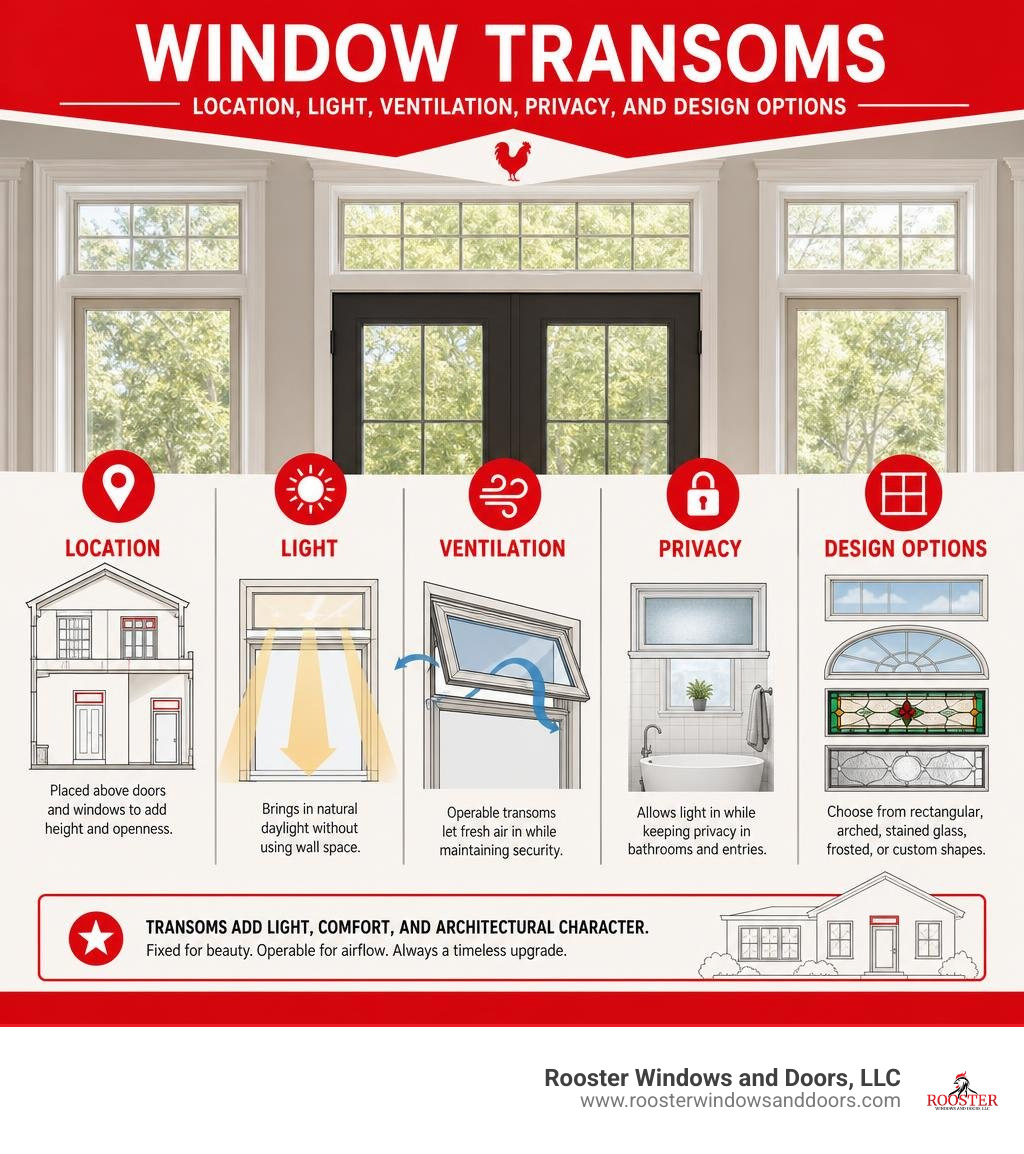
Window transoms are small windows set above a door or a larger window. They add daylight without taking up wall space, can preserve privacy in bathrooms and entryways, and may provide fresh-air ventilation when made operable. Fixed transoms are best for light and visual appeal; operable versions, often built like small awning windows, are useful where high-level airflow matters.
They began as a practical feature in 14th-century Europe. Before central heating and air conditioning became common, open transoms helped move air through homes, apartments, schools, and offices. Today, they still solve practical problems while making an entry, living room, kitchen, or interior doorway feel taller and more open.
Modern options range from clean rectangular glass panels to arched fanlights, stained glass, frosted glass, and custom shapes. The right frame, glazing, and installation details also matter: insulated glass with Low-E coatings and argon gas can help an exterior transom support your home’s energy performance.
I am Piotr Wilk of Rooster Windows and Doors, LLC. With more than two decades of combined residential window and door installation experience across Chicagoland, our team helps homeowners select and install window transoms that fit their home’s style, comfort needs, and existing openings.
What Is a Transom Window? History, Anatomy, and Purpose
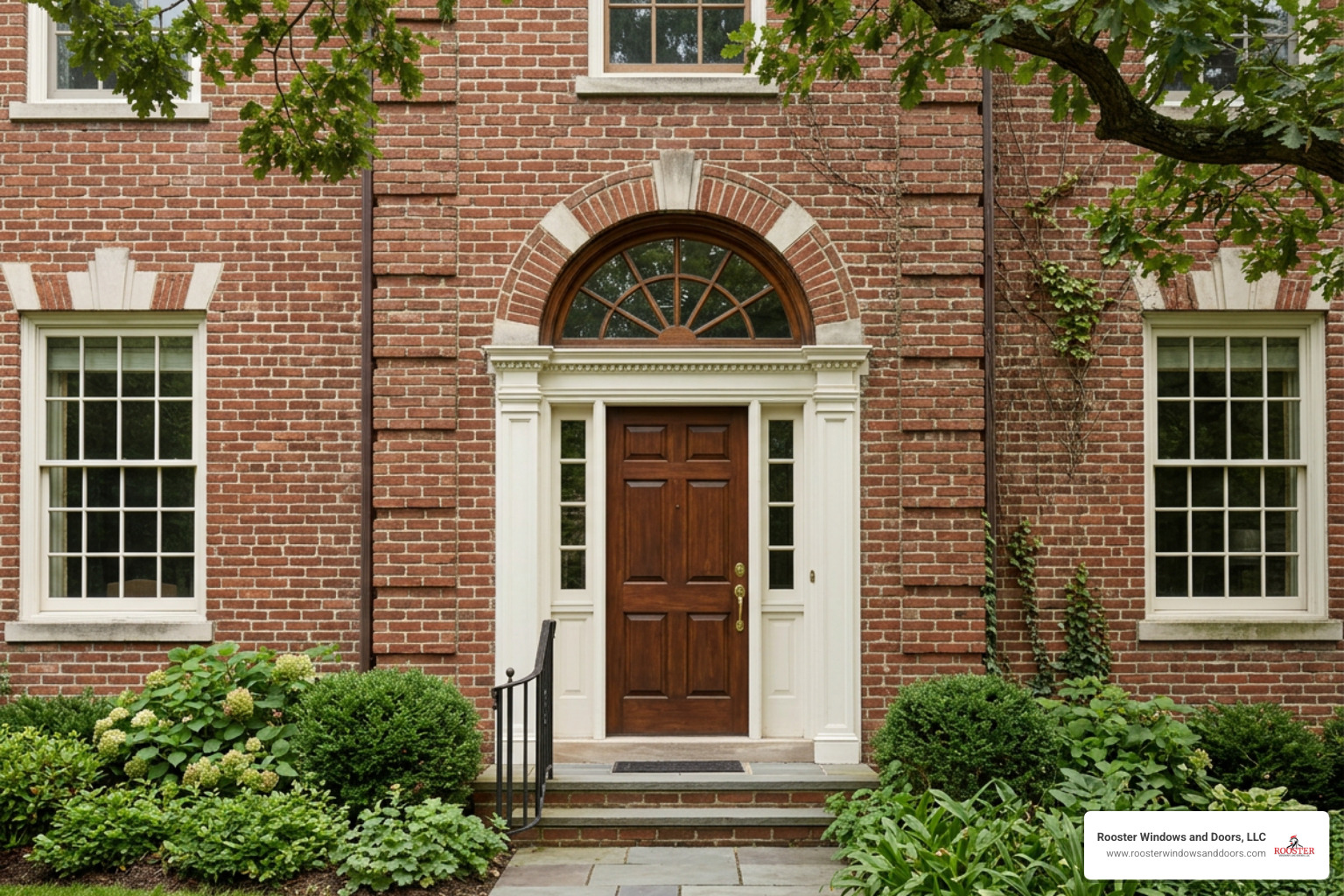
A transom window sits directly over the horizontal crosspiece—known as the transom beam or transom bar—that separates a door frame or primary window frame from the glass above it. Historically, the architectural term transom referred specifically to that structural horizontal beam. Over centuries of building practice, the term came to describe the window unit resting on top of it.
The concept dates back to 14th-century European architecture, appearing in early Gothic architecture before spreading across residential and civic design during the Perpendicular Period. Before mechanical HVAC systems arrived in the early-to-mid 20th century, transoms served as an essential cooling technology. Opening an interior or exterior transom allowed warm air rising toward the ceiling to escape while pulling cooler air through lower openings, generating continuous cross-ventilation.
Across different languages and cultures, this window developed unique names:
- Fanlight: In British English, referring originally to semi-circular, fan-patterned glass over front doors.
- Imposte & Vasistas: In French, describing decorative framing elements or small hinged venting panes.
- Ranma: In traditional Japanese architecture, wooden or glass panels positioned above sliding doors to distribute light and air.
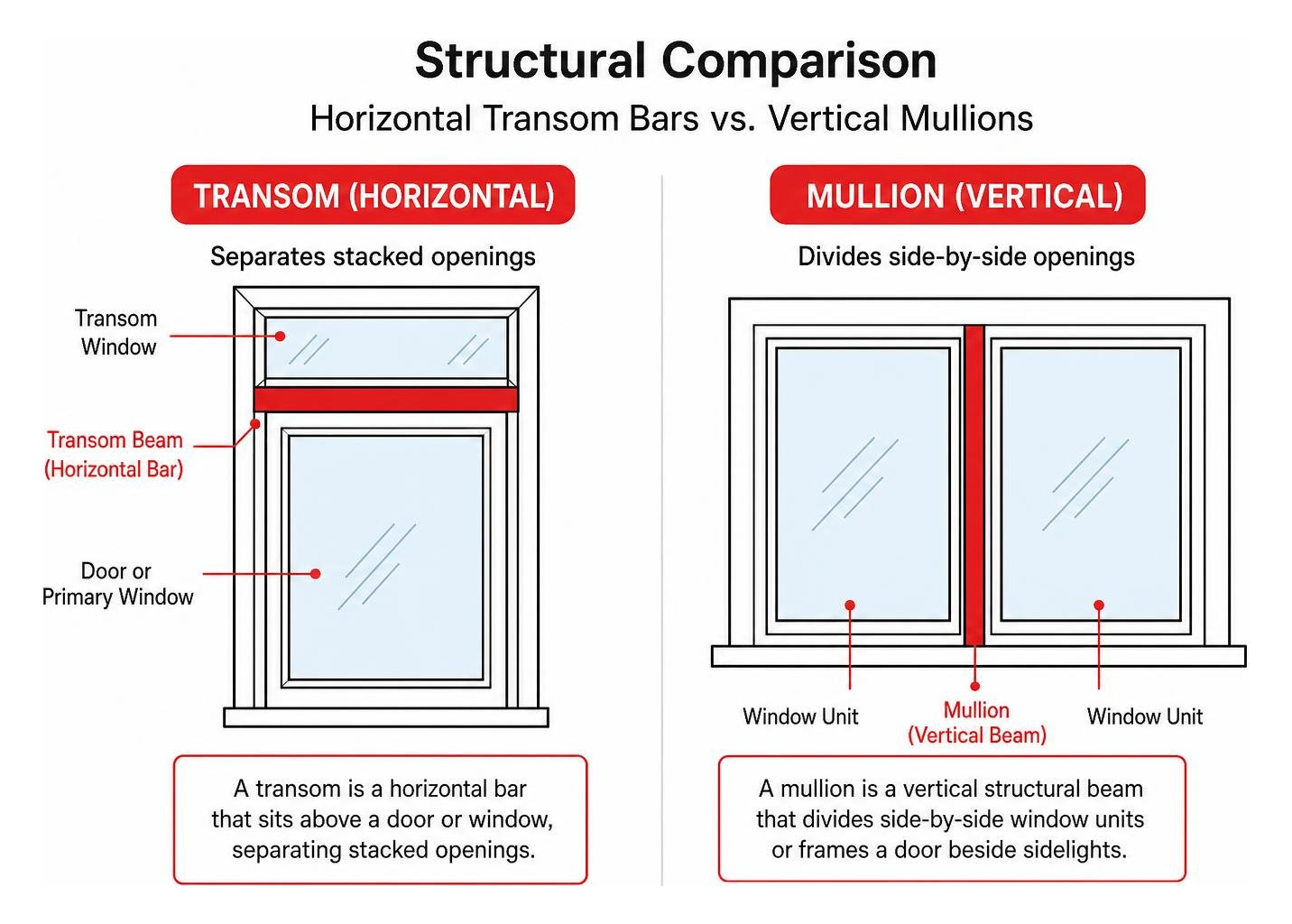
Modern building science often brings up a common point of confusion: the difference between a transom and a mullion. While both divide glass units, they serve distinct structural roles. A transom is a horizontal bar separating stacked openings, whereas a mullion is a vertical structural beam dividing side-by-side window units or framing a door beside sidelights. For a deeper breakdown of historic and contemporary framing, see our definitive guide to transom windows.
Types and Styles of Window Transoms

Architectural styles dictate the shape, profile, and material selection of transom windows. Whether you are remodeling a Craftsman bungalow in Highland Park or modernizing a townhome in Chicago, matching the profile to your structure creates visual continuity.
Frames come in several core materials:
- uPVC / Vinyl: Durable, cost-effective, and virtually maintenance-free with exceptional thermal resistance.
- Wood: A classic choice offering rich, stain-grade interiors that can match historic moldings and heritage millwork.
- Fiberglass: Structurally robust, dimensionally stable through harsh temperature shifts, and capable of holding large glass panes.
- Steel / Aluminum: Ultra-slim sightlines that suit industrial and modern minimalist designs, often finished in bold black frames for striking visual contrast.
Operable vs. Fixed Window Transoms
A transom can be built as a fixed architectural accent or an operable ventilation unit.
Fixed transoms function as stationary picture windows. Because they have no moving hardware, hinges, or latches, they maximize glass area, deliver top-tier energy efficiency ratings, and require minimal upkeep.
Operable transoms typically feature a bottom-hinged awning or top-hinged hopper configuration. They utilize friction stay hinges or swiveling hardware to hold the sash open securely at various angles. When placed high on an exterior wall, an operable transom lets stale indoor air vent out while keeping your home secure from intruders, as the small opening prevents unauthorized entry.
Exterior vs. Interior Window Transoms
Exterior transoms sit above front entry doors, patio sliders, or primary window banks. They flood dark foyers with natural light, make exterior entryways appear taller, and significantly boost curb appeal without compromising security.
Interior transoms are installed in partition walls above interior doorways, between kitchens and dining rooms, or in enclosed hallways. They allow natural daylight to travel between connected living areas while preserving acoustic privacy. In private spaces, specialized bathroom transom installations let steam escape and sunlight enter near the ceiling line while keeping sightlines completely private.
Decorative Glass and Customization Options
Transom glass can be customized with varied textures, patterns, and opacities to meet specific architectural and privacy goals.
- Artistic Stained Glass: Features colorful glass pieces joined by metal caming (available in Brass, Patina, or Zinc) to create bespoke motifs suited for Victorian and Craftsman facades.
- Frosted and Obscure Glass: Incorporates acid-etched, sandblasted, reed, or rain textures. Reviewing different frosted glass transom options helps you pick the right balance on the standard 0–10 privacy scale.
- Heritage Glass Preservation: Historic homes with original leaded pieces require specific care; following proper stained glass transom maintenance prevents lead fatigue and structural sagging over time.
Energy Efficiency, Glazing, and Cost Considerations
Because warm air naturally rises to the top of a room, exterior transoms must be carefully specified to prevent unwanted thermal transfer. Modern exterior installations feature double- or triple-pane insulated glass units (IGUs) built with Low-Emissivity (Low-E) coatings, argon gas fills, and warm-edge spacer systems like Super Spacer® Cushion Edge™ to eliminate perimeter cold spots.
Pricing varies based on sizing, frame material, glass type, and whether the transom is installed into new framing or retrofitted above an existing header.
| Transom Configuration | Typical Sizing | Frame & Glazing Type | Energy Rating Level | Estimated Cost Range |
|---|---|---|---|---|
| Fixed Rectangular Entry | 28″ – 36″ Wide x 12″–18″ High | uPVC / Low-E Argon Double Pane | ENERGY STAR® Certified | $350 – $850 |
| Operable Awning Transom | 30″ – 48″ Wide x 14″–20″ High | Fiberglass / Friction Stay Hinges | High Performance | $650 – $1,400 |
| Arched / Eyebrow Transom | 36″ – 64″ Wide x 18″–30″ High | Clad Wood / Custom Radius IGU | ENERGY STAR® Certified | $900 – $2,200 |
| Custom Stained / Leaded | Built to Rough Opening | Wood or Metal Caming Profile | Variable Decorative Rating | $1,200 – $3,500+ |
| Complete Entry Door System | Single or Double Door + Transom | Steel or Fiberglass + Transom Unit | NAFS-22 / High Efficiency | $2,580 – $6,600+ |
Maintenance, Cleaning, and Treatment Solutions
Because transom windows are positioned above standard eye level, proper maintenance techniques keep them clean and structurally sound without unnecessary hassle.
- High-Reach Cleaning: Use an extendable telescoping pole fitted with a microfiber duster for regular dry cleaning. For wet washing, pair an extendable squeegee with a streak-free glass cleaner.
- Seal & Condensation Checks: Periodically inspect the perimeter caulking and rubber gaskets. If you observe persistent fogging or moisture between glass layers, the insulated unit seal has failed and requires glass replacement.
- Hinge Lubrication: For operable awning transoms, apply silicone-based spray lubricant to friction stays and hinges once a year to ensure smooth opening action.
- Window Treatments: When direct sunlight creates harsh glare, explore practical transom window covering solutions such as motorized cellular shades, custom plantation shutters, or stationary sheer inserts.
Frequently Asked Questions About Transoms
What is the main difference between a transom and a mullion?
A transom is a horizontal structural bar or beam that separates a door or lower window from the window opening above it. A mullion is a vertical structural support that joins adjacent window units or separates an entry door from vertical sidelights.
Do modern transom windows open?
Yes, modern transom windows can be ordered as operable units. While many installations use fixed glass for simple daylighting, operable awning or hopper transoms feature swiveling hardware and friction stays that provide natural passive ventilation.
Can you add a transom above an existing door?
Yes, but the installation requires structural evaluation. If the wall above your existing door does not have sufficient clearance beneath the load-bearing header, the framing must be modified. A professional contractor can alter the rough opening, adjust the header, and install a custom jamb package to support the new transom window securely.
Conclusion
Installing a transom window elevates architectural character, invites continuous daylight into living spaces, and preserves privacy where standard windows cannot. Whether you select an operable awning unit for natural air movement or an ornate leaded-glass panel for heritage charm, choosing quality materials and energy-efficient glazing ensures lasting performance.
At Rooster Windows and Doors, LLC, we install high-performance, precision-fit window and door systems throughout Chicagoland communities, including Libertyville, Lake Forest, Evanston, Schaumburg, and surrounding areas. Explore our selection of transom windows to discover how tailored design and expert craftsmanship can transform your home’s entryways and interiors.

