

The Complete Guide to Stained Glass Transom Maintenance and Replacement
The History and Evolution of the Stained Glass Transom
To understand the stained glass transom, we have to look back at why they were created in the first place. Long before air conditioning and electric lighting were standard, transoms served a vital architectural purpose: they allowed light to penetrate deep into the center of a home and, when hinged, provided a path for cross-ventilation.
During the Victorian Era, the transom evolved from a simple clear glass pane into a canvas for artistic expression. The Aesthetic Movement of the late 19th century pushed this further, emphasizing “art for art’s sake.” It wasn’t uncommon to see an antique Victorian Aesthetic Era c1890 stained glass transom featuring a complex mix of jewels and bevels. These windows weren’t just decorative; they were status symbols that showcased the homeowner’s taste.
As architectural trends shifted, so did the glass. The Art Nouveau period introduced flowing, organic lines and whiplash curves, while the Queen Anne style often utilized stained glass borders to add what historians call “colorful whimsy” to residential facades. By the early 20th century, the Arts & Crafts and Prairie School movements (famously championed right here in the Chicago area by architects like Frank Lloyd Wright) moved toward geometric simplicity and earthy tones.
Today, many of these historical pieces are rediscovered through architectural salvage. We often see homeowners in places like Evanston or Oak Park looking to preserve these original sashes, which were frequently framed in durable zinc or heavy oak. Whether it is a reclaimed piece from a 19th-century St. Paul residence or a local Chicago Victorian find, these windows carry a sense of history that modern mass-produced glass simply cannot replicate.
Popular Designs for a Stained Glass Transom
When selecting a design, you aren’t limited to what was popular 100 years ago. However, most homeowners gravitate toward a few “timeless” categories:
- Floral Motifs: From simple tulips to intricate rose patterns, floral designs are the most common for residential entries.
- Geometric Patterns: These fit perfectly in Craftsman or Prairie-style homes, using straight lines and squares to create a clean, organized look.
- Tiffany-Style: Inspired by Louis Comfort Tiffany, these designs use opalescent glass to create rich, painterly scenes, often featuring dragonflies or lush landscapes.
- Beveled Glass and Jeweled Accents: Many stained glass transom windows use clear beveled glass. When the sun hits the angled edges of the bevels, it acts as a prism, throwing “rainbows” across your entryway. Faceted jewels—often in deep crimson, amber, or blue—add a three-dimensional sparkle.
- Art Nouveau: If you prefer movement, leaded stained glass Art Nouveau style transom windows offer stylized vines and asymmetrical curves that feel both vintage and modern.
Material Variations in Antique vs. Modern Units
The way we build a stained glass transom has changed significantly over the last century.
Antique Units typically rely on leaded glass held together by lead or zinc framing. The glass itself might be “Waterglass” (which has a wavy, ripple-like texture) or “gluechip” glass (which looks like frost on a winter window). While beautiful, lead is heavy and can optimize over time, causing the window to “bow” or sag.
Modern Units often utilize polymer panels. These are made from high-quality, lead-free polymers that are much lighter than traditional glass (usually around 2 lbs per square foot). These panels are incredibly durable and meet modern safety standards for commercial and residential use. Modern transoms also frequently incorporate textured glass and opalescent finishes to mimic the look of old-world cathedral glass while providing better privacy and impact resistance.
Benefits of Installing Modern Stained Glass Transoms
If you are considering adding or replacing a stained glass transom, the benefits go far beyond just “looking pretty.”
- Privacy Levels: A challenge in a front entryway is balancing light and privacy. A stained glass transom allows you to keep your curtains closed on the lower windows while the upper glass floods the hallway with light. Depending on the texture—such as “Rain” or “Baroque” glass—you can achieve a privacy rating from semi-private to completely opaque.
- Natural Light: There is nothing quite like the “kaleidoscope of colors” that fills a room when morning light hits a stained glass panel. It transforms a dark foyer into an inviting space.
- Property Valuation: In the Chicagoland real estate market, architectural details matter. A custom-fitted transom acts as a permanent piece of art that increases curb appeal and sets your home apart from the neighbors.

Comparing Traditional vs. Modern Transom Materials
| Feature | Traditional Leaded Glass | Modern Polymer Panels |
|---|---|---|
| Weight | Heavy (requires sturdy framing) | Lightweight (approx. 2 lbs/sq ft) |
| Maintenance | High (lead oxidation, rattling) | Low (easy to clean, seamless) |
| Safety | Contains lead; fragile | Lead-free; high impact resistance |
| Installation | Often requires full sash replacement | Can be used as an overlay |
| Durability | 100+ years if maintained | 150+ years; won’t fade or crack |
Enhancing Energy Efficiency with a Stained Glass Transom
Many people worry that a decorative window means a drafty home. At Rooster Windows and Doors, we prioritize energy efficiency. Modern stained glass transom units can be built as triple-pane insulated units.
By sandwiching the decorative glass between two panes of clear tempered glass, we create a thermal barrier. We use argon gas between the panes to reduce heat transfer and Intercept spacers to prevent condensation at the edges. Adding a Low-E coating ensures that your beautiful new window reflects heat back outside in the summer and keeps it inside during our brutal Illinois winters. For more on how these windows function, check out our guide on Transom Windows.
Selection and Installation of a Stained Glass Transom
Choosing the right window involves a choice between custom vs. ready-made options.
- Ready-made: You can find antique salvage or pre-made panels in common sizes (like 24″x10″ or 36″x12″). These are great if you are building a new opening to fit the window.
- Custom: If you are retrofitting an existing home in Naperville or Schaumburg, custom is usually the way to go. We can create a panel to fit your exact opening, down to the fraction of an inch.
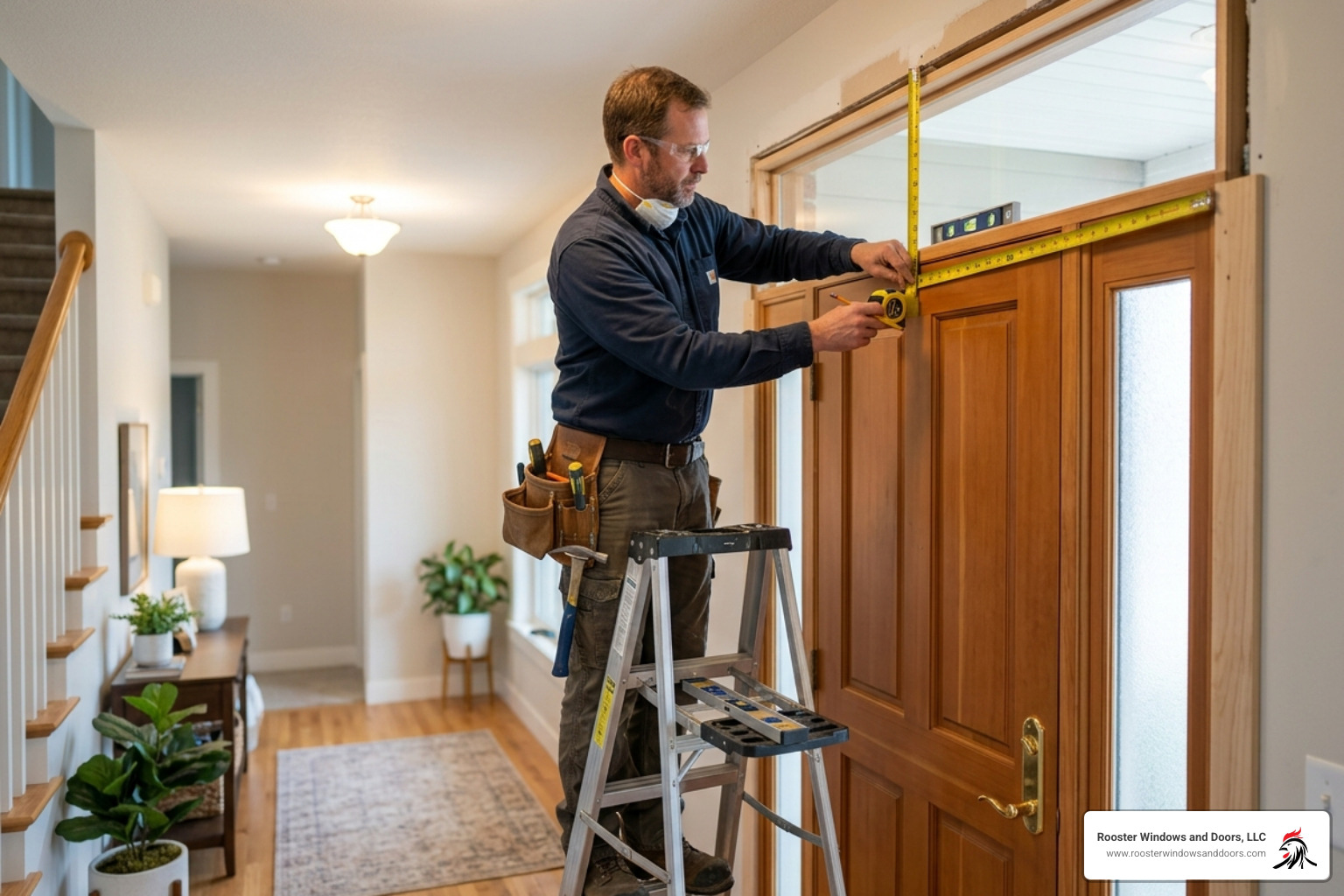
Framing and Retrofitting Options
There are three primary ways we install these units:
- Full Framed Unit: The stained glass is built into a wood or vinyl frame and installed as a permanent part of the wall or door header.
- Overlay/Retrofit: A decorative panel is installed directly in front of your existing clear glass transom. This is secured with silicone caulking or small wood trim pieces. It’s an excellent way to get the look without removing the original weather-sealed window.
- Hanging Panels: For a less permanent option, some homeowners choose to hang the panel using eyehooks and chains. This is popular for renters or those who want to take the glass with them when they move.
Cost Factors for Your Stained Glass Transom
Budgeting for a stained glass transom involves several variables. On the lower end, you can find antique salvage pieces for $225 to $495. However, these often require cleaning or minor repairs.
For a professional, custom-installed unit, costs are influenced by:
- Size: Larger arched transoms (some up to 57″ wide) naturally cost more in materials and labor.
- Complexity: A piece with 500 individual glass “cuts” and multiple jewels will be more expensive than a simple geometric design.
- Glass Type: Specialty opalescent or hand-blown glass carries a premium over standard textured glass.
- Installation Labor: Retrofitting an old Victorian frame often requires more time and expertise than installing a new unit into a fresh rough opening.
Maintenance and Care for Longevity
A well-made stained glass transom can last over 150 years, but it needs the right care.
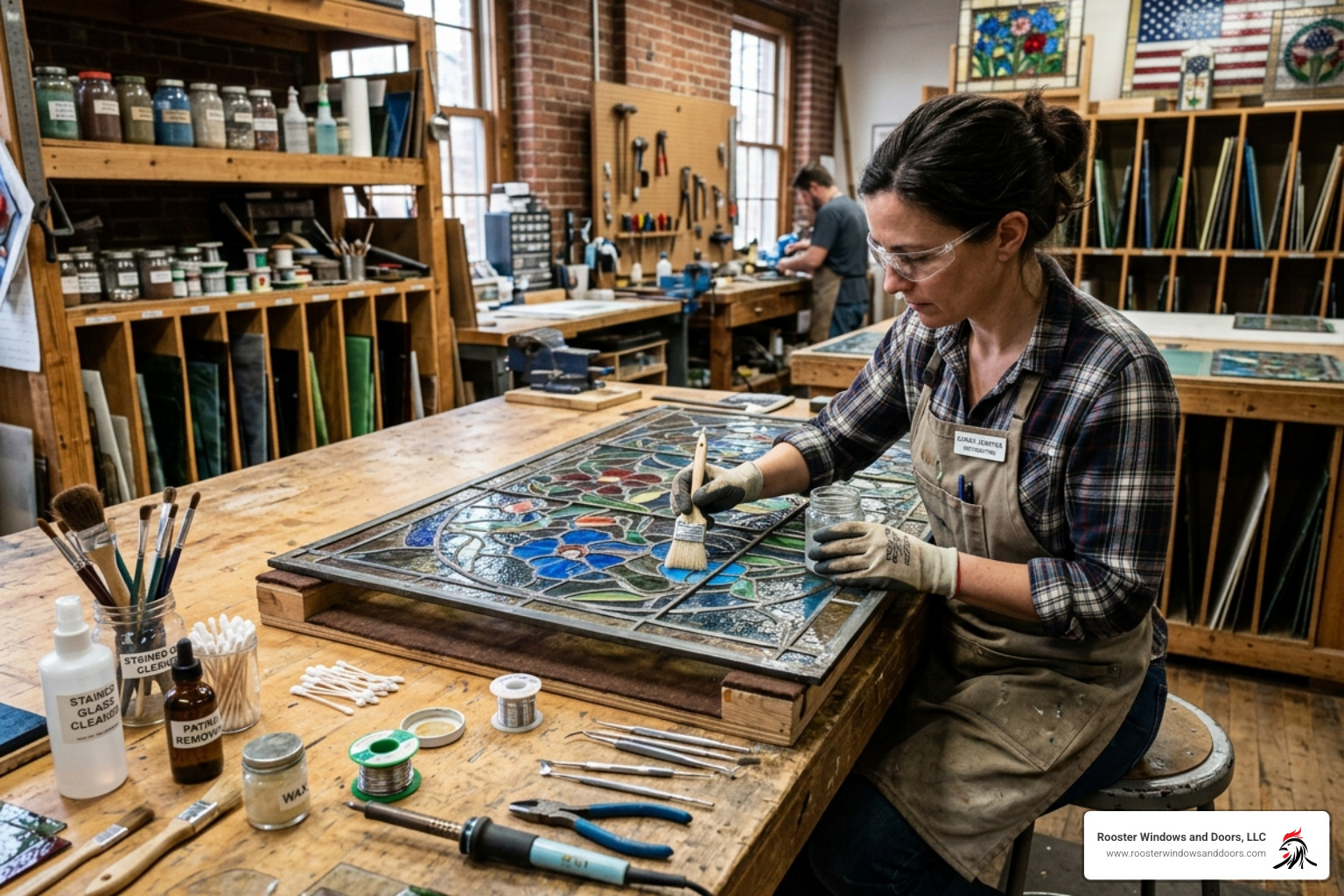
- Cleaning: Never use harsh chemicals or ammonia-based cleaners (like Windex) on leaded glass, as they can break down the solder and lead over time. Instead, use a soft cloth with mild soap and water.
- Dust Prevention: Modern polymer panels are smooth and seamless, making them much easier to dust than traditional leaded glass, which has many “nooks and crannies.”
- Structural Checks: If you have an antique window, check for lead oxidation (a white, powdery substance on the lead) or rattling glass. If the window is bowing, it may need professional restoration to reinforce the structure.
- Protective Glazing: For valuable antique pieces, we recommend adding a layer of clear tempered glass on the exterior. This protects the delicate art glass from hail, wind, and vandalism while improving the home’s insulation.
Frequently Asked Questions about Stained Glass Transoms
How much does a stained glass transom window cost?
Prices vary widely based on whether you are buying an antique, a pre-made panel, or a custom-built unit. Antique listings can be found for under $350, but custom triple-pane, energy-efficient units for a large entryway can range from $600 to $1,500+ depending on the complexity of the design and the framing materials used.
Can I install a stained glass panel over an existing window?
Yes! This is called an overlay method. It is a very popular “retrofit” option because it doesn’t require you to tear out your existing, weather-stripped window. You simply secure the new decorative panel against the existing glass using bracket security or silicone caulking. It provides the aesthetic upgrade while keeping your home’s original energy seal intact.
How do I clean antique stained glass without damaging it?
Stick to the basics. Use a soft-bristle brush (like a soft toothbrush) to gently remove dust from the corners of the lead lines. Wipe the glass with a damp, lint-free cloth and a drop of dish soap. Avoid saturating the frame with water, as moisture control is key to preventing wood rot in older sashes.
Conclusion
A stained glass transom is more than just a window; it’s a bridge between your home’s architectural history and its modern future. Whether you’re restoring a Queen Anne home in Elgin or adding a touch of Tiffany-style elegance to a new build in Bolingbrook, these windows provide a unique blend of privacy, light, and artistry.
At Rooster Windows and Doors, LLC, we specialize in high-quality, flawless installations that don’t just look great but also stand up to the Illinois climate. If you’re ready to transform your entryway with an energy-efficient, beautiful glass upgrade, we are here to help. From selecting the perfect design to ensuring a perfect fit, our team brings decades of experience to every project.
Ready to take the next step? You can Upgrade your home with custom picture windows and transoms that reflect your personal style and enhance your home’s value for decades to come. Give us a call today to discuss your vision for a brighter, more beautiful home!