

The Best Frosted Glass Transom Windows for Your Next Project
The Small Window Above Your Door That Makes a Big Difference
A frosted glass transom is one of the smartest upgrades you can add to an entry door or interior doorway — and it’s one of the most overlooked.
Quick answer: What is a frosted glass transom?
- A transom is a narrow window installed above a door or another window, separated by a horizontal beam
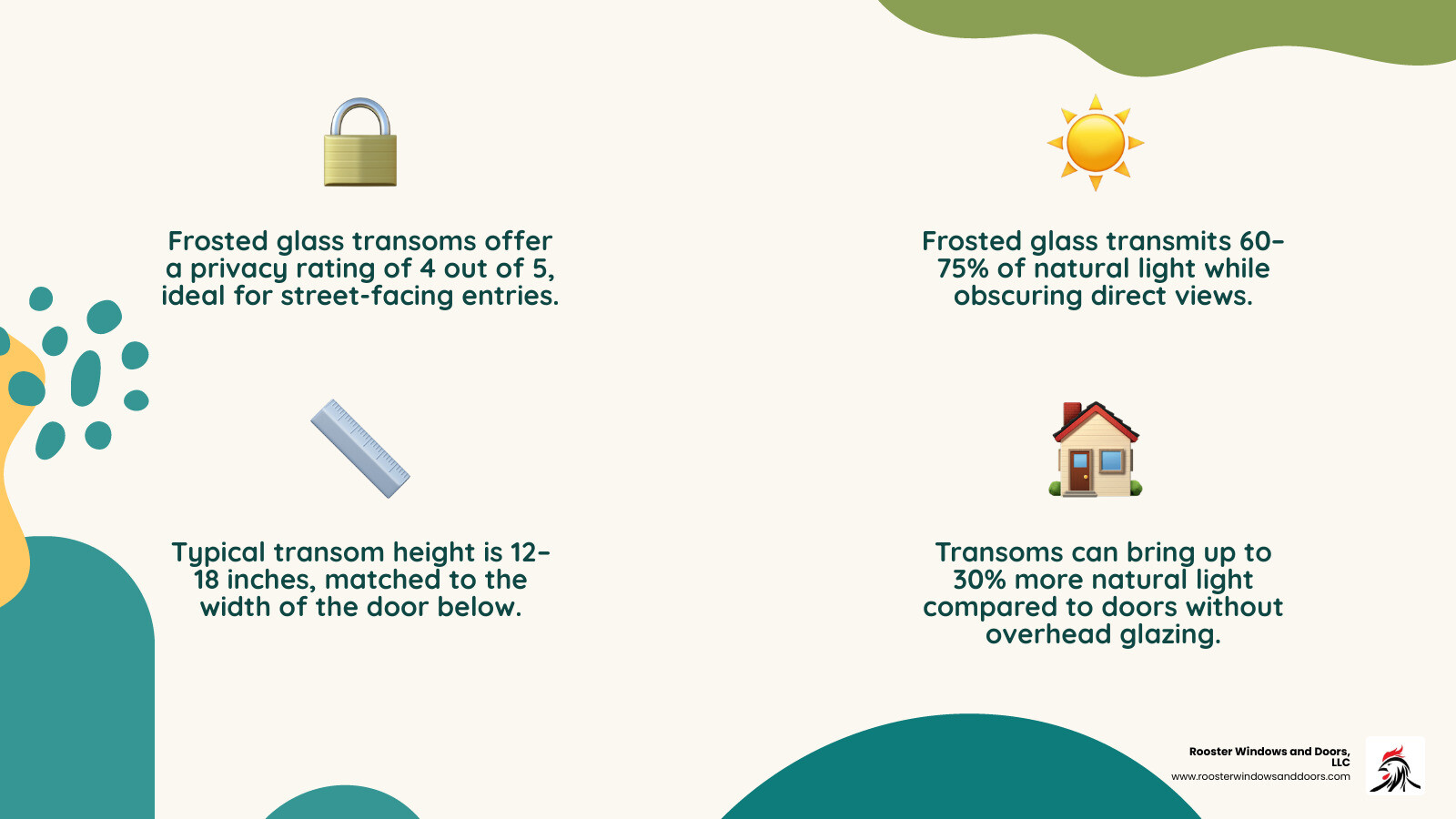
- Frosted glass obscures the view while still letting light pass through — typically 60–75% of what clear glass allows
- It sits above eye level, so it adds natural light without sacrificing privacy
- Privacy rating: 4 out of 5 — ideal for street-facing entries and bathroom doors
- Common sizes: 12–18 inches tall, matched to the width of the door below
Most homeowners don’t think about the space above their front door. But that narrow strip of wall is a missed opportunity. A frosted glass transom can bring in up to 30% more natural light compared to a standard door with no overhead glazing — without letting strangers see inside your home.
It works for new builds, renovations, and retrofits. It fits traditional homes, modern entries, and everything in between. And it costs significantly less than adding full sidelights.
That’s why we put together this roundup — to help you compare the best frosted glass transom options by type, design, glass finish, size, and budget, so you can choose the right one for your project.
I’m Piotr Wilk, and at Rooster Windows and Doors, LLC, my team and I have spent over two decades installing windows and doors across Chicagoland — including countless frosted glass transom installations above entry doors, interior doors, and hallway openings throughout Lake, Cook, and McHenry County. Whether you’re replacing an existing unit or planning a full entry upgrade, the details in this guide come straight from real-world installation experience.
What a Frosted Glass Transom Is and Why Homeowners Choose It
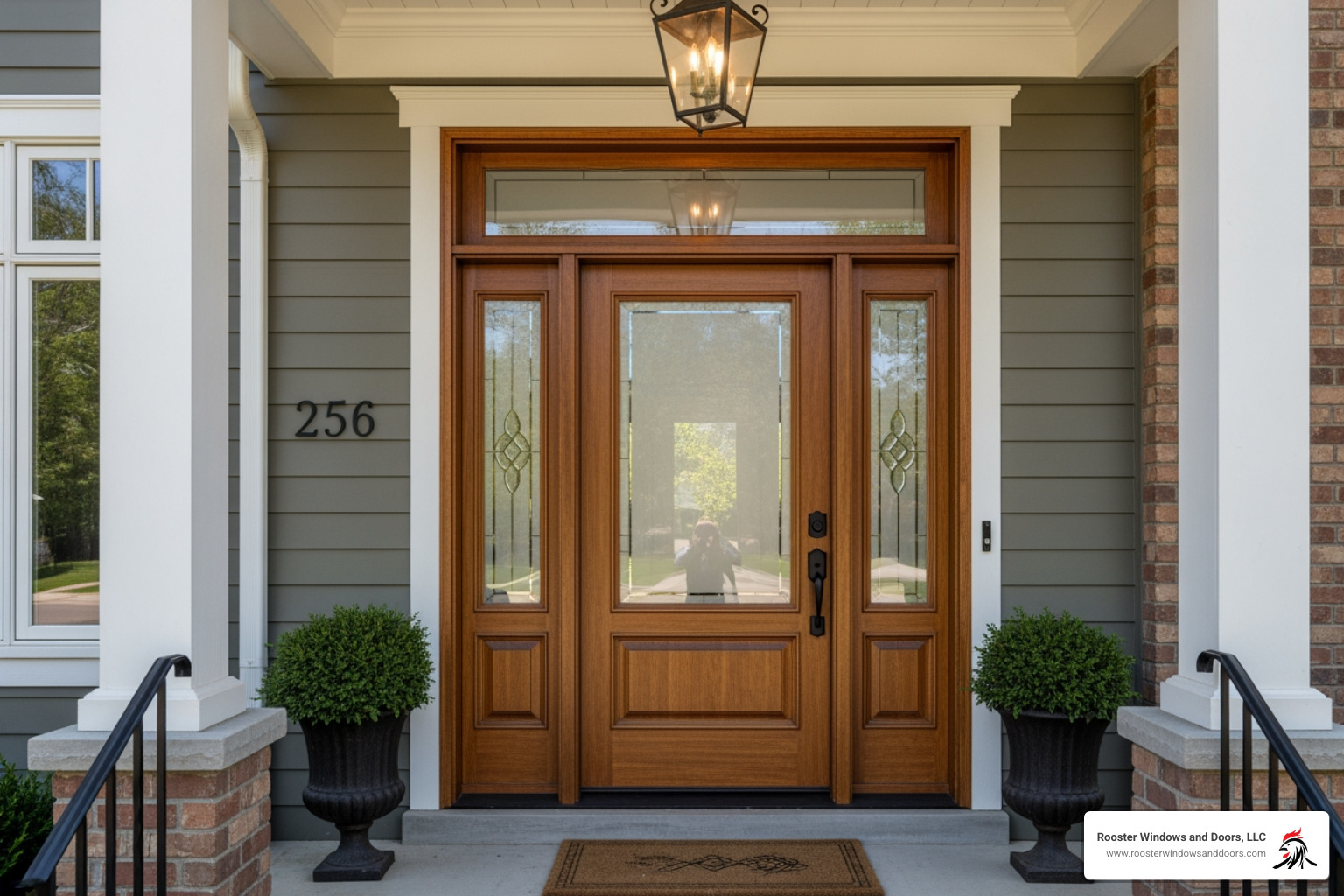
A transom window is defined by its position: it sits above a door or window and is separated from the opening below by a horizontal structural member called a transom bar or beam. Add frosted glass, and you get a window that brightens a space while blurring direct views.
That combination is exactly why homeowners love it. A frosted glass transom gives you overhead daylight, architectural character, and privacy in one compact feature. In practical terms, it is often the sweet spot between a plain solid wall and a full glass-heavy entry system.
Most of the time, homeowners choose frosted transoms for one or more of these reasons:
- They want more daylight at the front entry without exposing the interior
- They want privacy in bathrooms, hallways, offices, or interior doorways
- They want a more custom look without committing to full sidelights
- They want a cleaner, safer alternative to eye-level glass panels
- They want a design detail that works in both traditional and modern homes
Transoms can be fixed or operable. Fixed units are the most common, most secure, and usually the most budget-friendly. Operable transoms can open for ventilation, which makes them especially useful in older homes or interior spaces where airflow matters.
Shape also matters. Rectangular transoms are the most common and easiest to fit into contemporary projects. Arched and elliptical transoms lean more decorative and often show up in traditional or historically inspired designs.
How a frosted glass transom differs from clear, stained, and textured transoms
Not all transom glass behaves the same way, and the differences are worth understanding before you buy.
Clear glass transoms
- Let in the most direct light
- Preserve views outward and inward
- Offer the least privacy
- Work best where visibility is a feature, not a concern
Frosted glass transoms
- Diffuse light instead of transmitting a clear view
- Usually provide privacy around a 4/5 level
- Let in roughly 60-75% of the light clear glass would
- Work especially well for front doors, bathrooms, and street-facing spaces
Stained glass transoms
- Prioritize decorative impact over maximum light
- Add color, pattern, and traditional character
- Can provide privacy depending on glass opacity and lead pattern
- Are ideal when the transom is meant to act like jewelry for the house
Etched or sandblasted glass transoms
- Create a more refined decorative surface than basic frosting
- Can include custom motifs, monograms, foliate designs, or house numbers
- Often look more upscale than plain obscure glass
- Vary in privacy depending on the depth and coverage of the design
Textured or obscure glass transoms
- Use surface pattern to distort visibility
- Include styles like rain, reed, granite, or glue-chip effects
- Can look more dimensional than plain frost
- Often hide fingerprints and dust a little better too, which is a nice bonus if life in your house is enthusiastic
Best places to use a frosted glass transom
We most often recommend frosted transoms in the following locations:
- Above a front entry door
- Above an interior office door
- Above a bathroom door
- Above French doors between rooms
- Above existing windows to increase total glass height
- In hallways that need borrowed light
- In office partitions where privacy matters but daylight still helps
For a broader overview of styles and placements, see our guide to Transom Windows.
Best Frosted Glass Transom Window Options by Type and Design
If you are evaluating products, the best choice usually comes down to how you plan to use the transom.
Best applications by transom type
- Fixed frosted transom: front entries, hallways, bathrooms, above interior doors
- Operable frosted transom: older homes, interior airflow, historic restorations
- Arched or elliptical frosted transom: traditional entries, custom homes, statement doors
- Insulated frosted transom: exterior doors in cold-climate Chicagoland homes
- Tempered frosted transom: safety-focused entry systems and code-sensitive locations
Fixed frosted glass transom options for entry doors and hallways
For most projects, fixed is the winner.
Fixed transoms are simpler to install, more secure, and commonly 20-40% less expensive than full sidelight assemblies while still delivering strong daylighting benefits. They are also the easiest option to seal well for energy performance.
Typical features include:
- Heights around 10 to 18 inches
- Widths matched to the door or opening below
- Tempered glass for safety
- Insulated glass options for exterior applications
- Minimal frame profiles for a cleaner look
A good example of the compact end of the category is this Fixed 10″ x 18″ Transom Window with Tempered Glass, which reflects the kind of small fixed unit often used in practical utility or accessory structures. For homes, we usually scale width and glass package to match the entry system more precisely.
Fixed frosted transoms are especially smart when your priorities are:
- Privacy
- Security
- Simpler installation
- Lower cost
- Clean architectural lines
Operable frosted glass transom options for ventilation and older homes
Operable transoms are less common today, but they still make a lot of sense in the right setting.
Historically, transoms were used to move air between rooms before central air conditioning was common. That function still matters in older homes, interior hallways, offices, and bathrooms. If the transom is high up, the sash may be operated by a crank, rod, or even a motorized setup.
Best uses include:
- Historic homes where original ventilation patterns matter
- Row-house style layouts
- Interior doorways where borrowed air and light improve comfort
- Bathrooms needing airflow while protecting privacy
That said, operable units add hardware, complexity, and cost. They can also create more security and weather-sealing considerations for exterior applications. In most front entry projects, we recommend fixed unless ventilation is a genuine requirement.
Custom frosted glass transom designs with arches, grilles, and decorative details
If your project is more about character than pure utility, custom is where frosted transoms really shine.
Custom options can include:
- Arched tops
- Elliptical shapes
- Decorative grille patterns
- Etched floral or geometric designs
- House numbers worked into the glass
- Mixed frosted and clear sections
- Stained glass accents layered into the design
Antique examples show how decorative these windows can become. This Antique etched foliate transom example highlights a style with etched plant details and an integrated house number, a look that still inspires custom entry designs today.

If you love the idea of a custom look but want modern performance, we usually recommend recreating the design in insulated safety glass rather than relying on a true antique unit for exterior use.
Frosted Glass Transom vs Sidelights vs Full Entry Assemblies
A lot of homeowners compare transoms with sidelights, and that is the right comparison to make.
Here is the simple version: transoms bring light from above, sidelights bring light from the sides, and a full assembly does both. The best option depends on whether privacy, daylight, budget, or drama matters most.
| Option | Light | Privacy | Security | Cost | Best for |
|---|---|---|---|---|---|
| Frosted transom only | Moderate overhead light | High | Strong, because glass is out of reach | Lower | Privacy-first entries |
| Sidelights only | High eye-level light | Lower unless frosted | More vulnerable near lock area | Mid-range | Bright entries needing vertical glass |
| Transom plus sidelights | Maximum light | Depends on glass choice | Varies by glass spec | Highest | Grand custom entry systems |
When a frosted glass transom is the better choice than sidelights
A frosted glass transom is usually the better choice when:
- The home faces a street or sidewalk
- You want privacy without closing off natural light
- You do not want glass near the lockset
- You want a simpler retrofit
- You want a smaller budget impact
Because transoms sit above eye level, they naturally protect privacy better than clear sidelights. That is a big reason they work so well for urban and suburban front entries across our service area. They also feel safer to many homeowners because the glass is harder to reach from outside.
When sidelights or full combinations make more sense
Sidelights or full entry combinations make more sense when:
- You want the brightest possible entry
- You are building a dramatic focal point
- You have a wide front elevation that needs balance
- You are installing double entry doors
- You want the door, sidelights, and transom to read as one complete design
If you are considering a larger entry upgrade, our guides on Custom Entry Doors and Custom Front Double Doors can help you compare styles.
Glass, Materials, Energy Efficiency, and Code Requirements
A transom may be small, but its materials matter a lot.
For exterior applications in Chicagoland, we usually steer homeowners toward insulated glass packages and durable, low-maintenance frames. Common frame materials include:
- Wood for classic appearance and interior warmth
- Vinyl for low maintenance and moisture resistance
- Fiberglass for stability and energy performance
- Aluminum-clad systems where exterior durability is a priority
For the glass itself, the most common performance upgrades are:
- Double-pane insulated glass
- Low-E coatings to reflect heat radiation
- Argon gas fill to reduce heat transfer
- Warm-edge spacers to limit condensation around the glass perimeter
- Laminated glass where added security or sound control is desired
- Tempered safety glass where code requires it
The key energy metrics are U-Factor and SHGC. Lower U-Factor generally means better insulation. SHGC, or solar heat gain coefficient, helps describe how much solar heat passes through the glazing. In our climate, balancing insulation and solar control is important, especially on exposed front elevations.
Frosted, etched, sandblasted, textured, and film-applied finishes explained
There is more than one way to get the frosted look.
Acid-etched or permanently frosted glass
- Smooth, consistent finish
- Easy to clean
- Durable and long-lasting
- Best for homeowners wanting a true built-in privacy surface
Sandblasted glass
- Creates a soft, matte appearance
- Can be decorative or fully obscuring
- Often used for custom patterns
- Can require careful maintenance depending on finish depth
Ceramic-ink privacy finishes
- Common in manufactured decorative glass products
- Can combine frosted areas with clear lines or patterns
- Offer a polished, repeatable design
Textured privacy glass
- Includes patterns like reed, rain, granite, or glue-chip
- Gives more depth and visual interest
- Can pair well with traditional entries
Film-applied frosting
- Most useful for interior or retrofit situations
- Lower commitment than replacing glass
- Can be practical when the existing glass is staying in place
For example, ORACAL® 8810 Frosted Glass Cast is one example of a decorative frosted film product used on glass surfaces. Film can be a good solution in select cases, but for permanent exterior entry systems, we generally prefer factory-finished glass for durability and cleaner long-term results.
Safety codes and performance rules for exterior frosted glass transom installations
Exterior transoms are not just a style choice. They also need to meet safety and performance expectations.
Important considerations include:
- Tempered safety glass may be required depending on size, location, and proximity to doors
- Impact-rated glass may be needed in some specialty applications
- Energy code compliance matters for exterior envelope performance
- Moisture resistance and air sealing are critical in freeze-thaw conditions
- Structural framing must support the opening correctly, especially in retrofits
Code details can vary by municipality, so we always recommend confirming local requirements before installation in places like Chicago, Evanston, Northbrook, Arlington Heights, Schaumburg, or anywhere else in our service area. If you are planning a larger entry modification, our Exterior Door Installation Guide covers important planning points.
Sizes, Installation Considerations, and What Frosted Glass Transoms Typically Cost
Most residential transoms are not huge, but they do need to be proportioned correctly.
Common residential dimensions include:
- 10″ x 18″ compact units
- 24″ x 10″ decorative units
- Door-width rectangular transoms
- Custom 12-18 inch high units spanning a single or double door opening
The most important rule is visual proportion. A transom should look like it belongs with the opening below it, not like it wandered in from a different house.
Common sizes and rough opening planning for a frosted glass transom
Industry-wide, transoms are often about 12 to 18 inches tall, while widths vary to match the door frame below. That could mean a narrow single-door transom or a broader unit spanning a complete entry system.
When planning a rough opening, we look at:
- Existing header conditions
- Available wall space above the door
- Whether the transom will be fixed or operable
- Frame thickness and insulated glass depth
- Desired sightlines from interior and exterior
- Whether the project is new construction or retrofit
A 24″ x 10″ decorative transom like this 24″W X 10″H Madison Transom Stained Glass Window-You Will Love! shows how compact transoms can still have a strong visual effect, even though stained glass and frosted glass serve different privacy and lighting goals.
Installation and replacement factors that affect total project cost
Cost depends less on the word “transom” and more on the project conditions around it.
Main cost drivers include:
- Fixed vs operable construction
- Standard vs custom size
- Rectangular vs arched shape
- Basic frosted glass vs decorative etched glass
- Insulated glass package upgrades
- Frame material and finish
- New construction vs retrofit
- Structural modifications above an existing door
In general, fixed transoms are the most affordable type, and they are often 20-40% less expensive than full sidelight assemblies. Retrofitting a transom above an existing door can cost more than homeowners expect because it may involve reframing, header changes, trim work, insulation, and exterior finishing.
There is also an antique market for salvaged transoms, with vintage frosted examples often priced around $95 to $300 depending on size and etched detail. Those can be beautiful, but they are usually better suited to restoration work or interior decorative use unless they are carefully rebuilt for modern performance.
If you are replacing part of an entry system or planning a new opening, our Door Installation and Door Replacement pages explain how we approach these projects.
Design Trends and Decorative Ideas for Frosted Glass Transom Windows
Transoms are having a quiet comeback, and honestly, it is about time.
In 2026, homeowners want privacy, daylight, and clean design at the same time. A frosted transom checks all three boxes without making the entry look overbuilt.
Custom frosted or etched transoms can also boost perceived curb appeal. Design trend data shows architectural glass details like these can increase curb appeal ratings by roughly 15-25%, especially when they fit the style of the home.
Popular frosted glass transom looks for 2026
The styles we are seeing most often include:
- Clean rectangular transoms with narrow frames
- Matte black exterior finishes
- Warm wood interiors paired with frosted glass
- Privacy-first modern entries with minimal ornament
- Farmhouse-inspired entries with simple grilles
- Historic restorations using etched patterns and traditional profiles
For inspiration, many homeowners start with visual collections like this frosted glass transom inspiration board, then narrow down the look based on their actual opening size and privacy needs.
Combining frosted transoms with stained glass, grilles, and etched patterns
Yes, you can absolutely combine frosted glass with other decorative elements.
Popular combinations include:
- Frosted field glass with clear beveled accents
- Geometric or colonial-style grilles
- Floral or foliate etched borders
- Monograms or house numbers
- Stained glass accents layered into the perimeter
- Frosted backgrounds behind decorative leading
If you like richer art-glass effects, this stained glass transom inspiration shows how much personality a transom can add. And if you own an older decorative unit already, our guide to The Complete Guide to Stained Glass Transom Maintenance and Replacement can help you understand restoration versus replacement.
Frequently Asked Questions about Frosted Glass Transom Windows
Do frosted glass transom windows provide enough privacy at a front entry?
Yes, in most cases they do. Frosted glass typically offers a privacy level around 4 out of 5 while still letting in useful daylight. Because the transom sits above eye level, it naturally protects privacy better than clear glass near the door handle or sidelights at standing height. For street-facing homes in places like Chicago, Glenview, Buffalo Grove, or Lake Forest, that is often the biggest advantage.
Can a frosted glass transom be added above an existing door?
Sometimes, yes. It depends on the wall space above the door and the framing conditions inside the wall. Retrofitting may require altering the header, reframing the opening, repairing finishes, and adjusting trim inside and out. That is why adding a transom during a planned door replacement is often more efficient than doing it as a standalone project later.
Are frosted glass transoms energy efficient and code-compliant?
They can be, provided the right glass and frame package are used. For exterior applications, we recommend insulated double-pane glass, Low-E coatings, argon gas, and code-appropriate safety glazing where required. Compliance depends on local rules and the exact location of the glass within the opening, so the final spec should always be checked before installation.
Conclusion: How to Choose the Right Frosted Glass Transom for Your Project
The best frosted glass transom is the one that balances four things well:
- Privacy
- Light
- Energy performance
- Design fit with the rest of the home
For many homeowners, a fixed frosted transom is the smartest place to start. It gives you overhead daylight, strong privacy, good security, and a lower project cost than sidelights or full glass-heavy entry systems. If you want something more distinctive, custom arches, etched patterns, grilles, and mixed-glass designs open up plenty of options.
When comparing suppliers or products, we recommend looking closely at:
- Safety glass specifications
- Energy-efficient glazing details
- Frame material quality
- Warranty terms
- Custom sizing capability
- Installation experience with retrofit and structural work
If you are planning a full entry upgrade, you may also want to explore our resources on Custom Home Doors, Best Quality Doors, and our custom picture windows services.
At Rooster Windows and Doors, we help homeowners across Chicagoland choose entry and window solutions that look right, perform well, and are installed with the kind of precision that keeps small design upgrades from becoming big headaches. A well-chosen frosted transom may be a small window, but it can do a lot of heavy lifting.
