

The Ultimate Guide to Basement Window Selection and DIY Installation
Why Your Basement Window Choice Matters More Than You Think
A basement window is more than just a small opening in your foundation wall. It controls natural light, ventilation, moisture, and — in many cases — whether your basement is legally safe to occupy.
Here is a quick overview of what you need to know:
| Topic | Key Facts |
|---|---|
| Main window types | Hopper, sliding, casement, awning, tilt & turn |
| Standard sizes | 14–32 in. wide, 10–24 in. high |
| Egress requirements | 5.7 sq ft net clear opening, min. 24 in. height, min. 20 in. width |
| Best frame materials | Vinyl or fiberglass (not wood or aluminum) |
| Minimum glazing | Double-pane insulated glass with Low-E coating |
| Required for | Any basement bedroom per IRC building code |
| Shipping times | Standard and custom: 4–5 weeks; Quick-ship options: 3 days |
Most homeowners don’t think much about their basement windows — until water starts seeping in, heating bills spike, or a home inspector flags a code violation. Getting this decision right from the start saves you real money and real headaches.
This guide walks you through everything: window types, sizes, egress codes, materials, installation, and costs — so you can make a confident choice for your home.
I’m Piotr Wilk, and at Rooster Windows and Doors, LLC, my team and I have spent over two decades installing and replacing basement windows across Lake, Cook, and McHenry County in Chicagoland. That hands-on experience is baked into every recommendation you’ll find here.
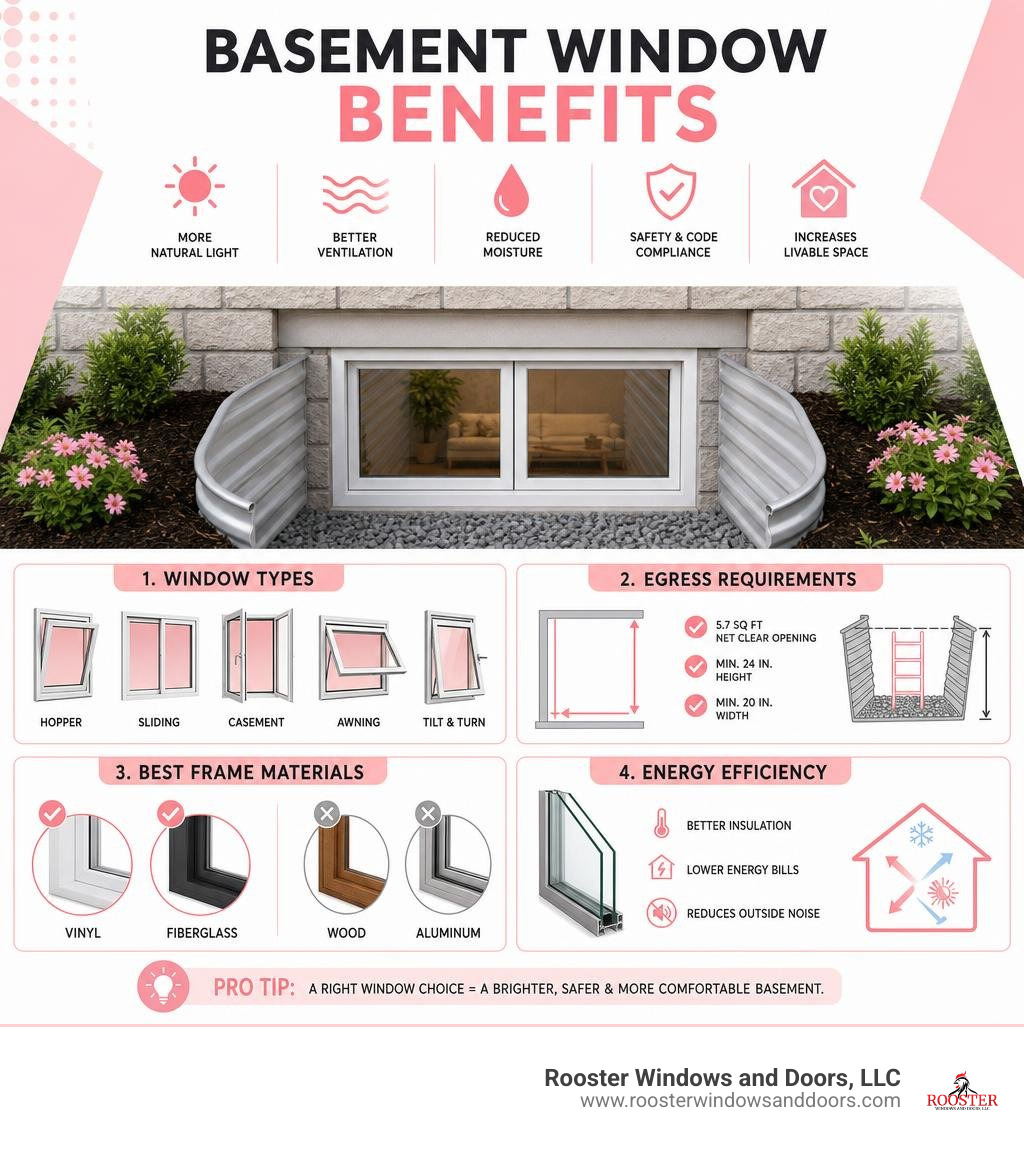
Know your basement window terms:
Choosing the Right Basement Window for Your Home
When selecting a replacement basement window, matching the style to your basement’s physical layout and usage is key. A dark storage area has very different needs than a finished family room or a newly built basement bedroom.
To make the right choice, you need to balance natural light, home security, and proper ventilation. If you want a deep dive into all available options, check out our Basement Windows Complete Guide. Let’s break down the most popular styles you will encounter.
Hopper and Awning Basement Window Styles
For classic, below-grade basement openings with limited above-ground clearance, hopper and awning windows are the traditional go-to solutions.
- Hopper Windows: These are hinged at the bottom and open inward from the top. They are excellent for tight spaces and provide great security. Because they open inward, they are highly effective at pulling fresh air into the room while keeping out dirt and debris. To explore these options further, view our dedicated Basement Window page.
- Awning Windows: Hinged at the top, awning windows open outward. The beauty of an awning window is its built-in rain shield; you can keep it open for ventilation even during a light summer shower without worrying about water pooling on your basement floor.
Both styles provide tight compression seals when locked, making them highly effective for moisture control and draft prevention.
Sliding and Casement Basement Window Designs
If you are looking to maximize daylight or need to meet strict emergency escape codes, sliding and casement designs are highly popular.
- Sliding Windows: Operating on horizontal tracks, sliding windows are incredibly user-friendly and do not swing into your room or out into your window well. They are ideal if you have shrubs or landscaping close to the foundation. For a reliable, budget-friendly option, many homeowners turn to a standard 32.25 in. x 24.25 in. White Left-Hand Double-Pane Insulated Glass Vinyl Sliding Basement Window with Screen, which retails around $98.88.
- Casement Windows: Hinged on the side, casement windows swing outward like a door. They are highly energy-efficient and are the preferred choice for egress compliance because the entire window opens up, maximizing the physical escape route within a smaller rough opening.
Regardless of the design you choose, selecting a high-quality frame material like vinyl or fiberglass ensures your new installation will withstand the harsh, damp conditions typical of below-grade environments.
Egress Requirements and Building Codes for Below-Grade Windows
Safety must always come first. If you are planning to convert your basement into a livable space — particularly a bedroom — local building codes and the International Residential Code (IRC) mandate the installation of a fully compliant egress window.
An egress window is designed to serve as an emergency exit in case of a fire or other crisis. If you are starting a basement remodeling project, reading through our Egress Basement Window Complete Guide is an essential starting point.
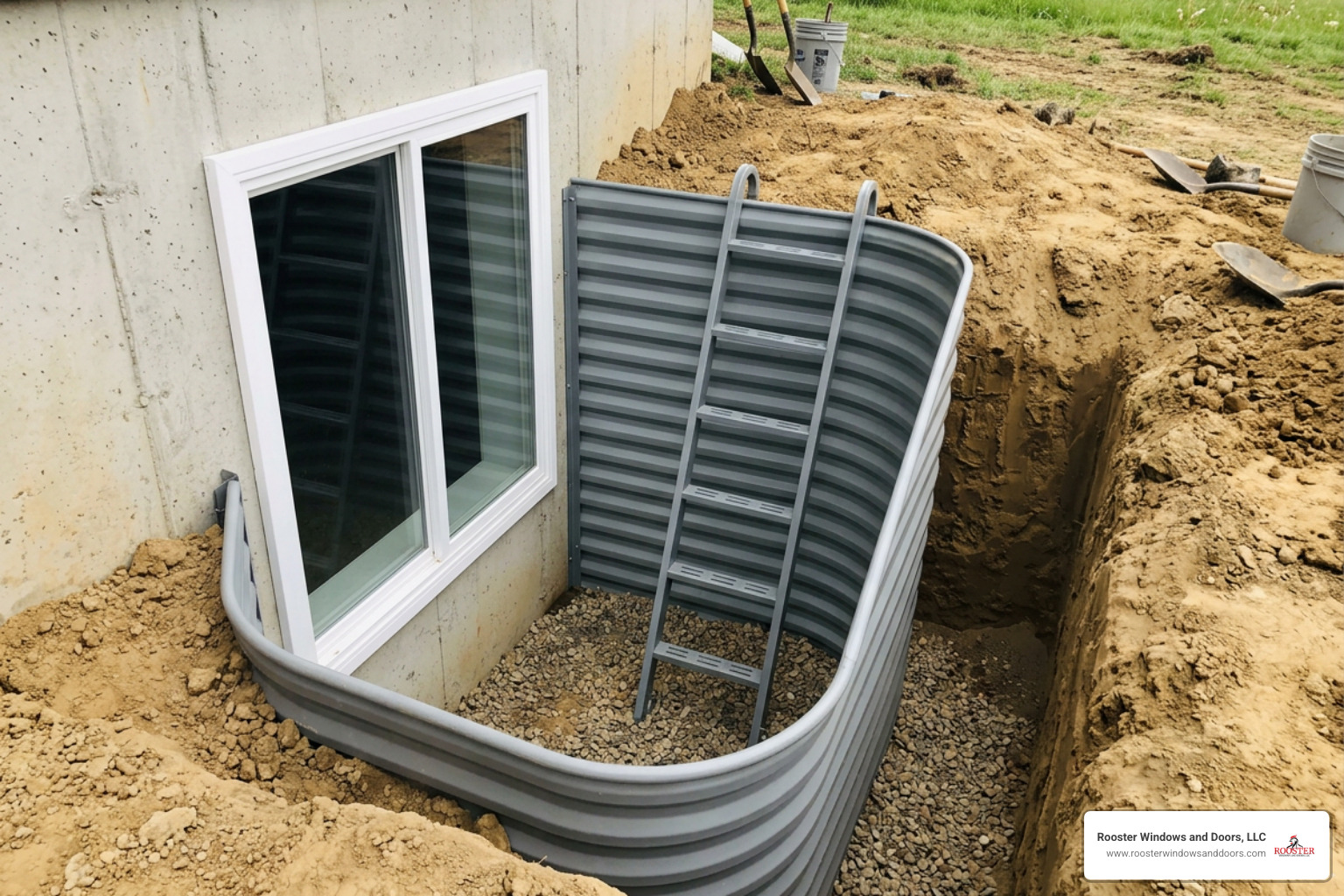
Standard vs. Egress Window Dimensions
You cannot simply install any standard utility window and call it an egress exit. The IRC has strict, non-negotiable minimum dimensional requirements to ensure a fully equipped firefighter can enter the basement while a resident escapes.
To meet the code, the window must satisfy the following:
- Minimum Net Clear Opening Area: 5.7 square feet (reduced to 5.0 square feet for ground-floor or grade-level windows).
- Minimum Net Clear Opening Height: 24 inches.
- Minimum Net Clear Opening Width: 20 inches.
- Maximum Sill Height: 44 inches from the finished basement floor.
Here is how standard utility windows compare to compliant egress models:
| Window Type | Typical Width | Typical Height | Code Compliant for Egress? |
|---|---|---|---|
| Standard Hopper | 14″ – 32″ | 10″ – 24″ | No (Too small, opens inward) |
| Standard Sliding | 31″ – 32″ | 14″ – 24″ | No (Half of the window remains blocked) |
| Egress Casement | 28″ – 36″ | 36″ – 48″ | Yes (Entire sash swings wide open) |
| Egress In-Swing / Tilt & Turn | 31″ – 42″ | 36″ – 48″ | Yes (Swings inward like a door) |
When is an Egress Window Well Required?
If your basement window sill is located below the ground level (grade), you must install a compliant window well. The well must provide a clear, unobstructed path to safety.
According to the building code:
- The window well must allow the window to open fully.
- It must have a minimum horizontal projection of 36 inches.
- If the well depth exceeds 44 inches, a permanently affixed ladder or steps must be installed.
- Well covers or safety grates can be used for fall protection, but they must be easily openable from the inside without the use of keys, tools, or special physical effort.
For a seamless installation, we highly recommend complete, pre-engineered solutions such as the Classic White Basement Egress Window Kit | EgressUSA. This package matches a code-compliant European tilt and turn window with a durable steel well, safety grate, and a matching escape ladder.
Materials and Energy Efficiency Features for Below-Grade Openings
Because basement windows sit close to the soil and are exposed to high humidity, choosing the right frame material and glass package is critical.
At Rooster Windows and Doors, LLC, we strongly advise against using wood frames in below-grade spaces because they are highly susceptible to rot, mold, and termites. Aluminum frames are also poor choices because they conduct heat rapidly, leading to major condensation issues.
Instead, look for these high-performance materials:
- Vinyl Frames: The most popular choice for modern basements. High-quality vinyl resists moisture, never needs painting, and features multi-chambered profiles that trap air for improved insulation.
- Fiberglass Frames: Exceptional durability and strength. Fiberglass expands and contracts at virtually the same rate as glass, keeping the seals tight for decades.
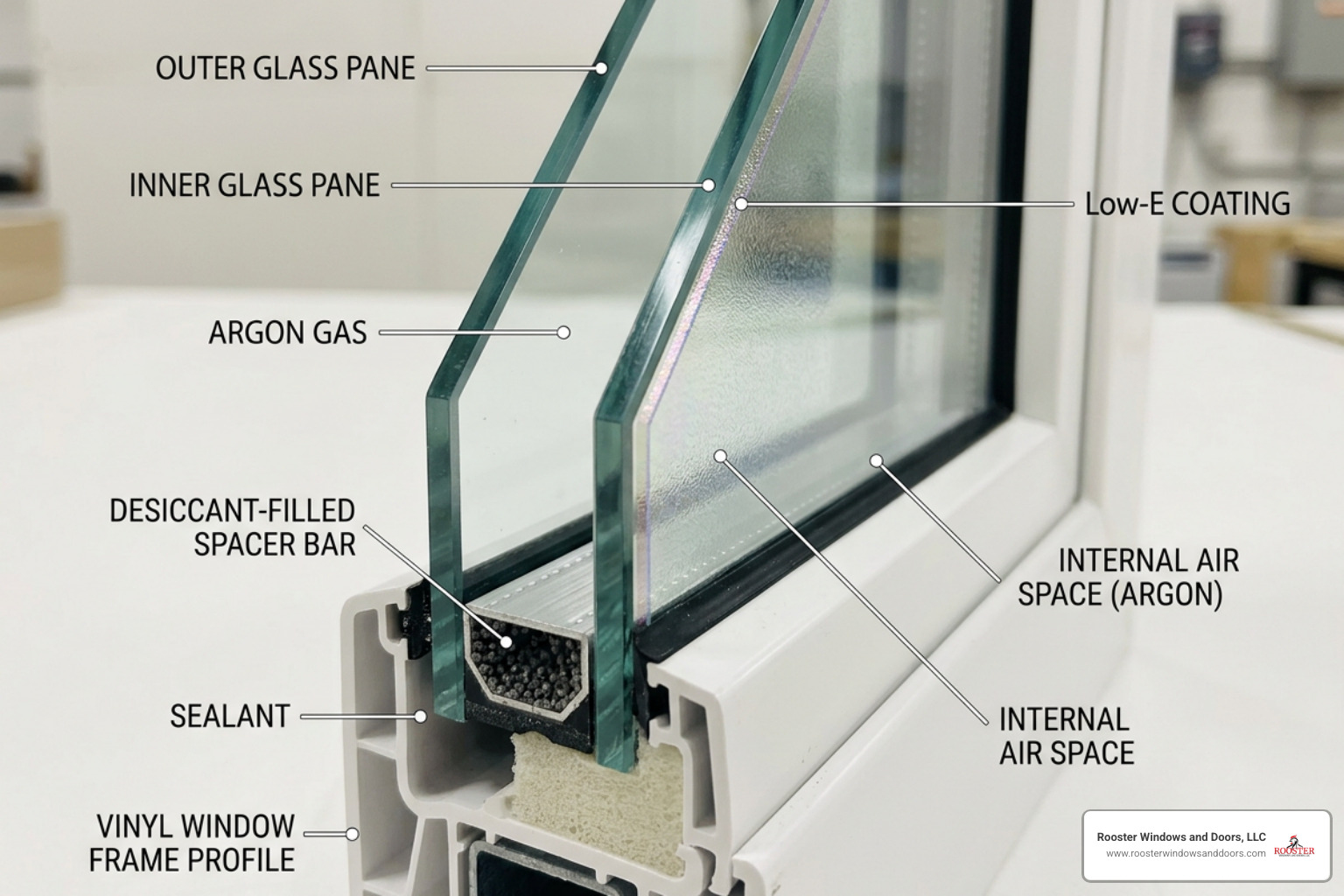
To keep your energy bills low, make sure your window features double-pane or triple-pane insulated glass, filled with argon gas to prevent thermal transfer. Applying a Low-E (low-emissivity) coating is also essential; it reflects heat back into your home during the winter and blocks outdoor heat in the summer without reducing natural light.
To learn more about how the right materials can transform your lower level, read our article on Why Custom Basement Windows Are the Secret to a Brighter Foundation.
Step-by-Step DIY Basement Window Installation and Maintenance
If you are a handy homeowner with experience handling heavy tools, installing a replacement basement window can be a rewarding weekend project. However, if your project requires cutting through a concrete foundation wall to expand an opening for an egress window, we strongly recommend hiring a professional.
For those tackling a standard replacement, here is a general overview of the process. For a complete, detailed walkthrough, read our guide on How to Install New Basement Window.
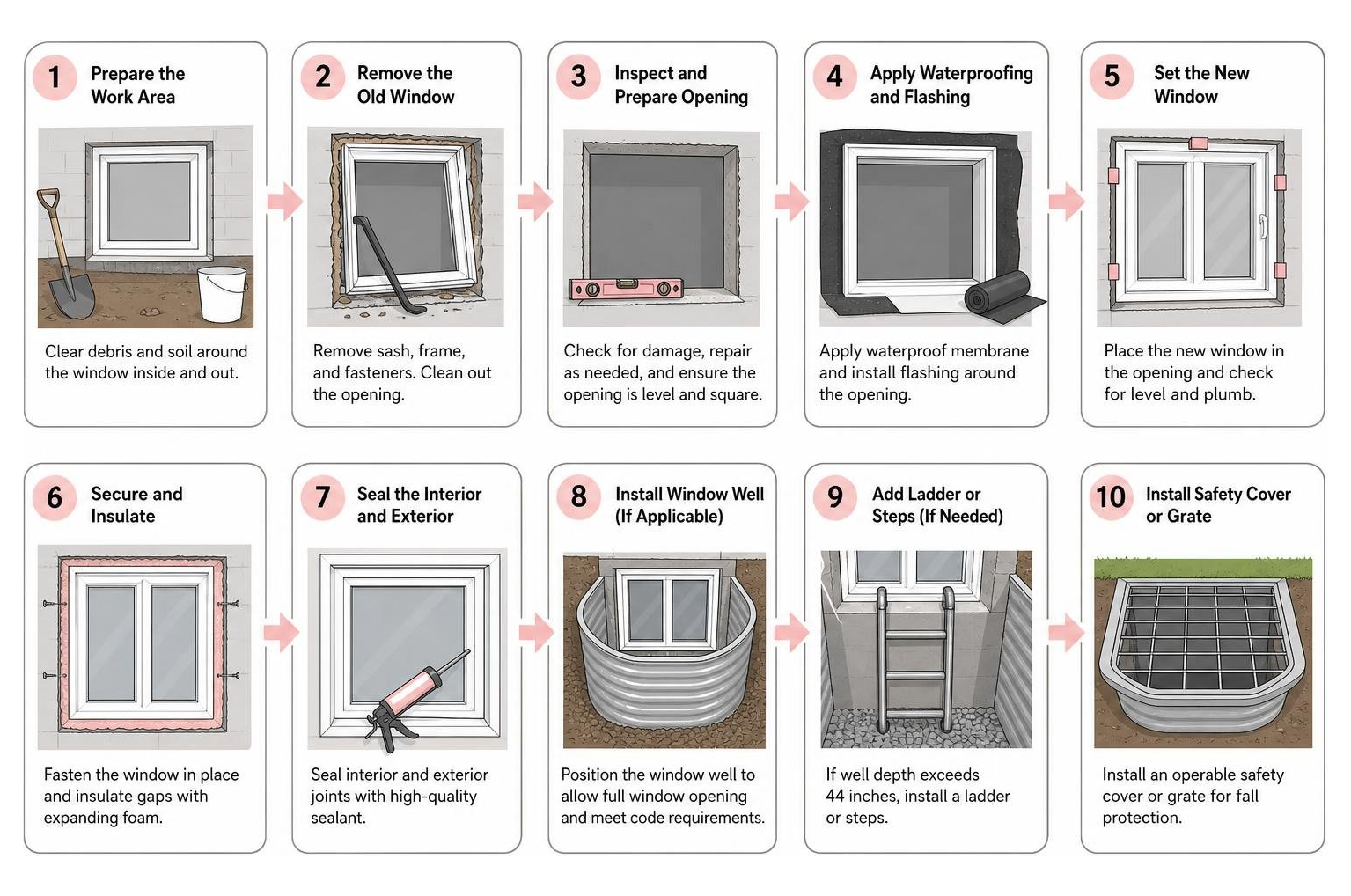
Waterproofing and Moisture Prevention Tips
Water is the ultimate enemy of any below-grade structure. If you do not waterproof your window opening correctly, heavy rains will turn your basement into an indoor pool.
Follow these critical steps to keep water out:
- Clear the Window Well: Ensure your window well has a proper gravel bed at least 12 inches deep to allow water to drain away from the foundation.
- Install Well Covers: A durable, clear polycarbonate cover keeps rain, snow, leaves, and pests out of your window well while still letting in maximum sunlight.
- Apply Professional-Grade Sealants: Use high-quality, exterior-grade silicone caulk around the entire perimeter of the window frame where it meets the concrete.
- Direct Downspouts Away: Ensure your home’s gutters and downspouts discharge water at least 5 to 6 feet away from your window wells.
Cost Analysis and Lead Times for Replacement Projects
Planning your budget and project timeline is much easier when you know what to expect. Standard and custom-sized windows currently have a shipping lead time of approximately 4 to 5 weeks.
If you are on a tight schedule, we offer premium quick-ship options that can ship in as little as 1 to 3 business days.
Here is a breakdown of typical pricing for popular basement window styles:
- Economy Sliding Window: Starts at $378.00 (regular shipping).
- Premium Hopper Window: Starts at $358.00 (regular shipping).
- Quick-Ship Freedom In-Swing Casement Egress Window: Starts at $828.00 (3-day shipping available).
- Quick-Ship Tilt & Turn Window: Starts at $848.00 (3-day shipping available).
- Single-Hung, In-Swing Casement Escape Egress Window: Priced at $875.00 (1–3 business day shipping).
To compare options and learn how to budget for your upcoming home improvement, refer to our Basement Window Replacement Guide 2026.
Frequently Asked Questions about Below-Grade Openings
Do all basement rooms require egress windows?
No. If your basement is strictly used for storage, utility mechanicals, or a simple workshop, standard utility windows (like hoppers or sliders) are perfectly acceptable. However, if you add a bedroom, or if you are fully finishing the basement to create a habitable living space (like a family room or home office), the building code strictly mandates at least one compliant egress window.
Can I replace a basement window without disturbing the concrete?
Yes! If your existing window frame is still structurally sound, square, and free of rot or damage, you can perform an “insert replacement” (also known as a retrofitted or frame-in-frame installation). This allows you to slide a new, highly efficient vinyl window directly into the existing opening without having to chip away at your concrete foundation.
How do I prevent water from leaking through my basement window?
Preventing leaks requires a combination of proper drainage and high-quality seals. Ensure your window well has a deep gravel bed connected to a perimeter drain or drain tile. Keep the well covered with a clear polycarbonate cover, and inspect the exterior silicone caulking around the window frame annually, replacing any cracked or peeling sealant immediately.
Conclusion
Upgrading your basement window is one of the smartest investments you can make for your home. Not only does it flood a dark lower level with beautiful natural light and fresh air, but it also improves your home’s energy efficiency, keeps dangerous moisture out of your foundation, and ensures your family is protected with a safe, code-compliant escape route.
While DIY replacement is possible for experienced homeowners, working with a professional team ensures a flawless, leak-free installation that meets all local building codes.
At Rooster Windows and Doors, LLC, we provide premium window and door replacement services across Chicagoland, including Libertyville, Vernon Hills, Mundelein, Highland Park, and Lake Zurich. If you live in our service area, we invite you to connect with our local experts.
If you are ready to take the next step and convert your lower level into a bright, safe, and legal living space, we are here to help. To get started, Schedule an Egress Window Installation Consultation with our team today!
