

Why Awning Windows Deserve a Place in Your Home
Awning windows are one of the smartest, most versatile window styles available to homeowners today. Hinged at the top and swinging outward from the bottom, they let fresh air into your home — even when it’s raining.
Quick answer: What are awning windows?
- Hinged at the top — the sash swings outward from the bottom
- Operated by a crank or push-out handle
- Rain-resistant — the open sash acts like a canopy, blocking water
- Highly energy efficient — seal tightly when closed, like a refrigerator door
- Versatile placement — ideal for bathrooms, kitchens, basements, and bedrooms
- Available sizes — up to 6 feet wide by 4 feet high
They solve a problem most windows can’t: how do you get fresh air into a room without letting rain in?
That’s not a minor detail. It’s why awning windows have been trusted since the 1920s — first in schools and factories that needed ventilation before air conditioning existed, and now in modern homes where comfort, efficiency, and style all matter.
Whether you’re replacing old, drafty windows or planning a renovation, this guide covers everything you need to know — from how they work to where they belong in your home, what they cost, and how to keep them performing for years.
I’m Piotr Wilk, and at Rooster Windows and Doors, LLC, our team has spent over two decades installing awning windows and other window styles across the Chicagoland area for single-family homeowners and multi-unit property owners alike. That hands-on experience is what shapes every recommendation in this guide.
What Are Awning Windows and How Do They Work?

To understand why awning windows are such a favorite among design-savvy homeowners, we have to look closely at their simple yet clever engineering.
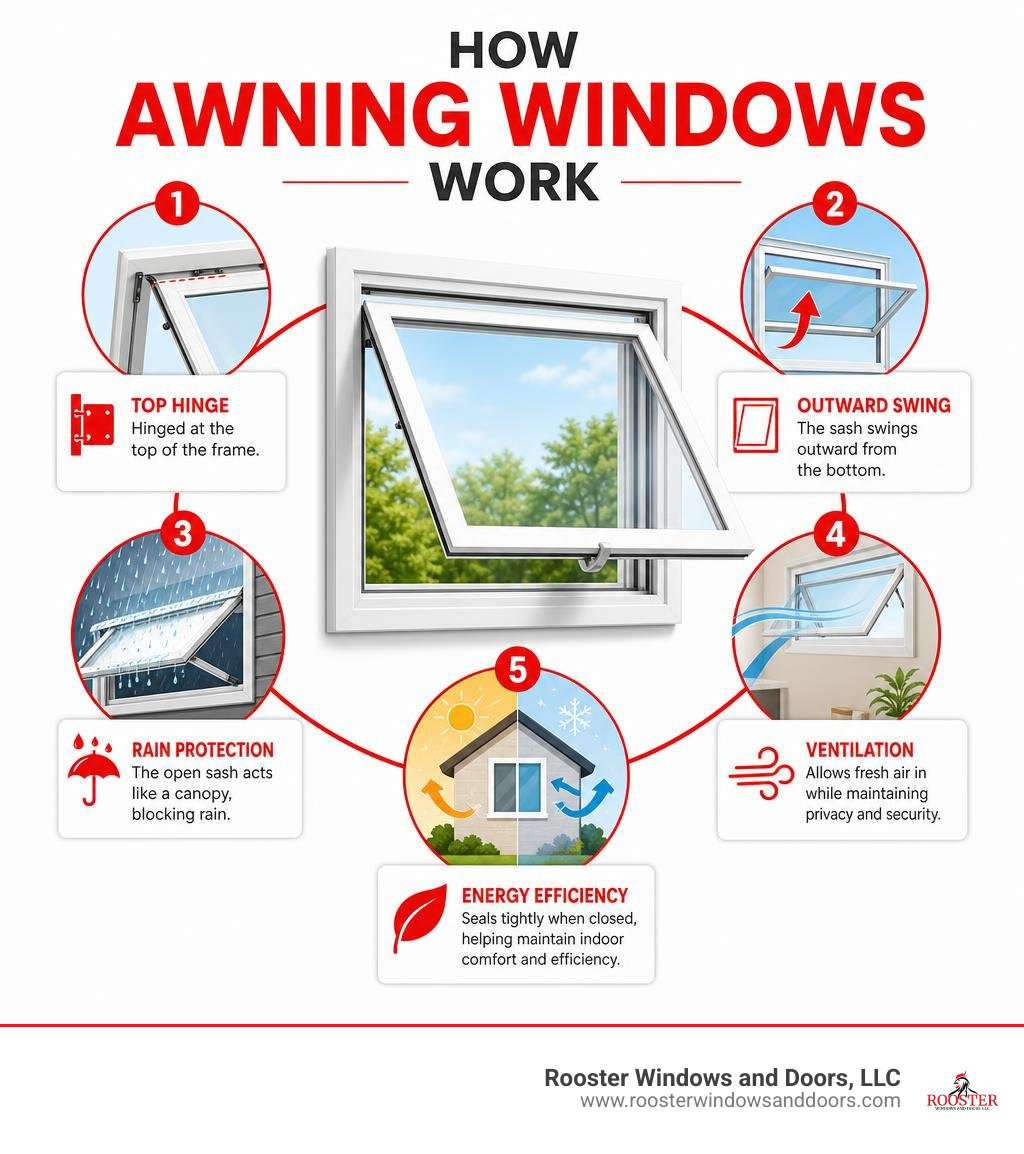
Unlike traditional windows that slide vertically or horizontally, an awning window is built with a single sash hinged at the very top of the frame. To open it, you turn a mechanical crank handle or press a push-out bar located at the bottom sill. This action pushes the bottom of the sash outward and upward, creating a distinctive slanted glass canopy over the wall opening.
This outward-opening angle is typically around 45 degrees, though some premium models can tilt up to 90 degrees for maximum airflow. Because the glass slopes downward and away from your home, it forms a built-in roof over the opening. This unique design provides rain-resistant ventilation, allowing you to enjoy a cool breeze during a summer drizzle without worrying about water pooling on your hardwood floors or drywall.
When you are ready to close the window, the crank pulls the sash back tightly against the frame. This action is backed by a multi-point locking system. Rather than relying on a single latch, heavy-duty locks secure the sash along both sides, pulling the window flush against thick weatherstripping to create an airtight barrier against the elements. If you are planning a home improvement project in the North Shore or northwest suburbs, choosing a high-quality Awning Window Replacement is one of the most reliable ways to improve home comfort.
The History and Evolution of Awning Windows
Long before modern HVAC systems and smart thermostats kept our homes at a crisp 72 degrees, builders had to rely entirely on passive architectural design to keep indoor spaces livable. From the 1920s through the 1950s, awning windows were the gold standard for institutional and industrial ventilation.
If you walk through older school buildings, manufacturing plants, or historic municipal offices in the Chicago area, you will often see rows of top-hinged windows set high along the walls. Architects placed them there because they knew hot air rises. By opening these high-set windows, hot, stagnant indoor air could escape while drawing cooler air in from below.
Furthermore, because these windows could remain open during rainstorms, factories and schools could maintain continuous airflow without risking water damage to machinery, schoolbooks, or wood flooring. As residential architecture evolved in the mid-century modern era, architects brought this industrial-strength ventilation into residential homes, realizing that the same principles that cooled a 1930s classroom could make a suburban living room feel remarkably airy and bright.
Key Benefits of Installing Awning Windows
Why are so many homeowners opting for these windows today? The benefits go far beyond historical charm:
- Ventilation in Unpredictable Weather: The canopy effect is unmatched. Whether it is a light spring shower or a steady autumn rain, you can keep your windows open to prevent that stuffy, closed-in feeling.
- Superior Compression Seal: Because the sash closes by pressing directly against the frame (rather than sliding along a track), it creates a remarkably tight seal.
- Enhanced Security: When open, the narrow, angled gap makes it incredibly difficult for an intruder to squeeze through. Additionally, our premium models feature robust multi-point locking systems that are tested for forced entry resistance according to strict ASTM F588 standards.
- Unobstructed Views: Unlike double-hung windows that have a horizontal meeting rail cutting right through your line of sight, an awning window features a single, clear pane of glass.
If you live in an area prone to severe weather or simply want the ultimate peace of mind, you can opt for specialized glass packages. Check out our guide on the Top Rated Awning Impact Windows for Style and Safety to see how impact-resistant glass can protect your home from both storm debris and potential intruders.
Comparing This Style to Other Window Designs
When planning a window replacement project, it is helpful to see how different styles stack up against one another. Every window style has its strengths, but understanding the mechanical and functional differences will help you choose the right product for each room.
| Window Feature | Awning Windows | Casement Windows | Double-Hung Windows |
|---|---|---|---|
| Hinge Location | Top of the frame | Side of the frame | None (slides vertically) |
| Opening Direction | Outward and upward | Outward (left or right) | Vertically within frame |
| Operation Method | Crank or push-out | Crank or push-out | Manual lift/slide |
| Rain Protection | Excellent (acts as a canopy) | Poor (rain blows inside) | None (must be closed) |
| Seal Tightness | High (compression seal) | High (compression seal) | Moderate (brush/sliding seals) |
| Screen Placement | Interior side | Interior side | Exterior side |
To dive deeper into similar crank-operated options, you can read about the various Types of Casement Windows to see which configuration fits your architectural style.
Comparing to Casement Windows
Awning and casement windows are close structural relatives. Both are crank-operated windows that rely on a compression seal rather than sliding tracks. However, the critical difference lies in the hinge placement.
While an awning window is hinged at the top, a casement window is hinged on the left or right side, swinging outward like a door. This structural difference changes how they interact with wind and rain. A casement window acts like a sail, catching passing breezes and directing them into your home. This makes casements fantastic for side-to-side ventilation, but they must be closed tightly during rain to prevent water from splashing inside.
To help you decide between these two sister styles, we have put together The Ultimate Guide to Choosing High Quality Casement Windows, which explores their mechanical design in greater detail.
Comparing to Double-Hung Windows
Double-hung windows are the most common style in classic American homes, featuring two sashes that slide vertically within a track. While they offer a traditional look, they operate on a very different mechanical principle than crank windows.
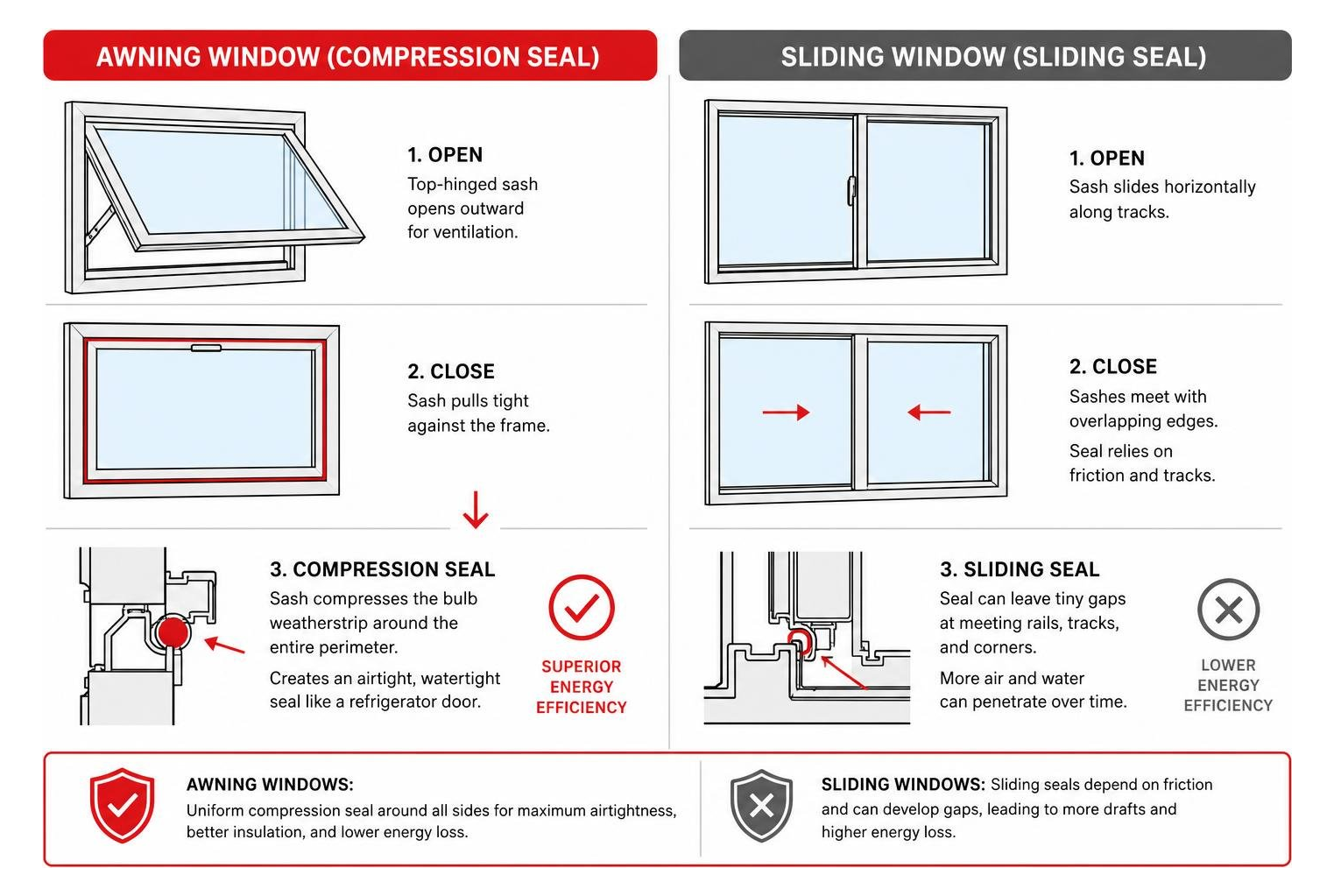
First, sliding windows rely on weatherstripping that rubs against the tracks to create a seal. Over time, this friction can wear down the seal, leading to minor drafts. Awning windows, by contrast, use a compression seal that presses flat without friction, keeping its shape and airtight seal for decades.
Second, there is the physical effort required to open them. Sliding a heavy double-hung sash upward requires vertical lifting strength. Crank-operated awning windows, however, require about one-tenth of the physical force to operate compared to traditional sliders. This makes them exceptionally easy to open for seniors, children, or anyone operating a window in a hard-to-reach spot, such as over a wide kitchen counter.
Ideal Placements and Customization Options
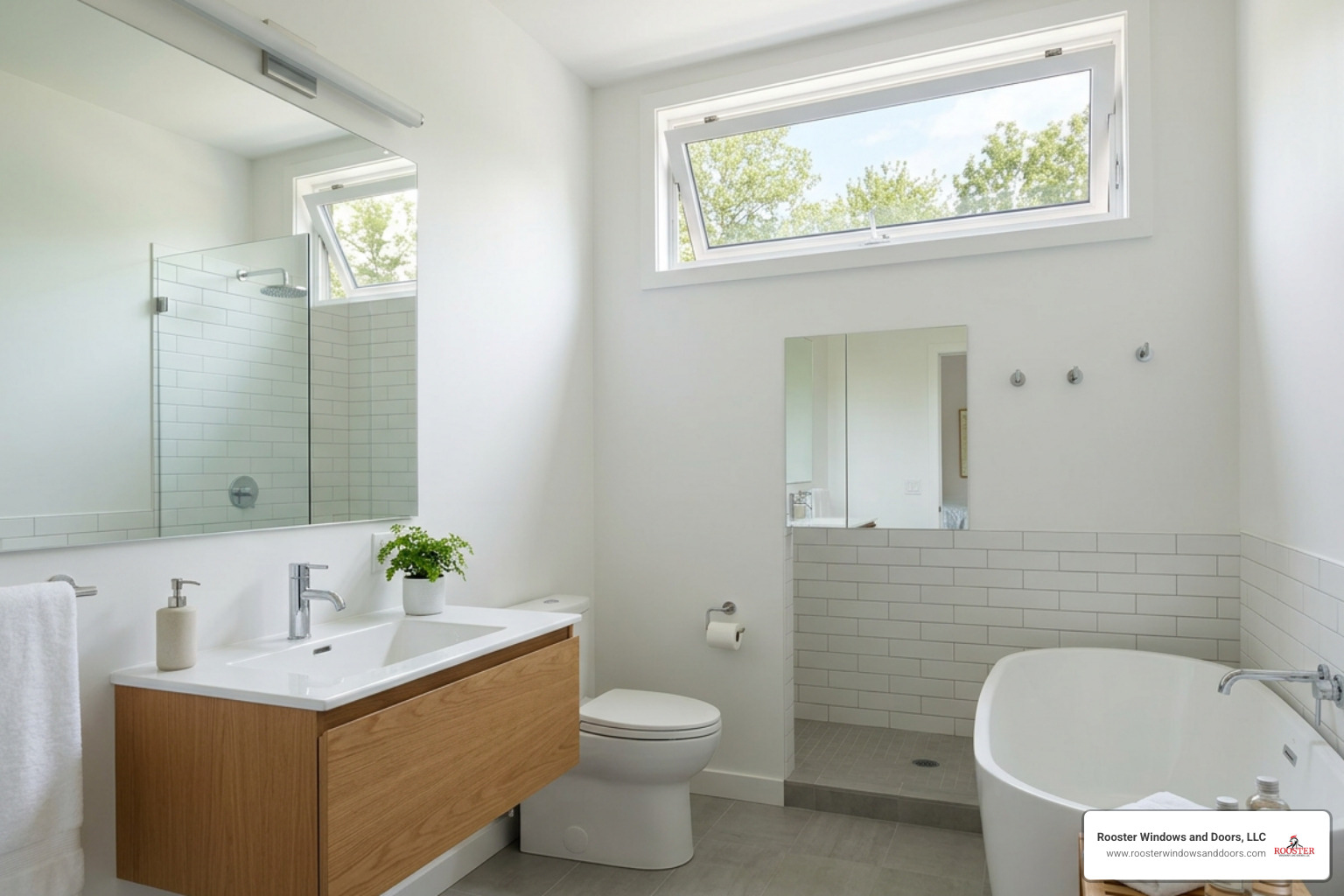
One of the greatest design strengths of awning windows is their shape. Because they are typically wider than they are tall, they can fit into compact, horizontal spaces where other windows simply won’t work.
- High on Bathroom and Bedroom Walls: Placing an awning window near the ceiling (often called a clerestory placement) allows rising steam and heat to escape easily. It also floods the room with natural light while keeping the viewing angle high enough to maintain complete privacy from neighbors.
- Above Kitchen Sinks and Countertops: Reaching over a deep sink to lift a heavy double-hung window can be a back-straining chore. A low-profile crank handle on an awning window lets you open it with minimal effort.
- Basements and Laundry Rooms: Partially below-grade basement openings are often small and horizontal. An awning window fits these tight spaces perfectly, providing essential ventilation to prevent dampness while keeping rain and lawn-sprinkler runoff from splashing inside.
- As Transoms Above Doors or Picture Windows: You can stack an awning window above a large, non-operable picture window or entry door. This configuration gives you the best of both worlds: a massive, uninterrupted view paired with controllable airflow right at the top of the room.
No matter where you plan to install them, getting the dimensions right is crucial. For a comprehensive look at how to measure and order non-standard sizes, take a look at our Custom Size Windows Ultimate Guide.
If you are planning a replacement project in the Chicagoland suburbs, working with a local specialist who understands regional architectural styles and climate challenges is key. At Rooster Windows and Doors, LLC, we provide expert installation services tailored to the unique needs of homeowners in Highland Park, Vernon Hills, Grayslake, Mundelein, Lake Zurich, Buffalo Grove, and surrounding communities. Our team ensures that every window is perfectly fitted to withstand the local climate while enhancing your home’s curb appeal.
Material and Glass Customization
To ensure your new windows match your home’s architectural style and performance needs, we offer a wide array of materials and glass options:
- Vinyl: A highly popular, low-maintenance option. Vinyl frames provide excellent thermal insulation, do not require painting, and are highly resistant to moisture, making them ideal for high-humidity areas like bathrooms and laundry rooms.
- Fiberglass: If you want ultimate durability, fiberglass is up to eight times stronger than vinyl and three times stronger than wood/vinyl composites. It holds its shape perfectly in extreme temperatures, resisting warping even during freezing Chicago winters and humid summers.
- Wood: For historic, heritage, or log homes, nothing matches the rich, natural warmth of real wood. Premium wood windows treated with modern preservation processes (like AuraLast wood, which releases 96% fewer VOCs during manufacturing) resist rot, water absorption, and termites.
- Composite (Fibrex): Combining the strength of wood fiber with the low-maintenance ease of vinyl, composite materials offer a sleek, modern profile with exceptional longevity.
When it comes to glass, selecting the right performance tier can dramatically lower your heating and cooling costs. Low-E (low-emissivity) coatings reflect infrared heat while letting visible light pass through. For our northern climate, you can choose specialized coatings that allow for passive solar heat gain during winter, or dual-layer coatings that block intense summer sun.
Additionally, you can opt for self-cleaning glass (which uses UV rays to loosen dirt so rainwater can wash it away) or sound-abatement glass packages to block out street noise.
Given the freezing winters we experience in Illinois, upgrading to triple-pane glass is often a smart investment. To help you weigh the costs and benefits, read our detailed analysis on Are Triple Pane Windows Worth It? and explore our main guide to Triple Pane Windows.
Energy Efficiency and Installation Considerations
When it comes to energy efficiency, awning windows are the unsung heroes of the window world. In fact, they are widely recognized as the most energy-efficient of all operable window styles.
The secret lies in their single-sash design and the physics of wind pressure. Unlike double-hung or sliding windows, which have overlapping sashes and sliding tracks that can slowly develop tiny air gaps, an awning window has a single continuous sash.
When you close the window, the sash is pulled flat against the frame, compressing a bulb weatherstrip around the entire perimeter. This creates a seal that functions exactly like a heavy-duty refrigerator door.
Furthermore, because these windows open outward, any wind blowing directly against the exterior of your home actually pushes the sash tighter against the frame and weatherstripping. This natural compression prevents cold air drafts from leaking into your home during blustery winter storms.
To maximize these savings, professional installation is absolutely critical. Even the highest-rated window will leak air and waste energy if the frame is not perfectly square, plumb, and insulated within the wall cavity. To learn more about how we ensure a draft-free fit, check out our guide on Energy Efficient Window Installation. For a deeper look at high-performance options, you can also read about The Top High Performance Casement Windows for Maximum Energy Savings.
Sizing, Costs, and Professional Installation
While we customize every window to fit your home’s unique openings, there are standard sizing guidelines and structural limits to keep in mind:
- Sizing Limits: Standard awning windows typically range from 18 inches to 60 inches (5 feet) in width, and 18 inches to 48 inches (4 feet) in height. Some premium architectural series can go up to 6 feet wide by 4 feet high.
- The United Inch Limitation: For custom orders, manufacturers often use the “United Inch” limit (the total of the width plus the height) to ensure the weight of the sash does not overload the top hinges. For many standard models, this limit is 96 united inches.
- Clearance Requirements: Because the sash swings outward, you must ensure that the exterior space around the window is completely clear of physical obstructions, such as low-hanging tree branches, patio furniture, or heavy foot-traffic pathways.
The cost of your project will depend on several factors, including the frame material, glass package (dual-pane vs. triple-pane), hardware finishes, and whether you are doing a pocket replacement or a full-frame installation. To help you budget for your upcoming project, we have compiled a comprehensive breakdown of Energy Efficient Window Prices.
Frequently Asked Questions
Can they be left open in the rain?
Yes! This is the signature benefit of the awning style. Because the window is hinged at the top and swings outward from the bottom, the open sash acts like a protective canopy over the wall opening.
During light to moderate rain showers, water slides down the sloped glass and drips off the outer edge, keeping the inside of your home completely dry while allowing fresh air to circulate. However, during severe storms with high winds or driving, sideways rain, we recommend cranking the windows fully shut and locking them to ensure a watertight seal.
How do you clean them from the inside?
Cleaning an awning window is straightforward, though it requires a slightly different approach than sliding windows:
- Remove the Interior Screen: Because the screen is mounted on the inside of the frame (to keep it out of the path of the outward-swinging sash), simply pop the screen tabs and lift it out.
- Crank the Window Open: Open the sash slightly to access the outer edges.
- Use the Right Tools: For windows on the first floor, you can easily clean the exterior glass from the outside of your home. For upper-level windows, crank the window open as far as it will go. You can then reach around the sides with a microfiber cloth or use a long-handled, flexible squeegee to clean the outer glass from the comfort of your room. Some advanced models also feature removable sashes or specialized hinges that slide down slightly when opened, creating a larger gap at the top for easier interior-access cleaning.
Do they meet bedroom egress requirements?
In most cases, standard-sized awning windows do not meet local building codes for bedroom egress (emergency escape and rescue openings).
Egress codes typically require a window to have a minimum clear opening width of 20 inches, a minimum opening height of 24 inches, and a total clear opening area of at least 5.7 square feet. Because the top hinges on an awning window restrict how far the sash can open vertically, and because the open sash remains in the path of the opening, it is highly difficult for an adult to climb through in an emergency.
If you are replacing bedroom windows, we recommend using casement or double-hung styles to meet local safety codes, while reserving awning windows for high-wall privacy, kitchens, basements, and transoms.
Conclusion
Awning windows are a beautiful, highly functional addition to any home. Whether you want to catch a cool breeze during a summer rain, add privacy and light to a bathroom, or lower your monthly utility bills with a refrigerator-tight seal, this classic style delivers outstanding performance.
At Rooster Windows and Doors, LLC, we specialize in providing flawless, high-quality, and energy-efficient window replacements tailored to your home’s unique needs. We serve homeowners across the entire Chicagoland area, including Libertyville, Lake Forest, Highland Park, Vernon Hills, Grayslake, Mundelein, Lake Zurich, Buffalo Grove, Deerfield, Gurnee, Waukegan, Antioch, Crystal Lake, Algonquin, Cary, McHenry, Woodstock, Huntley, Fox River Grove, Arlington Heights, Palatine, Schaumburg, Evanston, Northbrook, Glenview, Des Plaines, Mount Prospect, Hoffman Estates, Barrington, and Chicago.
Ready to elevate your home’s comfort, style, and energy efficiency? Explore our service areas and schedule your professional installation consultation by visiting our Rooster Windows and Doors Locations. Let us help you find the perfect window solution for your home!
