

Why Choosing the Right Sliding Closet Doors Transforms Your Home
Sliding closet doors are one of the most practical upgrades you can make to a bedroom or hallway. They save floor space, hide clutter, and add a clean, modern look — all without the swing clearance that traditional hinged doors require.
Here is a quick overview of what you need to know:
| Topic | Quick Answer |
|---|---|
| Main types | Bypass, barn door, bifold, pocket |
| Common materials | MDF, tempered glass, mirror, aluminum, solid wood |
| Standard sizes | 48″, 60″, 72″, 96″ wide × 80″ or 96″ tall |
| Sold as | A pair (2 panels) with full hardware kit |
| Floor track needed? | No — top-hung trackless systems are available |
| Paintable? | Depends on finish; prefinished PVC doors cannot be painted |
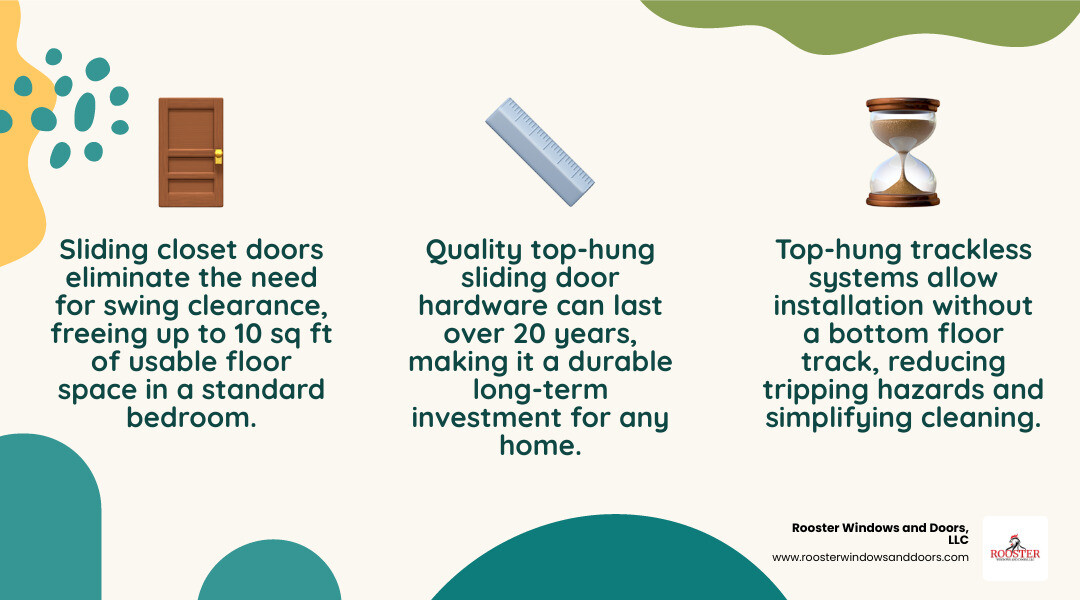
| Hardware lifespan | 20+ years with quality top-hung systems |
With over 9,000 product results on Amazon alone, the options can feel overwhelming fast. Bypass or bifold? Frosted glass or mirror? Trackless or traditional? This guide breaks it all down so you can make a confident decision.
I’m Piotr Wilk from Rooster Windows and Doors, LLC — with over two decades of residential door installation experience across the Chicagoland area, including countless sliding closet door projects in Lake, Cook, and McHenry Counties. In the sections below, I’ll walk you through every key consideration, from materials and sizing to hardware specs and installation costs.
Comparing Types of Sliding Closet Doors
When selecting new closet doors for your home in Libertyville, Barrington, or Arlington Heights, the first decision is the mechanical style of the door. The way your doors operate affects everything from floor space utilization to how much of your closet you can access at one time.
Bypass Doors, Barn Doors, and Bifold Doors
- Bypass Doors: These are the classic sliding closet doors. They consist of two or more panels that sit on parallel tracks, allowing them to slide directly behind one another. They require zero clearance space in front of the closet, making them ideal for tight layouts.
- Barn Doors: These slide along an exposed track mounted above the door frame on the wall. While stylish and rustic, they require empty wall space on either side of the closet opening to slide open.
- Bifold Doors: These panels fold in half as they slide to the side. They allow you to access almost the entire width of your closet at once but require a small amount of floor clearance in front of the opening to fold outward.
| Feature | Bypass Doors | Bifold Doors | Pocket Doors |
|---|---|---|---|
| Floor Space Saved | Maximum (Zero swing clearance) | Moderate (Requires small folding clearance) | Maximum (Slides entirely into wall) |
| Wall Space Required | None | None | Extensive (Requires empty wall cavity) |
| Max Closet Access | 50% of opening at one time | 90% of opening at one time | 100% of opening |
| Rough Opening Mods | None (Fits standard openings) | None (Fits standard openings) | High (Requires tearing open drywall) |
| Ease of Operation | Extremely high and smooth | High (Can occasionally bind if misaligned) | High (Requires solid track alignment) |
Bypass Doors and Trackless Systems
Traditional bypass doors roll on bottom tracks that are notorious for collecting dust, pet hair, and small toys. Over time, this debris can derail the rollers or scratch your expensive hardwood floors.
Fortunately, modern door technology has evolved. Today, high-quality systems utilize a top-hung trackless design. In this configuration, the weight of the door panels is suspended entirely from an aluminum upper track. To keep the doors from swinging back and forth, a small, adjustable floor guide is installed directly beneath the door overlap. This guide keeps your floors clear, eliminates tripping hazards, and prevents damage to your flooring.
If you are planning to upgrade your layout, you can learn more about sliding closet door installation to see how a trackless top-hung system can streamline your daily routine.
Pocket Doors and Folding Alternatives
If you want absolute, 100% access to your closet shelves, standard bypass doors might feel restrictive because one half of the opening is always covered. In this scenario, pocket doors or high-quality folding systems are excellent alternatives.
Pocket doors slide directly into a recessed cavity inside your wall, disappearing completely from view. However, pocket doors are highly invasive to install because they require removing drywall and modifying structural studs. If your home has plaster walls — common in historic properties in Lake Forest or Evanston — a pocket door installation can turn into a major construction project.
If you are dealing with an older pocket door that has jumped its track or a folding door that keeps getting stuck, we can help. Feel free to read our pocket door repair complete guide or browse our practical guide to installing folding closet doors to find the best mechanical solution for your space.
Materials, Aesthetics, and Customization Options
The materials you choose dictate not only the durability of your doors but also how they interact with the light and layout of your room.
Materials Used in Modern Sliding Closet Doors
Modern sliding closet doors are crafted from several high-performance materials:
- Medium-Density Fiberboard (MDF): MDF is highly stable, resisting the warping and cracking that can plague solid wood doors in humid environments. It provides a perfectly smooth surface for prefinished coatings.
- Solid Wood: Classic, heavy, and incredibly durable. Solid wood doors offer excellent sound dampening and can be stained or painted to match any historic trim.
- Aluminum Frames: Lightweight and structurally rigid, aluminum frames are the gold standard for modern, minimalist designs. They support large glass inserts without sagging.
When upgrading from cheap, hollow-core doors to solid wood or aluminum-framed glass, the difference in weight and sound-dampening is immediate. If you are looking for a premium architectural finish, you can explore 3-panel glass sliding doors with silent glide technology to see how modern metal-and-glass combinations look. If you prefer a traditional solid wood feel, you can learn how to replace hollow core door with solid wood to elevate your home’s insulation and soundproofing.
Another crucial feature of premium sliding doors is a double-sided design. Cheaper doors often have unfinished backs, which look unsightly when the doors slide open or if they are used as room dividers. High-quality options feature identical finishes on both sides, ensuring a polished look from every angle.
Glass and Mirror Options for Privacy and Style
If you want to maximize natural light or make a small bedroom in Schaumburg or Des Plaines feel twice as large, glass and mirror inserts are the perfect solution.
- Frosted Glass: Also known as obscure or “milky” glass, frosted glass allows natural light to filter between spaces while completely obscuring the contents of your closet. It hides messy shelves while maintaining a bright, open aesthetic.
- High-Definition Mirrors: Mirrored doors serve a dual purpose. They act as full-length dressing mirrors and bounce natural light around the room, instantly brightening up dark corners.
- Tempered Safety Glass: Always verify that any glass sliding door is made from tempered safety glass. If tempered glass ever breaks, it crumbles into small, harmless granular chunks rather than sharp, dangerous shards.
For those who appreciate sleek, minimalist design, you can check out frameless sliding bypass clear glass doors to see how frameless options operate. Alternatively, you can view 3-lite frosted glass bypass doors to see how a structured grid design balances privacy, style, and robust MDF framing.
Sizing, Measuring, and Hardware Specifications
Getting a flawless slide starts with precise measurements and heavy-duty hardware. A door that is too small will leave awkward gaps, while cheap hardware will quickly sag and bind.
Sizing and Measuring for Sliding Closet Doors
Unlike standard swing doors, bypass sliding doors must overlap slightly in the center when fully closed to prevent gaps.
To measure your closet opening:
- Measure the width: Measure across the top, middle, and bottom of the opening. Use the largest measurement.
- Measure the height: Measure from the floor to the top jamb on the left, center, and right. Use the smallest measurement.
Standard door sets are designed with built-in overlap tolerances. For example:
- A 48-inch door set (typically consisting of two 25-inch panels) is designed to fit rough openings between 42 and 48 inches wide.
- A 60-inch door set (two 31-inch panels) fits openings between 54 and 60 inches wide.
If your opening is slightly smaller than a standard size, the top aluminum track can easily be trimmed down with a hacksaw during installation to fit your specific frame.
If you are dealing with older, settled homes in places like Highland Park or Waukegan, you might find that your closet frames are slightly out of square. To navigate these tricky scenarios, consult our guide to replacing interior doors or read our specialized tips on replacing interior doors in an old house to ensure a perfect fit.
Hardware Durability and Weight Capacity
The secret to a sliding door that glides with a gentle touch of a finger is the hardware. High-quality sliding systems are rated by weight capacity:
- Light-duty systems: Rated for up to 66 lbs, best for lightweight hollow-core or thin acrylic panels.
- Medium-duty systems: Rated for up to 88 lbs (such as the Ducasse DN-80 folding sliding system).
- Heavy-duty systems: Rated for up to 110 lbs (such as the Jako Hardware JCSS01SET). These are designed for heavy solid wood or thick tempered glass panels.
Premium systems also feature concealed soft-close mechanisms integrated directly into the upper track. These mechanisms gently catch the door as it slides closed and pull it into place, preventing slamming, protecting fingers, and extending the lifespan of the rollers to over 20 years.
Installation, Maintenance, and Cost Factors
Installing sliding closet doors can be a rewarding DIY project, but it requires patience, precise leveling, and the right tools. If your floor is uneven by even a quarter of an inch, your doors may slide open on their own or bind against the frame.
Preparing the Door Frame and Trim
Before hanging your new doors, you must ensure that your door frame is structurally sound and level. If your existing frame is warped, cracked, or sagging, the new sliding track will not sit straight, causing the rollers to wear out prematurely.
If you need to prep your opening, you can check out our complete guide to interior door replacement for an overview of the structural requirements. For minor frame issues, learn how to repair a door frame to fix alignment problems, or read about replacing an interior door frame if your old closet jamb is beyond repair.
Cost Breakdown and Long-Term Value
What should you expect to invest in a sliding closet door upgrade in 2026?
While basic, off-the-shelf hollow-core bypass doors can be purchased online for a few hundred dollars, a professional, long-lasting installation using premium materials (such as solid core wood, aluminum frames, or thick tempered glass) offers much higher durability and aesthetic value.
A full, professional bedroom closet door replacement typically ranges between $3,000 and $4,000. This comprehensive cost includes:
- High-quality door panels (solid core, mirrored, or frosted tempered glass).
- Heavy-duty top-hung hardware rated for 20+ years of operation.
- Professional installation, precise track alignment, and custom trim fitting.
To help plan your budget, you can consult our detailed wardrobe and closet door replacement price guide. Additionally, because new doors often require updated molding, check out our door trim installation complete guide and our breakdown of the cost to install door trim to get a complete picture of your project’s scope.
Frequently Asked Questions
Can sliding closet doors be installed without a bottom floor track?
Yes! Modern top-hung sliding systems suspend the entire weight of the door panels from a heavy-duty aluminum top track. This eliminates the need for a bottom floor rail. Instead, a small, adjustable floor guide is installed at the center overlap to prevent the doors from swinging, keeping your floors clean and undamaged.
Do sliding closet doors come as a single door or a pair?
Bypass sliding closet doors are sold as a complete door set, which includes two panels, the upper track, bottom floor guides, and all necessary mounting screws. Because bypass doors must overlap to prevent gaps, they are designed and sold to operate as a pair.
Can prefinished PVC sliding doors be painted?
No. Doors prefinished with a protective PVC surface are designed to be completely maintenance-free, waterproof, and easy to clean. Because the PVC surface is non-porous, paint will not adhere to it properly and will quickly peel or scratch off. If you want custom-colored doors, buy unfinished pine or primed MDF doors instead.
Conclusion
Upgrading to high-quality sliding closet doors is an investment that pays off every single day. By selecting the right materials, utilizing a modern trackless top-hung design, and ensuring professional installation, you can eliminate clutter, maximize your floor space, and add a beautiful architectural feature to your home.
At Rooster Windows and Doors, LLC, we pride ourselves on delivering flawless, energy-efficient, and structurally perfect door installations. Whether you are remodeling a mid-century home in Northbrook, updating a bedroom in Crystal Lake, or building a modern space in downtown Chicago, we have the local expertise and premium options to suit your exact needs.
Ready to transform your home with beautiful, smooth-gliding doors? Schedule a professional sliding glass door installation consultation with our expert team today, and let’s bring your vision to life!

