

The Ultimate Guide to Choosing High Quality Casement Windows
Why High Quality Casement Windows Are Worth the Investment
High quality casement windows are side-hinged, crank-operated windows that swing outward to deliver maximum ventilation, superior energy efficiency, and a tight weatherproof seal — making them one of the best window upgrades for most homes.
Here’s a quick look at what separates high quality casement windows from the rest:
| Feature | What to Look For |
|---|---|
| Frame material | Virgin vinyl, fiberglass, or aluminum-clad wood |
| Sealing system | Triple weatherstripping + compression seal |
| Glass package | Dual or triple pane with Low-E coating and argon/krypton gas |
| Locking system | Multi-point locks |
| Wind resistance | Exceeds AAMA standards (premium models: 141 mph) |
| Warranty | Lifetime or 20–25 years on frame, glass, and hardware |
Casement windows are second only to double-hung windows in popularity — and for good reason. When you open a casement window, the entire sash swings outward, catching breezes from any direction. That’s something a sliding or double-hung window simply can’t match.
But not all casement windows are built the same. The difference between a budget unit and a genuinely high-quality one shows up in the frame construction, glass performance, hardware durability, and how well the window holds up after years of use.
I’m Piotr Wilk, and with over two decades of hands-on window installation experience across Chicagoland, I’ve seen which high quality casement windows hold up over time — and which ones don’t. This guide will walk you through everything you need to know before making a decision.
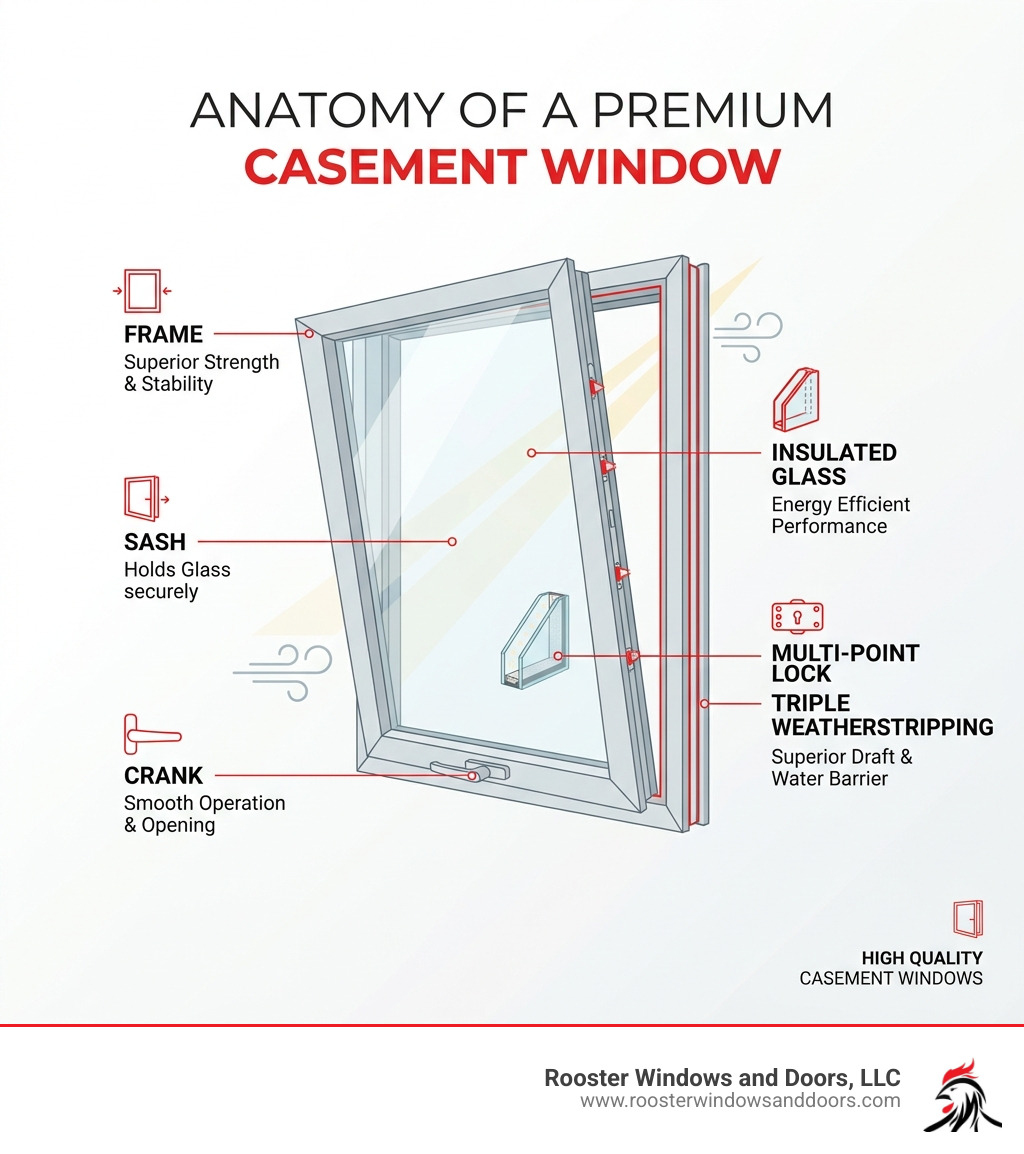
What Defines High Quality Casement Windows?
When we talk about high quality casement windows, we aren’t just talking about a window that looks pretty. We are talking about structural integrity and engineering that can withstand the unpredictable weather in areas like Libertyville, Lake Zurich, and Waukegan. A premium window is defined by how it is built from the inside out.
Compression Seal Technology and Multi-Point Locks
One of the most significant indicators of quality is the sealing mechanism. Unlike sliding windows that rely on brush-like weatherstripping, high-quality casements use compression seals. When you crank the window shut, the sash is pulled tightly against the frame, compressing a bulb-style seal. This creates an airtight barrier that is virtually impervious to drafts.
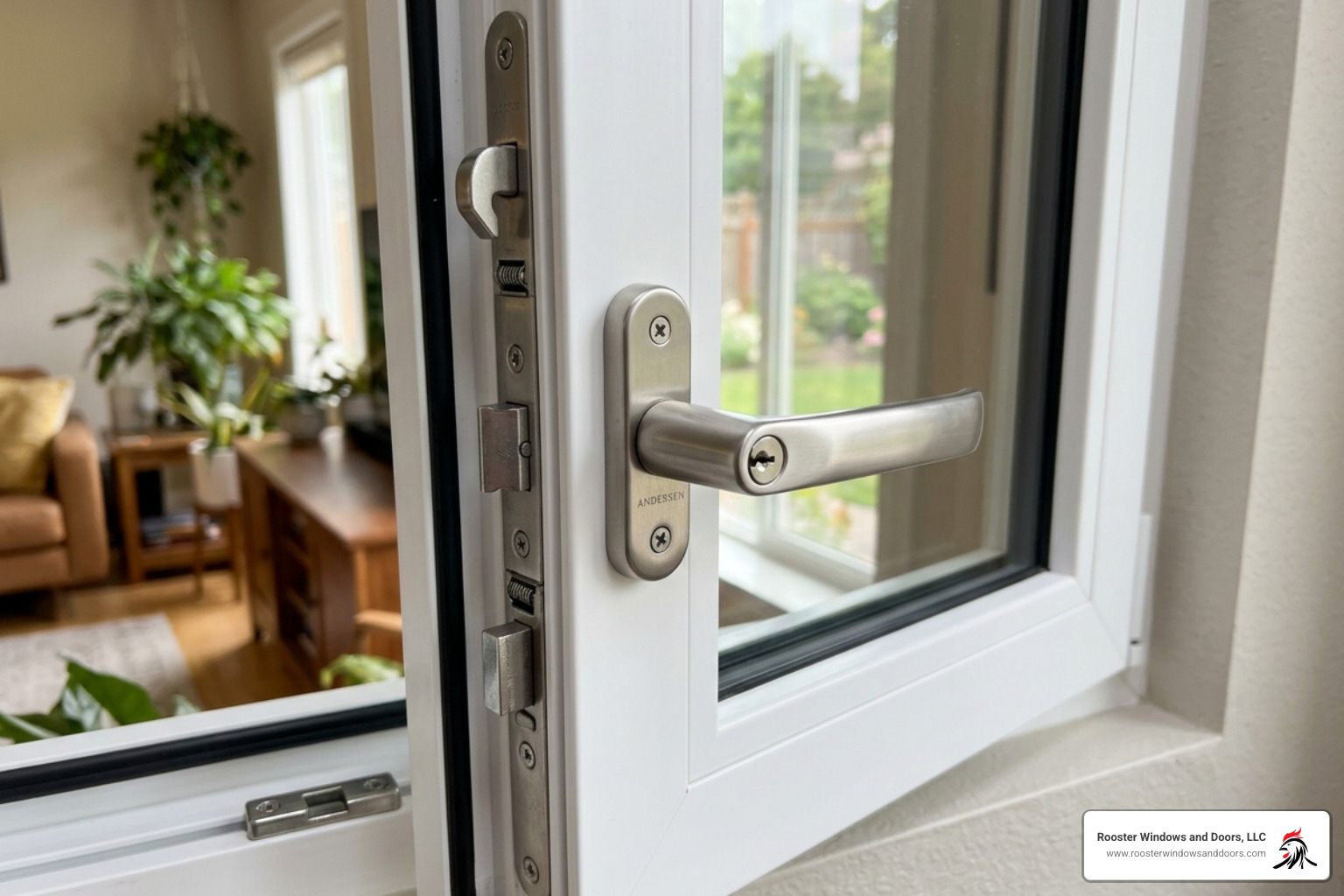
To ensure this seal is uniform from top to bottom, we look for a multi-point locking system. Instead of a single latch in the middle, a single lever activates multiple locking points along the frame. This not only boosts security but also ensures the sash doesn’t bow over time, maintaining that airtight performance for decades.
Material Excellence: From Virgin Vinyl to Extruded Aluminum
The “bones” of the window matter. In our service areas from Evanston to Crystal Lake, we recommend materials that handle thermal expansion without cracking.
- Virgin Vinyl: Premium models use 99% virgin vinyl. Lower-quality windows often use recycled plastics that can contain impurities, leading to fading, chipping, or blistering. Pharmaceutical-grade vinyl compounding ensures the white stays white and the frame stays rigid.
- Extruded Aluminum Cladding: For those who want the beauty of wood inside, high-quality exteriors feature extruded aluminum. This is much thicker and stronger than the “roll-form” aluminum used on cheaper windows, offering superior resistance to dents and fading.
- Fiberglass: Materials like Ultrex fiberglass are eight times stronger than vinyl and can withstand temperatures up to 285°F without losing their shape.
Performance Ratings and AAMA Standards
If you want to know if a window is truly high quality, look at the numbers. The American Architectural Manufacturers Association (AAMA) sets the bar, but the best windows jump right over it.
- Design Pressure (DP): While the minimum requirement might be 15 psf, a high-quality model often reaches a DP of 50.
- Wind Resistance: Standard windows are tested for 77 mph winds. However, premium casements are tested to withstand speeds of up to 141 mph. This is the level of protection we want for homes in Northbrook or Highland Park during a heavy storm.
For more details on the specific variations available, you can explore the different Types Of Casement Windows to see which configuration fits your home’s architecture.
Material Performance and Energy Efficiency
In the Chicago suburbs, energy efficiency isn’t just a “nice to have”—it’s a requirement for survival during our winters. High quality casement windows are widely considered the “efficiency kings” of the operable window world.
The Power of Triple-Pane Glass and Gas Fills
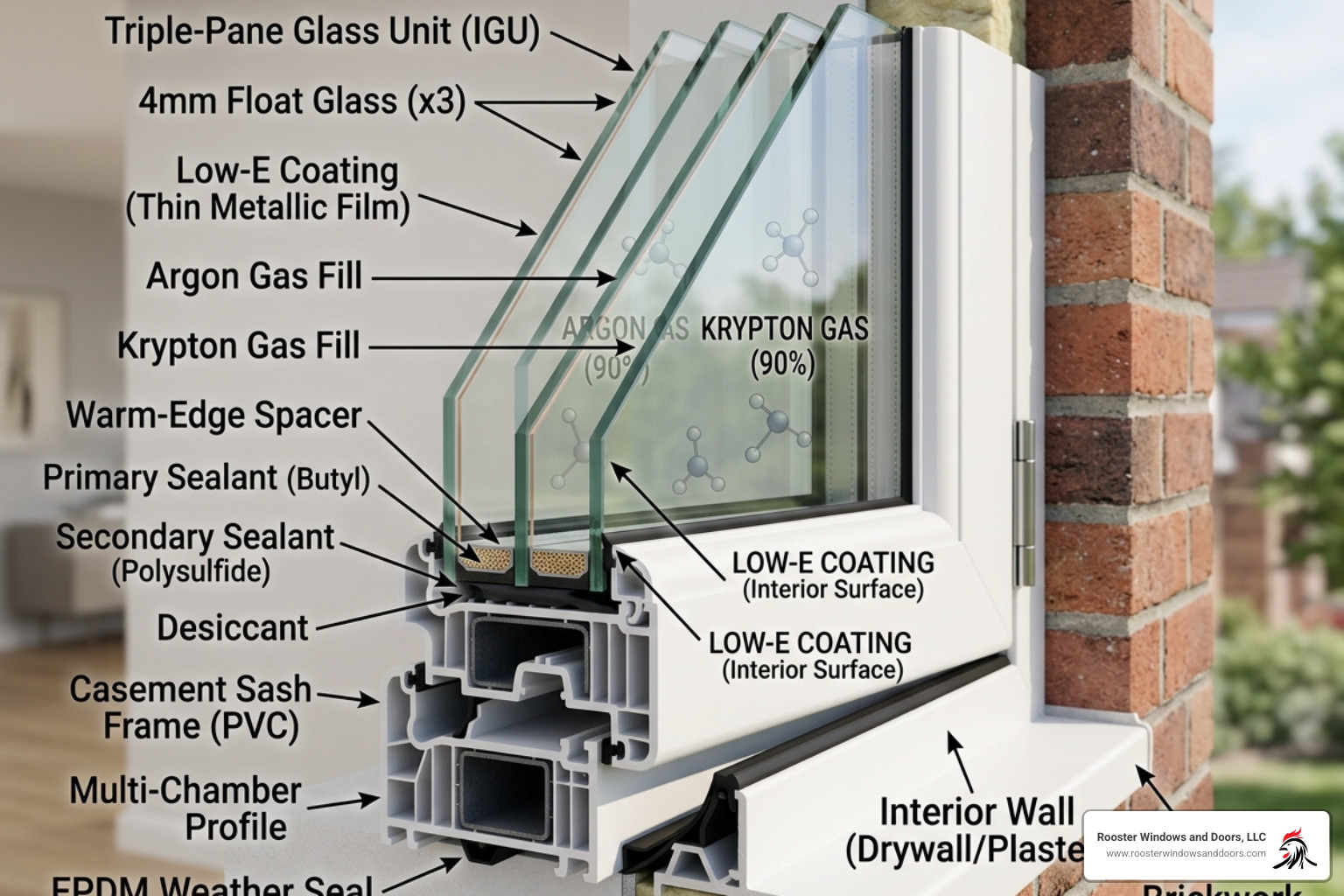
The glass makes up about 80% of your window, so this is where the magic happens. High-performance packages often include:
- Triple-Pane Glass: Adding a third layer of glass creates two insulating chambers instead of one. This can make a window up to 50% more efficient than a standard double-pane unit.
- Argon and Krypton Gas: We fill the space between the panes with these harmless, dense gases. Argon is six times denser than air, while Krypton is twelve times denser, significantly slowing down heat transfer.
- Low-E Coatings: These microscopic metallic layers reflect heat back to its source. In the winter, it keeps your furnace’s heat inside; in the summer, it bounces the sun’s rays away from your Buffalo Grove living room.
Insulation and Thermal Stability
Quality doesn’t stop at the glass. The frames themselves should be insulated. We often see premium vinyl windows with polyurethane foam injected into the frame chambers. This acts like a cooler for your home, preventing the frame itself from becoming a bridge for cold air.
When checking the stats for The Top High Performance Casement Windows For Maximum Energy Savings, keep an eye on these two metrics:
- U-Factor: This measures how well the window keeps heat inside. The lower the number, the better. Look for ratings below 0.25 for top-tier performance.
- Solar Heat Gain Coefficient (SHGC): This measures how much solar radiation comes through. In our climate, a balanced SHGC helps harvest some free heat in the winter without overheating you in July.
Air Infiltration Ratings
Casement windows naturally have better air infiltration ratings than single-hung or sliding windows because of that compression seal we mentioned earlier. For example, a high-quality fiberglass casement might have an air infiltration rating of 0.05 cfm/sq ft, which is twice as airtight as a comparable single-hung window (0.10 cfm/sq ft).
Comparing High Quality Casement Windows to Other Styles
Choosing the right window style often comes down to where the window is located and what you need it to do. Here is how high quality casement windows stack up against the competition.
Casement vs. Double-Hung vs. Sliding Windows
| Feature | Casement Windows | Double-Hung Windows | Sliding Windows |
|---|---|---|---|
| Ventilation | 100% (Entire sash opens) | ~50% (One sash at a time) | ~50% (One sash at a time) |
| Energy Efficiency | Excellent (Compression seal) | Good (Brush seal) | Fair (Brush seal) |
| Ease of Use | Crank-operated (Great for reach) | Lift/Slide (Requires strength) | Slide (Easy, but can stick) |
| Views | Unobstructed (No meeting rail) | Divided by horizontal rail | Divided by vertical rail |
| Security | High (Internal hardware) | Moderate (Standard latches) | Moderate (Can be lifted) |
Ventilation and Unobstructed Views
If you have a beautiful view of a backyard in Lake Forest or a park in Arlington Heights, a casement window is your best friend. Because there is no center meeting rail (the bar in the middle of a double-hung window), you get a clear, “picture window” view while still having the ability to open it. When you do open it, the sash acts like a sail on a boat, catching the wind and funneling it into your home.
The “Kitchen Sink” Problem
We’ve all been there: trying to lean over a kitchen counter to struggle with a heavy double-hung window that won’t budge. This is where high quality casement windows shine. Because they operate with a simple crank handle at the base, they are the perfect choice for hard-to-reach locations like over a sink or behind a large soaking tub.
Egress Requirements
In basements or bedrooms, local building codes often require “egress” windows—openings large enough for a firefighter to enter or a resident to exit during an emergency. Casement windows can often meet these requirements in smaller wall openings than double-hung windows because the entire area becomes an exit when the window is cranked open.
If you’re considering a switch from your current style, you can learn more about the process of installing Replacement Casement Windows to see how we can transform your space.
Key Considerations for Your Installation Project
Once you’ve decided on high quality casement windows, there are a few technical details you’ll want to get right to ensure you’re happy with the result for the next 30 years.
Hinge Direction and Airflow
Which way should your window swing? It sounds simple, but it matters. Ideally, you want the hinge to be positioned so the open sash catches the prevailing breezes. If you have two casements side-by-side, having them open away from each other (like French doors) creates a massive, inviting opening that maximizes airflow.
“Wash Mode” and Ease of Maintenance
One of the biggest myths about casement windows is that they are hard to clean. High-quality models feature a “wash mode” or a sliding hinge. When the window is cranked open to 90 degrees, the hinge slides away from the frame, creating a gap large enough for you to reach your arm through and clean the outside of the glass from inside your house. No ladders required for that second-story bedroom in Schaumburg!
Installation Methods: Full-Frame vs. Insert
At Rooster Windows and Doors, we help you decide between two main paths:
- Full-Frame Replacement: We remove everything—the sashes, the frame, and the exterior trim (brickmould). This allows us to inspect the “rough opening” for any hidden water damage or rot and maximize the glass area.
- Insert (Retrofit) Installation: If your existing wood frames are in perfect structural shape, we can install a new window unit inside the old frame. This is faster and preserves your interior trim, but it does slightly reduce the total glass area.
Customization and Finishing Touches
A high-quality window should look like it belongs in your home.
- Hardware: Look for “tuck-away” or nesting handles that fold flat so they don’t interfere with your blinds or curtains. Finishes like satin nickel, oil-rubbed bronze, or matte black can match your home’s existing hardware.
- Grilles/Muntins: If you live in a historic area like Woodstock or Barrington, you might want the look of a traditional window. We can add simulated divided lites (SDLs) that mimic the look of individual glass panes without sacrificing energy efficiency.
- Screens: Premium screens use high-transparency mesh that allows 14% more light and better airflow than standard fiberglass mesh.
Frequently Asked Questions about Casement Windows
Are high quality casement windows more secure than other styles?
Yes, they are widely considered the most secure operable window style. Because they are operated by an internal crank, there is no way to “pry” the window open from the outside. Furthermore, the multi-point locking system engages the sash into the frame at several points, making it nearly impossible to force open. The “hooked” nature of the latches means the harder someone pulls from the outside, the tighter the window locks.
How do I maintain high quality casement windows for longevity?
Maintenance is surprisingly simple. Once a year, you should open the window and wipe down the hinges and track to remove any dust or debris. Applying a small amount of dry silicone spray to the moving parts of the hardware will keep the crank operating smoothly. Because of the “hinge-wash” mode, you can keep the glass sparkling without ever stepping on a ladder. We also recommend a quick inspection of the triple weatherstripping to ensure it remains pliable and free of tears.
Can casement windows improve my home’s energy rating?
Absolutely. In fact, many of our customers in places like Mundelein and Gurnee see a noticeable drop in their heating and cooling bills after switching to high quality casement windows. The combination of compression seals (which eliminate the drafts common in older sliding windows) and high-performance glass packages with Argon or Krypton gas creates a thermal barrier that is second to none. Many of the models we install are recognized as “Most Efficient” by Energy Star.
Conclusion
Investing in high quality casement windows is one of the most effective ways to improve your home’s comfort, security, and curb appeal. From the structural strength of virgin vinyl and fiberglass to the incredible energy savings of triple-pane glass, these windows are engineered to perform in the demanding climate of the Chicago suburbs and surrounding areas.
At Rooster Windows and Doors, LLC, we pride ourselves on providing flawless craftsmanship and professional installation. Whether you are in Des Plaines, Mount Prospect, or Chicago itself, we understand that a window is only as good as the team that installs it. We don’t just “drop in” a window; we ensure every unit is perfectly level, plumb, and sealed against the elements to provide a lifetime of worry-free operation.
Ready to see the difference that premium ventilation and energy efficiency can make in your home? We are here to help you navigate the wide variety of customization options to find the perfect fit for your needs.
Request a consultation for Replacement Casement Windows and let us help you bring your vision to life with the quality and care your home deserves.
