

Why a Bay Window House Stands Out — and Why It Matters
A bay window house instantly draws the eye. That outward projection, the play of light, the sense of space — it changes how a home looks and feels, inside and out.
Here’s a quick overview of what bay windows offer:
| Feature | What You Get |
|---|---|
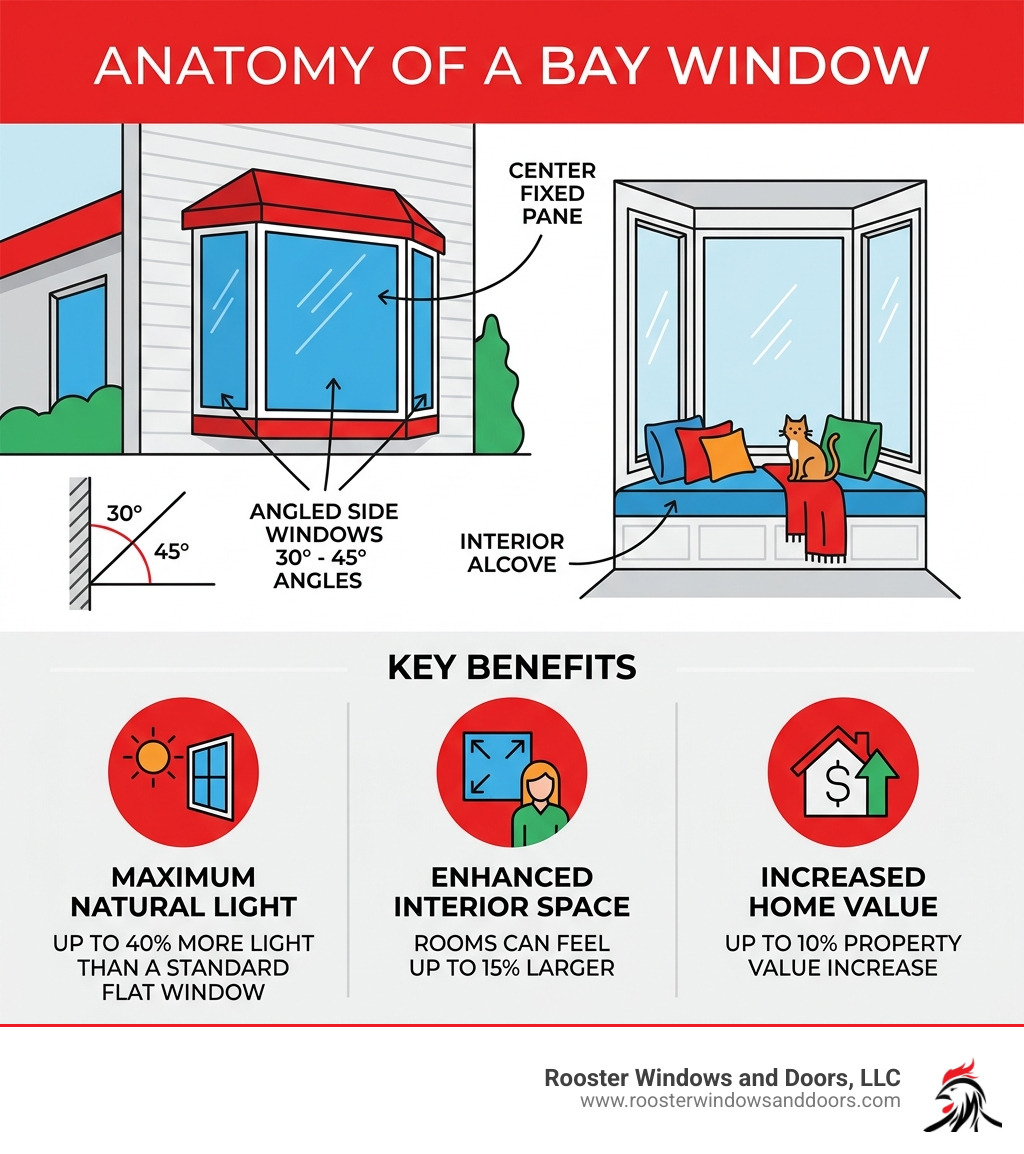
| Natural light | Up to 40% more light than a standard flat window |
| Interior space | Rooms can feel up to 15% larger |
| Curb appeal | Up to 25% boost to exterior appearance |
| Home value | Property value increase of up to 10% |
| Energy efficiency | Up to 20% better insulation vs. older single-pane units |
Bay windows are made up of three windows — typically one large fixed center pane flanked by two smaller operable windows set at 30° or 45° angles. That angled projection is what creates the signature look: an architectural focal point on the outside, and a light-filled interior alcove on the inside.
They aren’t new. Bay windows have appeared on homes since the 1800s, from Victorian Queen Anne facades to Italianate mansions. But they remain just as relevant today — fitting naturally into traditional, farmhouse, and contemporary styles alike.
I’m Piotr Wilk, and at Rooster Windows and Doors, LLC, my team and I have spent over two decades installing bay windows and other window solutions for homeowners across the Chicagoland area. We’ve seen how the right bay window house upgrade transforms both the look and the livability of a home.
The Architectural Impact of a Bay Window House
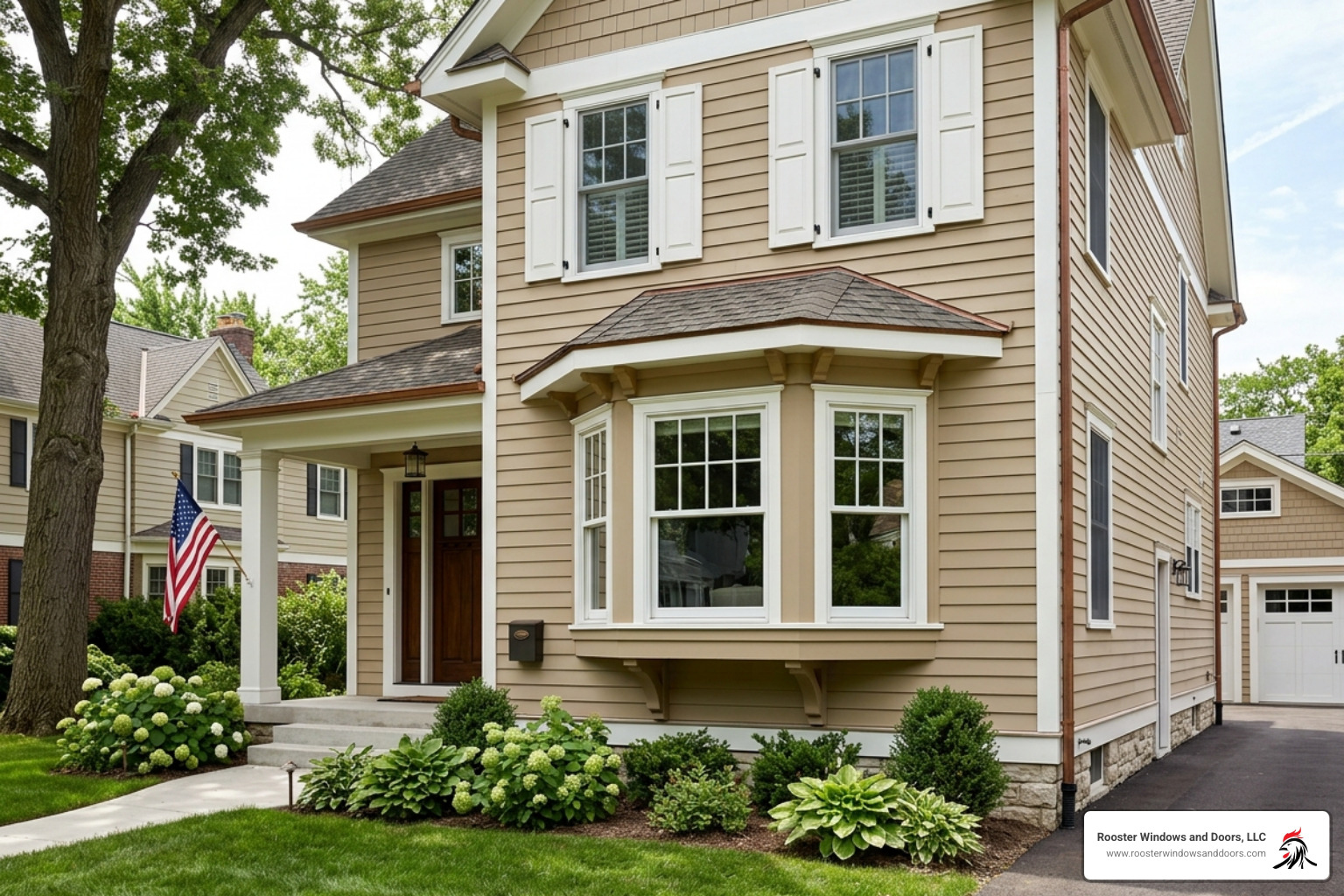
When we talk about a bay window house, we are describing a home that uses geometry to its advantage. Unlike a standard window that sits flush with your siding or brick, a bay window is a “projection window.” It physically extends beyond the exterior wall, creating a three-dimensional feature that adds depth to your home’s facade.
The classic configuration involves three panels. The center window is usually a large, fixed “picture window” that provides an unobstructed view of your neighborhood in Lake Forest or your garden in Mundelein. This center pane is flanked by two smaller windows, known as flankers, which are typically set at 30-degree or 45-degree angles. These side windows aren’t just for looks; they are usually operable — either double-hung or casement style — to allow for cross-ventilation.
Bay vs. Bow: Knowing the Difference
Many homeowners use these terms interchangeably, but they offer very different architectural vibes. If you are debating between the two, it helps to look at the “sharpness” of the design.
- Bay Windows: These have three panels and create sharp, clean angles. They project further out from the house, making them ideal for creating a deep interior ledge or a “bay seat.”
- Bow Windows: These typically use four, five, or even six window panels. Because there are more panels set at shallower angles (often around 10 degrees), the result is a soft, rounded curve rather than a sharp corner.
For a deeper dive into which one suits your specific home style, check out our guide on Bay Window vs Bow Window. Generally, we find that bay windows are perfect for contemporary or transitional homes because of their crisp lines, while bow windows lean toward a more traditional or Victorian aesthetic.
Key Benefits: Light, Space, and Value
Why go through the effort of modifying your home’s structure for a bay window? The data from May 2026 suggests the ROI is one of the highest in the home improvement industry.
First, let’s talk about the “wow factor.” A bay window house enjoys a curb appeal boost of up to 25%. It breaks up the flat, unremarkable exterior walls often found in mid-century or modern suburban builds. It’s like a facelift for your home that actually pays you back.
Inside, the transformation is even more dramatic. Because the window projects outward, it creates an alcove. Even though you haven’t technically changed the footprint of your foundation, the room can feel up to 15% larger. This extra “visual square footage” makes a massive difference in smaller living rooms or kitchens.
Then there is the financial aspect. Real estate experts note that a well-installed bay window can increase a home’s market value by up to 10%. In competitive markets like Arlington Heights or Evanston, these architectural details can be the deciding factor for a buyer. You can see various examples of bay and bow windows in Lancaster home design [photos] to see how different configurations impact the overall look of a residence.
Enhancing a Bay Window House with Natural Light
One of the most frequent complaints we hear from homeowners in places like Glenview or Northbrook is that their homes feel “dark.” A standard flat window only catches light from one direction. A bay window, however, catches the sun from three different angles as it moves across the sky.
This leads to a natural light increase of up to 40%. Beyond just making the room look better, this has real benefits for your well-being. More natural light is linked to better sleep patterns and improved mood.
From a practical standpoint, this also aids energy efficiency. During our cold Illinois winters, the large glass surface allows for passive solar heating. Modern units use high-performance glass with Low-E coatings to ensure that while the light comes in, the heat stays trapped inside during winter and is reflected away during summer. If your current windows are drafty or single-pane, our Window Replacement Services can help you upgrade to a high-efficiency bay unit that improves insulation by up to 20%.
Exploring Bay Window Styles and Materials
Not every bay window house looks the same. Depending on the architecture of your home, you might choose one of four primary styles:
- Canted Bay Windows: This is the most common type. It features a flat front and angled sides. It’s the “standard” look that fits almost any home.
- Box Bay Windows: These project out at a 90-degree angle, forming a rectangular shape. These are exceptionally popular in kitchens because the 90-degree corners provide a deep, flat ledge perfect for an indoor herb garden.
- Circle Bay Windows: A rarer, more expensive version that uses curved glass or many small panels to mimic the look of a bow window but with the projection of a bay.
- Oriel Windows: These are bay windows that do not reach the ground. They are supported by corbels or brackets and are often found on the second floor.
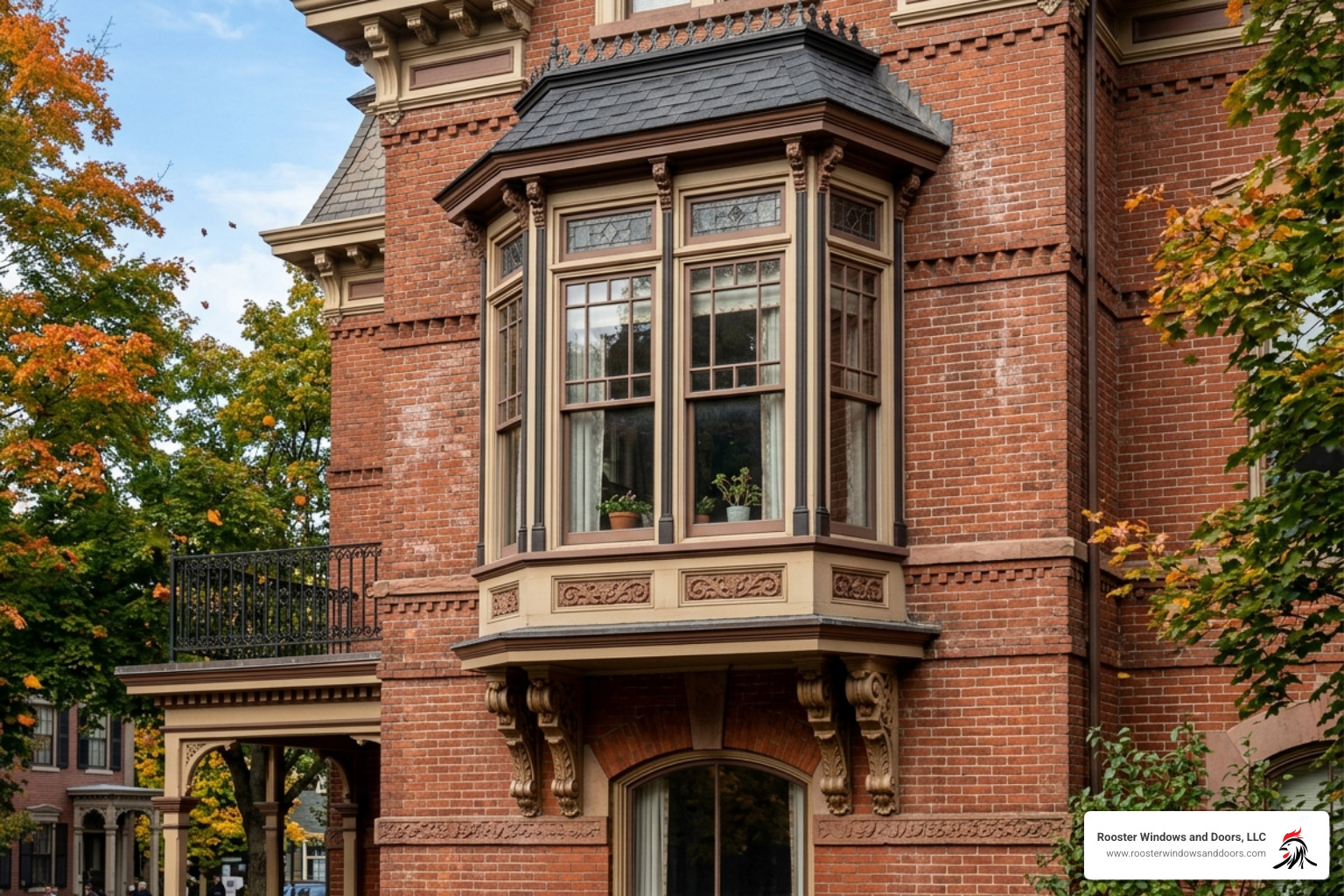
A classic example of this is A Bay Window on the Second Floor of the Sewell Home | ClipPix ETC, which showcases how a second-story projection can add immense character to a facade without needing a foundation below it.
Modern Materials for Your Bay Window House
The “best” material depends on your priorities — whether that’s historical accuracy, durability, or low maintenance.
- Vinyl: This is the most popular choice for homeowners in Buffalo Grove and Vernon Hills. Vinyl bay windows are incredibly durable, never need painting, and offer excellent thermal insulation. They are also the most budget-friendly option.
- Fiberglass: If you want the ultimate in strength and longevity, fiberglass is the way to go. It handles the extreme temperature swings of the Chicago area without expanding or contracting.
- Wood: For a historic Queen Anne or a traditional home in Highland Park, nothing beats the warmth of real wood. While it requires more maintenance (painting or staining), the aesthetic is unmatched.
- Glass Options: Regardless of the frame, we always recommend double-pane or triple-pane glass with argon gas fills and Low-E coatings. This is what makes a modern bay window house so much more comfortable than the drafty versions built 40 years ago.
If you have a specific vision or a non-standard opening, we specialize in Custom Made Windows to ensure the fit is airtight and architecturally perfect.
Strategic Placement and Interior Design
Where should you put a bay window? While you can technically put one anywhere, certain rooms benefit more than others.
- The Living Room: This is the most common location. A bay window here creates a natural focal point. We often see homeowners use the space for a built-in window seat, creating a cozy reading nook.
- The Kitchen: Replacing a flat window over the sink with a box bay window can transform your cooking space. It provides a “bay seat” for plants or decor and makes the kitchen feel much more open.
- The Master Bedroom: Installing a bay window that faces your backyard can create a serene morning retreat. It’s the perfect spot for a pair of small armchairs and a coffee table.
When it comes to decorating, don’t feel like you have to spend a fortune. We have some great tips on Styling Your Cream Bay Windows that show how simple additions like a tufted bench or a patterned runner can make the space feel high-end on a budget.
Installation Requirements and Cost Factors
Installing a bay window is more complex than a standard window replacement. It is a structural modification. Here is what we look for during a consultation:
- Space: You generally need at least 40 inches of horizontal wall space to accommodate a bay window properly.
- Structural Support: Because the window hangs out past the wall, it needs support. This is usually done with a “header” (a heavy beam above the window) and either support cables hidden in the frame or decorative “corbels” (brackets) underneath.
- Roofing: A bay window needs its own little roof or “cap” unless it sits directly under an eave. This roof must be properly flashed and shingled to prevent leaks.
- Insulation: The “seat board” (the bottom ledge) and the “head board” (the top) must be well-insulated. Without this, the alcove will feel freezing in January.
Regarding cost, a standard vinyl bay window installation typically ranges from $2,800 to $4,500. Factors that can push this higher include choosing wood frames, opting for triple-pane glass, or needing significant structural repairs to the existing wall. For a more detailed breakdown of what to expect, see our Window Replacement Cost Guide.
Frequently Asked Questions about Bay Windows
What is the difference between a bay and a bow window?
A bay window has three panels and creates an angular projection (usually 30 or 45 degrees). A bow window has four to six panels and creates a smooth, curved arc. Bay windows project further out, while bow windows are often wider and offer more glass surface area.
How much does a bay window increase home value?
On average, a high-quality bay window installation can increase your property value by up to 10%. This is due to the combined impact of improved curb appeal, increased natural light, and the added “perceived” interior space.
Are bay windows energy efficient?
Modern bay windows are very energy efficient. When we use vinyl or fiberglass frames combined with insulated glass units (IGUs), they can improve your home’s insulation by up to 20% compared to old, drafty windows. The key is ensuring the seat and head boards are properly insulated during installation.
Conclusion
At Rooster Windows and Doors, LLC, we believe that every home has the potential to be a showpiece. A bay window house isn’t just about adding a window; it’s about adding character, light, and a sense of luxury to your daily life. Whether you are in Libertyville, Naperville, or right in the heart of Chicago, our team is dedicated to providing flawless, energy-efficient installations that stand the test of time.
If you are ready to transform your home’s exterior and create a beautiful new interior space, we are here to help. Explore our options for Bay Window Installation and let’s build something beautiful together.
