

Why an Easy DIY Pet Door Slider Kit Is the Smartest Weekend Project for Pet Owners
An easy DIY pet door slider kit lets you give your pet independent outdoor access through your sliding glass door — without cutting into walls, hiring a contractor, or making permanent changes to your home.
Here’s how it works in a nutshell:
- Choose your kit — a pre-made panel insert (aluminum or vinyl) or a custom wood-frame build
- Measure your pet — shoulder width + 2 inches wide, back height + 2 inches tall
- Measure your sliding door track — height, channel depth, and track type
- Slide the panel into the track — top first, then drop the bottom in
- Seal and secure — weatherstripping, draft seals, and a security bar
Most kits install in under 30 minutes with little to no tools. Some cost as little as $85 to build yourself — compared to $175 or more for retail options.
Whether you have a large dog or a small cat, whether you rent or own, and whether you want a tool-free temporary fix or a sturdier build — there’s a slider kit approach that fits your situation.
But not all kits are created equal. The wrong size, the wrong track fit, or a poor seal can mean drafts, security gaps, or a confused pet who won’t go near the flap.
That’s exactly what this guide walks you through — step by step.
I’m Piotr Wilk, co-founder of Rooster Windows and Doors, LLC, with over two decades of hands-on residential door and window installation experience across the Chicagoland area. My team and I have worked with hundreds of homeowners on sliding door projects — including setups compatible with easy DIY pet door slider kits — so I know what works, what fails, and what to watch out for.
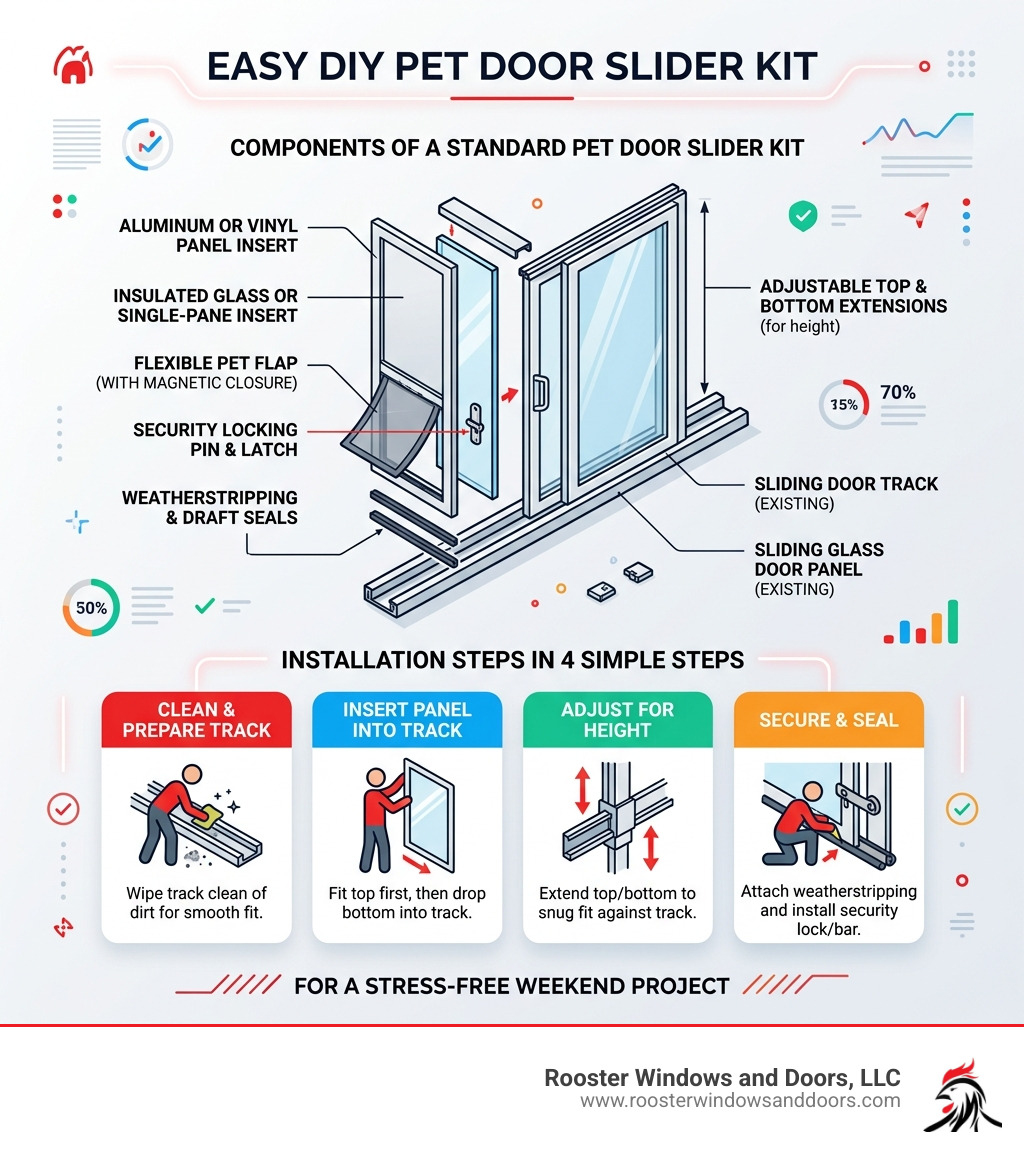
Learn more about easy DIY pet door slider kit:
Choosing the Right Easy DIY Pet Door Slider Kit for Your Home
When you start looking for an easy DIY pet door slider kit, you’ll realize there are two main paths you can take: purchasing a commercial “fast-fit” panel or building a custom insert from scratch. In May 2026, the market offers more variety than ever, from high-tech motion-activated systems to simple, budget-friendly coroplast folds.
Commercial Panel Inserts vs. Custom Builds
Commercial kits, like the Liberty Pet Door Patio Panel, are typically made of aluminum or vinyl. They are designed to match the material of your existing sliding door frame. Aluminum is incredibly durable and holds up well against the fluctuating temperatures we see in the Chicago area, while vinyl offers excellent thermal insulation.
On the other hand, a custom wood-frame build is a fantastic option for the true “Weekend Warrior.” Using 2×2 lumber and a basic pet door kit, you can create a sturdy insert for about $85. This is roughly half the cost of many retail options that start at $175.
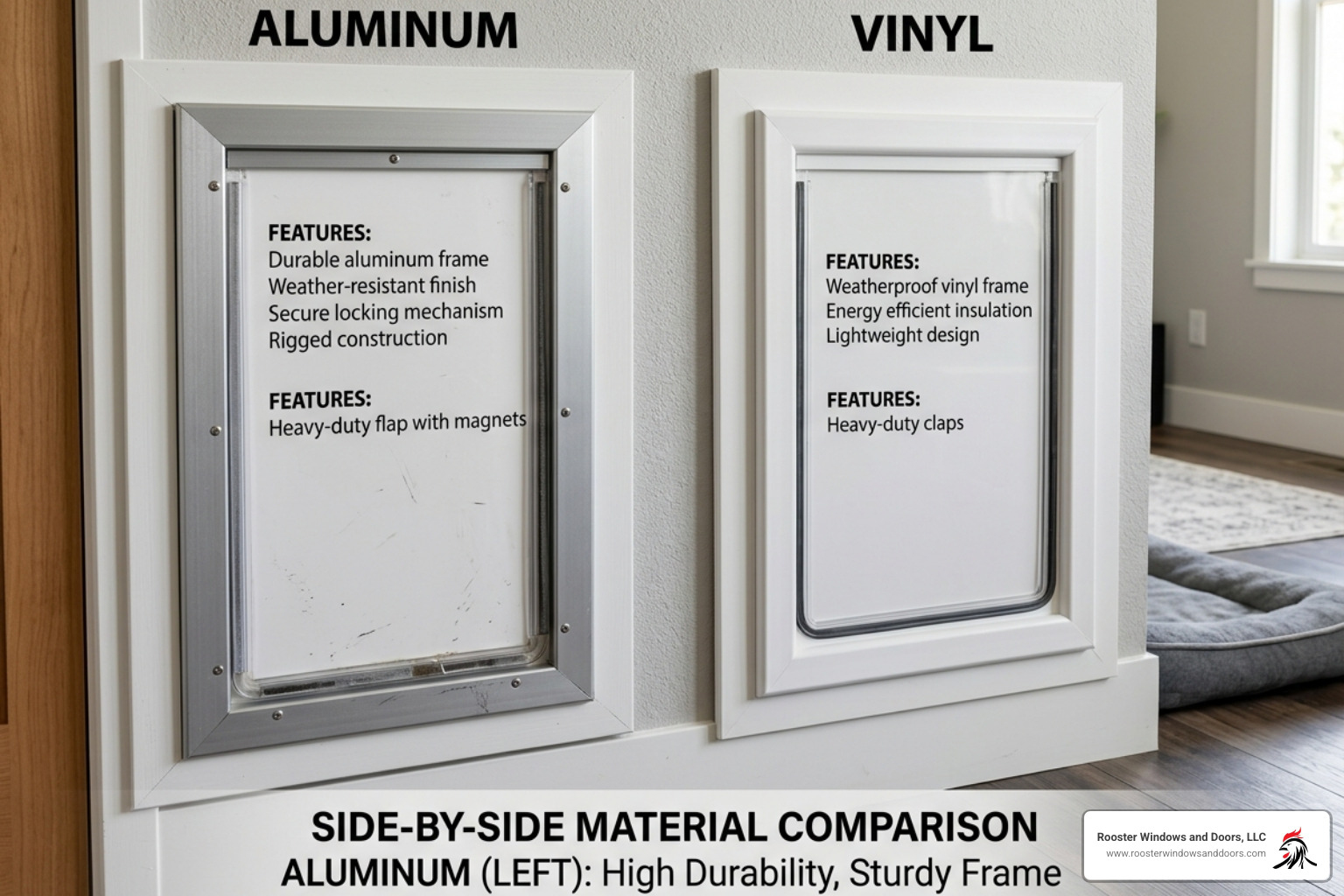
Flap Durability and Insulation
The flap is the heart of your easy DIY pet door slider kit. For homes in Libertyville or Naperville, where winters can be harsh, a single thin flap won’t cut it. Look for kits that feature magnetic closures or dual-flap systems. High-quality flaps, like the Endura Flap, are tested to stay sealed in wind gusts up to 50mph and remain flexible even at -40°F.
For more details on selecting the perfect model, check out The Ultimate Guide To The Best Pet Door For Sliding Doors.
| Feature | Commercial Slider Kit | Custom Wood Frame DIY |
|---|---|---|
| Average Cost | $175 – $600 | $85 – $120 |
| Install Time | 15 – 30 Minutes | 2 – 4 Hours |
| Material | Aluminum / Vinyl / Glass | Lumber / Screen / Plastic |
| Tools Needed | None (usually) | Drill, Saw, Staple Gun |
| Best For | Renters & Efficiency | Budget-conscious DIYers |
Measuring Your Pet for an Easy DIY Pet Door Slider Kit
Before you click “buy” or head to the lumber yard, you need to know exactly how big your pet is. A common mistake is measuring to the top of the pet’s head. Instead, you should measure to the tallest point of their back (the shoulders).
- Width: Measure your pet at their widest point (usually the shoulders or hips) and add 2 inches.
- Height: Measure from the floor to the top of the shoulders and add 2 inches.
- Step-Over: This is the distance from the floor to the bottom of the pet door opening. For senior pets or those with mobility issues, you want a low step-over. For younger, athletic dogs, a higher step-over (up to 8 inches) can help prevent the flap from being too low.
For a deeper dive into pet ergonomics, see our guide on the Sliding Glass Door Dog Door.
Sizing Your Sliding Door Track
Not every sliding door is the same. To ensure your easy DIY pet door slider kit fits perfectly, you must measure your track height and thickness.
- Track Height: Measure from the very bottom of the lower track to the very top of the upper track. Do this in at least two places to check for any settling in your home’s frame.
- Channel Thickness: Most aluminum panels require a track at least 1 inch thick, while vinyl panels are often 1.5 inches thick.
- Track Type: Check if you have a standard U-track or a “monorail” (a single raised rail). Most DIY kits are designed for channel-style tracks. If you have a Pella or Andersen door with a buried track or a “pencil rail,” you may need to use L-brackets or shims to prevent the panel from wobbling.
Step-by-Step Installation of an Easy DIY Pet Door Slider Kit
Once you have your kit in hand, it’s time for the fun part. Most modern kits use a spring-loaded system that allows for a tool-free installation, making them perfect for renters in Chicago or Evanston who want to take the door with them when they move.
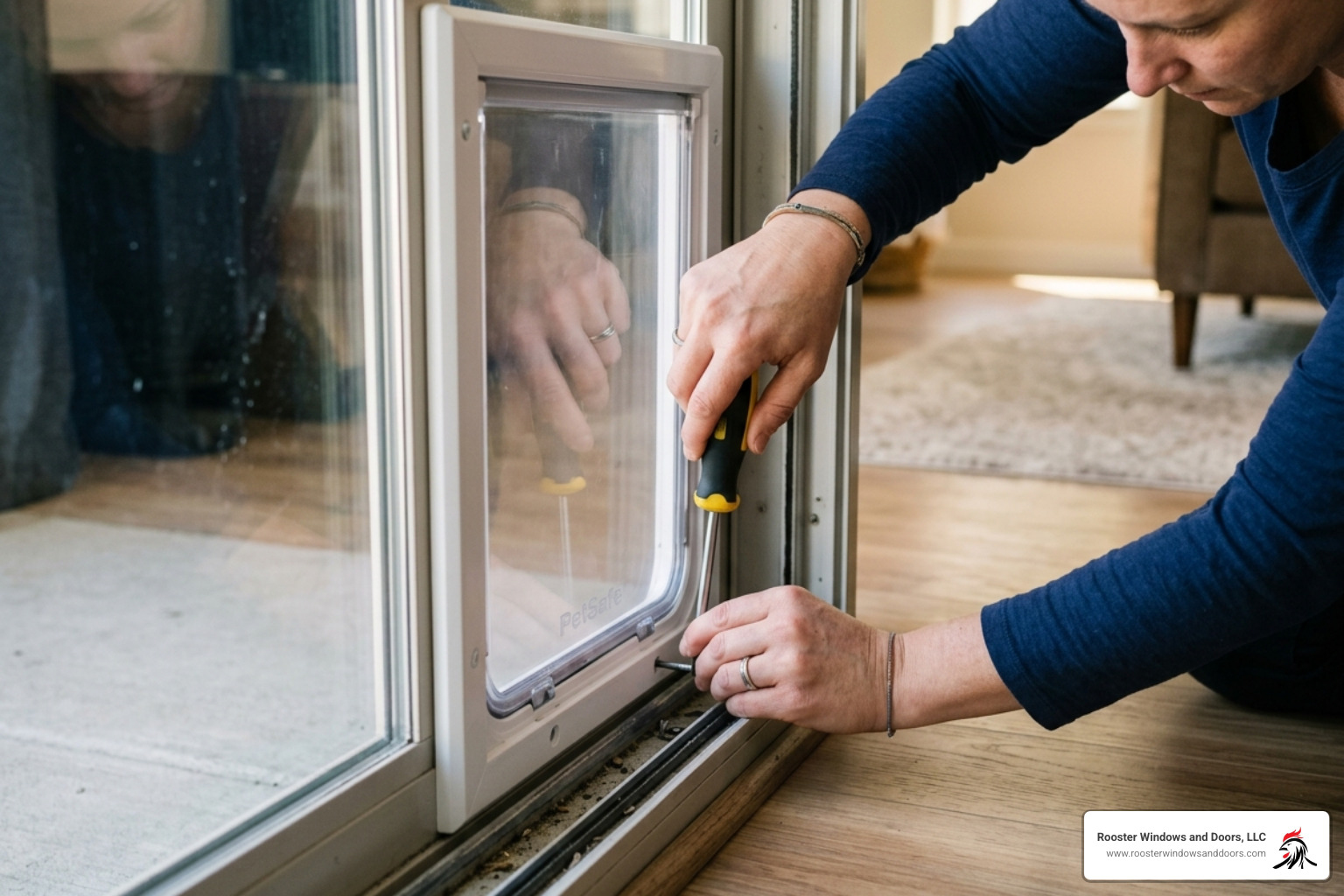
Preparing the Track and Inserting the Panel
Before you install anything, give your tracks a good scrub. Dirt, pet hair, and debris can prevent the panel from seating correctly, leading to air leaks.
- Clean: Vacuum the track and wipe it down with a damp cloth.
- Insert Top First: Lift the pet door panel and push the top into the upper track. Most kits have a spring-loaded top that compresses.
- Swing in the Bottom: While the top is compressed, swing the bottom of the panel into the lower track.
- Release and Secure: Let the spring tension push the panel down. Ensure it is flush against the side jamb where your sliding door usually closes.
For a visual walkthrough of this process, visit our page on Patio Dog Door Installation.
Securing and Weatherproofing Your Easy DIY Pet Door Slider Kit
Even the best easy DIY pet door slider kit will have small gaps where the panel meets the frame. Proper sealing is the difference between a comfortable home and a $400 heating bill in January.
- Weatherstripping: Most kits include a roll of adhesive foam. Apply this to the side of the pet door panel that will meet your sliding door.
- Draft Seals: Use a vinyl draft seal (often called a “bug seal”) on the back edge of your sliding door. This prevents air from whistling through the gap created when the door is partially open.
- Silicone Sealant: If you are doing a more permanent installation, a bead of clear silicone sealant along the exterior edges can provide a professional-grade moisture barrier.
- Magnetic Alignment: Ensure the magnets at the bottom of the flap align perfectly. If they don’t, the flap won’t seal after your pet passes through.
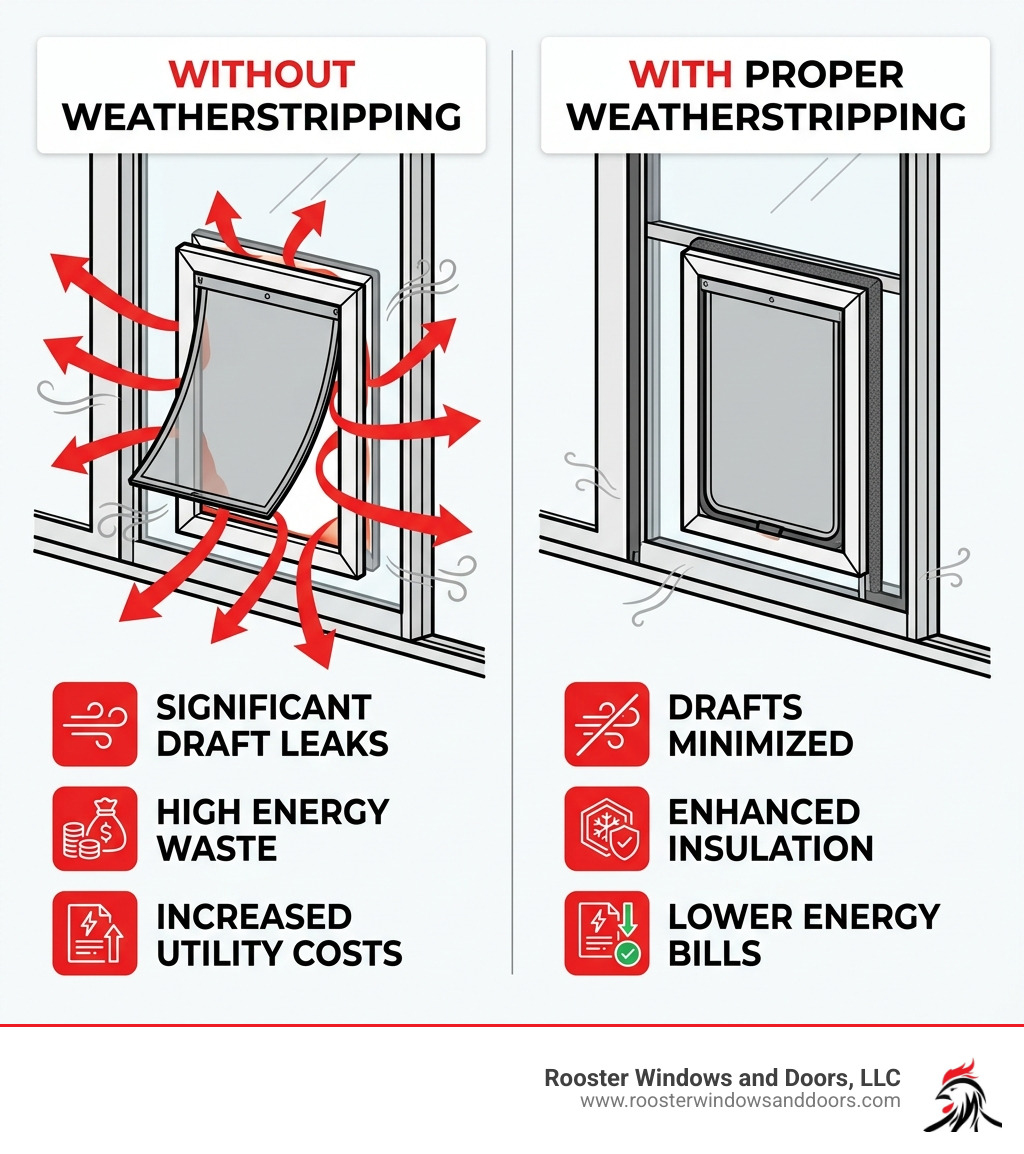
Safety, Security, and Energy Efficiency Tips
One of the biggest concerns we hear at Rooster Windows and Doors is security. When you install a pet door panel, your sliding door’s built-in lock no longer lines up.
Maintaining Home Security
Don’t rely on the flimsy plastic latch that comes with some cheap kits. To keep your home safe in Waukegan or Schaumburg, use these professional-grade options:
- Charley Bars: This is a sturdy pressure bar that fits between the sliding door and the opposite wall, preventing the door from being opened from the outside.
- Locking Pins: You can drill a small hole through the sliding door frame into the stationary frame and insert a metal pin.
- Internal Adjustment Locks: High-end panels like the Liberty Custom Pet Door feature locks on the inside of the panel that prevent it from being lifted out of the track from the exterior.
Maximizing Energy Efficiency
In the Chicagoland area, energy efficiency is non-negotiable. If you’re upgrading your home, consider a kit with Low-E glass. This specialized coating reflects heat, keeping your home cooler in the summer and warmer in the winter.
If you find that your DIY project is becoming too complex or you’re worried about the thermal performance of your old sliding door, it might be time for a full upgrade. You can explore our Sliding Glass Door Installation services for a more permanent, high-performance solution.
Frequently Asked Questions about DIY Pet Doors
How do I train my pet to use the new door?
Some pets take to the flap immediately, while others act like it’s a portal to another dimension.
- The Treat Method: Hold the flap open and lure your pet through with their favorite treat. Repeat this three times in a row to lock in the behavior.
- Flap Removal: For very timid pets, remove the flap entirely for a few days. Once they are comfortable walking through the “hole,” reinstall the flap.
- Patience: Younger animals often learn faster, but older pets can get there too with enough praise.
Are these kits safe for renters?
Yes! Most easy DIY pet door slider kit options are completely non-permanent. Since they are held in by spring tension or simple Velcro strips (like the Pop-Up Pet Door), you can pop them out in seconds without leaving a single screw hole behind.
How do I maintain the weather seal over time?
Maintenance is key to longevity.
- Clean the Magnets: Dirt and hair can build up on the magnetic strips, preventing a tight seal. Wipe them down monthly.
- Inspect the Flap: Over time, vinyl flaps can warp or crack due to UV exposure. Most manufacturers sell replacement flaps so you don’t have to buy a whole new kit.
- Check the Weatherstripping: Foam seals can compress and lose their effectiveness. Replace them every 2-3 years to keep drafts at bay.
Conclusion
Installing an easy DIY pet door slider kit is one of the most rewarding home improvement projects you can tackle in a single afternoon. It gives your furry family members the freedom they crave while saving you from being a full-time doorman.
While DIY kits are a fantastic “Weekend Warrior” solution, we know that sometimes you want a more integrated, high-performance look. If you decide that a temporary insert isn’t enough and you want a sliding door with a factory-integrated pet door — or if you simply need a more energy-efficient door to withstand the Chicago wind — our team at Rooster Windows and Doors, LLC is here to help.
We provide professional, flawless installations across the entire Chicagoland area, from Barrington to Chicago and everywhere in between. Give your home the upgrade it deserves with our premium Sliding Glass Door Installation services. Happy building, and give your pet an extra treat for us!
