

The Anatomy of a Double Hung Window
What Are Double Hung Window Components?
Double hung window components are the individual parts that make up one of the most popular window styles in American homes. Here is a quick overview of the main parts:
| Component | What It Does |
|---|---|
| Frame | The outer structure (head, jambs, sill) that holds everything in place |
| Upper Sash | The top movable panel that slides down for ventilation |
| Lower Sash | The bottom movable panel that slides up for ventilation |
| Check Rail | Where the two sashes meet in the middle, forming a weather seal |
| Balance System | Keeps sashes in position and makes them easy to open and close |
| Glazing | The glass unit inside each sash (single, dual, or triple-pane) |
| Sash Lock | Hardware at the check rail that locks the window shut |
| Weatherstripping | Seals around the sash to block air and water |
| Jamb Liner | The track the sashes slide along inside the frame |
| Tilt Latches | Allow the sash to tilt inward for easy cleaning |
What makes a double-hung window unique is simple: both the upper and lower sashes move. That sets it apart from a single-hung window, where only the bottom sash operates.
Double-hung windows have been a staple in home design for centuries — and for good reason. They offer flexible ventilation, easy cleaning, and a classic look that fits almost any architectural style. But knowing how each part works helps you make smarter decisions when buying, maintaining, or replacing them.
I’m Piotr Wilk, and over more than two decades of installing windows across the Chicagoland area, I’ve worked hands-on with every double hung window component imaginable — from balance systems to glazing units. That experience is the foundation of everything you’ll read in this guide.
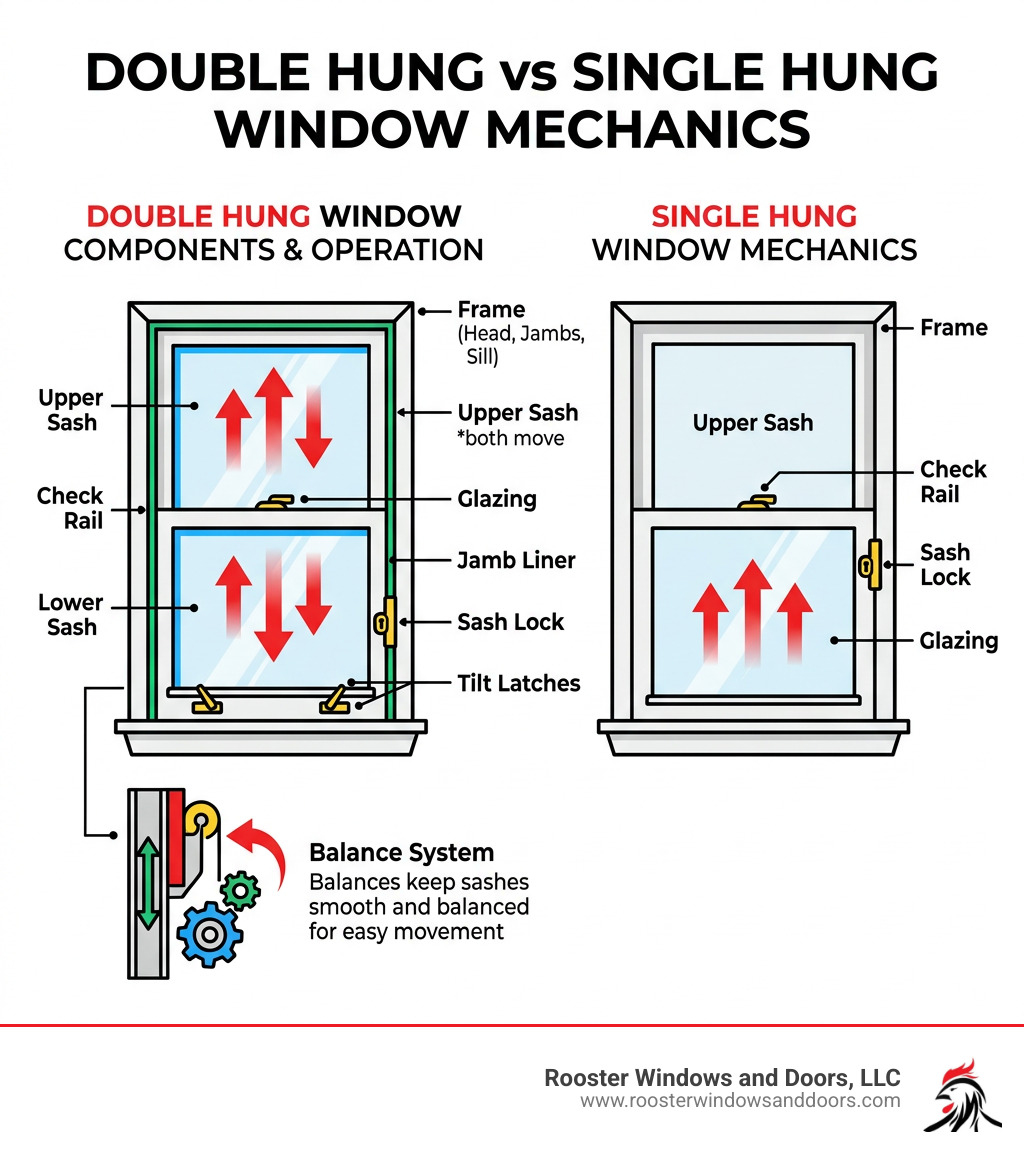
Basic double hung window components terms:
Essential Double Hung Window Components: The Frame
The frame is the backbone of the window. It is the fixed outer structure that is secured into the wall of your home. Without a sturdy, well-installed frame, even the most expensive sashes won’t perform correctly. In our experience across Illinois, from the historic homes of Evanston to the new builds in Naperville, the frame’s integrity is what prevents drafts and water damage.
The Head and Side Jambs
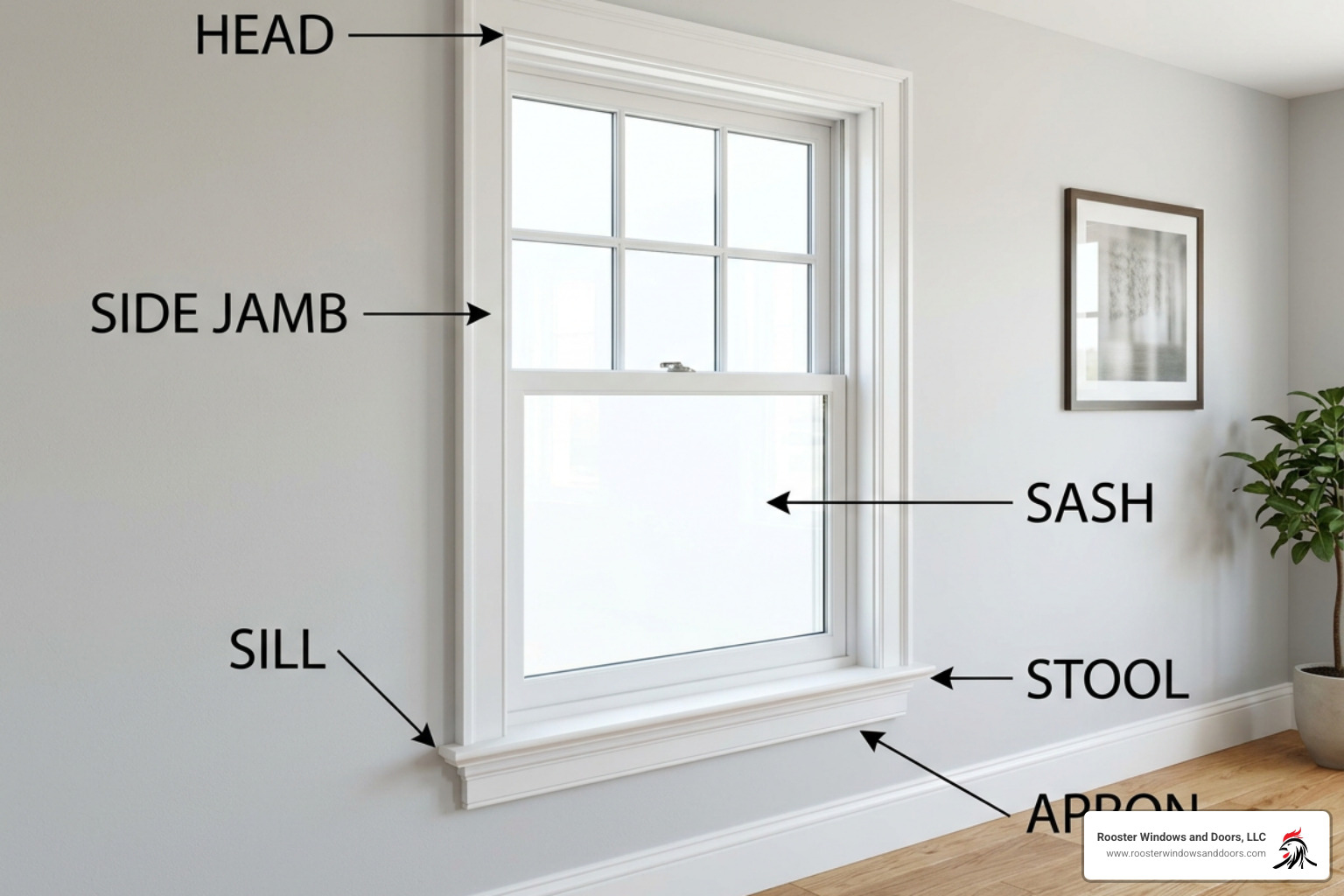
The head is the horizontal piece at the very top of the window frame. It supports the weight of the upper sash when it is closed. The side jambs are the vertical sides of the frame. Inside these jambs, you will find the tracks that allow the sashes to slide up and down. Modern vinyl windows often feature a multi-chambered design in these jambs, which adds structural strength and creates pockets of air that improve insulation.
The Sill, Stool, and Apron
One of the most common points of confusion for homeowners is the difference between the sill and the stool.
- The Sill: This is the exterior horizontal bottom of the frame. It is sloped outward to shed water away from your home’s structure. You can learn more about how these parts fit into the overall design on our double hung windows page.
- The Stool: Often incorrectly called the “sill” by homeowners, the stool is the interior ledge where you might place a plant or a picture frame.
- The Apron: This is the decorative trim piece installed directly beneath the stool on the interior wall.
Weep Holes and Drainage
In vinyl window systems, the frame includes an integrated self-drainage system. Weep holes are small openings on the exterior of the sill. These are critical because they allow any water that enters the tracks to escape to the outside, preventing rot and mold. Some high-quality units use reticulated filter foam in these holes to block insects while still allowing water to flow out freely.
Finishing the Frame: Casing and Jamb Liners
The Anatomy of a Double Hung Window also includes the casing, which is the decorative molding that covers the gap between the window frame and the wall. On the exterior, this is often called brickmould. Inside the side jambs, we install jamb liners. These are the tracks that house the balance system and provide a smooth surface for the sashes to travel along.
Understanding the Sash and Glass Assembly
The sash is the part of the window that holds the glass and moves. In a double-hung window, you have two: the upper sash and the lower sash. Each sash is a rectangular frame made of stiles (the vertical sides) and rails (the horizontal top and bottom pieces).
The Check Rail: Where the Magic Happens
The check rail, also known as the meeting rail, is where the bottom of the upper sash and the top of the lower sash meet when the window is closed. This is a critical double hung window component because it houses the sash lock and the weatherstripping that prevents air infiltration. When the lock is engaged, it pulls these two rails together to form a tight, energy-efficient seal.
Glazing and Energy Efficiency
The “glazing” refers to the glass itself. In the Chicagoland climate, choosing the right glass is the difference between a cozy winter and a sky-high heating bill.
| Feature | Dual-Pane Glass | Triple-Pane Glass |
|---|---|---|
| Insulation | Great for most IL homes | Best for extreme cold/noise |
| Weight | Standard (approx. 101 lbs for large units) | Heavier; requires stronger balances |
| Structure | Standard sash depth | Increased sash depth |
| Best For | General replacement | North-facing walls/noisy streets |
Most modern windows use Energy-efficient windows which feature multiple panes of glass separated by spacers. These spacers often contain moisture-absorbing desiccant to prevent condensation between the panes. To further boost performance, the space between the glass is filled with argon gas, which is denser than air and slows down heat transfer.
We also highly recommend Low-E (low-emissivity) coatings. These are microscopic layers of metallic oxide applied to the glass that reflect heat back to its source—keeping your home warm in the winter and cool in the summer. For more details on how these sashes save you money, check out our guide to vinyl double hung windows.
Glazing Beads and Capillary Tubes
The glass is held into the sash by glazing beads, which are trim pieces that snap into the sash frame. In high-altitude areas (though less common in the flat lands of Illinois), capillary tubes might be used to equalize pressure between the panes, though these are rarely needed for our local installations in places like Arlington Heights or Schaumburg.
Decorative Double Hung Window Components: Grilles and Muntins
If you want to maintain a traditional look, you’ll want to look at grilles (sometimes called muntins). These are the bars that divide the glass into smaller panes.
- True Divided Lights: Individual small panes of glass separated by actual bars. These are rare today due to energy loss.
- Simulated Divided Lights (SDL): Grilles are attached to the outside of the glass with a spacer bar in between to look like traditional windows.
- Grilles-Between-Glass (GBG): The grilles are sealed inside the glass unit, making the window incredibly easy to clean.
- Colonial vs. Prairie: Colonial grilles create a standard grid, while Prairie styles have a large open center with small squares in the corners.
Operating Hardware and Balance Systems
The hardware is what makes your window functional and secure. Without high-quality hardware, a window becomes a chore to open or a security risk.
Sash Locks and Lifts
The sash lock is located on the check rail. It’s not just for security; it’s designed to pull the sashes tight against the weatherstripping. For larger windows, we often install two locks to ensure an even seal. Sash lifts are the handles or grooves at the bottom of the lower sash (and sometimes the top of the upper sash) that give you a place to grip when opening the window.
Tilt Latches and Security
Tilt latches are the small sliding buttons on the top rail of the sash. When you slide them, they disengage the sash from the jamb liners, allowing it to tilt inward. For added safety, many of our windows include ventilation limiters (or night latches). these are small tabs that, when popped out, prevent the window from opening more than a few inches—perfect for letting in a breeze while keeping the home secure. You can find more about securing your home in our complete guide to window locks.
Weatherstripping and Seals
To keep the Illinois wind out, we use various types of seals. Bulb seals are compressible tubes that create a tight barrier at the bottom of the sash. Weatherstripping (often felt or brush-like “pile”) is used along the sides of the sashes to stop air from leaking through the tracks. For premium performance, some manufacturers like Loewen Windows use high-grade gaskets that remain flexible even in sub-zero temperatures.
Mechanical Double Hung Window Components: The Balance System
How does a 100-pound window sash stay open without falling on your fingers? The answer is the balance system. This is a hidden mechanism inside the jamb that offsets the weight of the sash.
- Constant Force Coils: These use a stainless steel spring coil (similar to a tape measure) to provide smooth, consistent tension.
- Spiral Balances: A rod with a spiral internal spring that can be adjusted to provide more or less lift.
- Block-and-Tackle: A system of pulleys and a string (cord) connected to a spring.
- Counterweights: Found in very old historic homes, these use lead or iron weights hanging on ropes over a pulley.
When a window becomes difficult to open or won’t stay up, it’s usually because a balance has failed. You can learn how to identify these issues in our repair guide for double hung windows.
Frequently Asked Questions about Double Hung Windows
What is the difference between a window sill and a window stool?
As we mentioned earlier, the sill is the structural bottom of the window frame that sits on the outside. It is designed to be the “water-shedding” component, sloped so that rain runs away from the house. The stool is the interior decorative piece—the “shelf” inside your home. While the sill is essential for preventing rot, the stool is primarily for aesthetics and finishing the interior look.
Why do double-hung windows have weep holes?
Weep holes are essential for vinyl windows. Because vinyl frames are hollow and have tracks for the sashes, water can sometimes collect in those tracks during a heavy storm. The weep holes provide a path for that water to drain out. Without them, water would back up, potentially leaking into your walls or causing the window frame to warp or rot over time.
How do tilt-in sashes work for cleaning?
This is the favorite feature of many homeowners in the Chicago suburbs. By engaging the tilt latches, the sash pivots on pivot bars located at the bottom of the sash. These bars sit in brake shoes inside the jamb liner. When you tilt the window, the brake shoe locks in place so the sash doesn’t slide down while you are cleaning the exterior glass from the safety of your living room.
Conclusion
Understanding double hung window components is the first step toward a more comfortable and efficient home. From the hidden balance systems that make operation effortless to the advanced glazing that keeps your energy bills low, every part plays a vital role.
At Rooster Windows and Doors, LLC, we pride ourselves on our flawless installations. We know that even the best components won’t perform if they aren’t installed with precision. Whether you are in Libertyville, Aurora, or anywhere in the Chicagoland area, our team is here to provide high-quality, energy-efficient solutions tailored to your home.
Ready to see how these components come together in your own home? Upgrade your double hung windows with us today and experience the difference that expert craftsmanship makes.

