

How to Install a Dog Door in a Glass Sliding Door on a Budget
Choosing the Best Dog Door Sliding Glass Door Types for Your Budget
To install a dog door in a sliding glass door on a budget, use a modular spring-loaded track insert. Clean the door tracks, compress the panel’s top spring mechanism into the upper track channel, swing the base onto the lower rail, and tighten the height-adjustment tension screws. Finish by applying foam weatherstripping along the jamb and glass seams, and secure the sliding patio door with an auxiliary lock bar.
Finding the right setup comes down to evaluating your budget, your living situation, and how much modification your patio door can handle. Homeowners and renters often weigh built-in vs insert choosing the best sliding glass door with a dog door to determine if a removable panel or a permanent glass replacement makes the most sense.
| Option Type | Typical Price Range | Installation Method | Best For | Key Trade-Off |
|---|---|---|---|---|
| Modular Track Insert | $90 – $580 | Tool-free spring compression into existing tracks | Renters, budget-conscious owners, seasonal use | Reduces human walk-through clearance width |
| Smart Automated Opener | $499 – $599 | Interior track mount with removable adhesive | Smart home setups, hands-free automation | Requires operational 2-panel door; battery/power dependent |
| In-Glass Custom Conversion | $800 – $1,500+ | Professional replacement of existing glass unit | Long-term homeowners, severe climates | Higher upfront investment; requires exact glazing specs |
Modular Spring-Loaded Track Inserts
Modular inserts represent the most accessible entry point for pet owners. These units feature an aluminum or vinyl frame holding a pane of glass at the top and a flexible pet flap at the bottom. The entire vertical panel slides directly into your existing sliding patio track.
A top spring-loaded mechanism expands into the upper channel to secure the panel under tension without screws or cutting. Standard budget units, such as single-pane aluminum models from brands like PetSafe or VEVOR, cost between $120 and $200. Premium modular options, such as the Liberty Vinyl Patio Pet Door or the PetSafe Extreme Weather Sliding Glass Pet Door, incorporate insulated dual-pane glass and magnetic multi-flap systems starting around $325 to $580. Because they can be removed in minutes without damaging the frame, they are the standard choice for rental properties.
Smart Automated Sliding Door Openers
Smart sliding pet door openers, such as Wayzn, take a different approach by motorizing your existing sliding glass door instead of adding an insert. The device mounts horizontally along the interior bottom track using heavy-duty, damage-free adhesive strips.
When triggered via a smartphone app, motion sensor, Alexa voice routine, or an RFID collar tag, the motorized arm slides the actual patio door open to a preset width and closes it once your pet passes. These systems integrate 256-bit SHA encryption, obstacle-detection safety sensors, and an internal physical brace that locks the door against intruders when closed. While priced around $499 to $599, they eliminate flap drafts entirely and preserve your door’s full walk-through width when manually disengaged.
In-Glass Conversion and Custom Glazing Units
For a permanent, high-performance solution, an in-glass conversion replaces the existing double-pane glass unit inside your door frame with a custom-built unit that features a factory-integrated pet door.
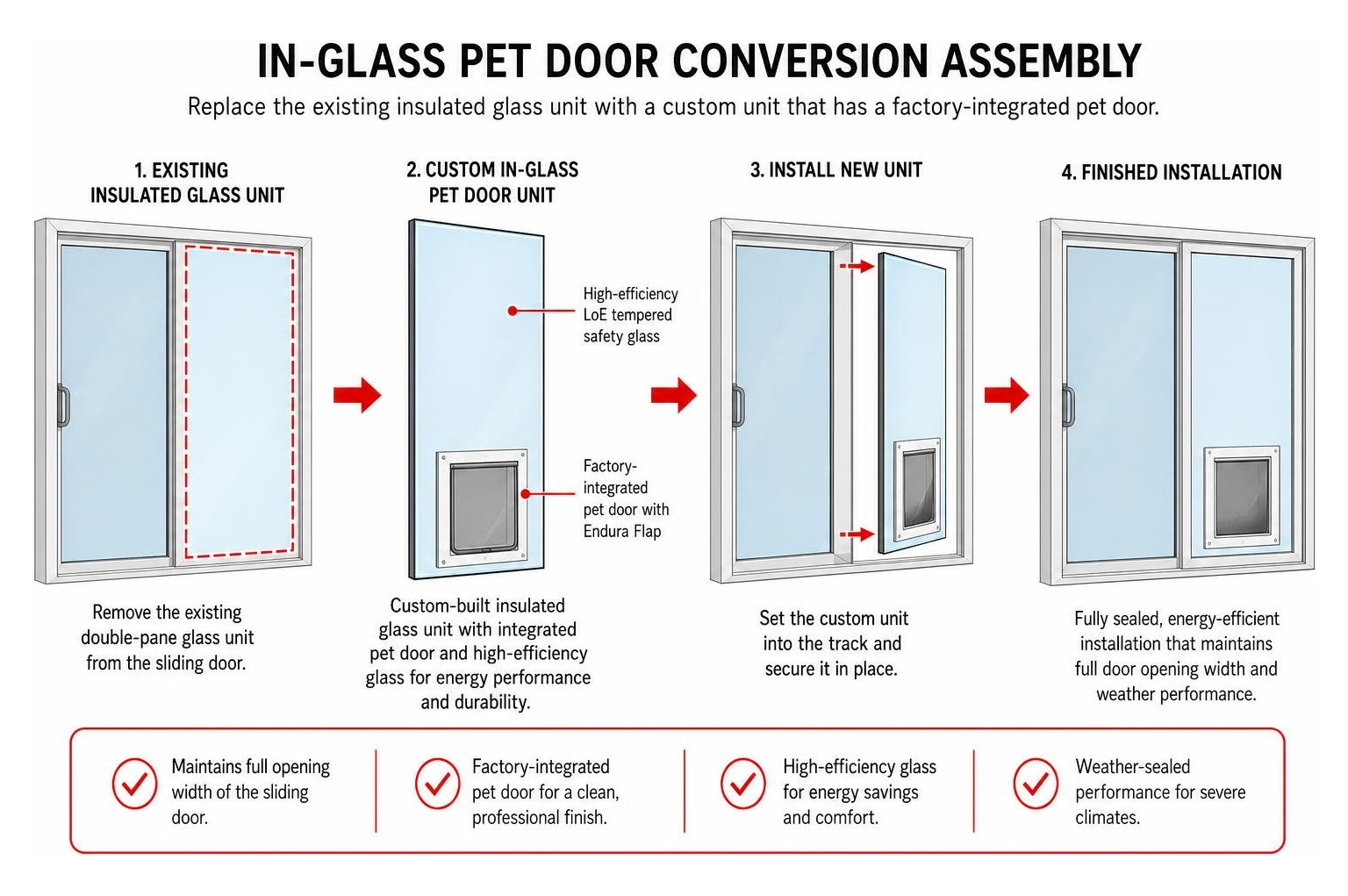
Manufacturers such as Pet Door Products utilize high-efficiency Cardinal LoE 270, 340, or 366 tempered safety glass paired with polyolefin polymer Endura Flaps rated down to –40°F. While this option represents a higher investment, exploring the complete guide to sliding patio door options prices helps put the long-term energy savings and aesthetics into perspective. It maintains the full opening width of your sliding door and retains factory-grade weather sealing against harsh Midwest winters.
How to Measure Your Patio Track and Pet Accurately
A proper fit prevents drafts, rattling, and pet discomfort. Taking precise measurements ensures the panel seats securely into the frame channels.

Step-by-Step Measurements for a Dog Door Sliding Glass Door
To choose the correct insert height, avoid relying on nominal door sizes (such as “standard 80-inch door”) and record exact fractions:
- Measure Vertical Track Height: Fully open your sliding door. Place a tape measure inside the deepest channel of the bottom track and measure vertically to the deepest interior point of the top track. Standard patio doors generally range from 75 7/8 inches to 81 inches, while tall custom doors span 91 to 96 inches.
- Determine Track Width: Measure the width of the bottom track channel. Aluminum door tracks typically measure between 1.0 and 1.5 inches wide, whereas modern vinyl patio doors measure 1.5 inches or wider.
- Inspect Track Style: Check if your bottom track features an exposed cylindrical pencil rail or a recessed channel. If your frame is flush or recessed, check the weekend warriors guide to easy diy pet door slider kits to see if an additional track adapter kit is needed.
Sizing Pet Flaps and Step-Over Heights
A pet door should accommodate your dog’s physical build without forcing them to crouch or scrape their back.
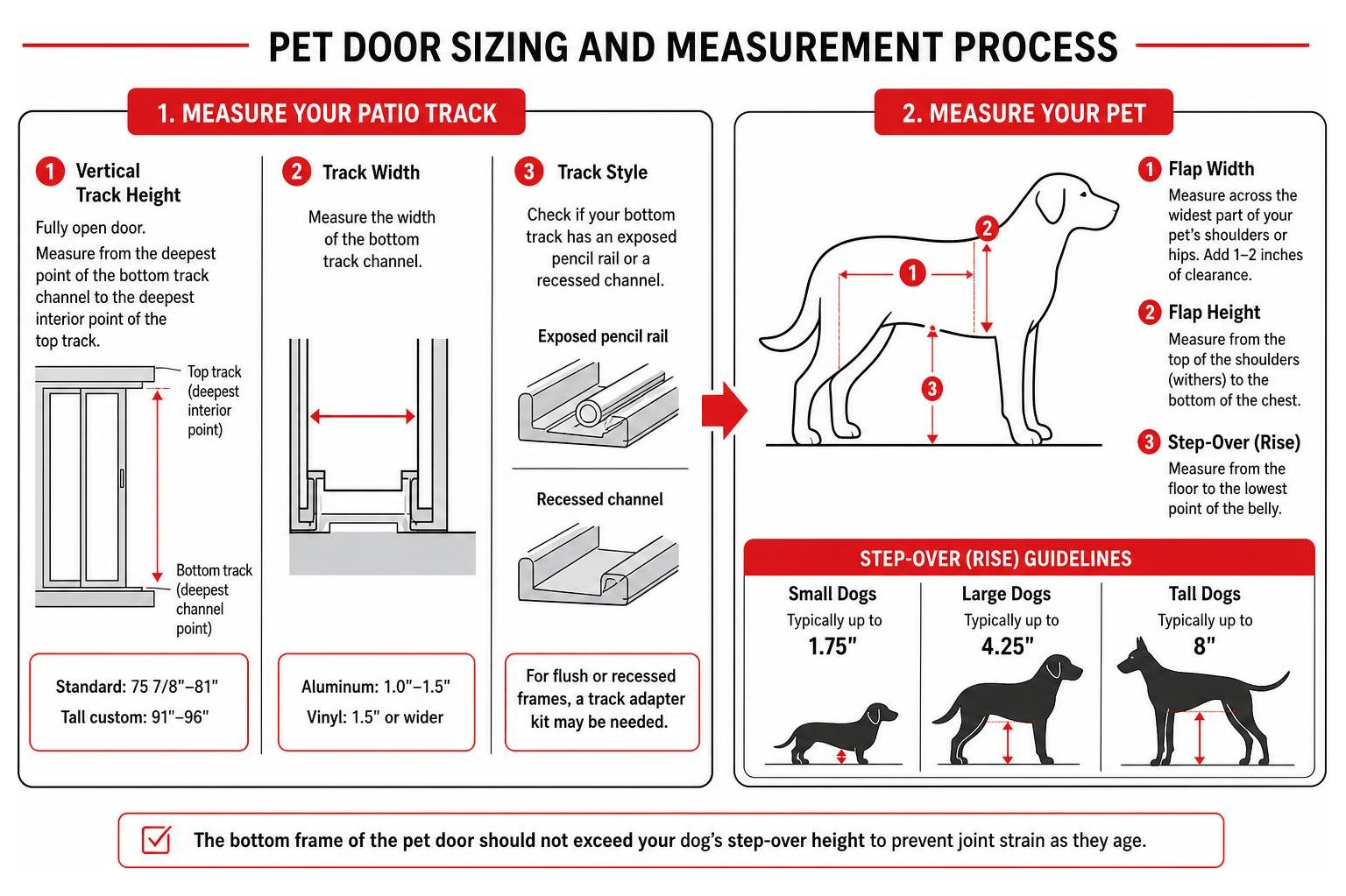
- Flap Width: Measure your pet across the widest part of their shoulders or hips and add at least 1 to 2 inches of clearance.
- Flap Height: Measure from the top of your pet’s shoulders (withers) to the bottom of their chest.
- Step-Over (Rise): Measure the distance from the floor to the lowest point of your dog’s belly. The bottom frame of the pet door should not exceed this height (typically 1.75 inches for small dogs, 4.25 inches for large breeds, and up to 8 inches for tall dogs) to prevent joint strain as they age.
Step-by-Step DIY Installation and Weatherproofing on a Budget
Installing a budget panel insert requires minimal equipment. A standard sliding glass door dog door installation can be completed in about 30 minutes.
Installing a Modular Track Insert Without Power Tools
- Clean the Tracks: Thoroughly vacuum and wipe down the upper and lower channels with rubbing alcohol to remove debris.
- Compress and Position: Loosen the height adjustment thumb-screws on the insert. Angle the top of the panel into the upper track against the internal spring mechanism, then swing the base inward until it rests over the bottom track rail.
- Adjust Tension: Extend the adjustable top section until the panel fits snugly between both tracks. Tighten the interior locking screws to hold the panel in place.
- Apply Weatherstripping: Adhere high-density foam seals along the side of the insert panel where it contacts the door jamb, and place the vertical draft stopper along the overlapping glass edge to review techniques from energy efficient pet door installation il keeping the cold out.
Upgrading Security for Your Dog Door Sliding Glass Door
Because a track insert sits between the sliding panel and the wall jamb, the factory latch mechanism is offset and will no longer engage with its original strike plate. To maintain home security on a budget:
- Charley Bar / Security Bar: Mount an adjustable telescoping security bar horizontally between the back edge of the sliding panel and the door frame.
- Track C-Clamps: Fasten a heavy-duty C-clamp lock onto the bottom track directly behind the sliding door to block manual sliding.
- Slide-In Locking Cover: Insert the rigid ABS or steel-reinforced closing panel into the pet door frame at night or while away to block external access through the flap.
Frequently Asked Questions About Sliding Patio Pet Doors
Can I still lock and use my sliding glass door normally?
Yes, but the insert narrows the usable human walk-through opening by the width of the panel (usually 10 to 16 inches). The sliding panel still operates smoothly, but because the primary factory lock is offset, you will rely on an auxiliary track clamp, a Charley bar, or a supplemental latch kit to secure the door.
How do I stop drafts and keep energy bills low in cold weather?
In northern Illinois, single-pane inserts can experience condensation and air leakage. To optimize insulation:
- Select an insert with dual-pane Low-E tempered glass.
- Choose flaps equipped with continuous magnetic perimeter seals or a triple-flap configuration.
- Install a vinyl or foam center-post draft sweep along the vertical seam where the active sliding glass pane overlaps the stationary glass pane.
How long does it take to train a dog to use a sliding door flap?
Most dogs learn to use a sliding door pet flap within 1 to 3 days. Begin by propping the flap fully open with tape. Stand on the opposite side and encourage your dog through with praise and treats. Once comfortable passing through the opening, lower the flap and gently guide them to push through with their nose. For timid pets, you can temporarily remove a few perimeter magnets to reduce opening resistance until they gain confidence.
Conclusion
Installing a budget-friendly sliding glass dog door gives your pet independent backyard access without requiring costly structural modifications or risking security deposits. Whether you choose a removable modular track panel, a smart automated opener, or explore permanent sliding glass door installation options, accurate track measurements and proper weather sealing will keep your home comfortable year-round.
At Rooster Windows and Doors, LLC, we deliver high-quality, energy-efficient patio door solutions across Chicago and the surrounding northern suburbs. When you are ready to upgrade your patio door system with professional craftsmanship and durable materials, our team is here to assist with every phase of your project.
