

Choosing the Right Style for Your Home’s Windows
Deciding Between Casement and Double-Hung Windows
Choosing new windows for your home means balancing style, function, and practicality. Many homeowners find themselves wondering about the differences between casement windows vs double hung styles. Both are popular options, each offering unique benefits that can significantly impact your home’s curb appeal, energy efficiency, and daily comfort.
Here’s a quick look at their main differences:
- Casement Windows: These windows are hinged on one side and open outward with a crank handle, like a door. They offer unobstructed views and create a very tight seal when closed, leading to excellent energy efficiency. They can also “scoop” breezes into your home for great ventilation.
- Double-Hung Windows: Featuring two sashes that slide vertically up and down, double-hung windows provide a classic, timeless look. They allow for versatile ventilation from either the top or bottom sash, and modern designs often tilt inward, making them very easy to clean.
At Rooster Windows and Doors, LLC, we have over two decades of experience installing windows and doors in the Chicagoland area, and we’ve helped countless homeowners navigate the choices between casement windows vs double hung to find the perfect fit for their homes. Let’s explore these options to help you make an informed decision.
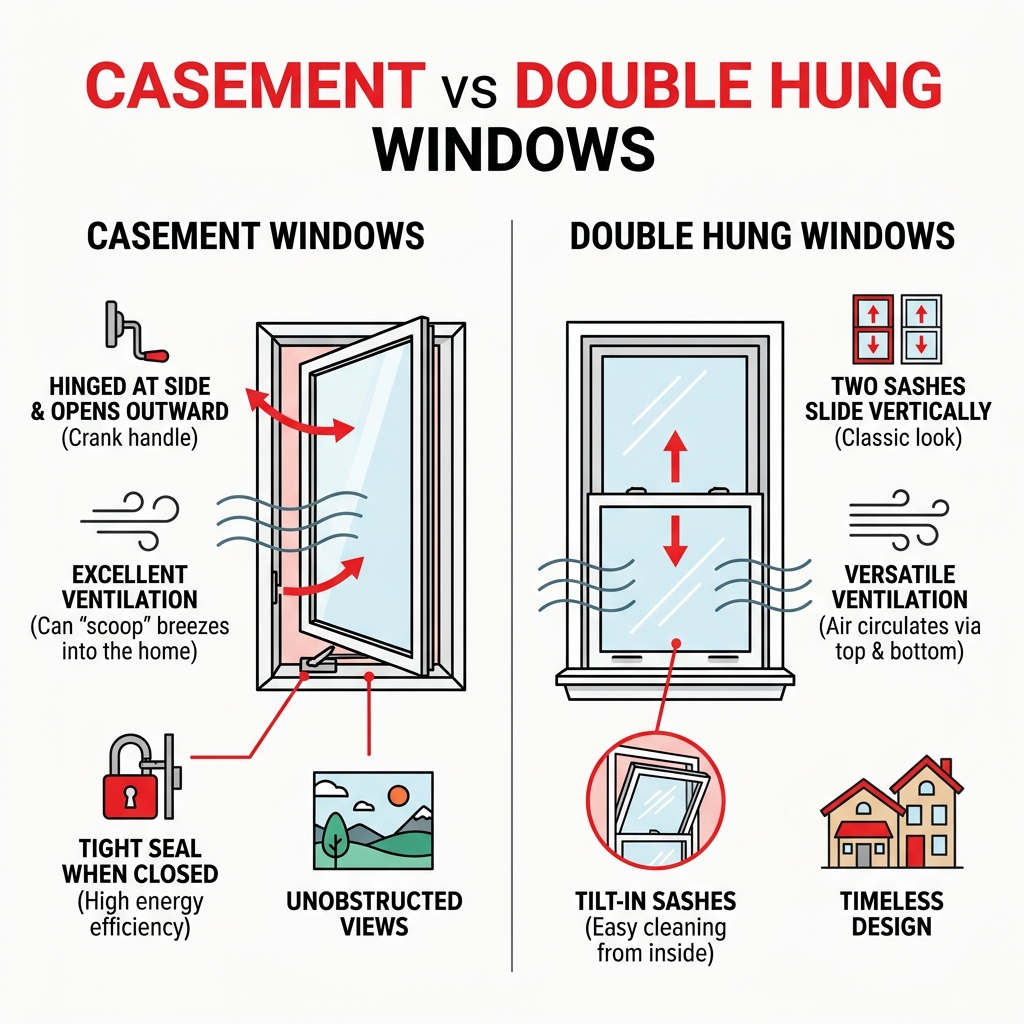
Casement windows vs double hung glossary:
Understanding the Mechanics: Casement Windows vs Double Hung
When we look at casement windows vs double hung options, the most fundamental difference lies in how they move. Think of it as the difference between a door and a sliding gate. One swings on a radius, while the other stays within its own tracks.
The Double Hung Window Explained: Everything You Need to Know highlights that these windows are the traditional backbone of American architecture. They consist of two sashes—the glass-filled frames—that slide vertically. Conversely, Replacement Casement Windows are often described as “crank windows” because they rely on a mechanical arm to push the window outward.
Operating a Casement Window
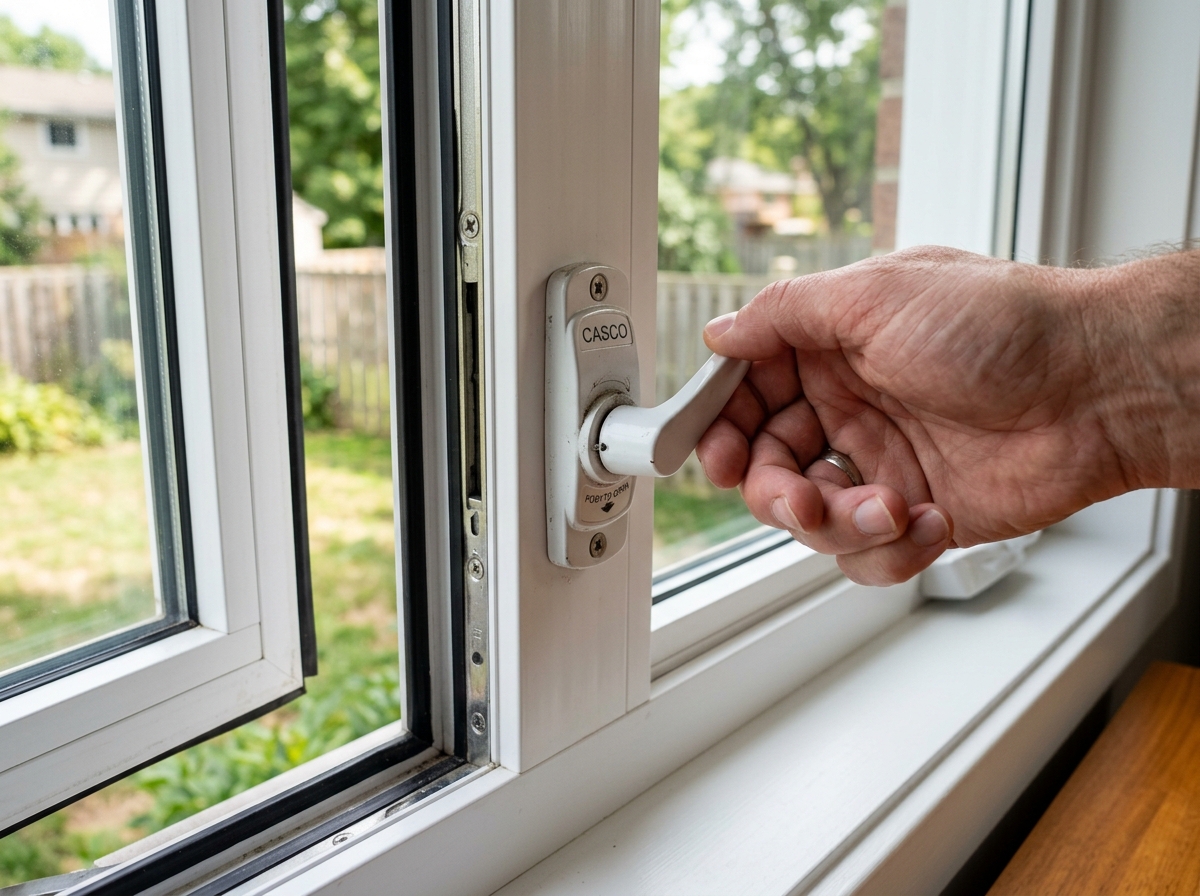
Operating a casement window is generally a low-effort task. You simply fold out a small crank handle and turn it. As you turn, the sash swings outward on side-mounted hinges. This allows the window to open a full 100%, providing a massive amount of airflow compared to other styles.
There are various Types of Casement Windows, including French casements that open from the center without a middle post, but the standard side-hinged version is what most of our Chicago neighbors choose for its simplicity and clear views.
Operating a Double-Hung Window
A double-hung window operates by sliding the sashes up or down. Unlike single-hung windows, where only the bottom moves, Double Hung vs Single Hung Windows offer movement for both the top and bottom panels.
Modern double-hung units use a spring-loaded balance system. This hidden mechanism counteracts the weight of the glass, so you don’t have to be a weightlifter to get some fresh air. You simply unlock the latch and slide the sash to your desired height. Because the sashes stay within the frame, they don’t take up any “swing space” outside your home.
Performance Comparison: Energy Efficiency, Sealing, and Security
In the Chicagoland climate—where we deal with everything from humid 90-degree summers to “The Hawk” wind off Lake Michigan in January—performance is everything.
When comparing casement windows vs double hung for energy efficiency, casements generally take the crown. This is due to their “compression seal.” When you crank a casement window shut and lock it, the sash is pressed firmly against the weather stripping on all four sides of the frame. It’s a lot like how a refrigerator door seals shut.
Double-hung windows are very efficient when properly installed by a professional team like ours, but because the sashes must slide, the seals are “brush-like” or sliding seals. Over many years, these can wear down more easily than a compression seal, potentially leading to minor air seepage.
Security is another vital factor. Casement windows are notoriously difficult to break into from the outside because the hardware is tucked inside and the sash is flush with the frame. However, double-hung windows offer excellent peace of mind when equipped with modern Double Hung Window Locks.
Airflow and Ventilation: Casement Windows vs Double Hung
If you love a fresh breeze, the casement windows vs double hung debate has a clear winner in terms of volume. Because a casement opens fully, it captures 100% of the window opening for ventilation. Even better, if the wind is blowing alongside your house, an open casement sash can act like a “scoop” or a sailboat sail, directing that air straight into your living room.
Double-hung windows are limited to a 50% opening (since one sash always covers the other). However, they offer a unique “natural convection” trick. If you open both the top and bottom sashes slightly, cool air enters through the bottom while warm air escapes through the top. This creates a gentle, circular airflow that many of our clients find perfect for bedrooms. You can learn more about these nuances in our Double Hung Windows Complete Guide.
Security and Durability Features
Both window styles are built to last, but they have different “wear points.”
- Casement Windows: The crank mechanism and hinges are the most active parts. If they aren’t lubricated, they can become stiff over time.
- Double-Hung Windows: The spring balances and tracks are the main mechanical components. In older homes, you might see “dropped windows” where a balance fails, but our modern installations use heavy-duty hardware to prevent this.
For those dealing with older units, checking out a Double Hung Window Repair Complete Guide can help you identify if it’s time for a simple fix or a full replacement.
Practical Considerations: Maintenance, Cleaning, and Cost
Choosing between casement windows vs double hung often comes down to the “Saturday Morning Test”—how much work is it going to be to keep them looking good?
| Feature | Casement Windows | Double-Hung Windows |
|---|---|---|
| Cleaning | Easy with “Easy-Wash” hinges | Very Easy with tilt-in sashes |
| Screens | Located on the inside | Located on the outside |
| Exterior Space | Needs clearance to swing out | No exterior clearance needed |
| Maintenance | Requires annual crank lubrication | Requires track vacuuming |
Ease of Cleaning and Maintenance
If you live in a multi-story home in Arlington Heights or Naperville, you probably don’t want to be on a 20-foot ladder every spring. Modern double-hung windows are a dream for this because both sashes tilt inward. You can clean the outside glass while standing comfortably inside your room.
Casement windows have improved significantly in this area too. Many now feature “Easy-Wash” hinges that create a gap between the sash and the frame when opened, allowing you to reach around and wipe the exterior glass from the inside.
For maintenance, we recommend a simple routine:
- Vacuum the tracks: For double-hung windows, keeping the bottom track free of grit ensures a smooth slide.
- Lubricate: Use a dry silicone spray on casement cranks and hinges once a year to keep them turning like butter.
Cost Analysis: Casement Windows vs Double Hung
When it comes to your budget, there is a noticeable difference. Generally, casement windows vs double hung pricing shows that casements are more expensive. Research indicates that casement windows can sometimes cost up to twice as much as a standard double-hung window.
Why the price gap? It comes down to mechanical complexity. A casement window requires a complex crank system, reinforced hinges, and a multi-point locking system to ensure that airtight seal.
- Standard Double-Hung: Typically ranges from $400 to $900 per window installed.
- Standard Casement: Typically ranges from $430 to $1,060+ per window installed.
Material also plays a role. While vinyl is a popular and cost-effective choice for both, moving to fiberglass can bring the prices closer together. For a deep dive into local Chicago pricing and options, see our Double Hung Windows Chicago Ultimate Guide.
Choosing the Best Style for Your Home Architecture
Architecture should play a huge role in your decision. We’ve found that certain styles just “belong” on certain homes.
Double-Hung Windows are the “classic and timeless” choice. If you live in a Colonial, Craftsman, or Victorian home in Lake Forest or Evanston, double-hung windows with traditional grid patterns (grilles) maintain that historic charm. They look fantastic in rows and provide that symmetrical, balanced look that traditional architecture demands.
Casement Windows are “modern to the max.” They offer clean, simple lines and a large, unobstructed pane of glass. If you have a contemporary home or a mid-century modern gem in Highland Park, casements offer that “picture window” feel while still being able to open.
Pro-Tip on Placement: One of the best places for a casement window is over a kitchen sink. Trying to lean over a countertop to lift a heavy double-hung sash can be a literal pain in the back. With a casement, you just reach out and turn the crank. It’s much more accessible for everyone, including those with limited mobility.
For more on how sashes impact your home’s look, check out Modern Double Hung Windows: The Sashes That Make the House.
Frequently Asked Questions about Window Styles
Which window type is more energy efficient?
Casement windows are generally more energy-efficient. Because the sash presses directly against the frame when locked, it creates an airtight compression seal similar to a high-end exterior door. While double-hung windows are very efficient, their sliding design naturally allows for slightly more air intrusion over time compared to the “clamped” seal of a casement.
Can I use a window A/C unit with casement windows?
This is a common “deal-breaker” for some. Standard window A/C units are designed for windows that slide up and down (double-hung). They do not fit in casement windows. If you rely on window units for cooling, double-hung is the way to go. If you have casement windows and need an A/C unit, you would have to invest in a specialty “vertical” unit or a portable floor unit with a venting kit, which can be more expensive and less efficient.
Which style is better for hard-to-reach areas?
Casement windows are the clear winner for hard-to-reach spots. Because they operate with a crank located at the bottom of the frame, you don’t need much leverage to open them. This makes them ideal for placement behind kitchen sinks, over large soaking tubs, or in high-ceilinged rooms where reaching the top of a double-hung sash would be impossible without a step stool.
Conclusion
At the end of the day, the choice between casement windows vs double hung depends on your specific needs, your home’s architectural style, and your budget. Whether you want the maximum ventilation and modern look of a casement or the timeless versatility and easy cleaning of a double-hung, we are here to help.
At Rooster Windows and Doors, LLC, we pride ourselves on providing high-quality, flawless installations across the Chicagoland area—from Joliet to Waukegan and everywhere in between. We don’t just “install” windows; we ensure they are perfectly sealed and energy-efficient to stand up to our tough Illinois winters.
Ready to upgrade your home’s comfort and curb appeal? Explore our Double Hung Windows options or contact us today to discuss your project. We’ll help you find the perfect opening style for your unique home.

