

Why Your Front Door Choice Matters More Than You Think
Choosing an exterior door with a glass panel is one of the most impactful decisions you can make for your home’s curb appeal, comfort, and security. The right door lets in natural light, makes your entryway feel larger, and tells visitors something about your home before they even step inside.
Quick answer — key benefits of an exterior door with a glass panel:
- More natural light — glass panels brighten dark entryways without needing extra lighting
- Better curb appeal — glass adds visual interest and a welcoming feel
- Higher resale value — front entry doors with glass can boost home value by up to 5–10%
- Convenient visibility — see who’s at the door without a peephole
- Style flexibility — available in dozens of designs to match any home architecture
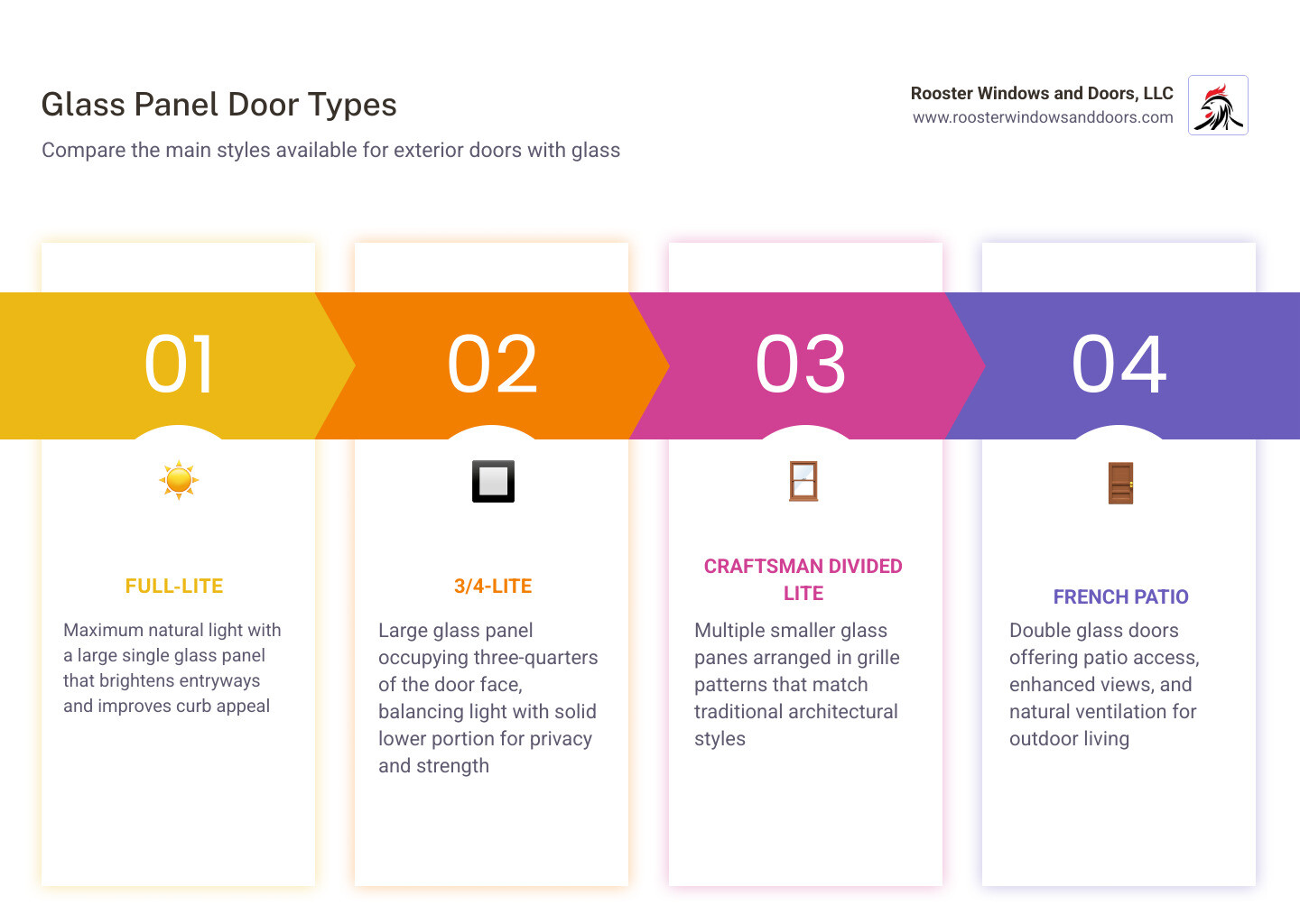
Glass panel doors come in many forms — from full-lite and 3/4-lite front doors to French patio doors and craftsman-style divided lites. Each option balances light, privacy, and security differently. This guide walks you through all of it.
I’m Piotr Wilk, and through Rooster Windows and Doors, LLC, my team and I have spent over two decades installing exterior doors with glass panels across Chicagoland — helping homeowners in Lake, Cook, and McHenry County find the right fit for their home, climate, and budget. Whether you’re replacing a single entry door or upgrading a full patio setup, we’ve seen what works and what doesn’t.
Why Choose an exterior door with glass panel?
A well-chosen glass panel door does more than look nice in listing photos. It can brighten a closed-off foyer, make a narrow entrance feel wider, and add character that a plain slab door often lacks. For many homeowners, that first burst of daylight is the feature they love most.
Front entry doors with glass panels may also improve resale appeal. Research commonly cites a potential bump of up to 5-10% in curb appeal and perceived value when the entry feels brighter and more polished. That is not magic, of course. A beautiful door still needs the right proportions, hardware, and installation. But the right combination can make a strong first impression.

Main benefits homeowners notice first
The biggest day-one benefits are usually simple:
- More daylight in the foyer or mudroom
- Better sightlines to the porch or yard
- A more open, spacious feel
- Stronger curb appeal from the street
- Easier connection to patios and outdoor living spaces
That last one matters more than people expect. In patio and back-door locations, glass panels help visually connect indoor and outdoor spaces, which makes entertaining feel easier and everyday traffic less awkward.
How an exterior door with glass panel adds value beyond looks
Looks matter, but function is what makes people happy six months later.
A glass panel door can improve daily convenience by helping you see visitors, monitor package deliveries, or keep an eye on the yard. It can also reinforce your home’s architecture. Craftsman lites, modern square glass layouts, and decorative privacy glass all create a different tone.
When buyers walk into a bright entry instead of a dim one, the whole home often feels more cared for. That is one reason Door Glass Panel choices matter beyond decoration.
Best placements for an exterior door with glass panel
The most common and practical locations include:
- Front entry doors
- Back entry or side doors
- Patio and garden doors
- Doors with sidelites
- Doors with transoms above the slab
Sidelites are especially useful when you want more light without committing to a larger glass area in the door itself. A transom can do the same thing higher up, which is great for privacy.
Glass Types, Privacy Levels, and Security Features That Matter
Not all glass is created equal. One panel might offer a crystal-clear view; another may blur shapes while still letting in sunlight. The trick is matching glass type to your priorities: privacy, security, energy performance, and style.

Here is a simple comparison of common options:
| Glass type | Privacy | Light | Security notes | Best use |
|---|---|---|---|---|
| Clear | Low | High | Best when paired with strong locks and placement awareness | Modern entries, patios |
| Frosted | High | Medium-high | Good privacy without losing brightness | Front doors near street |
| Rain | Medium-high | High | Textured surface obscures direct view | Decorative front entry |
| Decorative/beveled | Medium to high | Medium-high | Style-focused, often paired with insulated units | Traditional and statement entries |
Best glass options for an exterior door with glass panel
For most homes in our service area, we recommend prioritizing these features:
- Tempered safety glass
- Dual-pane insulated glass
- Low-E coated glass
- Obscure or textured glass when privacy matters
- Grilles between glass if you want divided-lite style with easier cleaning
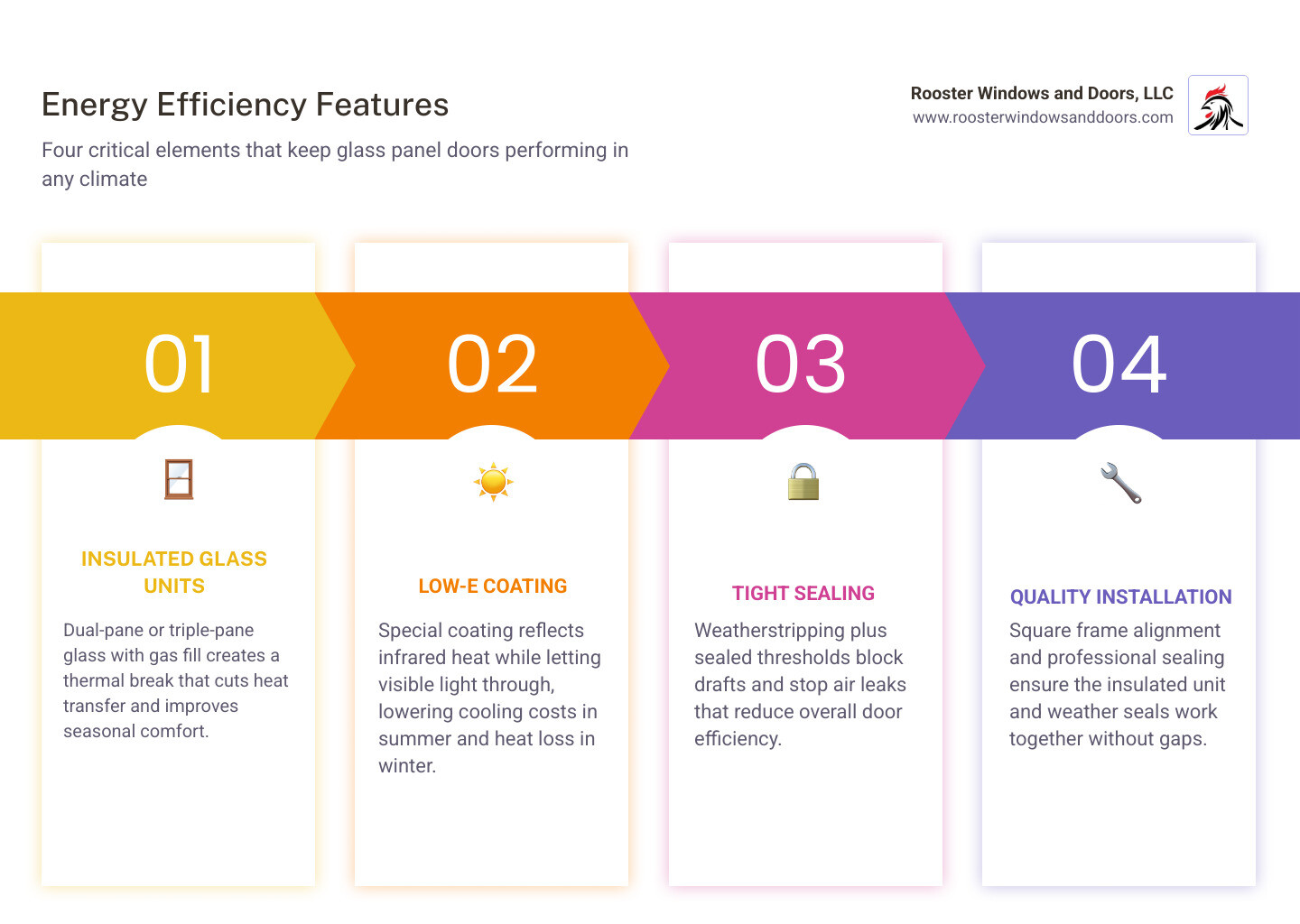
Tempered glass is designed to break into smaller, less dangerous pieces than standard glass. Insulated dual-pane glass reduces heat transfer. Low-E coatings help reflect heat in summer and retain warmth in winter. In a climate with cold winters and humid summers, that combination matters.
Decorative options can include frosted, rain, beveled, stained, or etched looks. If you want privacy without turning your entry into a cave, textured glass usually gives a better balance than dark tint.
How glass choice affects security and privacy
Security concerns around glass doors are understandable. Nobody wants a beautiful door that feels vulnerable.
The good news is that modern exterior door glass can be quite secure when the whole system is designed properly. Tempered glass is standard in many exterior applications. Laminated glass adds another layer of protection because it holds together better when struck. This can slow forced entry and reduce the chance of a clean opening.
Privacy depends on visibility control:
- Clear glass gives the most visibility in both directions
- Frosted and rain glass obscure details
- Decorative patterns can hide direct sightlines while still admitting light
- Higher-placed or smaller lites can preserve privacy better than full-view glass
If privacy is your top concern, a 3/4-lite or smaller decorative layout often works better than a full-lite clear panel.
Security upgrades to look for in the door frame and hardware
Glass is only part of the security story. The frame, lockset, strike plate, hinges, and installation quality matter just as much.
Look for:
- Multi-point locking systems
- Quality deadbolts
- Reinforced frames
- Strong lock blocks in the slab
- Security hinges or hinge bolts
- Smart locks with secure integration
- Professionally aligned thresholds and weather seals
A multi-point lock secures the door at several locations rather than one. That can improve both security and weather compression. If you want a deeper overview of glass insert performance and design, see our guide on Door Glass Panel.
Energy Efficiency, Insulation, and Weather Resistance
A lot of homeowners still assume that glass automatically means energy loss. That may have been true of old single-pane units, but it is not the whole story today.
Modern glass panel doors can perform very well when they include insulated glazing, quality weatherstripping, and an energy-efficient slab material such as fiberglass with a foam core.
How glass panel doors can still be energy efficient
The best-performing glass panel doors usually combine:
- Double-pane insulated glass
- Low-E coatings
- Gas fill between panes in some units
- Foam-insulated cores
- Tight weatherstripping
- Well-sealed thresholds
Single-pane glass performs poorly compared with insulated glazing. Dual-pane units create a thermal break that reduces heat transfer. Triple-pane glass can offer even better insulation in premium products, though it is not necessary for every project.
Proper installation is a huge part of energy performance. Even an efficient door can draft if the frame is out of square or the weather seal is poorly fitted. That is why our Exterior Door Installation process focuses on fit, sealing, and long-term performance rather than just getting the slab to swing.
What improves weather resistance and long-term durability
Door material plays a major role in durability:
- Fiberglass resists rot, dents, and everyday weather exposure well
- Steel offers strong security and durability but can dent and conduct temperature more readily
- Wood has natural beauty and insulating value, but requires more maintenance and protection from moisture
Fiberglass is often the sweet spot for homes in Libertyville, Lake Forest, Highland Park, Vernon Hills, Grayslake, Mundelein, Lake Zurich, Buffalo Grove, Deerfield, Gurnee, Waukegan, Antioch, Crystal Lake, Algonquin, Cary, McHenry, Woodstock, Huntley, Fox River Grove, Arlington Heights, Palatine, Schaumburg, Evanston, Northbrook, Glenview, Des Plaines, Mount Prospect, Hoffman Estates, Barrington, and Chicago because it handles seasonal swings well and stays relatively low-maintenance.
An overhang helps too, especially for wood doors. So do good caulking details, sill pans, and proper flashing. Glamorous? No. Important? Extremely.
Exterior door with glass panel performance in hot, cold, and wet climates
In northern Illinois conditions, a door has to handle:
- Winter cold and wind
- Summer heat and humidity
- Driving rain
- Freeze-thaw cycles
That means we look carefully at expansion and contraction, seal compression, water management, and the quality of the threshold system. Fiberglass and insulated glass units tend to manage these conditions better than older wood or single-pane setups. Storm doors can also help seasonal comfort, especially models with interchangeable screen and glass panels.
Styles, Materials, and Custom Design Options
This is the fun part. Also the part where people accidentally spend three nights comparing black hardware finishes.
Exterior doors with glass panels are available in styles ranging from classic to very modern, with enough configuration choices to make your head spin in a decorative but manageable way.
Matching door styles to home architecture
A few reliable style pairings:
- Colonial homes: symmetrical divided lites, classic decorative glass, sidelites
- Craftsman homes: vertical glass near the top, 3-lite or 6-lite patterns
- Contemporary homes: clean lines, square glass panels, minimal hardware
- Mid-century homes: sleek slab profiles with geometric glass
- Rustic or farmhouse homes: warmer wood-look finishes and simple lite layouts
- Brick homes: dark contrast colors often look especially sharp
- Stucco or minimalist exteriors: flush modern designs work well
If you are replacing an outdated entry, our article on Types of Front Doors can help narrow down what fits your architecture.
Material choices: fiberglass vs steel vs wood
Here is the short version:
Fiberglass
- Best balance of insulation, durability, and low maintenance
- Can mimic wood grain convincingly
- Usually more dent-resistant than steel
Steel
- Strong and budget-conscious
- Good security profile
- Can dent and may need attention if finish damage leads to corrosion
Wood
- Beautiful and customizable
- Naturally insulating
- Requires more upkeep, especially in exposed locations
If you want a stainable wood look without the higher maintenance demands, fiberglass is often the practical winner. If budget is tight, steel can be a solid option. If authenticity matters above all else and the entry is protected, wood can still be a great choice.
Customization options for size, color, glass, and hardware
A quality exterior door with glass panel can often be customized in these ways:
- Prehung or slab format
- Inswing or outswing
- Left-hand or right-hand operation
- Custom sizes
- Paint or stain colors
- Clear, frosted, rain, reeds, or decorative glass
- Sidelites and transoms
- Handlesets, levers, and smart lock compatibility
- Grille patterns and divided-lite layouts
Prehung units often provide the best overall fit for replacement projects because the frame, hinges, and slab are designed to work together. If you are considering a fully tailored look, explore Custom Entry Doors and our Custom Entry Door Installation services.
Product Roundup: Top Exterior Glass Panel Door Configurations to Consider
A product roundup works best when it is based on needs, not just looks. We usually help homeowners sort options by four factors:
- How much light they want
- How much privacy they need
- Their security priorities
- The opening size and existing framing
Full-lite and 3/4-lite front doors for maximum light
Best for homeowners who want a bright, open entry.
- Full-lite doors maximize natural light and create a dramatic look
- 3/4-lite doors keep the upper and middle area bright while adding a bit more privacy below
- Decorative or rain glass makes these options more comfortable for front-facing entries
A good real-world example of this style is a 3/4-lite rain decorative glass fiberglass prehung front door, which combines privacy texture with a substantial glass area.
Craftsman and modern paneled doors with divided lites
Best for homeowners who want character without too much exposure.
- 3-lite and 6-lite craftsman doors suit bungalows and traditional homes
- 5-lite and square-glass modern doors fit contemporary facades
- Divided-lite looks can be achieved with true divisions or grilles between glass
These styles often hit the sweet spot between daylight, privacy, and architectural detail. For many homes, this is the “looks expensive without trying too hard” category.
Patio and French door setups with sidelites or venting panels
Best for entertaining, yard access, and open-plan homes.
- French patio doors feel classic and symmetrical
- Sliding glass doors save floor space
- Sidelites bring in extra daylight
- Venting sidelites can add airflow in select configurations
For example, a steel patio door with venting sidelites shows how glass-heavy configurations can combine access, light, and ventilation. If you are replacing a dated patio setup, our article Open Up to Style with a Fresh Front Door Replacement offers helpful inspiration for the broader update.
Storm and security door combinations for ventilation and protection
Best for homeowners who want layered performance.
- Storm doors with interchangeable glass and screen panels help with seasonal flexibility
- Security doors can add a protective outer layer
- Some security designs use metal screening that allows safer airflow
This combo can be especially useful where ventilation matters but you still want protection and better insulation through the year.
Cost, Maintenance, and How to Buy with Confidence
Price matters, but value matters more. The cheapest door is rarely the cheapest long-term choice if it drafts, sticks, or needs early replacement.
How glass panel doors compare in price and value to solid doors
In general, glass panel doors cost more than solid slabs because of:
- Insulated glass units
- Decorative glass upgrades
- More complex manufacturing
- Added hardware or configuration options
- Installation details for prehung systems and sidelites
But that higher upfront cost can be offset by better curb appeal, stronger resale appeal, and improved comfort when the door is well built. Fiberglass doors with decorative insulated glass often sit in the middle-to-upper price range, while steel with simpler glass inserts can be more budget-friendly.
The best value comes from choosing the right product category for your priorities instead of paying premium money for features you do not actually need.
Simple maintenance that keeps doors looking and working well
Glass panel exterior doors do not require constant fussing, but they do benefit from regular care:
- Clean glass with non-abrasive cleaner
- Wipe down frames and hardware
- Check weatherstripping for wear
- Lubricate hinges and lock components
- Inspect exterior caulk lines
- Refinish or reseal wood doors as needed
- Confirm the threshold still seals properly
A quick seasonal check can prevent air leaks and moisture issues. If your current entry is showing age, our guide on Replace Entry Door can help you decide whether repair or replacement makes more sense.
Where to buy a quality exterior door with glass panel and what to ask
Whether you buy through a showroom, manufacturer partner, or contractor, ask these questions:
- Is the glass tempered or laminated?
- Is the unit dual-pane and Low-E coated?
- Is it prehung or slab-only?
- What warranties cover glass, finish, and hardware?
- Who handles installation?
- How are measurements verified?
- What lead times should we expect?
- Will the installation meet local code requirements?
Also pay attention to the installer’s experience. A high-quality unit can underperform if it is not sealed and aligned correctly. We cover that in more depth in Doorway to Success: Choosing the Right Contractor for Your Custom Entry Door and our guide to Best Quality Doors.
Frequently Asked Questions About exterior door with glass panel
Are exterior doors with glass panels safe enough for a main entry?
Yes, they can be very safe when the complete system is chosen well. Look for tempered safety glass at minimum, and consider laminated glass for extra break-in resistance. Pair that with a reinforced frame, quality deadbolt or multi-point lock, and professional installation.
Do glass panel exterior doors make a home less energy efficient?
Not necessarily. Older single-pane doors often did, but modern insulated glass doors can perform very well. Dual-pane glass, Low-E coatings, foam-insulated cores, weatherstripping, and proper installation all help maintain efficiency and comfort.
Should I choose prehung or slab for an exterior door with glass panel?
If the frame is old, out of square, damaged, or drafty, prehung is usually the better choice. It gives you a new slab, frame, and hinge system designed to work together. A slab replacement can make sense when the existing frame is in excellent condition and the measurements are exact, but it allows less room for error.
Conclusion
Choosing the right exterior door with glass panel comes down to balance: light, privacy, security, efficiency, style, and budget. The best door is not always the one with the most glass or the boldest design. It is the one that fits your home, your climate, and the way you actually live.
At Rooster Windows and Doors, we help homeowners across our Chicagoland service area sort through those choices and install doors that are built to look great and perform well. If you are planning a replacement and want a polished, energy-efficient result, explore our door services or learn more about Custom Home Doors.
