

Why Invest in a House Front Door Replacement?
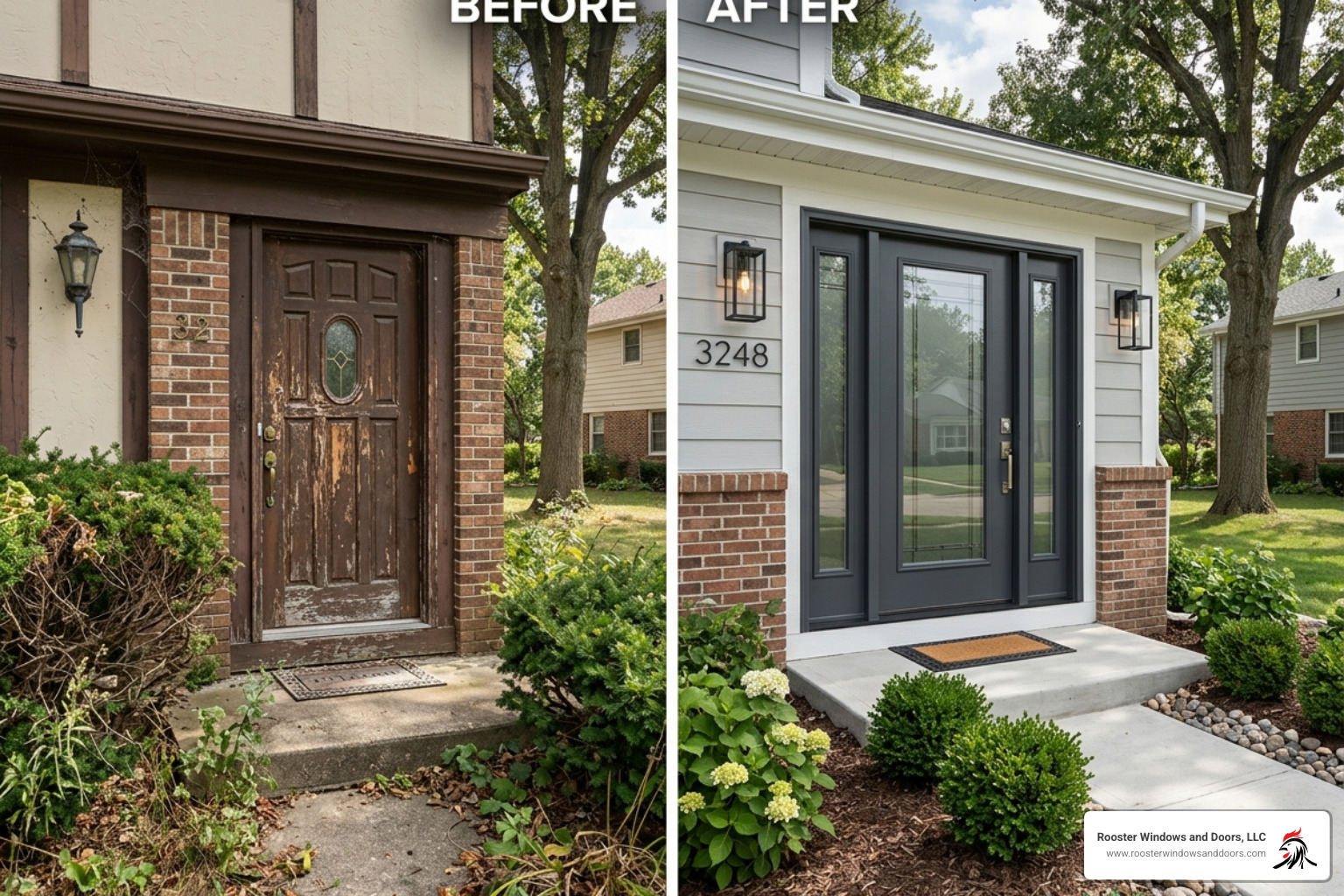
When you look at your home from the curb, the front door is often the focal point. It is the “handshake” of your house. Investing in a house front door replacement isn’t just about aesthetics; it’s a strategic move for your property’s longevity and your own comfort.
Boosting Property Value and Curb Appeal
First impressions are everything. Research shows that a new front door is one of the top home improvement projects for return on investment. Whether you are in Naperville or Arlington Heights, a stylish new entrance can instantly increase your home’s resale value. It signals to neighbors and potential buyers that the home is well-maintained.
Draft Reduction and Energy Efficiency
If you feel a chill every time you walk past your foyer in the winter, your door is likely the culprit. Older doors often have failing weatherstripping or warped frames that allow conditioned air to escape. By choosing to replace entry door systems that are outdated, you can significantly lower your utility bills. Modern doors feature advanced insulation cores and high-performance glazing that keep the Chicago cold out and the comfort in.
Enhanced Security and Soundproofing
Your front door is your first line of defense. New doors come with reinforced strike plates, multi-point locking systems, and sturdier materials that deter intruders. Additionally, a thick, well-sealed door acts as a sound barrier. If you live near a busy street in Evanston or Schaumburg, you’ll notice a dramatic decrease in traffic noise once a high-quality replacement is installed. For a deeper dive into your options, check out A Guide to Front Door Replacement Options for Your Entry.
Selecting the Best Material for Your Home
Choosing the right material is the most critical decision in the house front door replacement process. Each material has its own set of strengths regarding durability, maintenance, and price.
| Material | Durability | Maintenance | Insulation (R-Value) | Best For |
|---|---|---|---|---|
| Steel | High (Dents can happen) | Low | High (Up to R-16) | Security & Budget |
| Fiberglass | Very High (No rot/warp) | Minimal | High | Versatility & Longevity |
| Wood | Medium (Needs finish) | High | Moderate | Natural Beauty & Customization |
Steel Doors
Steel is the powerhouse of the door world. Most steel doors feature a 24-gauge skin over a wood or steel inner frame. The cavity is filled with high-density polyurethane foam, providing an impressive R-16 insulation value. This makes them incredibly energy efficient. Many steel doors, such as those from premium manufacturers, even come with a 20-minute fire rating to help protect your home. They are the most affordable option for those seeking maximum privacy and strength.
Fiberglass Doors
If you want the look of wood without the “homework” of wood, fiberglass door systems are your best bet. Fiberglass is engineered to resist the extreme weather we see in the Chicagoland area—it won’t rot, warp, or rust. These doors often feature molded wood-grain textures that are indistinguishable from real timber once stained. They are low-maintenance champions that stay beautiful for decades.
Wood Doors
For many, nothing beats the authentic feel of a solid wood door. We often see types of front doors crafted from premium hardwoods like Mahogany or Knotty Alder. To prevent the warping common in vintage doors, modern wood doors use engineered hardwood cores with thick veneers. This provides the “Old World” charm and custom carvings homeowners love, backed by modern structural integrity.
Popular Styles and Entryway Configurations
Your door should complement your home’s architectural soul. A ultra-modern door on a 1920s bungalow might look a bit “off,” so we help our clients find the perfect harmony.
Modern and Craftsman Designs
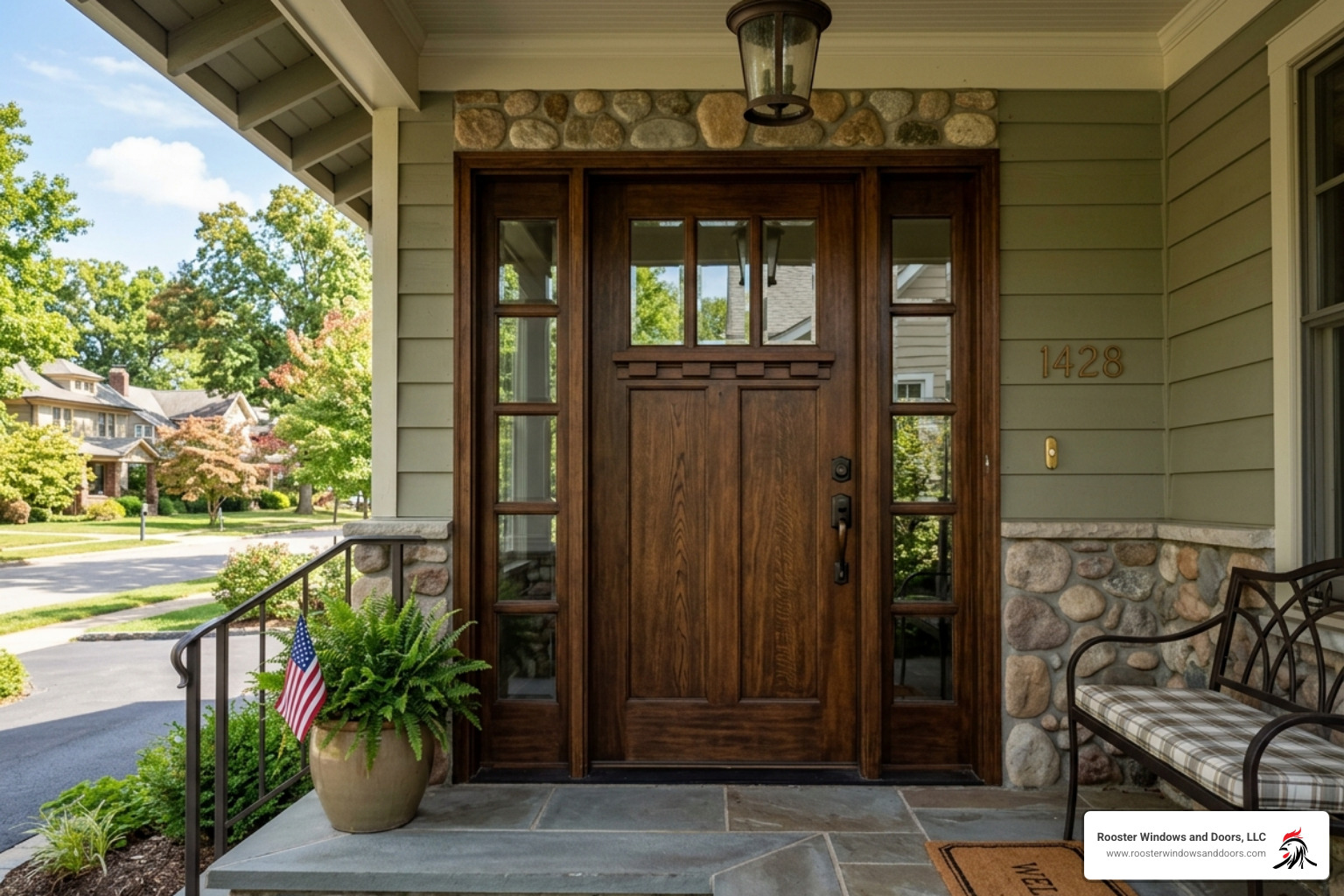
Craftsman doors are a staple in suburbs like Oak Park and Barrington. They are defined by clean lines, rectangular glass panes (often three or six lites), and sometimes a decorative “dentil shelf” below the window. Modern designs, on the other hand, lean toward minimalism. Think flat panels, oversized hardware, and asymmetrical glass inserts that allow for a sleek, contemporary look.
Sidelites and Transoms
If your entryway feels like a dark tunnel, sidelites and transoms are the answer. Sidelites are the narrow vertical windows on one or both sides of the door. A transom is the window that sits above the door frame. These configurations expand the visual proportions of your entrance and flood your home with natural light. If privacy is a concern, we offer a variety of decorative glass options like frosted or rain glass to keep prying eyes out while letting the sun in. For grander entrances, custom front double doors can create a truly breathtaking statement.
Essential Features for Security and Efficiency
A door is only as good as the technology built into it. When we perform a house front door replacement, we focus on features that provide peace of mind and long-term savings.
- Multi-Point Locks: Unlike a standard deadbolt that grips in one spot, these systems lock the door at the top, middle, and bottom simultaneously.
- Tamper-Proof Hinges: For outswing doors, these prevent intruders from simply popping the hinge pins to gain entry.
- Low-E Glazing: This “Low Emissivity” coating on glass panels reflects heat back to its source, keeping your home cooler in summer and warmer in winter.
- Weatherstripping and Thermal Breaks: High-quality door replacement units include a “thermal break”—a strip of insulation that prevents heat from conducting through the metal or fiberglass frame.
Estimating Your House Front Door Replacement Cost
Price is always a major factor. On average, a new front door can range from $1,800 to $5,000, though high-end custom wood systems can reach $7,000 or more.
Factors that influence the final quote include:
- Material: Steel is generally the most budget-friendly, while premium hardwoods are the most expensive.
- Size and Configuration: A single 36-inch door is cheaper than a double door or a door with two sidelites.
- Glass Complexity: Intricate leaded glass or decorative inserts add to the cost.
- Hardware Tiers: A basic handle set vs. a smart-lock system with a lifetime finish.
- Installation Labor: Complex structural changes to the rough opening will increase the labor cost.
The Professional Installation Journey
Proper installation is just as important as the door itself. A $5,000 door will perform like a $100 door if it isn’t plumb, level, and square.
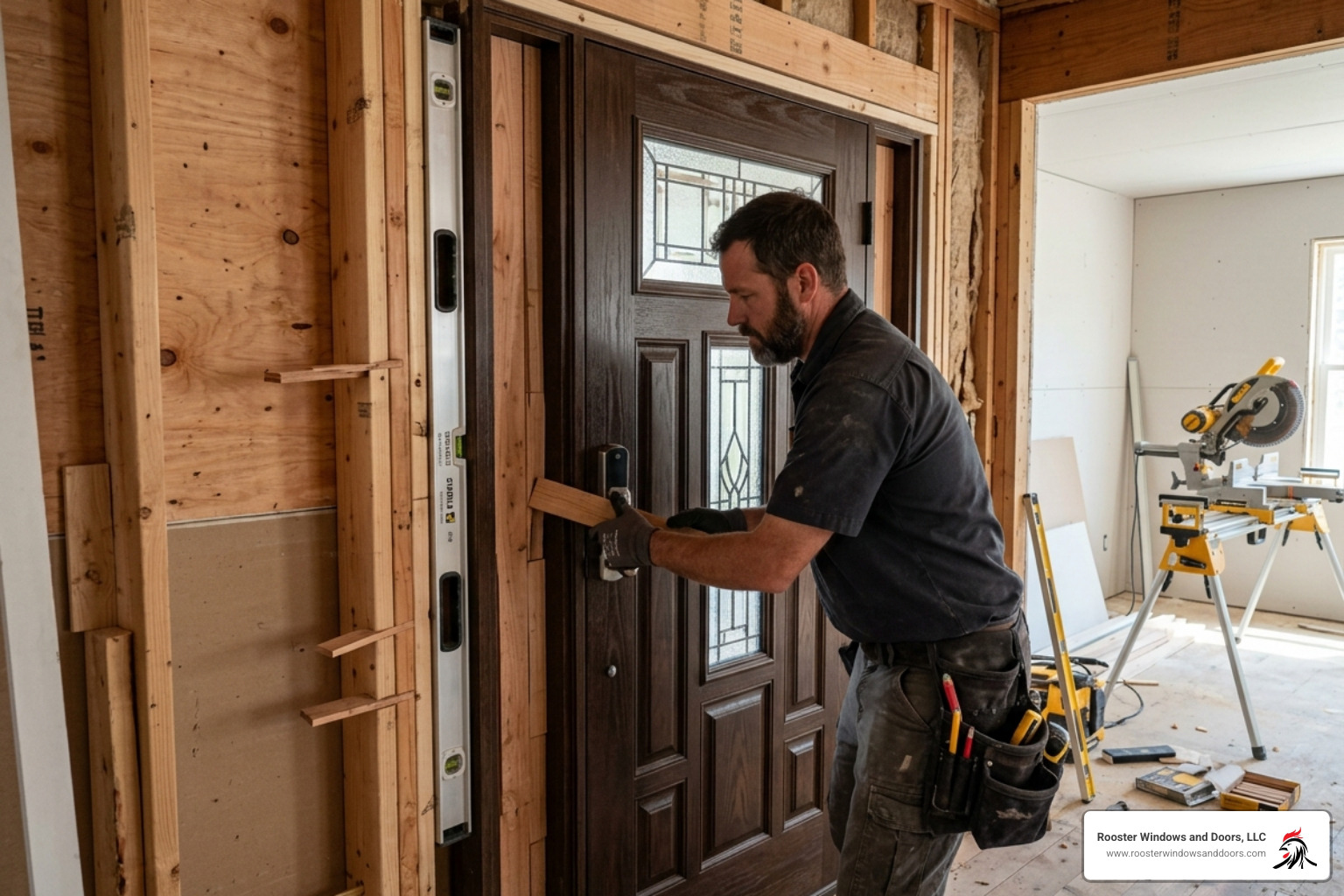
The process begins by measuring the “rough opening”—the space between the wall studs. Our exterior door installation guide details how we use shims to perfectly position the door frame within that opening. We ensure the floor is level and the jambs are square so the door swings effortlessly and seals tightly against the weatherstripping.
Full-Frame Replacement vs. Slab Only
One common question we get is: “Can I just replace the door itself (the slab)?” While possible if your existing frame is in perfect condition, we usually recommend a full-frame replacement. This involves removing the old door, the jambs, and the threshold.
Why?
- Rotted Wood: You can’t see what’s hiding behind the trim until it’s removed. We often find hidden rot in the subfloor or studs that needs addressing.
- Frame Integrity: Older frames may be bowed or out of square. A new prehung system ensures a factory-perfect seal.
- Weather Sealing: Replacing front door frame components allows us to apply modern flashing and foam insulation around the entire perimeter, preventing leaks for years to come.
Frequently Asked Questions
Common Questions About House Front Door Replacement
How do I tell if I need a left-hand or right-hand door? Stand in the open doorway with your back to the hinges. If the door is on your left, it’s a left-hand door. If it’s on your right, it’s a right-hand door. Most front doors are “inswing,” meaning they open into the house.
What is a “rough opening”? This is the unfinished opening in the wall where the door frame will be installed. For a standard 36″ x 80″ door, the rough opening is typically 2 inches wider and 1.5 inches taller than the door itself to allow for shims and insulation.
How long do quality front doors last?
With professional installation and basic care, a quality front door can last 30 years or more. Steel and fiberglass are particularly durable. Wood doors require a bit more love—you should inspect the finish every year and plan to refinish or re-paint every 2-5 years depending on sun exposure. We also recommend lubricating your hinges and locksets with a silicone-based spray every six months to keep them operating smoothly.
What is the difference between clear and frosted glass?
It comes down to the balance of light and privacy.
- Clear Glass: Best for maximum natural light and views, but offers zero privacy.
- Frosted/Obscure Glass: Blurs the view while still letting light through.
- Decorative Options: Styles like “Seeded,” “Rain,” or “Hammered” glass add a unique texture and artistic flair to your home while providing high levels of privacy.
Conclusion
Your home deserves an entrance that reflects your style and protects your family. At Rooster Windows and Doors, LLC, we specialize in high-quality, flawless installations that stand up to the unique climate of the Chicagoland area. From Libertyville to Joliet, we provide energy-efficient solutions and a wide variety of custom design options to suit any home.
Ready to transform your home’s first impression? Explore our door-replacement services and let us help you find the perfect fit for your lifestyle. Whether you are looking for the rugged security of steel, the low-maintenance beauty of fiberglass, or the timeless elegance of wood, we are here to ensure your installation is perfect from the first measurement to the final turn of the key.
