

What Does It Actually Cost to Change a Front Door in 2026?
The cost to change your front door is one of the most common questions homeowners ask before starting this project — and the answer varies more than most people expect.
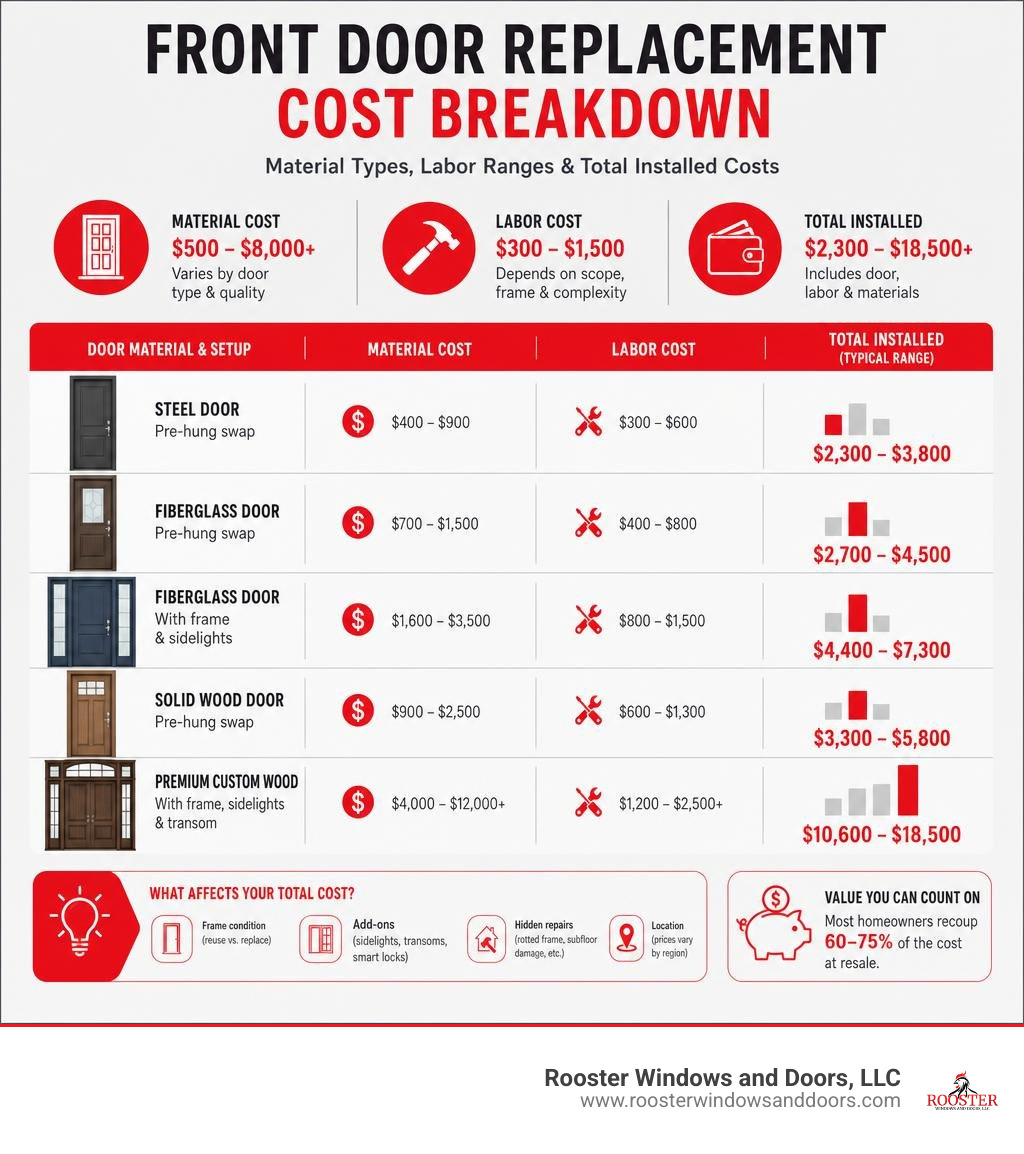
Here’s a quick snapshot of what you can expect to pay in 2026:
| Project Type | Typical Total Cost |
|---|---|
| Basic steel door (pre-hung swap) | $2,300 – $3,800 installed |
| Mid-range fiberglass door | $2,700 – $4,500 installed |
| Fiberglass with frame + sidelights | $4,400 – $7,300 installed |
| Solid wood entry door | $3,300 – $5,800 installed |
| Premium custom wood + transom | $10,600 – $18,500 installed |
| National average (most projects) | ~$1,800 ($1,000–$3,500) |
Those numbers swing a lot. That’s because the final price depends on the door material you choose, whether you’re doing a simple swap or a full frame replacement, and where you live.
A few things are almost certain to affect your budget:
- Door material — steel is cheapest, wood is most expensive
- Scope of work — reusing your existing frame saves money; replacing it costs more
- Add-ons — sidelights, transoms, and smart locks all raise the total
- Hidden repairs — rotted frames or damaged subfloors can add hundreds
The good news? A new front door consistently delivers strong value. Most homeowners recoup 60–75% of the cost at resale — and that’s before factoring in lower energy bills and better security.
I’m Piotr Wilk, and with over two decades of residential door and window installation experience across the Chicagoland area, I’ve helped hundreds of homeowners accurately budget the cost to change a front door — from simple steel swaps to full custom wood entries. In this guide, I’ll walk you through every cost factor so you know exactly what to expect before getting a quote.
Cost to change front door terms explained:
Breaking Down the Average Cost to Change Front Door Installations in 2026
When evaluating the overall cost to change front door setups in 2026, homeowners usually see total prices landing between $1,000 and $3,500 for standard residential entryways, with the national average lingering right around $1,800. However, fully custom double doors, architectural entrances, or complete structural modifications can easily stretch project totals from $4,400 to well over $18,000.
To understand where your money goes, it helps to break the total expenditure into three primary categories:
- Door Unit & Material Expenses (40%–60% of total budget): The physical slab, jambs, weatherstripping, threshold, and decorative glass features.
- Installation Labor & Overhead (30%–50% of total budget): Specialized carpentry skills, structural leveling, flashing, sealing, and trade licenses.
- Hardware, Trim & Municipal Fees (10%–20% of total budget): Locksets, smart handlesets, interior casing, exterior brickmould, permit applications, and haul-away fees.
To get a clearer picture of how these variables interact, let me share our comprehensive breakdown comparing standard materials, average turnkey installation costs, and long-term resale returns. Knowing how much does a new front door actually cost allows you to choose an entryway that aligns perfectly with your home’s aesthetic goals and budget boundaries.
| Door Material | Material Only Cost | Average Total Installed Cost | ROI / Resale Recovery | Primary Performance Advantage |
|---|---|---|---|---|
| Basic Steel | $300 – $800 | $1,400 – $3,800 | 65% – 75% | Highest security tier per dollar spent |
| Mid-Range Fiberglass | $500 – $2,000 | $2,700 – $4,500 | 60% – 70% | Best insulation (R-5 to R-6) & weather defense |
| Solid Wood / Hardwood | $1,000 – $3,000+ | $3,300 – $5,800 | 55% – 65% | Unmatched natural beauty and custom finishes |
| Deluxe Fiberglass w/ Sidelights | $2,000 – $4,500 | $4,400 – $7,300 | 60% – 68% | Expansive natural lighting with tight air sealing |
| Custom Architectural Wood + Transom | $5,000 – $12,000+ | $10,600 – $18,500 | 50% – 60% | Maximum grand entrance curb appeal |
Material Factors and the Cost to Change Front Door Options
The core material you select is the single biggest factor influencing the material portion of your cost to change front door budget. Each core material option brings unique performance characteristics, maintenance expectations, and initial price points.
- Steel Entry Doors: Steel represents the most economical entry point for a secure exterior entrance. Material costs for a plain steel slab range from $300 to $700, while a complete pre-hung steel unit costs $470 to $800. Steel provides superior intrusion protection and fire resistance. However, steel conducts thermal energy quickly, meaning cold outdoor temperatures can transfer through to the interior skin during severe winter spells. Steel is also susceptible to surface denting from hail or heavy impacts, and paint scratches can rust over time if left unaddressed.
- Fiberglass Entry Doors: Fiberglass has emerged as the value sweet spot for over 80% of modern replacement projects. Material costs for quality fiberglass range between $500 and $2,000 depending on grain detailing and glass inserts. Unlike metal, fiberglass won’t dent, scratch, or rust, and unlike solid wood, it never warps, twists, or rots when exposed to rain or snow. Modern polyurethane foam cores give fiberglass doors exceptional insulation value (R-5 to R-6), keeping indoor spaces comfortable year-round. Check out detailed historical pricing data via the 2026 Cost of a Front Door – Estimates and Prices Paid – CostHelper resource for additional material market comparisons.
- Solid Wood Doors: For traditional architectural charm, solid mahogany, oak, cherry, or knotty alder doors remain top choices. Raw material costs for solid wood range from $1,000 to over $3,000 for standard sizes, jumping significantly higher for custom historical reproductions. While solid wood offers incredible warmth and heft, wood expands and contracts with shifting ambient humidity. To prevent moisture absorption, finish cracking, or sun bleaching, real wood doors demand routine sanding and refinishing every 3 to 5 years.
Scope of Work: How Installation Type Drives the Cost to Change Front Door Assemblies
Beyond the physical door itself, the installation scope drastically alters your labor charges and final project total. Installers generally evaluate projects through two primary execution scopes: a direct slab swap or a full-frame replacement.
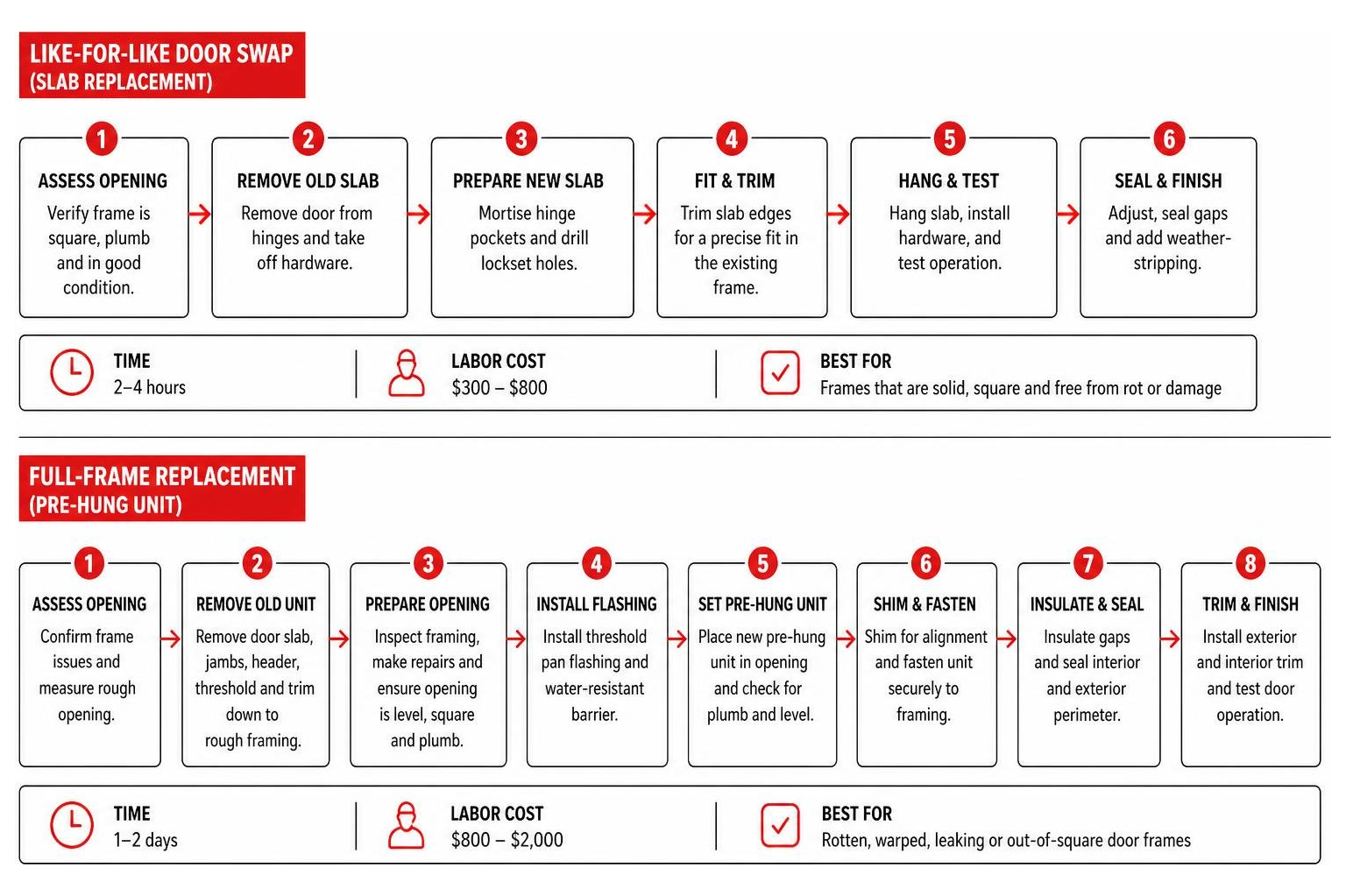
- Like-for-Like Swap (Slab Replacement): If your current door frame, exterior brickmould, threshold, and interior casing are completely square, plumb, and free from rot, you may only need to replace the door panel (the slab). In a slab swap, the carpenter carefully measures the existing opening, mortises hinge pockets into the side of the new slab, drills holes for the lockset, and trims the slab edges to fit the existing opening perfectly. Labor for a slab swap typically runs between $300 and $800.
- Pre-Hung Unit & Full-Frame Replacement: If your current frame exhibits rot, sagging jambs, chronic air leaks, or out-of-square alignment, a full-frame replacement is required. This involves tearing out the old door slab, side jambs, top header, threshold, and trim down to the rough house framing. The installer then levels the rough opening, installs threshold pan flashing, places a factory-assembled pre-hung unit (door hung inside a brand-new frame with factory weatherstripping), shims it plumb, fastens it securely, and installs fresh exterior and interior trim. Labor for a full-frame replacement ranges from $800 to $2,000 due to the added carpentry time and sealing materials required. You can learn more about structural jamb work in our guide on replacing front door frame systems.
Labor Rates, Regional Pricing, and Installation Scenarios
Professional carpentry labor rates vary significantly depending on geography, municipal trade requirements, and local economic factors. On average, qualified door installers charge loaded billing rates between $60 and $120 per hour per technician, with typical installation timelines taking anywhere from 3 to 5 hours for basic swaps up to a full day (8 to 12 crew-hours) for complex frame rebuilds.
Location heavily impacts labor rates across the country:
- Suburban & Rural Markets: Generally feature labor rates close to the national reference baseline ($350 to $800 for standard labor).
- Metropolitan Areas: High-density urban centers frequently see pricing premiums of 15% to 25% above national averages due to parking logistics, strict condo board governance, and higher regional overhead costs.
- Chicagoland Regional Pricing: In local communities like Libertyville, Lake Forest, Highland Park, Evanston, and Schaumburg, loaded billing rates for experienced carpenter crews typically range from $55 to $110 per crew-hour. Because local weather conditions require extra weather-proofing care, installation labor for a full-frame front door replacement in Chicago and surrounding suburbs usually ranges between $800 and $1,800. For hyper-local pricing details, review our specialized guide on door installation chicago services.
Professional Labor vs. DIY Risks

Homeowners who are handy around the house often wonder if installing a pre-hung exterior door panel themselves is a good way to save money on installation fees. While tackled successfully by advanced woodworkers, exterior entry installation carries far higher structural risks than interior door swaps.
- Water Intrusion and Foundation Rot: Exterior doors serve as a primary defense against driving rain, wind-driven snow, and extreme temperature changes. If threshold pan flashing is omitted or improperly sloped, water can quietly seep under the threshold into the subfloor framing. Over several seasons, hidden water leaks can rot floor joists, ruin hardwood floor finishes, and create structural damage that costs $1,500 to $5,000+ to repair.
- Drafts and Energy Loss: Even a minor 1/16-inch alignment error along the hinge jamb can prevent factory weatherstripping from contacting the door edge properly. The resulting air leak acts like a constant crack in your exterior wall, driving up winter heating costs and summer air conditioning expenses.
- Latching and Security Failures: A frame that is installed out of plumb or out of square puts physical tension on deadbolts and latches. Over time, seasonal frame settling can bind the deadbolt mechanism, making key operation frustrating or compromising home security against forced entry.
- Voided Warranties: Leading door manufacturers require strict adherence to installation specifications regarding squareness, shimming, flashing, and fastener placement. Improper DIY installation techniques can instantly void multi-year material and finish warranties.
Before attempting a self-installation project, read our detailed overview on doorway to diy installing your own exterior door to evaluate whether you have the specialized tools, lasers, structural flashing membranes, and level gauge experience necessary for a water-tight result.
Add-Ons, Hidden Expenses, and Structural Upgrades
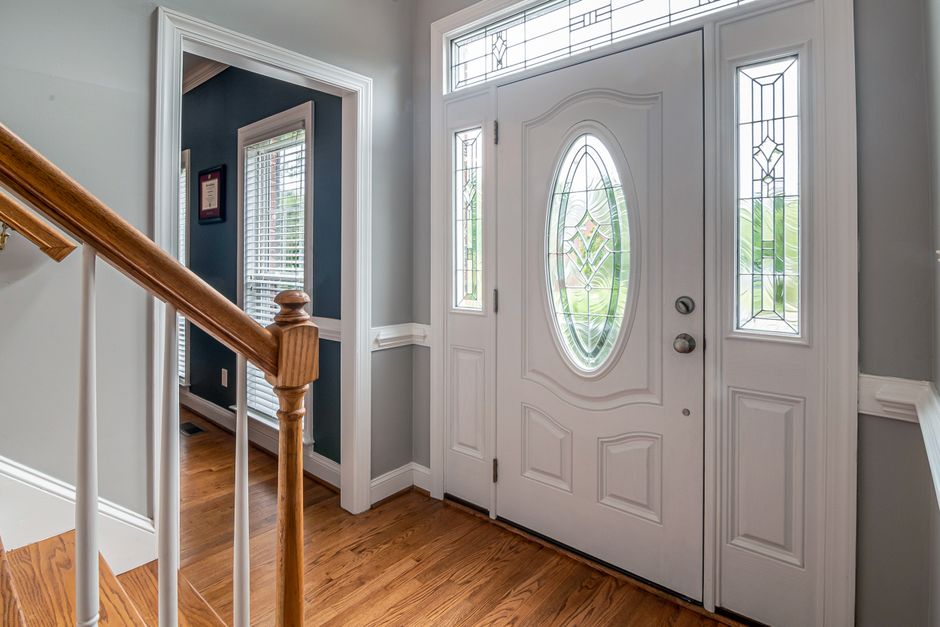
When homeowners map out the cost to change front door configurations, initial budgets are often based on the list price of a basic, solid door slab. However, aesthetic upgrades, custom sizing, glass panels, and unseen structural framing repairs can significantly alter the final project total.
To avoid unexpected financial surprises, evaluate how decorative architectural options impact baseline pricing:
- Decorative Glass Inserts: Upgrading from a solid slab to a unit featuring 1/4-lite, half-lite, or full-lite decorative glass inserts adds $200 to $1,200 to material costs depending on privacy glass textures, Low-E thermal coatings, double or triple glazing, and internal metal caming designs. Explore style options in our guide, a transparent guide to choosing exterior doors with glass.
- Custom Dimensions & Handing: Standard off-the-shelf residential entry doors measure 36 inches wide by 80 inches tall. If your home features an older 32-inch, 34-inch, or extra-tall 84-inch to 96-inch rough opening, ordering custom door dimensions adds 20% to 50% to base manufacturing costs and extends factory lead times to 6-12 weeks.
Sidelights, Transoms, and Smart Hardware
Adding glass features around an entryway transforms darker foyers into bright, welcoming spaces, but it also alters structural opening requirements.
- Sidelight Panels: Adding a single vertical glass side panel (sidelight) alongside your main entry door adds $300 to $1,000 to material expenses. Installing dual sidelights (one on each side) adds $600 to $2,000+. Because adding sidelights widens the rough structural opening, labor charges increase by $300 to $800 to cover wall framing adjustments, header upgrades, and expanded exterior trim integration.
- Transom Windows: A overhead transom window mounted directly above the main door frame adds $200 to $500 for the glass unit itself, plus $200 to $400 in additional structural framing labor.
- Hardware and Smart Locks: Standard key-operated entrance locksets and matching deadbolts run between $50 and $150. Upgrading to high-security electronic smart locks equipped with keypad entry, biometric fingerprint scanners, smartphone app control, and real-time access alerts adds $200 to $500 for hardware, plus $100 to $300 for professional alignment and programming. Compare protective hardware features in our post covering exterior security doors.
Hidden Structural Repairs and Permit Costs
Tearing away old door frames often reveals concealed structural problems caused by decades of weather exposure or past installation mistakes. Setting aside a 10% to 15% contingency buffer in your project budget covers common surprises:
- Frame & Subfloor Rot Repair: Water dripping past worn weatherstripping or leaky threshold seals can quietly decay structural subflooring, floor joists, or wall studs. Repairing rotted wood framing during door installation typically adds $150 to $500 for minor repairs, or up to $2,000 if structural joist sistering is required. See our guide on door frame repair to learn how contractors fix rotted jambs.
- Municipal Permit & Inspection Fees: Most cities and suburban municipalities require a building permit if an entry door installation involves structural header changes, opening resizing, or wall framing alterations. Building permit fees range from $50 to $200 for standard work, up to $500 in certain urban building departments.
- Disposal & Delivery Logistics: Removal, haul-away, and environmental disposal fees for old heavy door assemblies generally add $25 to $250 depending on local trade disposal rates.
Maximizing Return on Investment and Saving Money
While upgrading an entry system requires an upfront investment, a new front door consistently delivers some of the highest financial returns of any residential remodeling effort. According to home cost-versus-value research, replacing an old front door recoups approximately 60% to 75% of its original installed cost in immediate home resale value.
In addition to boosting market resale appeal, energy-efficient entry systems deliver ongoing utility savings:
- Draft Elimination: Modern pre-hung door systems feature compression weatherstripping, adjustable sill thresholds, and insulated core materials that eliminate air leaks. Replacing an drafty 20-year-old door can noticeably reduce winter heating loads and summer cooling demands.
- Insulation Ratings: Fiberglass doors with polyurethane foam cores deliver superior insulation ratings (R-5 to R-6) compared to aged solid wood units (R-1.5 to R-2), preventing conductive heat transfer during extreme weather snaps. For a full financial analysis of long-term energy savings, read the price of passage your ultimate door replacement cost guide.
Smart Ways to Lower Total Replacement Costs
If you want to stretch your renovation dollar without compromising on long-term weather performance or home security, consider these practical cost-reduction strategies:
- Stick to Standard Opening Dimensions: Design your project around standard 36-inch by 80-inch door sizes whenever possible. Avoiding custom sizing eliminates custom manufacturing surcharges and keeps rough framing modifications to a minimum.
- Choose Fiberglass Over Solid Wood: Opting for a wood-grained fiberglass door instead of custom solid hardwood can save $500 to $1,500 on materials while delivering better weather resistance and lower long-term maintenance requirements.
- Reuse Functioning Existing Hardware: If your current lockset, deadbolt, and handle handleset are in good mechanical condition and match your desired finish color, ask your installer to transfer them to the new slab to save $100 to $400.
- Combine Home Improvement Projects: If you plan to replace windows or siding alongside your entry door, hiring a installer for a larger combined scope reduces overhead setup fees per project component.
- Schedule Installation During Off-Peak Months: Scheduling your door installation during late fall or winter slow periods can sometimes yield lower contractor installation rates compared to peak spring and summer remodeling seasons.
For additional ideas on balancing style and budget, explore our resource on stunning exterior door trim ideas to instantly boost your curb appeal.
Frequently Asked Questions About Front Door Replacement Costs
How long does it take to replace a front door and frame?
For an experienced two-person installation crew, a standard like-for-like pre-hung front door replacement usually takes between 3 and 5 hours to complete. This includes removing the old door and frame, installing threshold pan flashing, positioning and shimming the new pre-hung frame plumb and square, applying expanding foam insulation, installing exterior brickmould, and testing lock alignment. If the project requires repairing rotted subfloors, widening the structural opening, or replacing custom interior casing, the job can take 8 to 12 hours (a full working day).
Is a fiberglass door cheaper than wood or steel?
Fiberglass occupies the middle cost tier between steel and solid wood. Steel remains the least expensive front door material upfront ($300 to $800 for materials only), while solid wood is the most expensive option ($1,000 to $3,000+). Fiberglass doors cost between $500 and $2,000 for materials. Despite costing slightly more than basic steel upfront, fiberglass is widely considered the best overall long-term value because it never rusts, dents, or warps, offers superior core insulation (R-5 to R-6), and requires almost zero maintenance over its 20- to 30-year operational life.
Do I need a permit to change my exterior front door?
If you are performing a direct like-for-like door replacement using the exact same dimensions without altering the surrounding wall framing, most local municipalities do not require a building permit. However, if your project involves widening the rough wall opening, adding new sidelights or transom glass that requires cutting into structural framing studs or replacing structural support headers, a municipal building permit is typically required. Permit fees usually range from $50 to $200. Professional licensed installers can advise you on local building codes in your specific municipality.
Conclusion
Upgrading your home’s entrance is one of the most rewarding home improvements you can make. Understanding the cost to change front door systems—from base materials and installation scopes to hardware upgrades—ensures you can budget accurately without unexpected financial surprises. Whether you select an economical steel door for enhanced entry security or a warm fiberglass door with decorative glass sidelights, investing in professional installation protects your home against winter drafts and water infiltration for decades to come.
At Rooster Windows and Doors, LLC, we pride ourselves on delivering precise, weather-tight installations tailored to your home’s unique style. Serving homeowners across Libertyville, Lake Forest, Highland Park, Vernon Hills, Evanston, Schaumburg, and the greater Chicago area, our expert installers ensure your project is completed flawlessly from start to finish. Ready to transform your entryway? Explore our professional door replacement services and request an itemized project estimate tailored to your home today.

