

What Is the Difference Between Single Hung and Double Hung Windows?
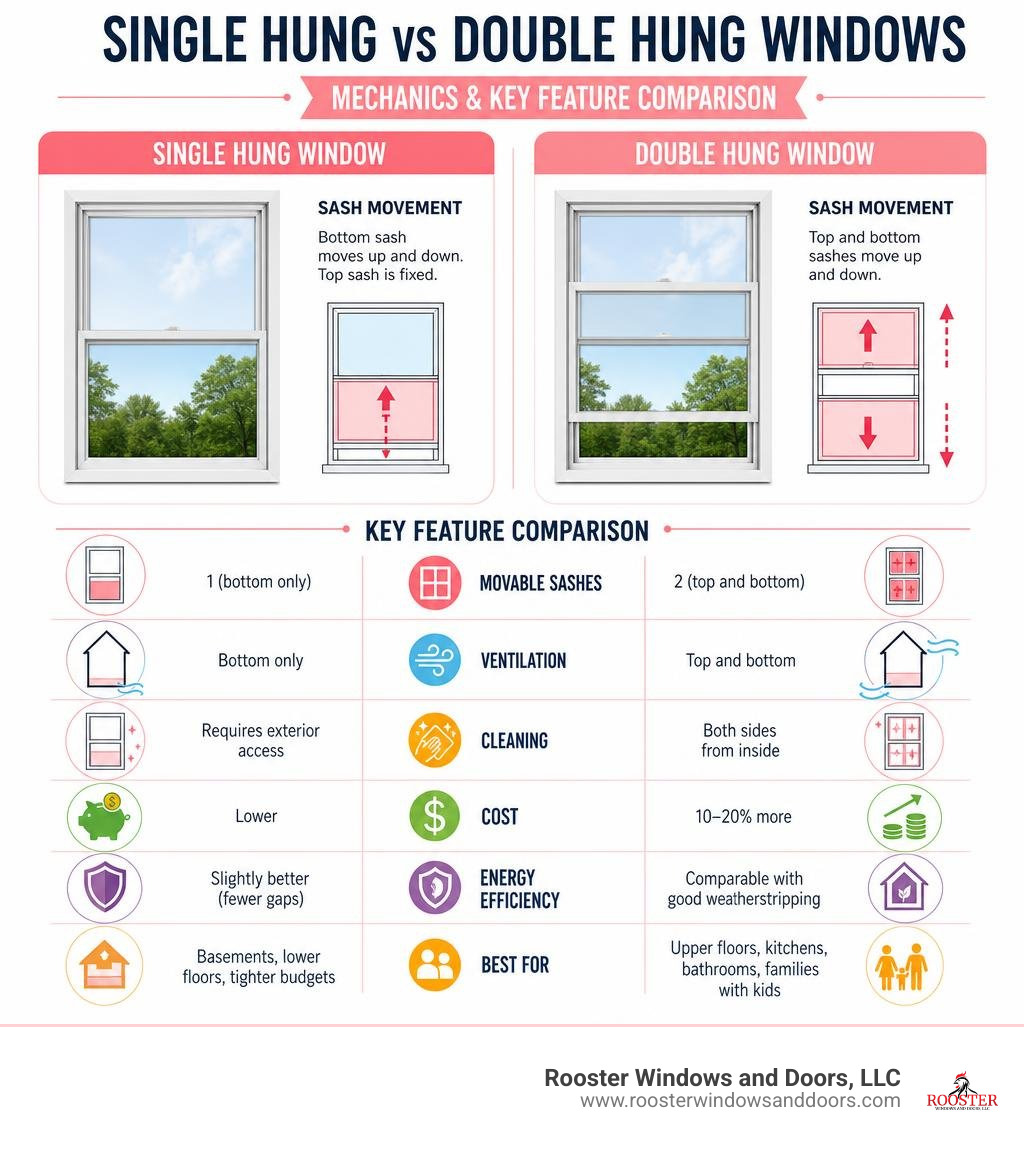
The difference between single hung and double hung windows comes down to one thing: how many sashes move.
| Feature | Single-Hung | Double-Hung |
|---|---|---|
| Movable sashes | 1 (bottom only) | 2 (top and bottom) |
| Ventilation | Bottom only | Top and bottom |
| Cleaning | Requires exterior access | Both sides from inside |
| Cost | Lower | 10–20% more |
| Energy efficiency | Slightly better (fewer gaps) | Comparable with good weatherstripping |
| Best for | Basements, lower floors, tighter budgets | Upper floors, kitchens, bathrooms, families with kids |
Both window types look nearly identical from the outside. But how they work — and how that affects your comfort, cleaning routine, energy bills, and safety — can be quite different.
That’s exactly what this guide breaks down.
I’m Piotr Wilk, and with over two decades of residential window installation experience across the Chicagoland area, I’ve helped countless homeowners navigate the difference between single hung and double hung windows to find the right fit for their home and budget. Let’s walk through everything you need to know to make a confident decision.
Quick difference between single hung and double hung windows terms:
Understanding the Core Difference Between Single Hung and Double Hung Windows
To really grasp the difference between single hung and double hung windows, we have to look at how they are built and how they operate on a daily basis. While they share a classic rectangular shape and look very similar when closed, their mechanical design sets them apart.
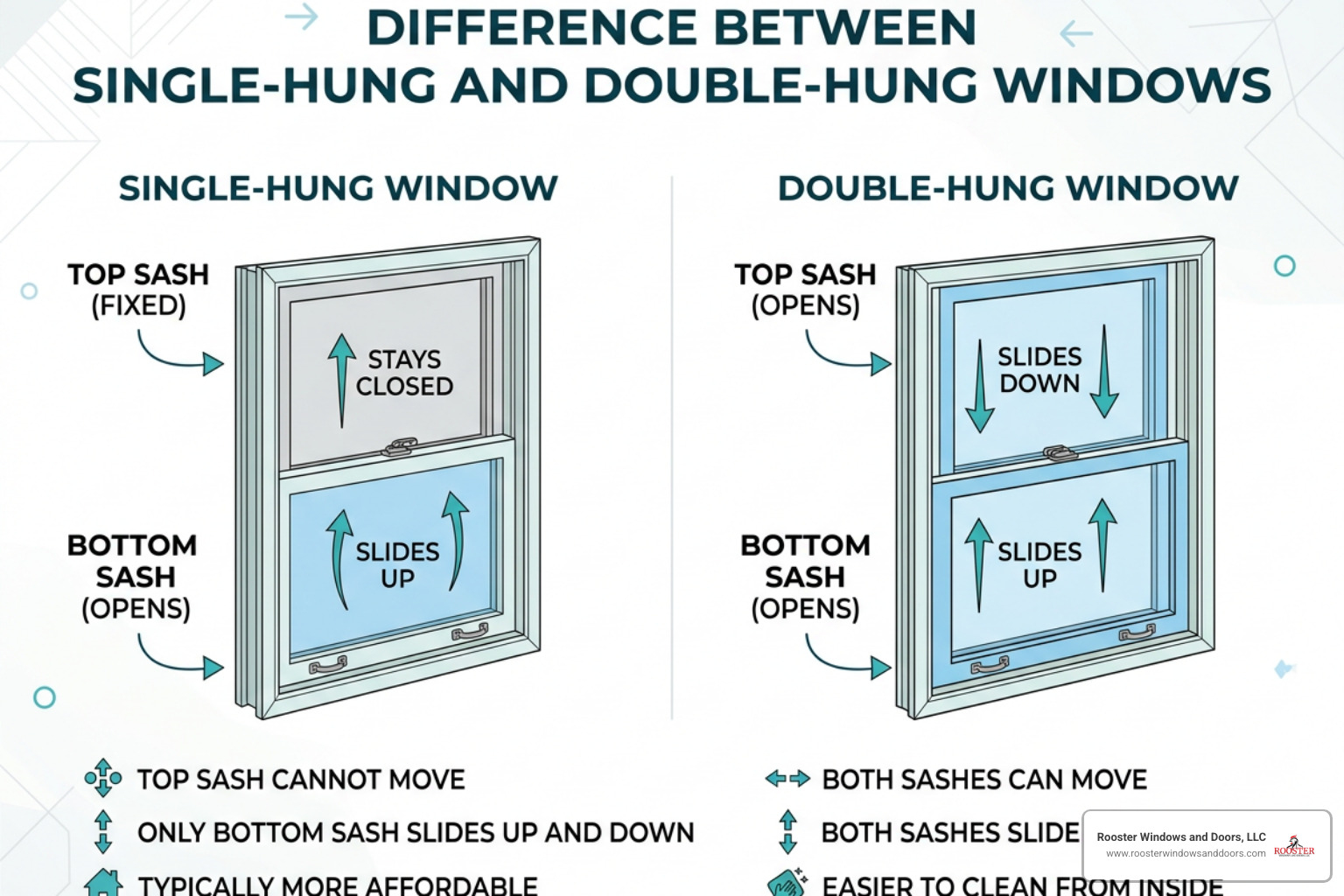
The primary difference lies in the number of operable sashes. A window “sash” is the inner frame that holds the glass panes. In a traditional hung window, there are two sashes stacked vertically.
According to a detailed comparison on Double vs. Single Hung Windows: What’s the Difference?, this mechanical variation dictates everything from how much fresh air enters your home to how easy it is to keep the glass sparkling clean.
What is a Single-Hung Window?
A single-hung window is the older, more traditional design of the two. In this configuration, the top sash is completely fixed in place and sealed to the window frame. Only the bottom sash is functional. To open a single-hung window, you unlock the latch and slide the lower sash vertically upward.
Because the upper half of the window remains permanently shut, single-hung windows offer a classic look with a highly stable design. They are a popular choice for budget-friendly new constructions and are often selected for areas where operating a top sash would be physically impractical. If you are weighing your options for a historic property or a standard main-floor replacement, you might find that single-hung models offer a reliable, traditional aesthetic. For more insights, you can read our guide on Don’t Get Hung Up on Your Window Choice.
What is a Double-Hung Window?
A double-hung window features two fully operable sashes. Both the top sash and the bottom sash can slide up and down independently within the frame. This means you can choose to open just the bottom, just the top, or open both halfway at the same time.
This modern versatility makes double-hung windows incredibly popular in contemporary home design. Most modern double-hung models also feature sashes that tilt inward toward the room. This tilt-in mechanism makes cleaning the exterior glass incredibly simple, especially for multi-story homes in communities like Lake Forest or Highland Park where climbing tall ladders in changing weather is far from ideal. To dive deeper into how these versatile systems work, check out The Double Hung Window Explained Everything You Need to Know.
Key Comparison Factors: Ventilation, Cleaning, and Safety
Choosing the right style for your home goes beyond aesthetics. It directly impacts your lifestyle, home maintenance, and the physical safety of your household. When comparing these two window types, three critical areas stand out: ventilation, cleaning access, and safety.
As outlined in the guide on Comparing Single-Hung vs. Double-Hung Windows, understanding how these factors play out in real-world scenarios will help you assign the right window style to the right room.
Airflow and Ventilation Control
One of the biggest advantages of double-hung windows is their ability to deliver superior natural ventilation. Because both sashes can open, you can create a highly efficient circular airflow effect.
Physics dictates that warm air rises while cool air sinks. When you open both the top and bottom sashes of a double-hung window, warm, stagnant air escapes through the top opening, while fresh, cooler outdoor air is drawn in through the bottom. This continuous air cycle is highly effective at cooling down a room quickly without relying solely on your air conditioning.
Single-hung windows, on the other hand, only allow air to enter and exit through the lower half of the frame. While this is perfectly adequate for bedrooms and living areas on lower levels, it is less than ideal for moisture-prone areas like bathrooms and kitchens. Proper ventilation in these rooms is essential for mold prevention and managing indoor humidity levels.
Cleaning and Maintenance Accessibility
If you have ever had to climb a tall ladder to clean the outside of your second-story windows, you know how dangerous and exhausting it can be. This is where the tilt-in feature of double-hung windows becomes a massive benefit.
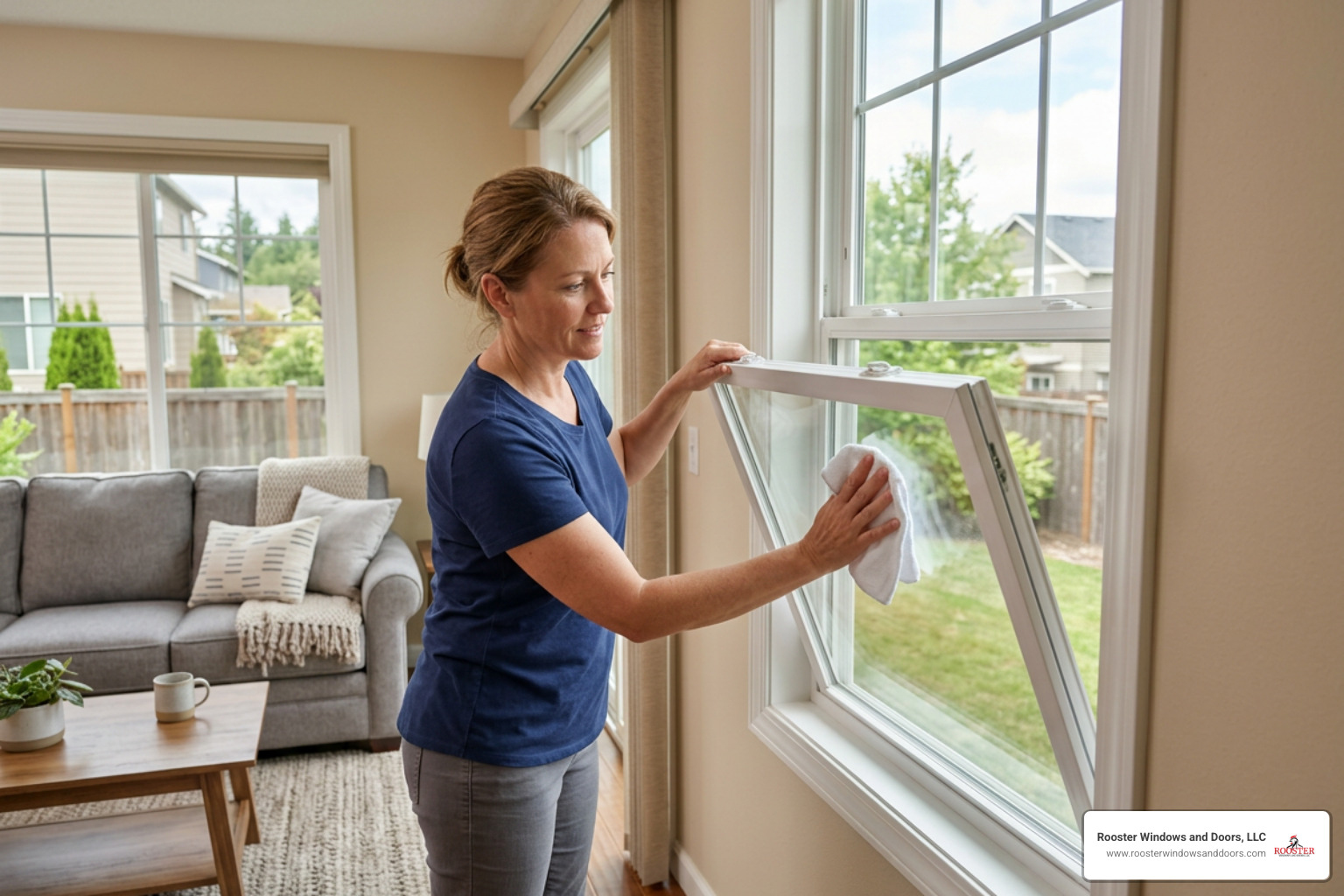
With a double-hung window, both sashes slide and tilt inward at an angle. This allows you to easily clean the exterior glass of both the top and bottom panes while standing safely inside your air-conditioned home. It completely eliminates the need for ladders, extension poles, or hiring professional window cleaners.
Single-hung windows do not have sashes that tilt in for cleaning. Because the top sash is completely fixed to the frame, you must clean it from the outside of your home. While this is easy enough on the first floor, it becomes a major maintenance challenge for upper floors in two-story homes.
Safety for Children and Pets
For households with small children or curious pets, window safety is a top priority. Double-hung windows offer a brilliant solution to this concern.
By opening only the top sash of a double-hung window for ventilation, you can let in fresh air while keeping the bottom sash securely closed and locked. Because the open portion of the window is high off the floor, it remains well out of reach of toddlers and pets, significantly reducing the risk of accidental falls.
Single-hung windows only open from the bottom, meaning the open gap is always at sill height. If you want fresh air in a child’s bedroom with a single-hung window, you must open the lower sash, creating an open hazard at floor level. Ensuring you have high-quality, operational latches is vital for security, which is why we recommend reviewing our Double Hung Window Locks Complete Guide to understand how modern locking systems keep your family safe.
Cost, Efficiency, and Home Value Impact
Beyond daily functionality, choosing between single-hung and double-hung windows has long-term financial implications. You need to consider upfront installation costs, monthly energy bills, and how the investment will affect your home’s overall resale value.
Cost Comparison: The Price Difference Between Single Hung and Double Hung Windows
It is no secret that single-hung windows are the more budget-friendly option. Because they have fewer moving parts, they are simpler to manufacture and easier to install. Generally, single-hung windows cost about 10% to 20% less than double-hung windows of the same size and material.
Double-hung windows carry a higher upfront cost because of their complex counterbalance systems, dual-operating tracks, and tilt-in latch mechanisms. On average, you can expect to pay at least $100 more per window for materials, along with slightly higher labor costs due to the precision required during installation.
However, the convenience of maintenance and superior ventilation often outweighs this price difference over time. To get a realistic idea of what to expect for your project, you can explore our pricing breakdown in Don’t Get Hung Up Your Guide to Twin Double Hung Window Installation Costs.
Energy Efficiency: Analyzing the Difference Between Single Hung and Double Hung Windows
When it comes to keeping your home comfortable during freezing Chicagoland winters and humid summers, energy efficiency is paramount. Historically, single-hung windows held a slight advantage in this department. Because the upper sash is permanently sealed to the frame, there are fewer seams, joints, and weatherstripping points where air infiltration can occur.
Modern manufacturing has closed this gap significantly. High-quality double-hung windows now feature advanced interlocking sashes, heavy-duty weatherstripping, and tight lock seals that prevent drafts just as effectively as single-hung options.
The overall energy performance of your window depends far more on the glass package you choose—such as double-pane or triple-pane glass with Low-E coatings—than on whether one or both sashes move. To learn more about how glass technology keeps your home insulated, check out our comparison on Single Pane vs Double Pane.
Home Value and Resale Appeal
If you plan to sell your home in the future, investing in double-hung windows can provide a noticeable boost to your property’s resale value and curb appeal. Modern home buyers are highly educated; they recognize the practical benefits of double-hung windows, such as easy interior cleaning and child safety.
Replacing old, drafty windows with high-quality double-hung units is a major selling point that can set your home apart in competitive local markets like Arlington Heights, Schaumburg, or Naperville. It signals to buyers that the home has been meticulously maintained with premium, modern upgrades.
Pros and Cons of Single-Hung vs. Double-Hung Windows
To help you visualize how these two window types compare side-by-side, let’s break down their respective advantages and disadvantages.
Single-Hung Windows: Advantages and Disadvantages
The Pros:
- Affordability: Typically 10% to 20% cheaper than double-hung windows, making them excellent for large-scale projects or tight budgets.
- Energy Efficiency: Fewer moving parts mean a simpler seal, reducing the long-term risk of minor air leaks.
- Security: The top sash is fixed, meaning there is only one operational lock to manage, and it automatically latches tightly when the bottom sash is fully closed.
- Ease of Use: Fewer mechanical components mean there is less hardware that can wear out or require adjustment over time.
The Cons:
- Difficult Cleaning: You cannot clean the exterior glass of the upper sash from inside the house.
- Limited Ventilation: Air can only flow through the bottom half of the window, restricting natural cooling.
- Lower Safety for Kids/Pets: Airflow is limited to the lower sash, which sits at ground level and poses a fall risk if left open.
Double-Hung Windows: Advantages and Disadvantages
The Pros:
- Unmatched Ventilation: The ability to open both the top and bottom sashes allows for circular, high-efficiency airflow.
- Convenient Maintenance: Tilt-in sashes allow you to clean all exterior glass safely from inside your home.
- Enhanced Safety: You can ventilate rooms by opening only the top sash, keeping children and pets safe from lower openings.
- Aesthetic Versatility: Available in larger custom sizes (up to 6 feet wide by 12 feet tall) and a wider variety of styles and finishes.
The Cons:
- Higher Upfront Cost: More expensive to purchase and install due to the complexity of the dual-sash design.
- Maintenance Requirements: With twice as many moving parts, they require occasional track cleaning and hardware lubrication to ensure smooth operation over their 15-to-30-year lifespan.
Frequently Asked Questions About Hung Windows
We hear many of the same questions from homeowners looking to upgrade their windows. Here are our expert answers to the most common queries.
Which window type is better for upper floors?
Without a doubt, double-hung windows are the superior choice for second stories and upper floors. The primary reason is cleaning safety. Being able to tilt both sashes inward to clean the exterior glass from inside your bedroom or hallway eliminates the danger of climbing ladders. Additionally, opening the upper sashes of second-floor double-hung windows is highly effective at releasing the hot air that naturally rises to the top floor of your home.
Can you replace a single-hung window with a double-hung window?
Yes! If your existing window frames are structurally sound, we can easily perform a retrofit or pocket installation to upgrade your old single-hung windows to modern, double-hung units. A professional installer will measure the existing opening to ensure the new double-hung window fits perfectly, giving you all the benefits of dual-sash operation without needing to tear out your interior drywall or exterior siding.
Do double-hung windows require more maintenance over time?
Because double-hung windows feature more moving parts—including balance systems, springs, and tilt latches—they do require slightly more attention than single-hung windows. However, this maintenance is very simple. Keeping the side tracks free of dust and debris, wiping down the weatherstripping, and applying a light silicone spray lubricant to the tracks once a year is usually all it takes to keep them sliding smoothly for decades.
Conclusion
Understanding the difference between single hung and double hung windows is the key to choosing the perfect fit for your home’s architecture, your family’s safety, and your budget. While single-hung windows offer a cost-effective, classic solution for first-floor rooms and basements, double-hung windows deliver unmatched versatility, effortless cleaning, and superior ventilation that makes them a fantastic long-term investment.
At Rooster Windows and Doors, LLC, we pride ourselves on delivering flawless, high-quality, and energy-efficient installations across the Chicagoland area—from Libertyville and Lake Forest down to Chicago. We work closely with you to assess your home’s unique needs and install premium windows that look beautiful and perform perfectly for years to come.
Ready to upgrade your home with beautiful, draft-free windows? Explore our premium selection and find your perfect fit at Rooster Windows and Doors Double Hung Windows today!
