

Why You Should Add Window to Basement Spaces (And What It Actually Takes)
Adding a window to your basement transforms one of the most underused spaces in your home into a bright, livable area — and it can meaningfully boost your property value.
Here’s a quick overview of what’s involved:
| Factor | Key Details |
|---|---|
| Purpose | Natural light, ventilation, emergency egress, legal bedroom conversion |
| Cost range | $1,500–$16,000+ depending on type and complexity |
| Egress requirement | Required for any basement bedroom or habitable living space |
| Value added | $10,000–$21,400 in increased home value |
| Process | Permits → excavation → concrete cutting → window and well installation |
| DIY or pro? | Simple replacements can be DIY; new openings in concrete need a professional |
Most basements start dark and uninviting. But that’s not a permanent condition. Adding even one properly sized window can make the difference between a storage room and a space you actually want to spend time in.
And if you’re thinking about a basement bedroom? You’ll need to meet egress code requirements — which we’ll cover in detail below.
I’m Piotr Wilk, and at Rooster Windows and Doors, LLC, our team has spent over two decades helping Chicagoland homeowners add windows to basements and throughout their homes — from straightforward replacements to full egress installations in concrete foundations. That hands-on experience shapes every recommendation in this guide.
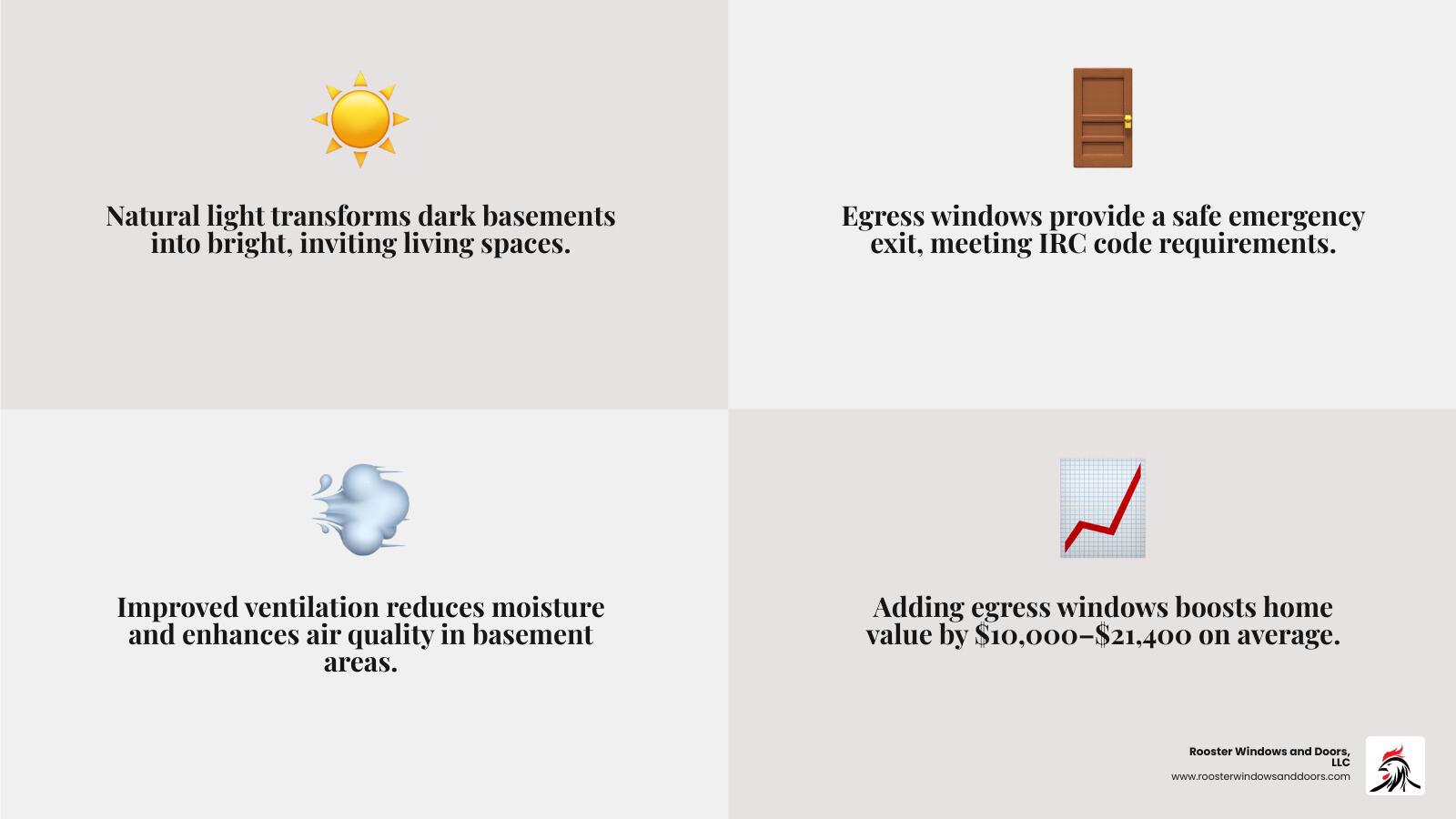
Simple guide to add window to basement:
Understanding Egress Requirements When You Add Window to Basement
When we talk about basement windows, the word “egress” comes up constantly. In plain English, an egress window is simply a window large enough to serve as an emergency exit. If you are planning to add window to basement walls to create a legal bedroom, the International Residential Code (IRC) has very specific rules you must follow.
These rules aren’t just red tape; they are designed to ensure that an adult—and a firefighter wearing full oxygen gear—can get through the opening in an emergency. According to the International Building Code standards, any “sleeping room” in a basement must have at least one operable emergency escape and rescue opening.
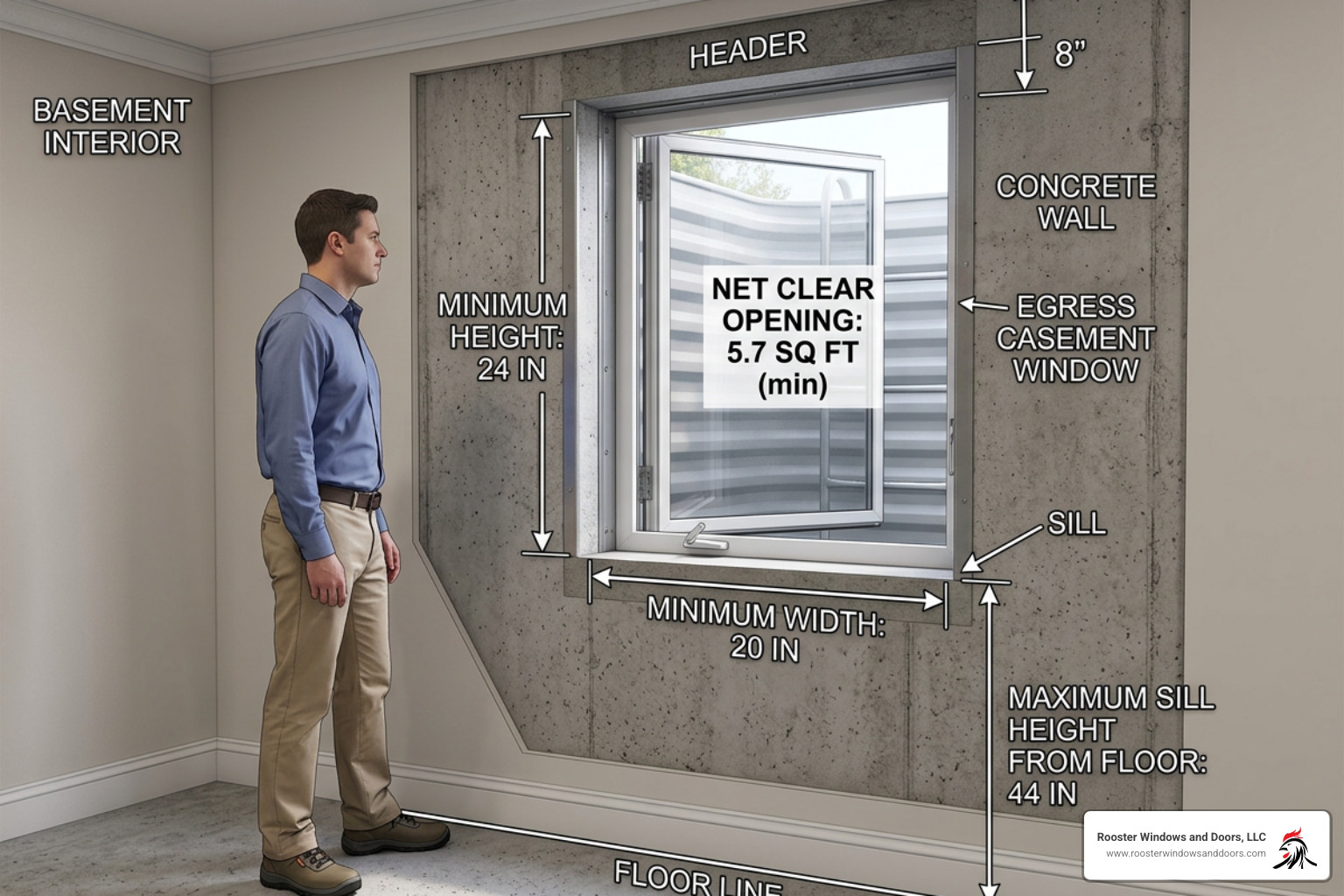
To meet the IRC requirements, your new window must hit these four marks:
- Minimum net clear opening: 5.7 square feet (this is the actual space you can crawl through when the window is open).
- Minimum opening height: 24 inches.
- Minimum opening width: 20 inches.
- Maximum sill height: No more than 44 inches from the finished floor.
If the window is below ground level—which most are in the Chicagoland area—you also need a window well. The well must provide at least 9 square feet of floor space and, if it’s deeper than 44 inches, it must have a permanently attached ladder or steps. For a deeper dive into these regulations, check out our Egress Window Installation Complete Guide.
The Financial Impact: Costs and ROI
One of the first questions we hear from homeowners in places like Naperville or Arlington Heights is: “Is it worth the money?” The short answer is yes, but the cost to add window to basement openings varies wildly based on whether you are replacing an old hopper window or cutting a brand-new hole in a 10-inch thick concrete foundation.
| Window Type | Estimated Cost (Materials & Labor) | Primary Benefit |
|---|---|---|
| Standard Replacement | $1,500 – $3,000 | Improved efficiency & light |
| New Egress (Standard) | $3,000 – $8,000 | Safety & legal bedroom status |
| Large Custom Egress | $10,000 – $16,000+ | Maximum light & high-end finish |
The investment pays off in two ways: usability and resale value. Adding an egress window is the only way to legally count a basement room as a bedroom. According to Added property value insights, creating a legal basement bedroom can add between $10,000 and $20,000 to your home’s value. In some cases, homeowners have seen a return of over $21,000 for a single installation when it transforms a dark storage area into a 350-square-foot living space.
Beyond the “official” appraisal, there is the “marketability” factor. A basement with large windows feels like a natural extension of the home rather than a “dungeon.” For more specifics on budgeting, visit our page on Egress Window Installation Cost.
The Step-by-Step Process to Add Window to Basement Walls
If you’ve decided to move forward, it’s helpful to know what the “day of” looks like. This isn’t a project where you just pop out a frame and slide in a new one. It’s a major structural modification.
The process generally follows these steps:
- Excavation: We dig a large hole outside where the window will go. This usually involves moving several yards of dirt.
- Concrete Cutting: Using a specialized high-powered saw, we cut through the foundation wall. This is a messy, loud, and precise job. We take great care to protect your interior from dust and water during this stage.
- Structural Support: If the opening is wide, we install a structural header to ensure the weight of your house is properly supported. You can see more about this in our guide on how to Cut Egress Window Basement.
- Drainage: This is the most critical step. We install a layer of gravel and often tie the window well into your home’s perimeter drainage system (weeping tile) to prevent the well from becoming a backyard swimming pool during an Illinois thunderstorm.
- Window & Well Installation: The window is leveled, shimmed, and sealed, and the window well is bolted to the foundation.
Selecting the Best Style to Add Window to Basement Spaces
Not all windows are created equal. Depending on your goals—whether it’s maximum airflow or maximum light—you’ll want to choose the right style. We offer a wide variety of Windows for Basement use:
- Casement Windows: These are the gold standard for egress. They crank open like a door, providing the largest possible opening in the smallest amount of wall space.
- Sliding Windows: These are great for wider openings. They are easy to operate and offer a modern look, though they need to be larger than casements to meet egress code because only half the window opens at a time.
- Awning Windows: Hinged at the top, these are excellent for ventilation because they can stay open even during a light rain. However, they are rarely used for egress because they don’t typically open wide enough.
- Hopper Windows: These are the classic “small” basement windows that hinge at the bottom. They are perfect for utility rooms but won’t count for egress.
Essential Steps to Add Window to Basement Foundations
Before we ever touch a shovel, there is a lot of “invisible” work. In Chicagoland, you almost always need a permit to add window to basement foundations because you are altering the structure of the home. We also handle utility marking—nothing ruins a renovation faster than hitting a gas line or an underground electrical wire.
During the actual installation, we focus on weatherproofing. We use high-quality rot-resistant shims to ensure the window is perfectly level and plumb. We then apply professional-grade sealant and low-expansion foam to keep the Illinois winter outside where it belongs. Finally, we highly recommend a Clear sloped egress window cover. These covers keep out leaves, snow, and debris while still letting that precious sunlight through.
Frequently Asked Questions about Basement Windows
We get a lot of questions about the long-term maintenance and safety of these systems. One common concern is safety—not just getting out, but keeping others out. Using high-quality Covers for Basement Windows can provide security and peace of mind.
Can I install a basement window myself?
While a handy homeowner can certainly replace a small window in an existing wood frame, we strongly advise against DIY for a new egress opening. Cutting through a concrete foundation is dangerous and can compromise the structural integrity of your home if not done correctly. If the header isn’t sized right, you could end up with a sagging floor above. Plus, if the drainage isn’t perfect, you’re looking at a flooded basement. It’s a job best left to professionals who have the right saws and insurance.
How much value does an egress window add?
As mentioned, it’s one of the few home improvements that can offer a 100% or better return on investment. By converting a “habitable space” into a “legal bedroom,” you change the classification of your home. A 3-bedroom house suddenly becoming a 4-bedroom house is a massive jump in marketability and appraisal value.
Do I need an egress window if it’s not a bedroom?
Technically, if the basement is just for storage or a utility room, you might not be required by code to have an egress window. However, if you are finishing the space for an office, gym, or family room, most local Illinois codes require at least one egress point. Even if it’s not required, we always recommend it. The safety benefit of having a second way out in a fire is priceless, and the boost in natural light and ventilation makes the space significantly more enjoyable.
Conclusion
At Rooster Windows and Doors, LLC, we believe your basement shouldn’t feel like a basement. Whether you’re in Libertyville, Aurora, or right in the heart of Chicago, our goal is to provide you with a flawless, energy-efficient installation that stands the test of time. Adding a window to your basement is an investment in your family’s safety and your home’s future.
Ready to transform your lower level from drab to fab? Let us handle the heavy lifting, the concrete cutting, and the permits. We’ll ensure you get a beautiful, code-compliant result that lets the sun shine in. Contact us today to discuss your Egress Window Installation project!
