

The Homeowner Guide to Window Glass Replacement in Chicago
When You Need Window Glass Replacement in Chicago: What to Know First
Window glass replacement in Chicago is one of the most common home repairs homeowners face — and for good reason. Chicago’s brutal winters, humid summers, and relentless freeze-thaw cycles put serious stress on window glass year after year.
If you need a quick answer, here’s what you should know right away:
Quick Guide: Window Glass Replacement in Chicago
| Situation | Recommended Action |
|---|---|
| Foggy or cloudy glass between panes | Replace the insulated glass unit (IGU) |
| Cracked or shattered pane | Replace glass immediately for safety |
| Drafts with window closed | Inspect seal and consider glass or full unit replacement |
| Rising energy bills | Upgrade to double or triple-pane Low-E glass |
| Condensation on interior surface | Improve ventilation; check seal integrity |
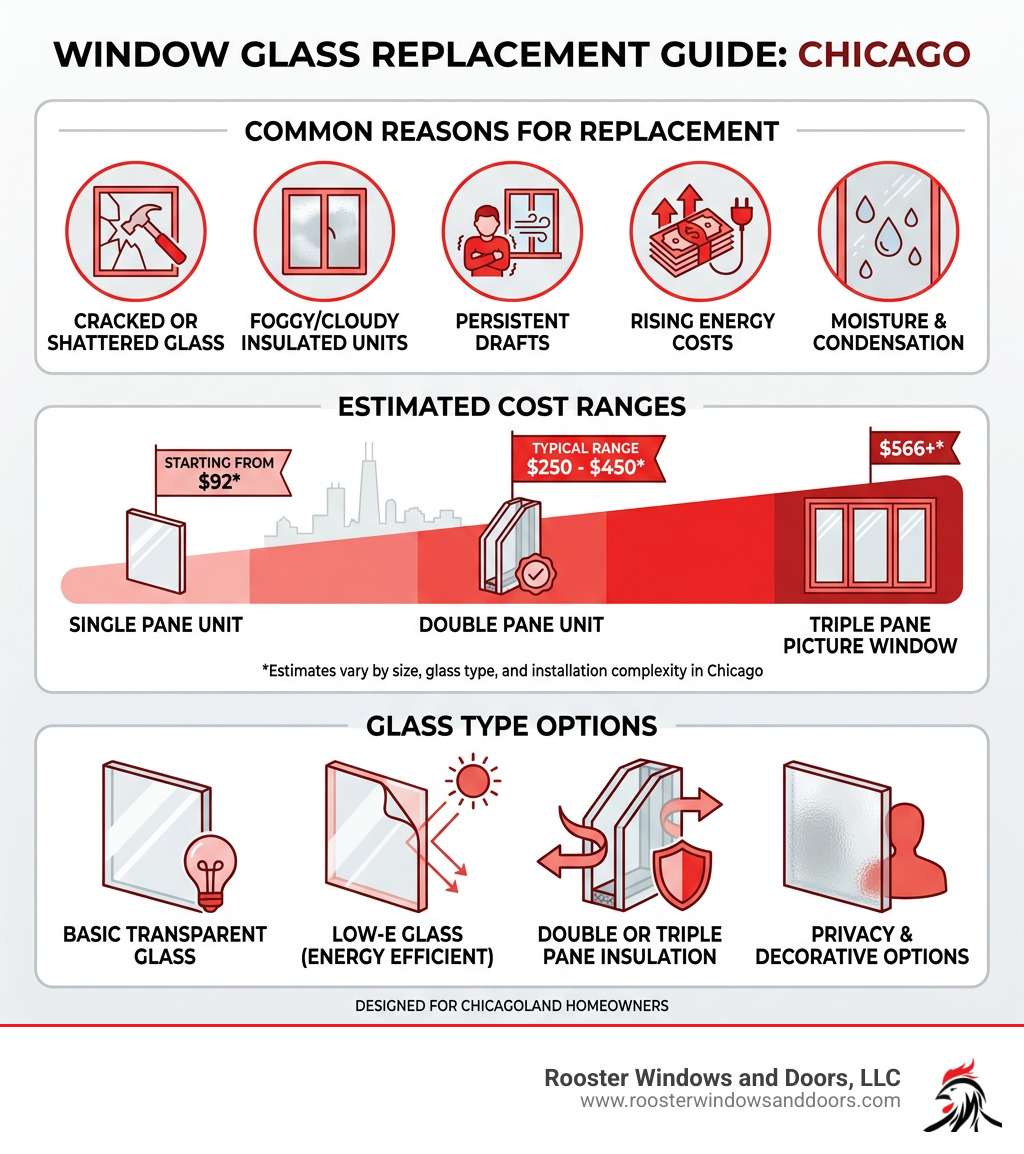
Replacement costs typically range from $92 for a basic single-pane unit to $566 or more for a triple-pane picture window, depending on size, glass type, and complexity.
The good news? In many cases, you don’t need to replace the entire window. Replacing just the glass — or the insulated unit — is often a faster, more affordable fix that restores both comfort and energy efficiency.
That said, getting it right matters. Poor installation leads to failed seals, moisture damage, and wasted energy — problems that can cost far more to fix down the road.
I’m Piotr Wilk, and through Rooster Windows and Doors, LLC, I’ve spent over two decades installing windows and doors across the Chicagoland area — including countless window glass replacement in Chicago projects in Lake, Cook, and McHenry Counties. In this guide, I’ll walk you through everything you need to make a smart, informed decision for your home.
Glossary for window glass replacement in chicago:
Common Reasons for Window Glass Replacement in Chicago
Living in the Windy City means our homes are on the front lines of some of the most volatile weather in the country. We see it all: sub-zero temperatures in January and sweltering 90-degree humidity in July. This constant seesaw of temperatures is the primary driver behind the need for window glass replacement in Chicago.
When glass expands and contracts rapidly, it puts immense pressure on the seals and the glass itself. Over time, even the sturdiest windows can develop issues that compromise your home’s comfort and safety. Beyond just the glass, we often find that window services are needed to address underlying issues like hardware wear or frame degradation that contribute to glass failure.
Common triggers for replacement include:
- Physical Impact: Whether it’s a stray baseball from a neighborhood game or debris kicked up during a high-wind storm, shattered or cracked glass is a safety priority.
- Thermal Stress Cracks: These often appear as hairline fractures that start at the edge of the window. They occur when one part of the glass gets significantly hotter than another, causing uneven expansion.
- Seal Failure: This is perhaps the most frequent complaint we hear from local homeowners. When the seal on a double or triple-pane window breaks, the insulating gas escapes, and moisture-laden air moves in.
View project examples of glass repair
Identifying Foggy Glass and Seal Failure
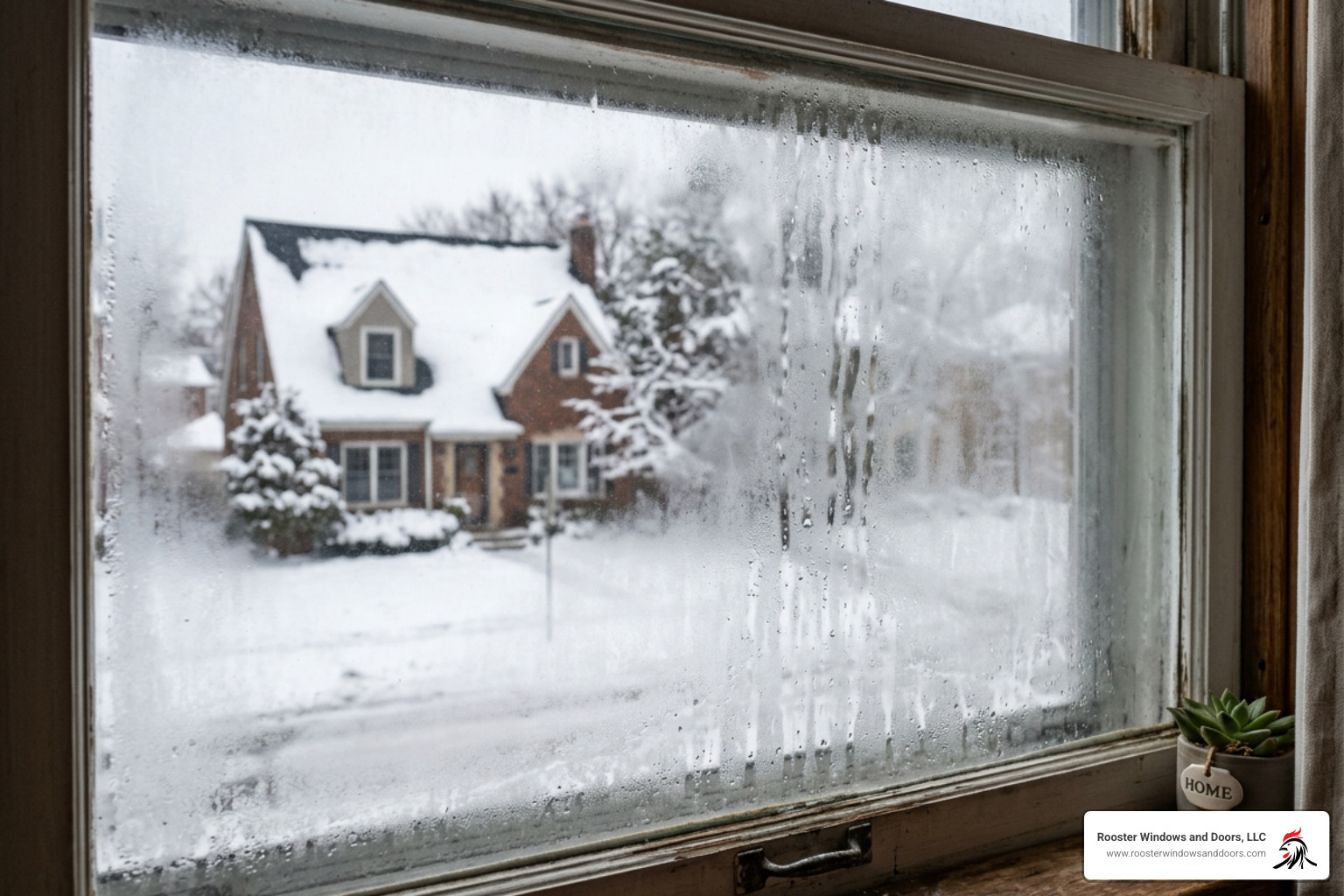
Have you noticed a persistent “cloudy” look on your windows that you just can’t wipe away? That is the classic sign of a failed seal in an Insulated Glass Unit (IGU). Inside every IGU is a spacer filled with desiccant—a material designed to absorb small amounts of moisture. Once the seal is breached, the desiccant becomes saturated.
Eventually, you’ll see actual water droplets or “fog” between the panes. As this moisture evaporates and returns, it leaves behind calcium deposits and mineral residue that permanently etch the glass, destroying your visibility and significantly reducing the window’s R-value (insulating power).
Impact of Chicago Weather on Glass Durability
Chicago’s climate is particularly hard on window seals. High wind loads during lake-effect storms can cause window frames to flex slightly. If the glazing isn’t flexible enough to move with the frame, the seal can snap. Furthermore, the high humidity levels in our summers increase the vapor pressure against the window seals, while the freezing winters cause the air inside the panes to contract, creating a “pumping” effect that eventually wears out the sealant.
Selecting the Best Glass for the Windy City Climate
Choosing the right glass isn’t just about finding something clear to look through; it’s about building a barrier against the elements. In Chicago, we recommend moving away from single-pane glass whenever possible, as it offers almost no protection against our winter chill.
| Glass Type | Typical R-Value | Best Use Case |
|---|---|---|
| Single Pane | ~0.9 – 1.0 | Historic storm windows or unheated garages |
| Double Pane (Clear) | ~2.0 | Standard residential replacement |
| Double Pane (Low-E + Argon) | ~3.0 – 3.8 | Modern Chicago homes; high efficiency |
| Triple Pane (Low-E + Krypton) | ~5.0 – 7.0 | Maximum noise reduction and extreme cold protection |
Upgrading your glass is one of the most effective energy efficient window upgrades you can perform. By replacing old, thin glass with modern insulated units filled with Argon or Krypton gas, you create a much denser thermal break that keeps heat where it belongs.
Benefits of Low-E Window Glass Replacement in Chicago
Low-Emissivity (Low-E) glass features a microscopically thin coating of metal oxide. In the winter, this coating reflects heat back into your room. In the summer, it reflects solar heat away from your house. This is crucial for Chicago residents who spend an average of $904 a year on energy bills. High-quality Low-E glass can significantly cut those summer cooling costs—sometimes by as much as 74% depending on the overall window system.
Safety and Specialty Glass Options
Depending on where the window is located, you may be required by Chicago building codes to use safety glass.
- Tempered Glass: This glass is heat-treated to be four times stronger than standard glass. If it does break, it crumbles into small, relatively harmless pebbles rather than jagged shards. You can find scientific details on tempered glass safety to understand why this is required for doors and windows near floor level.
- Laminated Glass: Often used for soundproofing and security, this consists of two panes of glass bonded with a plastic interlayer. It’s excellent for homes near the “L” tracks or busy downtown streets.
- Custom Shapes: Not every window is a perfect square. For architectural highlights, we often provide replacement casement windows or custom-shaped IGUs that maintain the character of historic Chicago bungalows.
The Professional Process of Window Glass Replacement in Chicago
We believe that a window is only as good as its installation. The process of window glass replacement in Chicago requires precision. If the measurements are off by even an eighth of an inch, the new glass won’t seat properly, leading to drafts or premature seal failure.
The process typically follows these steps:
- Precision Measurement: We measure the height, width, and thickness of the existing glass unit.
- Sash Removal: For most modern windows, we remove the sash (the moveable part of the window) to work in a controlled environment.
- Old Glass Disposal: We carefully remove the broken or foggy unit and ensure it is disposed of safely.
- Frame Cleaning: We scrape away old glazing tape, silicone, and debris. This is a critical step for a long-lasting vinyl window installation.
- New Unit Setting: The new IGU is set into the frame using setting blocks to ensure it remains centered and level.
- Sealing: We apply professional-grade, high-adhesion silicone and reinstall the glazing beads to lock the glass in place.
Preparing the Window Frame for New Glass
Before the new glass goes in, we perform a thorough “health check” on your frames. For older homes, we look specifically for signs of wood rot or structural warping. If the frame is compromised, putting new glass in is like putting a band-aid on a deep wound. In cases of significant rot, a full wood window replacement might be necessary to ensure the structural integrity of your wall.
Ensuring an Airtight Seal and Proper Insulation
The final stage is all about the details. We use high-quality caulking and weatherstripping to ensure that no air can bypass the glass. In many Chicago homes, we find that drafts aren’t coming through the glass, but around the edges of the frame. We use low-expansion foam and moisture barriers to create a truly airtight envelope for your home.
Cost Factors and Repair vs. Full Replacement
One of the most common questions we get is: “Should I just get a whole new window?” The answer depends on your goals and the condition of your existing frames.
Research shows that replacing just the foggy or broken glass unit can be significantly more cost-effective—sometimes up to fifteen times cheaper—than replacing the entire window unit. This is especially true if you have high-quality frames that are still in good condition.
Factors that influence the cost of window glass replacement in Chicago include:
- Pane Count: Triple-pane glass costs significantly more than double-pane due to the extra material and weight.
- Glass Type: Specialty coatings (Low-E), tints, or tempered glass will add to the price.
- Size and Accessibility: Large picture windows or windows on the third floor of a walk-up require more labor and specialized equipment.
- Customization: If you need custom made windows to fit a unique architectural opening, the price will reflect the bespoke manufacturing required.
Estimating Your Window Glass Replacement in Chicago Costs
While every job is different, here are some baseline estimates for common Chicago window types:
- Single Pane Storm Window (42 x 48 inches): Approximately $92.
- Double Pane Casement Window (32 x 68 inches): Approximately $283.
- Triple Pane Picture Window (58 x 36 inches): Approximately $566.
That these prices cover the glass and standard installation; emergency services or extensive frame repairs will adjust these totals.
When to Choose Glass Replacement Over Full Window Replacement
We generally recommend glass-only replacement when:
- The window frame (wood, vinyl, or aluminum) is structurally sound and not rotted.
- The window operates smoothly (opens/closes/locks correctly).
- You want to preserve the original architectural look of a historic home.
- You are on a tighter budget but need to restore energy efficiency.
However, if you have awning replacement windows where the hinges are rusted through and the wood is soft to the touch, a full replacement is usually the smarter long-term investment.
Maintenance Tips to Prevent Future Glass Issues
Once your new glass is installed, a little maintenance goes a long way. Windows can last 20 to 50 years if properly cared for.
- Clean the Tracks: Dirt and debris in the tracks can cause the sash to sit unevenly, putting “torque” on the glass and eventually breaking the seal.
- Inspect Caulking Annually: Chicago’s temperature swings cause materials to expand and contract. Check the exterior caulking every autumn to ensure no gaps have formed.
- Lubricate Hardware: Use a silicone-based lubricant on rollers and hinges. This ensures you aren’t forcing the window open, which can stress the glass.
- Avoid Pressure Washers: Never use a pressure washer on your windows. The high-pressure stream can easily cut through the seals of an IGU, leading to instant “foggy window” syndrome.
- Follow Installation Standards: Always ensure your window installation was done by professionals who understand the specific drainage requirements of different window brands.
Frequently Asked Questions about Chicago Glass Repair
How long does a typical glass replacement take?
The actual installation of the glass usually takes between 30 minutes and two hours per window. However, the entire process takes longer. First, we must visit your home to take precision measurements. Then, the custom IGU is manufactured (usually 3–10 business days). Once the unit is ready, we schedule the final installation.
Is it possible to replace just one pane in a double-pane window?
Technically, no. A double-pane window is a factory-sealed unit (IGU). The air or gas between the panes is dehydrated and sealed. If one pane breaks, the seal is gone. Replacing just one piece of glass in the field is impossible to do while maintaining the necessary vacuum and gas fill. We replace the entire “sandwich” of glass.
Does new window glass improve energy efficiency?
Absolutely. Upgrading from clear glass to Low-E glass with Argon gas can reduce heat loss through the window by over 50%. In a city where winter heating bills are a major concern, this translates to noticeable monthly savings and a much more comfortable living room during those January blizzards.
Conclusion
At Rooster Windows and Doors, LLC, we understand that your home is your sanctuary. Whether you are dealing with a shattered pane from a storm or the frustrating cloudiness of a failed seal, we are here to provide high-quality, flawless, and energy-efficient solutions. We serve the entire Chicagoland area, from Libertyville to Joliet, ensuring that every installation meets our rigorous standards for craftsmanship.
If your windows are showing their age, don’t wait for the next Chicago winter to take its toll. Investing in professional window replacement or glass repair today will keep your home beautiful, safe, and efficient for decades to come. Contact us to schedule your professional assessment and let us help you see the Windy City clearly again.
