

Why Egress Windows Are Essential for Your Home’s Safety and Value
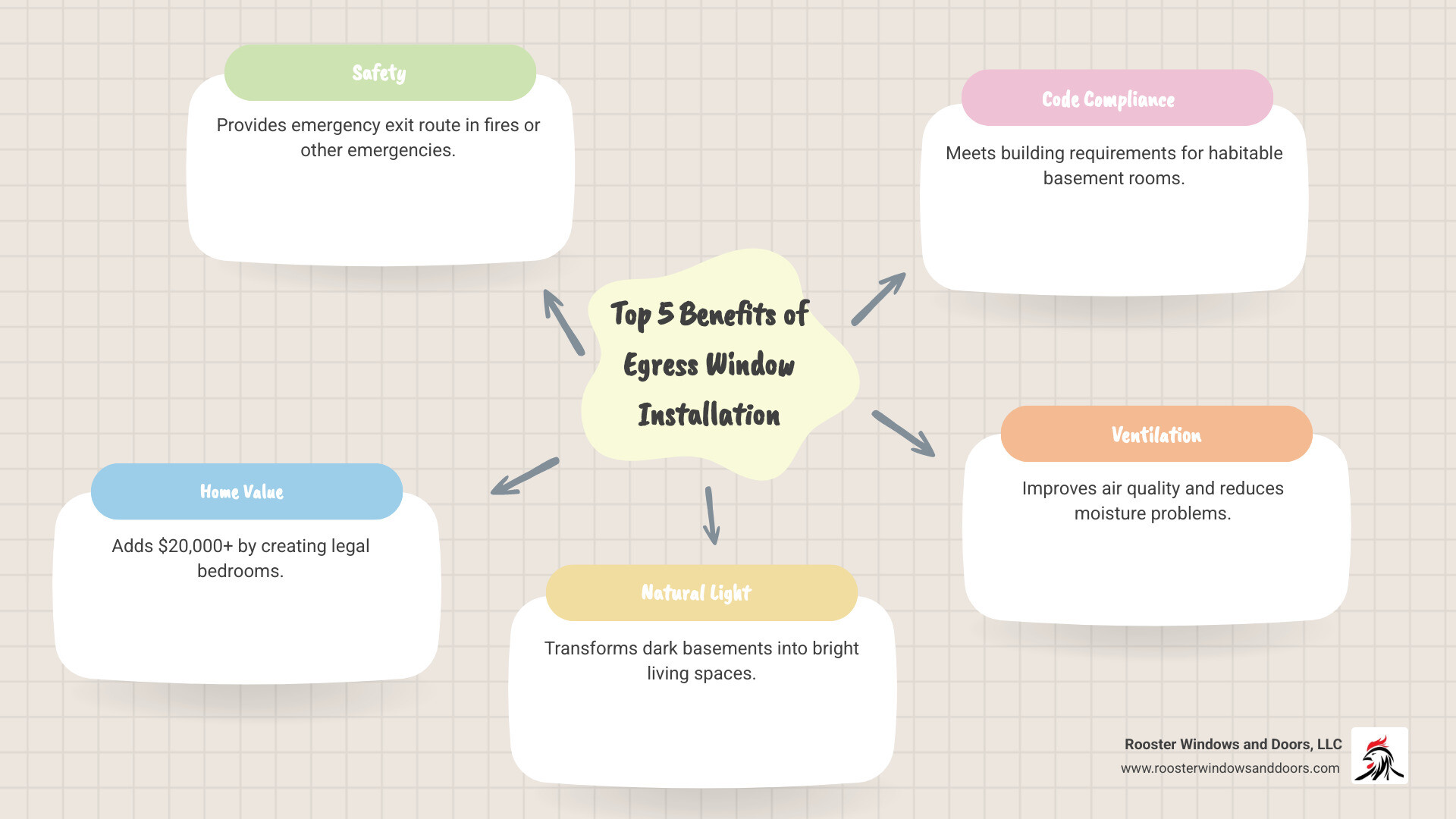
An egress window is a critical home improvement project that transforms your basement into a safer, brighter, and more valuable living space. This large, code-compliant opening serves as an emergency exit in case of fire, while also flooding your basement with natural light and fresh air. Egress windows aren’t just about meeting building codes—they’re about protecting your family. They can also add over $21,000 in home value by allowing you to legally market a basement room as a bedroom, dramatically improving your home’s livability.
Quick Overview: Egress Window Installation in 7 Steps
- Plan and Permit – Check local building codes, obtain permits, and call 811 to mark utility lines
- Excavate – Dig a hole 6-7 feet wide and deep enough for the window well
- Cut the Opening – Use a concrete saw to create the rough opening in your foundation wall
- Frame the Opening – Install a pressure-treated wood buck or frame to support the window
- Install the Window – Secure the egress window, ensuring it’s level, plumb, and properly flashed
- Add the Well – Attach the window well to the foundation and add gravel for drainage
- Finish – Install the well cover, interior trim, and seal all gaps
However, how to egress window installation is a complex job. It involves cutting through your home’s foundation, managing drainage, ensuring structural integrity, and meeting strict code requirements. For example, the opening must be at least 5.7 square feet with a sill no more than 44 inches from the floor.
As Piotr Wilk from Rooster Windows and Doors, I’ve spent over two decades installing windows throughout the Chicagoland area. I can tell you that a proper installation requires precision, expert waterproofing, and strict adherence to local codes. This guide will walk you through every step, from planning to the final finishing touches.
Common how to egress window installation vocab:
Planning Your Egress Window Project: Codes, Costs, and Considerations

Before touching a shovel or a saw, the first step in any successful how to egress window installation is meticulous planning. This involves understanding local regulations, managing your budget, and preparing for the project’s complexities.
Understanding Egress Code Requirements
Egress windows must meet stringent building codes, primarily the International Residential Code (IRC) in Illinois. Our team ensures every installation in areas like Aurora, Joliet, and Naperville adheres to these standards.
Here are the critical dimensions:
- Minimum Clear Opening: At least 5.7 square feet of unobstructed space.
- Minimum Dimensions: The opening must be at least 24 inches high and 20 inches wide.
- Maximum Sill Height: The bottom of the opening can be no more than 44 inches from the finished floor.
- Window Well Clearance: The well must have a horizontal projection of at least 36 inches and be wide enough for the window to open fully.
- Window Well Ladders: A permanent ladder is required for wells deeper than 44 inches.
Ignoring these codes can lead to failed inspections and compromise your family’s safety. For more detailed insights into basement windows and their requirements, we’ve got you covered.
Any project involving structural changes requires a building permit from your local municipality. Before any digging begins, it is mandatory to call 811, the national “Diggers Hotline.” This service coordinates with local utility companies to mark the location of underground lines (gas, water, electrical, etc.). This is a non-negotiable safety step to prevent dangerous and costly accidents.
Budgeting: Installation Cost and Added Home Value
How to egress window installation is a significant investment with substantial returns. The cost typically ranges from $3,000 to $8,000, depending on foundation type, window size, and project complexity. You can explore our guide on egress window installation cost and a broader guide to window replacement costs.
The return on investment is significant. Adding a code-compliant egress window allows you to legally classify a basement space as a bedroom, which can increase your home’s appraisal value by over $21,000. A legal bedroom makes your home more attractive to buyers, especially in competitive markets like Chicago, making it a smart financial decision.
Choosing the Right Type of Egress Window
While safety is the priority, you have style options. The key is that the chosen style must meet the clear opening requirements.
- Casement Windows: Hinged on the side, these open outward like a door, providing the maximum clear opening. They are often the best choice for meeting egress codes. We frequently recommend casement windows for this reason.
- Sliding Windows: These slide horizontally. To meet egress requirements, they must be very wide, as only half the window opens.
- Double-Hung Windows: These slide vertically. Like sliders, they must be very large to provide the necessary clear opening from one sash.
- Awning Windows: Hinged at the top, these are less common for egress but can qualify with special hardware that allows them to open wider. Learn more about awning windows and their potential applications.
We’ll help you select a window that is safe, beautiful, and energy-efficient, enhancing your home for years to come.
How to Egress Window Installation: A Detailed Walkthrough
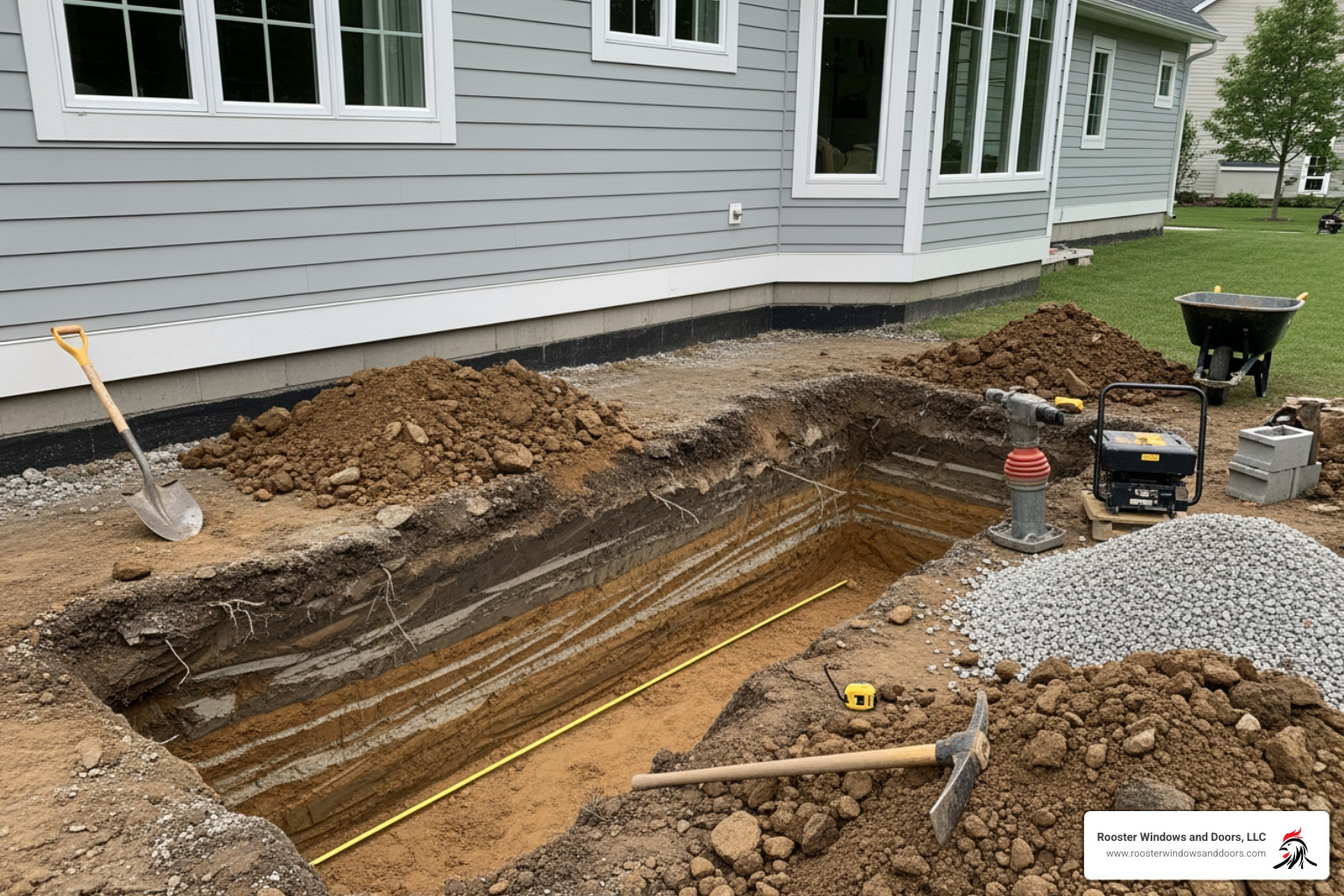
Now that we’ve covered planning, let’s dive into the how to egress window installation process. This is not a typical window replacement; it involves significant structural modifications that require expertise. For an overview of our commitment to quality, see our complete guide to window installation services.
Step 1: Preparation and Excavation
- Marking the Location: We carefully mark the window location on the interior and exterior walls to ensure perfect alignment.
- Calling 811 (Diggers Hotline): As mentioned, this is a critical safety step to have all underground utilities marked before any digging begins.
- Digging the Window Well Hole: This is the most physically demanding part. We excavate a hole large enough for the window well, plus ample working space and room for a proper drainage system. This often means digging a hole 6-7 feet across at the foundation.
- Dirt Removal: Excavation produces a large amount of soil, which we will haul away or use for landscaping on your property, as you prefer.
Step 2: Creating the Opening in Your Foundation
This is the most critical step, requiring specialized tools and expertise.
- Cutting the Foundation: The method depends on your foundation. Poured concrete requires powerful saws with diamond blades, while concrete block walls may be cut with concrete chainsaws. Both methods require precision.
- Safety and Dust Control: Cutting concrete is messy and requires professional safety measures. We use specialized equipment for dust control, such as wet-cutting methods, and our team always wears appropriate personal protective equipment (PPE).
- Installing a Structural Header: To maintain your home’s structural integrity, we install a sturdy header (a steel lintel or reinforced lumber) above the new opening. This header transfers the load from the structure above, preventing cracks or settling. Our expertise covers various wall types, including those in brick homes.
Step 3: Framing and How to Egress Window Installation
With the opening created, we prepare it for the window.
- Building a Pressure-Treated Wood Frame (Buck): We construct a durable, rot-resistant frame from pressure-treated lumber inside the rough opening. This “buck” provides a solid surface for mounting the window and is built to be perfectly plumb, level, and square.
- Fitting and Securing the Window: We test-fit the window, leaving about a 1/4-inch clearance for adjustments. Using shims, we position the window perfectly level and plumb to ensure proper operation. Then, we securely fasten the window to the buck or foundation using appropriate anchors.
- Waterproofing and Flashing: This is the most critical step for preventing water intrusion. We apply high-quality caulk and flexible flashing tape around the window to create a continuous, watertight seal that directs all moisture away from the opening. Our detailed guide to the window installation process explains these crucial steps further.
Step 4: Installing the Window Well and Finishing Touches
With the window secure, we finish the exterior well and interior space.
- Installing the Window Well and Drainage: The window well (made of steel, fiberglass, or concrete) is securely bolted to the foundation. We then add a thick layer of clean gravel at the base for drainage, often connecting it to the home’s drain tile system.
- Backfilling and Grading: We carefully backfill the soil around the well in compacted layers, grading it to direct surface water away from your home.
- Installing a Well Cover: A sturdy, clear cover is installed to keep out debris while allowing light in. These covers are designed for easy removal from the inside for emergency escape and are never locked. Find out more about covers for basement windows.
- Finishing Touches: We finish the job by installing interior trim to match your basement’s aesthetic and applying a final bead of weather-resistant caulk on the exterior for an extra layer of protection.
DIY vs. Professional Installation: Making the Right Choice
When considering how to egress window installation, many homeowners wonder whether to do it themselves or hire a professional. While the DIY spirit is admirable, this project is one where professional expertise is essential.
The Risks of Improper Installation
The stakes are incredibly high, as this project involves cutting a large hole in your home’s foundation. The risks of improper installation are significant:
- Foundation Damage: An incorrectly cut or supported opening can compromise your foundation’s structural integrity, leading to costly cracks, settling, or even catastrophic failure.
- Leaks and Moisture Problems: Improper waterproofing is a common DIY mistake that leads to severe water intrusion, mold growth, and damaged finishes in your basement.
- Failed Inspections: If the installation doesn’t meet strict local building codes, it will fail inspection, forcing you to redo the work at an additional cost.
- Compromised Home Safety: An improperly installed window or well can fail to function as a reliable emergency exit, putting your family at risk.
- Voided Warranties: Many window manufacturer warranties are voided if the product is not installed by a certified professional.
Cutting through a concrete foundation is not a DIY job. The complexities and risks far outweigh any potential cost savings.
When to Hire a Professional for How to Egress Window Installation
For a project this critical, hiring a professional is the smartest decision. Here’s why:
- Expertise and Equipment: Professionals have the specialized saws, training, and experience to safely cut through your foundation and install the necessary structural supports (headers or lintels).
- Permit Navigation: An experienced contractor understands the permit process in Chicagoland municipalities like Libertyville, Naperville, and Schaumburg, ensuring all approvals are obtained.
- Watertight Seal: Professionals use proven flashing and waterproofing techniques to guarantee a leak-proof installation.
- Code Compliance Guarantee: We are intimately familiar with IRC and local building codes, ensuring your project passes inspection the first time.
- Safety and Insurance: A professional team follows strict safety protocols and is fully insured, protecting you and your property.
- For a guaranteed professional result, the experts at Rooster Windows and Doors ensure every installation is energy-efficient and meets all local codes. We stand by our work, offering high-quality, flawless installations. You can even watch a video on proper window installation to see the level of detail involved.
When seeking a contractor, look for certified window installers who are insured and accredited. To make your search easier, we’ve compiled resources on how to find the best window installation companies in your area.
Frequently Asked Questions about Egress Windows
We often hear similar questions from homeowners considering how to egress window installation. Let’s address some of the most common ones.
Can I convert my existing small basement window into an egress window?
Yes, this is a common project. However, it’s not a simple swap. It requires professionally enlarging the existing opening in your foundation. The process involves cutting the concrete, ensuring the new opening meets all egress code requirements for size and placement, and installing a new, code-compliant window well. While more involved than a standard replacement, it’s a great way to upgrade your basement. Our guide on how to install new basement window provides more context.
What maintenance does an egress window and well require?
Egress windows require simple, regular maintenance to ensure they function properly in an emergency:
- Check Operability: Periodically open and close the window to ensure it doesn’t stick.
- Clear the Well: Regularly remove leaves, snow, and debris from the window well to keep it clear and prevent drainage clogs.
- Inspect Drainage: Ensure water is not pooling in the well, which could indicate a clog.
- Inspect Seals: Annually check the caulking around the window and well for cracks or gaps and reapply as needed.
- Check the Cover: Make sure the well cover is secure but still easy to remove from the inside.
Our window maintenance guide offers more general tips.
How do egress windows improve a basement’s environment?
Egress windows do more than just provide an emergency exit; they transform your basement’s environment.
- Natural Light: A large egress window floods your basement with natural light, making the space feel brighter, larger, and more inviting—less like a dungeon and more like a true part of your home.
- Natural Ventilation: Because they open fully, egress windows provide excellent fresh air circulation. This improves air quality, reduces humidity, and helps eliminate musty basement odors.
- Energy Savings: With more natural light, you’ll rely less on artificial lighting, which can lower your electricity bills. Modern units also contribute to an energy-efficient window installation.
Overall, an egress window makes your basement a more comfortable, livable, and enjoyable space.
Your Partner for a Safe and Successful Installation
We’ve explored the ins and outs of how to egress window installation, from understanding crucial building codes and budgeting for your project to the detailed steps of excavation, cutting, framing, and finishing. We’ve also highlighted the critical importance of choosing professional installation over a risky DIY approach.
The benefits of adding an egress window are clear: improved safety for your family, a significant boost in home value, and a dramatically improved, light-filled, and well-ventilated basement environment. This is an investment that pays dividends in peace of mind and property appreciation.
Given the structural complexities, the need for precise code compliance, and the critical importance of watertight sealing, a project of this magnitude demands the expertise of seasoned professionals. At Rooster Windows and Doors, we pride ourselves on providing high-quality, flawless, and energy-efficient installations throughout Libertyville, Chicago, and the entire Chicagoland area. Our team is dedicated to ensuring every installation is executed with the utmost care, adhering to all local codes, and delivering a result that exceeds your expectations.
For expert guidance and a flawless finish on your project, explore our egress window installation services. Let us help you transform your basement into the safe, beautiful, and valuable space it’s meant to be.
