

Your Basement Needs a Way Out — Here’s Who Can Help
Companies that install egress windows are specialized contractors who handle everything from concrete cutting and excavation to code-compliant window placement and waterproofing in basement spaces.
Here are the main types of companies that install egress windows:
- Egress specialists — dedicated firms that install only egress windows and wells (e.g., serving regions like SE Michigan, Wisconsin, Minnesota, NY/NJ/CT, Denver)
- Foundation and waterproofing contractors — professional firms that bundle egress installation with structural and drainage services to ensure a dry, stable basement
- Full-service window and door installers — residential window companies serving local markets, like Rooster Windows and Doors in the Chicagoland area
- General contractors — broader remodeling firms that offer egress as one of many services
What to expect from a professional egress window installer:
| Factor | Typical Range or Detail |
|---|---|
| Average installation cost | $2,500 – $5,300 |
| Typical timeline | 1 to 3 days |
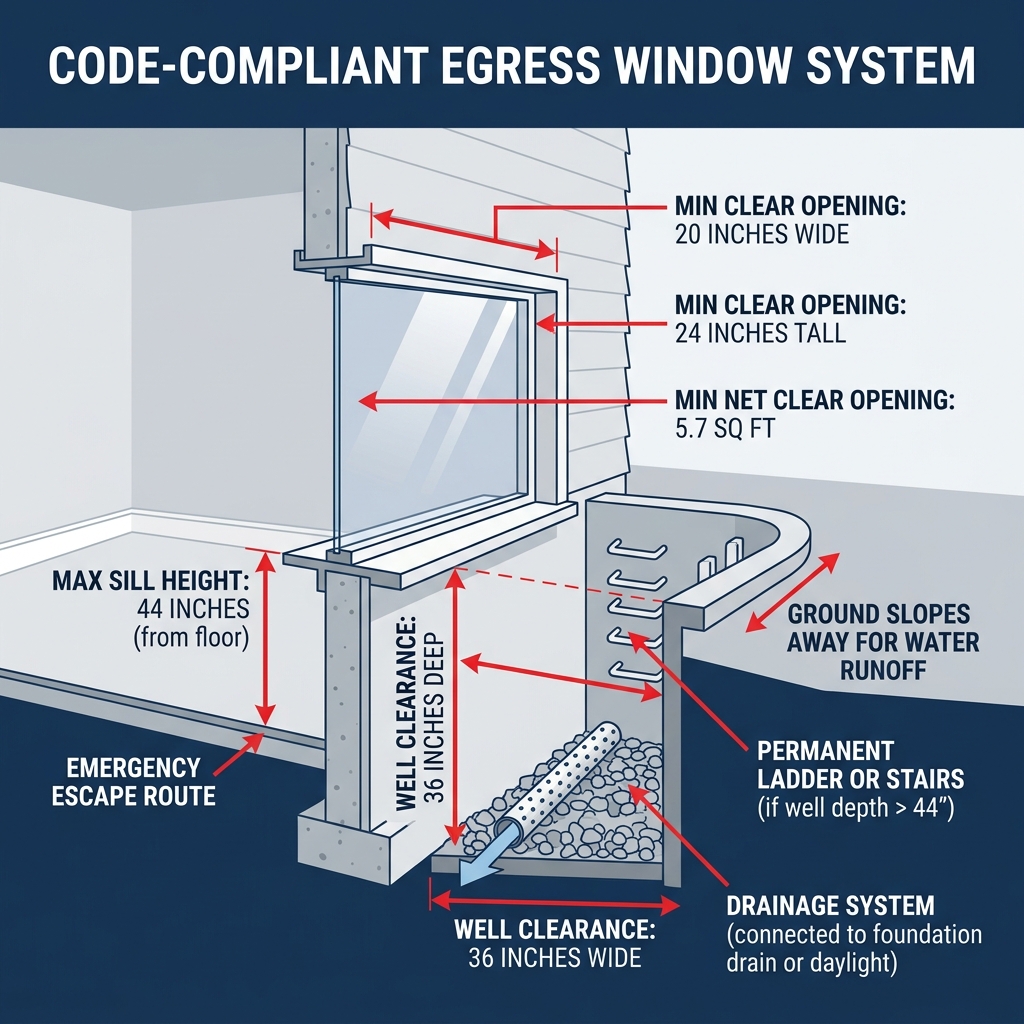
| Minimum clear opening | 5.7 sq ft (20″ wide x 24″ tall) |
| Maximum sill height | 44 inches from floor |
| Return on investment | ~70% |
A code-compliant egress window isn’t just a nice-to-have. The International Residential Code (IRC) requires at least one emergency escape opening in every basement bedroom or finished living space. Getting it wrong — wrong size, wrong depth, wrong drainage — can mean failed inspections, fines, or worse, a blocked escape route in a fire.
At Rooster Windows and Doors, LLC, our team has spent over two decades installing windows and doors across Lake, Cook, and McHenry County — including egress windows for homeowners who need safe, code-compliant basement solutions. As one of the companies that install egress windows serving the Chicagoland area, we bring the same hands-on expertise to every basement project that we apply to every window and door installation we do.
Essential companies that install egress windows terms:
Why You Need Professional Companies That Install Egress Windows
When we talk about basement renovations in places like Naperville, Arlington Heights, or Schaumburg, the conversation usually starts with flooring or drywall. But the most critical element for any finished basement is the egress window. According to the International Residential Code (IRC), any basement with a “habitable space” or a sleeping room must have at least one operable emergency escape and rescue opening.
Hiring professional companies that install egress windows ensures your home meets these strict safety standards. Beyond just following the law, a properly installed Basement Window offers a staggering 70% return on investment (ROI). It transforms a dark, “dungeon-like” basement into a bright, ventilated living area that actually counts toward your home’s legal square footage. This added value is a major win for homeowners in the competitive Chicagoland real estate market.
The Risks of Non-Compliant Basement Openings
Cutting corners on egress installation is a gamble you don’t want to take. If a fire breaks out, a standard small hopper window won’t allow a person to climb out or a firefighter in full gear to climb in. Without a building permit and a code-compliant window, that extra basement bedroom you built isn’t legally a bedroom — it’s a liability.
Professional installers handle the paperwork and ensure the opening meets the 5.7 square foot minimum. If you ever decide to sell your home in Elgin or Joliet, an inspector will check these windows. Non-compliant openings can lead to forced removals, expensive retrofitting, or even the inability to close on a sale.
Why You Need Professional Companies That Install Egress Windows for Structural Integrity
Installing an egress window isn’t like replacing a standard window on your first floor. It involves cutting through your home’s foundation. This requires structural headers to support the weight of the house above the new, larger opening.
Furthermore, professional companies that install egress windows prioritize waterproofing and drainage. We’ve seen many DIY attempts where the window well becomes a swimming pool during a heavy Illinois rainstorm, leading to basement flooding. Professionals connect the window well to the home’s perimeter drainage system or use specialized gravel beds to ensure water moves away from the foundation, not into it.
Key Requirements for Code-Compliant Egress Windows
To be considered a legal “egress,” a window must meet very specific measurements. In our service areas from Waukegan to Wheaton, we strictly follow the IRC guidelines to ensure every Egress Window Installation passes inspection.
The core requirements include:
- Minimum net clear opening: 5.7 square feet (this is the actual space you can crawl through when the window is open).
- Minimum opening height: 24 inches.
- Minimum opening width: 20 inches.
- Maximum sill height: 44 inches from the finished floor.
If the window is below ground level—which most basement windows are—it must also feature a comprehensive egress window system, including a properly sized window well.
Minimum Dimensions for Emergency Escape
While a window might look large enough, the “clear opening” is what matters. For example, a sliding window might be 4 feet wide, but if only half of it opens, the clear opening might only be 22 inches wide. If that doesn’t meet the 5.7 square foot total area requirement, it won’t pass. These dimensions are designed to ensure that an adult can exit quickly and that a firefighter carrying an oxygen tank can enter without obstruction.
Window Well and Ladder Specifications
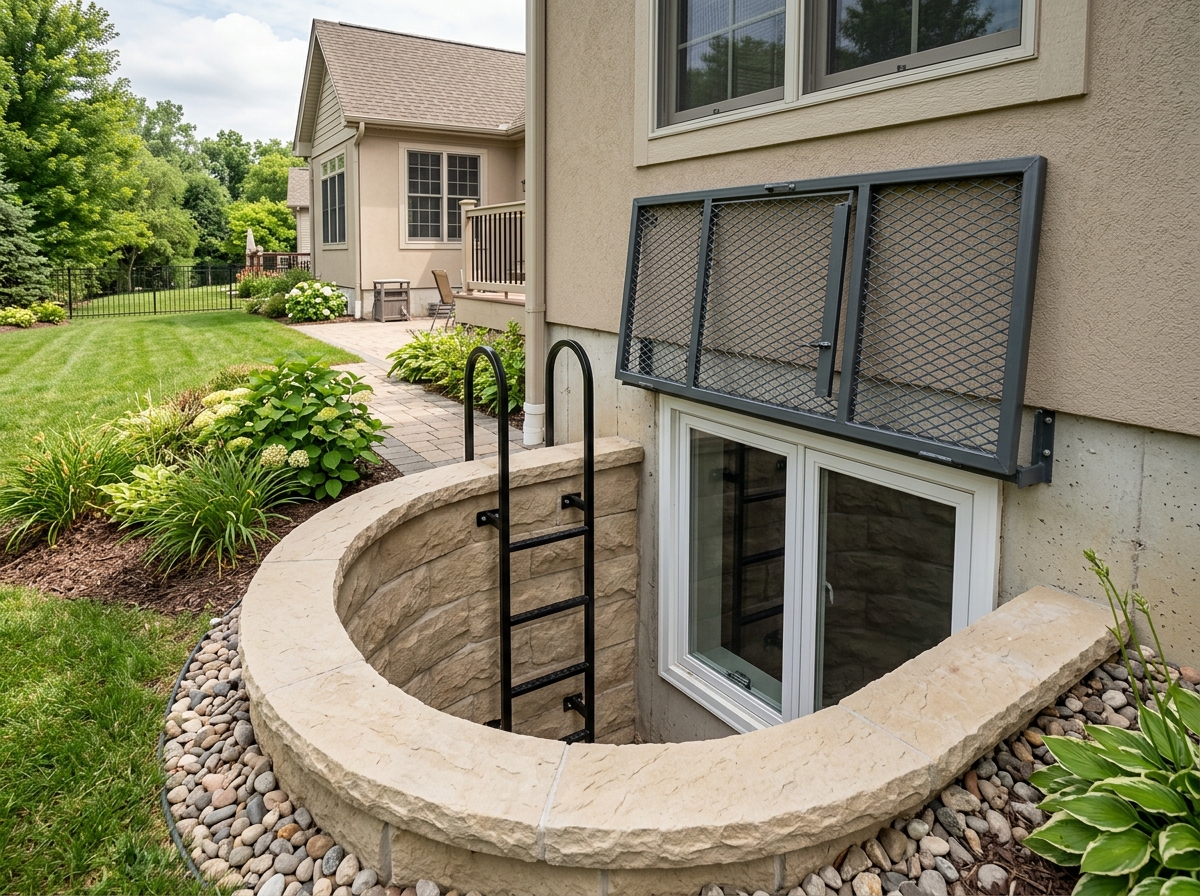
A window well is just as important as the window itself. It must provide enough room for someone to climb out and move away from the building.
- Clearance: There must be at least 36 inches (approx. 914mm) of horizontal projection in front of the window.
- Ladders: If the window well is deeper than 44 inches, a permanent ladder or steps must be installed. The ladder cannot encroach more than 6 inches into the required clearance space.
- Drainage: We typically use a layer of drainage rock (about 6 inches deep) to prevent water accumulation.
- Covers: Safety covers or grates are highly recommended to prevent children or pets from falling into the well, but they must be easily removable from the inside without the use of a key or tool.
What to Look for in Companies That Install Egress Windows
Not every handyman with a shovel is qualified to cut into your foundation. When searching for companies that install egress windows, you need to look for specific credentials that guarantee your home is in safe hands.
At Rooster Windows and Doors, LLC, we emphasize that quality materials and flawless installation provide unmatched peace of mind. Here is what you should verify:
- Licensing and Insurance: Ensure they are licensed to work in your specific municipality (like Chicago or Aurora) and carry full liability and worker’s compensation insurance.
- Specialized Expertise: Do they understand structural headers and foundation integrity?
- Warranties: Reputable installers often offer craftsmanship warranties (standard industry ranges are 2 to 5 years) in addition to the manufacturer’s window warranty.
- Reviews: Look for high ratings on platforms like Google or Angi, specifically mentioning egress projects.
Verifying Credentials and Local Experience
Local experience is vital because building codes can vary slightly by town. A company familiar with the inspectors in Libertyville or Lake Forest will know exactly what those specific offices look for during a final walkthrough. Being bonded and insured protects you from any accidents that might occur during the heavy excavation or concrete sawing process.
Evaluating Installation Techniques and Materials
The best companies that install egress windows use techniques that respect your property. For example, many high-end specialists prefer hand-digging the window well area. While it takes more effort, it prevents heavy machinery from tearing up your grass or damaging underground utilities in tight suburban lots.
When it comes to materials, we recommend high-grade vinyl frames for their energy efficiency and resistance to moisture—critical for basement environments. Below is a comparison of common window well materials:
| Material | Pros | Cons |
|---|---|---|
| Galvanized Steel | Economical, durable, fire-resistant | Can rust over decades if not maintained |
| Fiberglass | Rust-proof, attractive stone textures | Generally more expensive than steel |
| Retaining Wall Block | Highly aesthetic, matches landscaping | Very labor-intensive, higher cost |
| Plastic/Composite | Lightweight, won’t rot or rust | Can become brittle in extreme cold |
The Step-by-Step Process of Professional Egress Installation
A professional installation typically takes between one and three days. The first day is usually dedicated to the “messy” work, while the final days focus on the precision of setting the window and finishing the interior.
- Permitting: We start by securing the necessary building permits from your local Illinois building department.
- Utility Marking: Before a shovel hits the ground, we ensure all gas, water, and electric lines are marked.
- Excavation: We dig the hole for the window well, often by hand to preserve your landscaping.
- Concrete Sawing: Using a hydraulic or high-powered electric saw, we cut the opening into your foundation wall.
- Window Setting: We install the structural header, the window frame, and the energy-efficient glass.
- Well Installation: The window well is bolted to the foundation and backfilled with gravel and soil.
Excavation and Site Preparation
Excavation is the most labor-intensive part of the job. A typical egress well requires moving several cubic yards of soil. Professional companies that install egress windows don’t just dig a hole; they ensure the bottom of the well is properly graded and connected to a drainage tile if necessary. This prevents the “aquarium effect” where water builds up against the glass.
Finishing and Waterproofing
The job isn’t done when the window is in the hole. We apply high-quality exterior caulk to create a watertight seal against the concrete. On the inside, we install trim and ensure the area is clean. A final walkthrough ensures that the window operates smoothly and that the escape path is completely unobstructed.
Comparing Styles Used by Companies That Install Egress Windows
Choosing the right style of window is about more than just looks; it’s about functionality. Since egress windows must provide a large clear opening, some styles work better than others.
Casement Windows for Maximum Opening
Casement windows are the “gold standard” for egress. Because they hinge on the side and swing outward like a door, the entire window area becomes a clear opening. This allows you to meet code requirements with a smaller overall window size compared to other styles. They also feature crank operations that are easy for children or seniors to use in an emergency.
Sliding and Hopper Window Options
- Sliding Windows: These are popular for wider openings. However, since only half the window opens at a time, the total window must be quite large (usually at least 4 feet wide) to meet the 5.7 sq ft clear opening requirement.
- In-Swing / Hopper Windows: Some specialized egress windows swing inward. These are great for tight spaces where an outward-swinging window might hit the window well wall, though they require clear space inside the room to open fully.
Frequently Asked Questions about Egress Installation
How much does it cost to install an egress window?
The average cost to install an egress window is approximately $3,900, with most projects falling between $2,500 and $5,300. Factors that influence the price include the hardness of your foundation (poured concrete vs. block), the size of the window, and the material of the window well. While basement escape systems can start higher—sometimes around $4,995 for premium turnkey solutions—the investment is offset by the increased home value.
How long does the installation process take?
Most professional companies that install egress windows can complete the job in 1 to 3 days. At Rooster Windows and Doors, we strive for efficiency to minimize disruption to your home. The first two days are typically spent on excavation and concrete cutting, while the final day involves window setting, waterproofing, and site cleanup. Some specialized crews can even finish a standard installation in a single day.
Can I install an egress window myself?
While you can buy egress windows online, DIY installation is extremely risky. You are dealing with the structural integrity of your home’s foundation. One wrong cut or a failure to install a proper header can lead to wall cracks or even partial collapse. Additionally, DIYers often struggle with local code compliance and waterproofing, leading to failed inspections and basement leaks. It is always safer and more cost-effective in the long run to hire professionals.
Conclusion
Adding an egress window is one of the single best improvements you can make to your home. It provides safety, brings in natural light, and adds significant value to your property. When you are looking for companies that install egress windows in the Chicagoland area, you want a team that combines structural knowledge with high-quality, energy-efficient products.
At Rooster Windows and Doors, LLC, we pride ourselves on flawless execution and a wide variety of options tailored to your home’s needs. From Arlington Heights to Wheaton, we are here to help you make your basement a safer, brighter place to live.
Schedule your professional egress window installation today


