

Why Basement Window Replacement Matters for Your Home
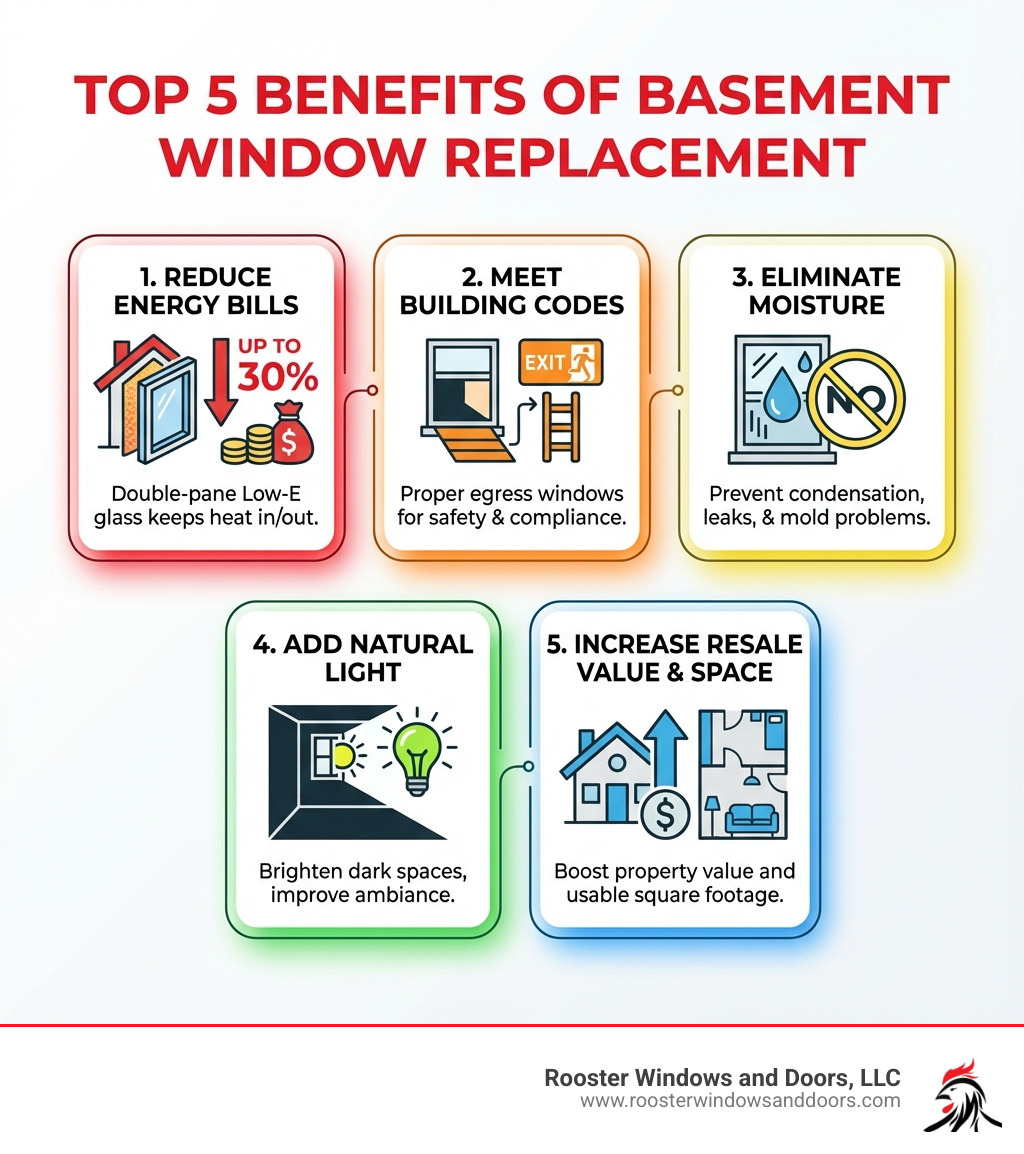
Replacement basement window projects are one of the most impactful home improvements you can make. If you’re dealing with drafty old windows, moisture problems, or want to transform your basement into usable living space, new windows deliver immediate benefits:
Top Reasons to Replace Your Basement Windows:
- Energy Efficiency – Stop drafts and reduce heating/cooling costs with modern insulated glass
- Safety Compliance – Meet building codes for egress in finished basements and bedrooms
- Moisture Control – Eliminate condensation, leaks, and potential mold issues
- Natural Light – Brighten dark spaces and make your basement feel more inviting
- Home Value – Increase property value with updated, functional windows
Many homeowners in the Chicagoland area have basement windows that are decades old—often single-pane steel or wood frames that have rusted, rotted, or stopped working. When old windows fail, basements can feel drafty, cold, and drab. The good news is that modern replacement basement window options are more affordable, energy-efficient, and easier to install than ever.
I’m Piotr Wilk, and for over two decades I’ve specialized in replacement basement window installation throughout Lake, Cook, and McHenry County. I’ve seen how the right windows transform basements from forgotten storage into comfortable, safe living areas.
Quick replacement basement window definitions:
- Basement Windows
- egress basement window
- how to install basement windows
Signs It’s Time for a Basement Window Upgrade
A shiver near your basement window or a persistent musty smell are tell-tale signs that your old windows are past their prime and working against your home’s comfort and energy efficiency.
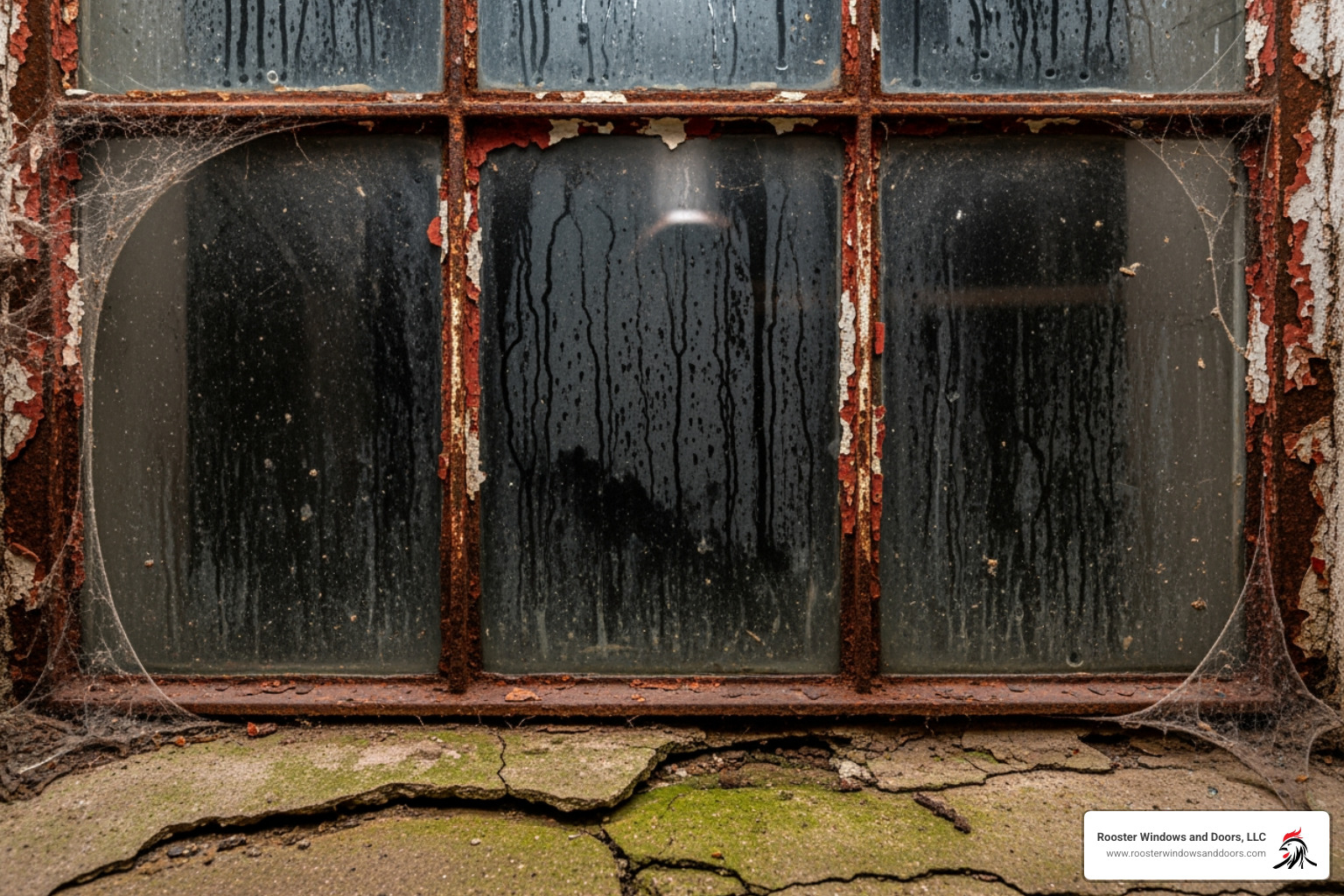
Here are the common problems we frequently encounter with old basement windows in homes across Chicagoland:
- Cold Drafts and High Energy Bills: Old, single-pane windows allow cold drafts to seep in, forcing your heating system to work overtime and driving up energy bills. A significant amount of heat escapes through the glass, making your basement uncomfortable.
- Water Leaks and Condensation: Old windows often worsen basement moisture issues. Leaks around the frame and condensation from poor insulation can lead to water intrusion, mold growth, and musty odors.
- Rotted Wood or Rusted Steel Frames: Older homes often have steel or wood-framed basement windows. Steel frames rust, degrading their function and appearance, while wood frames are prone to rot and peeling paint that requires constant maintenance.
- Difficulty Opening or Closing, Broken Locks: Rust, rot, or warped frames can make old windows difficult or impossible to operate. Broken latches also leave your home vulnerable, compromising both ventilation and security.
- Outdated Appearance: Let’s face it, old basement windows can be an eyesore. They detract from your home’s curb appeal and can make your basement feel dark and uninviting.
If any of these sound familiar, it’s a clear signal that it’s time to consider a replacement basement window. New windows can dramatically improve your basement’s comfort, energy efficiency, and usability. Learn more about general window replacement in our Window Replacement Guide.
Choosing Your Replacement Basement Window: Styles and Materials
When starting on a replacement basement window project, one of the first exciting steps is exploring the different styles and materials available. The right choice can transform your basement from a dark, damp space into a bright, functional area.
Popular Basement Window Styles
The type of window you choose for your basement depends largely on your specific needs: do you prioritize ventilation, natural light, or emergency egress?
- Hopper Windows: These are small but mighty. Hopper windows are horizontally oriented with hinges at the bottom, so they open into the room from the top. This design is excellent for ventilation and clearing out musty odors. They’re also space-efficient and can be a very cost-effective option.
- Slider Windows: These windows feature one or two sashes that slide horizontally. Slider windows offer good ventilation and are easy to operate. They provide a wider opening than hoppers, which can be beneficial for maximizing natural light.
- Awning Windows: Similar to hoppers but hinged at the top, awning windows open outward from the bottom. This design allows for ventilation even during light rain, as the glass sash forms a protective “awning” over the opening.
- Fixed Windows (Window Inserts): These windows do not open. Their primary purpose is to maximize natural light where ventilation isn’t critical. Fixed windows are often the most energy-efficient option because they have no moving parts to create air leaks.
- Egress Windows: We’ll dive deeper into these crucial windows shortly. Egress windows are designed to meet strict building codes for emergency escape and rescue, making them a necessity for finished basements that include bedrooms or habitable living spaces.
Our team is always ready to help you steer these choices and find the perfect fit for your basement. For a more comprehensive overview, consult our Basement Windows Complete Guide.
The Best Materials for Durability and Efficiency
When it comes to replacement basement window materials, especially in the unique environment of a basement, durability and resistance to moisture are paramount.
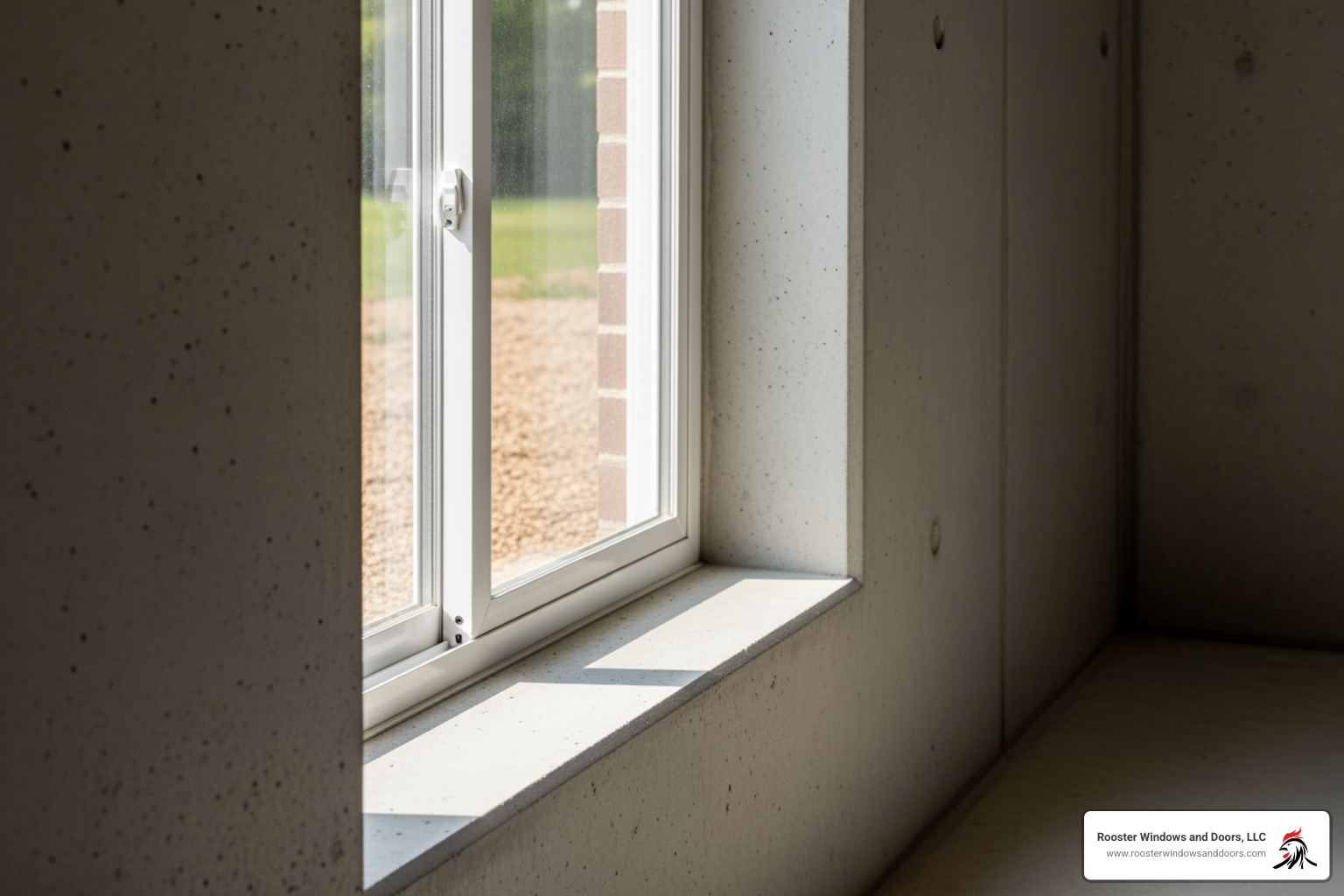
- Vinyl Windows: Without a doubt, vinyl (PVC) is the champion for basement window applications. Here’s why:
- Low Maintenance: Unlike wood, vinyl never needs scraping, sanding, or painting. It’s essentially maintenance-free.
- Moisture Resistance: Vinyl is impervious to moisture, meaning it won’t rot, warp, or swell, even in damp basement conditions.
- No Rust: For homes with old steel-framed windows, the shift to vinyl is a game-changer. Vinyl frames will never develop rust.
- Durability and Cost-Effectiveness: Modern vinyl windows are incredibly durable and offer excellent value for their cost.
- Energy Efficiency: Vinyl is an excellent insulator, making it an ideal material for energy-efficient windows.
Builders historically chose cheap steel or wood-framed windows for basements, leading to significant problems over time. Our reinforced vinyl frames are designed to easily outlast and outperform these traditional materials, offering you peace of mind and a superior product.
Boosting Energy Efficiency with Your Replacement Basement Window
Beyond the frame material, the glass package is where your replacement basement window truly shines in terms of energy efficiency. Upgrading from old single-pane windows can lead to significant savings on your utility bills and make your basement far more comfortable.
- Double-Pane and Triple-Pane Glass: Old, single-pane windows allow a great deal of heat to escape. Modern windows feature multiple panes of glass separated by a sealed air or gas-filled space. Double-pane glass significantly reduces heat transfer, while triple-pane glass offers even greater insulation and sound dampening.
- Low-E Coating: Low-emissivity (Low-E) coatings are microscopic, transparent metal layers applied to the glass surface. These coatings reflect infrared light (heat) while allowing visible light to pass through. In winter, they reflect heat back into your home; in summer, they reflect external heat away. Low-E coatings also help block harmful UV rays, protecting your furnishings from fading.
- Argon Gas Fill: The space between the glass panes is often filled with an inert gas like argon. Argon is denser than air, which further reduces heat transfer, enhancing the window’s insulating properties.
These features work in harmony to create a highly insulated barrier against the elements. The result? Reduced heat loss, fewer drafts, a more consistent basement temperature, and noticeable savings on your heating and cooling costs. According to the U.S. Department of Energy, energy-efficient windows can reduce heating and cooling costs by up to 12% nationwide. We specialize in Energy Efficient Window Installation, ensuring your new basement windows provide superior thermal protection.
The Ultimate Guide to Egress Replacement Basement Window Requirements
Perhaps the most critical aspect of any replacement basement window project, especially for finished basements, is understanding and meeting egress requirements. Egress windows aren’t just about light and air; they’re about safety, providing an emergency escape route in case of fire or other hazards.
For homes in Chicagoland, converting a basement space into a bedroom or other habitable area necessitates a compliant egress window. This isn’t just a suggestion; it’s a building code mandate designed to ensure the safety of your family. The addition of even one egress window can make a basement much more usable and functional, and it’s a significant factor in increasing your home’s value. Our team is expert in guiding you through this process, ensuring your home is both safe and compliant. For deeper insights, explore our Egress Window Installers Best Guide.
Understanding Egress Building Codes
Local building codes, generally based on the International Residential Code (IRC), dictate specific requirements for egress windows. These codes are in place to ensure that occupants can safely exit the basement during an emergency and that emergency personnel can enter.
For homes in Chicago and surrounding Illinois communities, here are the key minimum requirements for an egress window:
- Minimum Opening Width: The window must have a minimum clear opening width of 22 inches.
- Minimum Opening Height: The window must have a minimum clear opening height of 24 inches.
- Minimum Total Opening Area: The net clear opening area of the window must be at least 5.7 square feet. This means that 22 inches x 24 inches (which is 3.67 sq ft) is not enough; you need a larger overall opening to achieve the 5.7 sq ft. For instance, a window that is 24 inches wide would need to be 34.2 inches high to meet the area requirement (24 * 34.2 / 144 = 5.7).
- Maximum Sill Height: The bottom of the window’s clear opening (the sill) must be no more than 42 inches from the finished floor of the basement. If the sill height exceeds this, a permanent, affixed step or ladder must be installed below the window to allow easy access.
- Operation: Egress windows must be operable from the inside without the use of keys, tools, or special knowledge. They must also not be obstructed by bars, grilles, or other fixtures unless these are easily removable from the interior without tools.
These requirements apply to any basement bedroom or habitable space. If your basement includes a bedroom, it must have at least one compliant egress window. We work diligently to comply with local safety codes to ensure your replacement basement window project meets all necessary regulations.
Window Wells and Covers: The Complete System
When an egress window is installed below ground level, it’s not just the window itself that’s important; a properly constructed window well is an integral part of the egress system.
- Purpose of a Window Well: A window well creates an open space outside the basement window, allowing light and air in and providing the necessary clearance for a safe escape. It effectively turns an underground window into an accessible exit.
- Dimensions and Clearance: The window well must extend at least 36 inches from the foundation wall, giving enough space for someone to crawl out. Additionally, it must maintain a minimum clear horizontal size that allows the window to be fully opened and provides a pathway for escape.
- Ladder Requirements: If the bottom of the window well is deeper than 44 inches below ground level, it must include a permanently affixed ladder or steps. This ladder must not obstruct the window’s clear opening and should be easily accessible.
- Proper Drainage: A crucial,, aspect of a window well is proper drainage. Without it, the well can fill with water during heavy rains, turning a safety feature into a flooding hazard. Window wells should be positioned away from downspouts and include a drainage system (e.g., gravel base connected to a drain tile) to prevent water buildup.
- Covers: While not always required, a window well cover can be a smart addition. It prevents debris, animals, and accidental falls into the well. If a cover is used, it must be easily removable from the inside without tools, ensuring it doesn’t impede emergency escape.
Installing a full egress window system, including the window well, is a complex construction project that often involves excavation and concrete cutting. It’s a job best left to professionals to ensure it meets all safety codes and is properly waterproofed. We can help you with appropriate Covers for Basement Windows and connect you with reputable Window Well Companies Near Me for comprehensive solutions.
Budgeting for Your Project: Costs and Installation
Considering a replacement basement window project is a smart financial decision. While there’s an upfront cost, the long-term benefits often provide an excellent return on investment (ROI). New, energy-efficient windows can significantly reduce your utility bills, and meeting egress requirements can transform your basement into valuable, legal living space, increasing your property’s overall value. We offer comprehensive Window Installation services to ensure your investment is sound.
What is the typical cost for a replacement basement window?
The cost of a replacement basement window can vary widely based on several factors, including the type of window, its size, materials, glass features, and installation complexity. In our Chicagoland service area, here’s a general idea of what you might expect:
| Window Type | Approximate Cost Range (Window Only) |
|---|---|
| Hopper Window | $100 – $300 |
| Slider Window | $300 – $700 |
| Egress Window (basic) | $800 – $1,200+ |
Note: These are estimates for the window unit itself. Installation costs are additional and can vary significantly based on project complexity.
Factors Affecting Cost:
- Window Type: Simpler hopper windows are generally less expensive than larger slider or specialty egress windows.
- Size: Standard basement window sizes are common, but larger, custom sizes will cost more.
- Material: While vinyl is recommended, variations in quality and reinforcement can affect the price.
- Glass Features: Adding energy-efficient features like triple-pane glass, Low-E coating, and argon gas fill will increase the cost.
- Installation Complexity:
- Simple replacement into an existing opening is the least costly for labor.
- Enlarging an opening for an egress window is a major undertaking. This involves concrete cutting (typically $1,500 – $3,000), excavation for a window well ($800 – $2,000), window well construction, and permits ($200–$500).
A full egress window installation, including excavation, a cinder block retaining wall, ladder, cover, drainage, and a new vinyl window, can cost around $6,000, depending on the job’s complexity. For a more detailed breakdown, our Cost to Replace a Window Ultimate Guide offers further insights.
The Installation Process: DIY vs. Professional
When it comes to replacement basement window installation, particularly for windows below grade or those requiring structural changes, we strongly advise against a do-it-yourself approach. The complexities of basement environments demand professional expertise.
Here’s why professional installation is the best choice:
- Expertise in Basement Challenges: A meticulous installation is crucial to prevent water infiltration. Our experienced crews understand proper flashing, sealing, and drainage techniques specific to below-grade installations.
- Structural Integrity: Enlarging an opening in a concrete foundation is a significant structural undertaking. It requires precise concrete cutting and reinforcement to maintain the integrity of your home’s foundation. This is “not usually a do-it-yourself project.”
- Code Compliance: Professionals ensure that your new egress window and window well system meet all local building codes in Chicagoland, avoiding costly rework and safety hazards.
- Proper Sealing and Waterproofing: Proper sealing is vital for energy efficiency. We ensure that your windows are perfectly sealed against air leaks, drafts, and moisture, maximizing their insulating properties.
- Warranty and Assurance: Professional installation often comes with a warranty on both the product and the workmanship, providing peace of mind that your investment is protected.
- Tools and Equipment: Concrete cutting and excavation require specialized, heavy-duty equipment that most homeowners don’t possess.
While our blog does offer a general guide on How to Install a New Basement Window, we emphasize that complex projects are best handled by experienced professionals. Our team is equipped to ensure your replacement basement window project is completed safely, efficiently, and to the highest standards. If you’re looking for expert help, check out our Window Installers Near Me page.
Financing Your Window Replacement
We understand that a replacement basement window project can be a significant investment. We believe that improving your home’s comfort, safety, and value shouldn’t be out of reach.
That’s why we partner with various financing vendors to help make your project affordable. During your consultation, we can discuss your project needs and explore available payment plans that fit your budget. Our goal is to make the process easy and stress-free, allowing you to enjoy the benefits of new, high-quality basement windows with convenient monthly payments.
Frequently Asked Questions about Basement Window Replacement
We often hear similar questions from homeowners in Chicagoland considering a replacement basement window. Here are some of the most common inquiries and our expert answers:
What is the best material for a basement window?
For the unique environment of a basement, reinforced vinyl is hands-down the best material for a replacement basement window. Unlike old steel frames that rust or wood frames that rot and peel, vinyl is inherently moisture-resistant and maintenance-free. It won’t warp, crack, or corrode, even in damp conditions. Beyond durability, vinyl is an excellent insulator, contributing significantly to your basement’s energy efficiency. This combination of moisture resistance, low maintenance, and thermal performance makes vinyl the ideal choice for below-grade applications.
Do all basement windows need to be egress windows?
No, not all basement windows need to be egress windows. The requirement for an egress window is tied directly to the use of the basement space. If your basement contains a bedroom or any other habitable living space (like a family room, home office, or guest suite), then that space must have a compliant egress window to meet safety codes. However, if your basement is primarily used for storage, laundry, or utilities and does not contain any habitable spaces, then standard, non-egress windows (like hopper or fixed windows) are perfectly acceptable. We always recommend checking with your local building department in Illinois to confirm specific requirements for your project.
How long does it take to replace a basement window?
The timeline for a replacement basement window project can vary significantly based on its complexity:
- Simple Replacement (into existing opening): For a straightforward swap where a new window fits into an existing, appropriately sized opening, installation can often be completed in less than a day per window. This assumes no structural modifications or excavation are needed.
- Full Egress Installation (requiring enlargement and window well): This is a much more involved process. A full egress conversion, including excavation, concrete cutting to enlarge the opening, building a new window well, and installing the window and drainage system, can take several days, typically 2-4 days for a single unit. A complex project where an existing hopper window opening was enlarged into a full-sized egress window, including a cinder block retaining wall, ladder, plexiglass cover, drainage, and a new vinyl window, was completed in four days. This timeline accounts for the various stages of construction and necessary curing times.
We always provide a clear project timeline during our consultation, so you’ll know exactly what to expect for your specific replacement basement window project.
Conclusion
Investing in a replacement basement window is a smart home improvement that offers a multitude of benefits, changing your basement from an afterthought into a functional, comfortable, and safe extension of your living space. From eliminating drafts and reducing energy bills to ensuring emergency safety and enhancing natural light, new windows deliver immediate and long-lasting value.
We, at Rooster Windows and Doors, LLC, pride ourselves on providing high-quality, flawless, and energy-efficient installations with a wide variety of options to suit the unique needs of homeowners across Libertyville, Chicago, and the entire Chicagoland area. Our expertise, honed over two decades, ensures that your replacement basement window project is handled with precision and care, resulting in a beautiful and durable finish you’ll appreciate for years to come.
Don’t let old, inefficient basement windows compromise your home’s comfort or safety any longer. It’s time to bring new views and new life to your space below.
Learn more about our Basement Window services and find how we can help you achieve your basement change goals.
