

No More Drips: Easy Ways to Waterproof and Seal Your Basement Windows
Why Sealing Your Basement Windows Matters
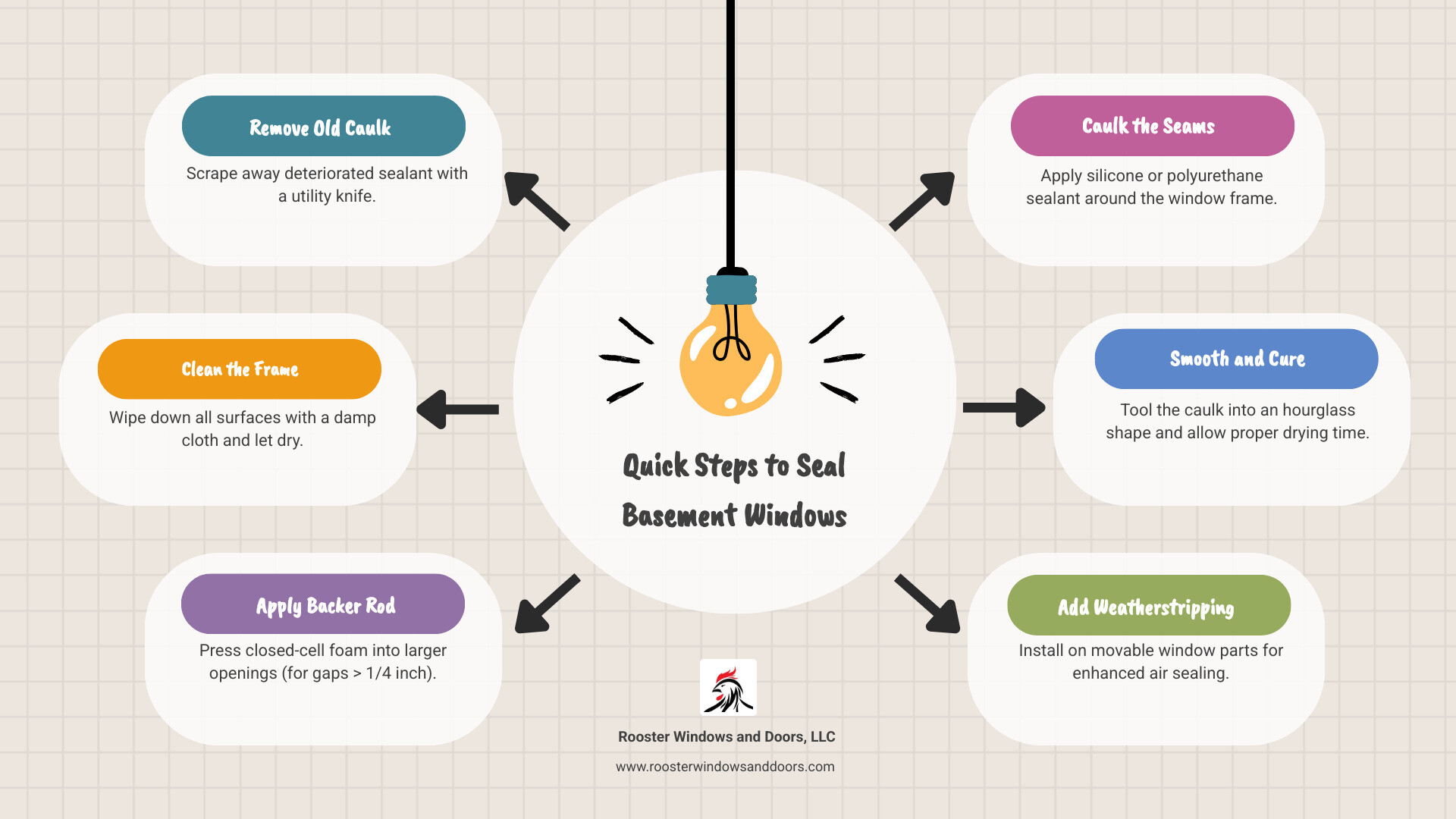
How to seal basement windows is a critical maintenance task that protects your home from water damage, reduces energy costs, and prevents mold growth. Here’s the quick answer:
Quick Steps to Seal Basement Windows:
- Remove old caulk – Scrape away deteriorated sealant with a utility knife.
- Clean the frame – Wipe surfaces with a damp cloth and let dry.
- Apply backer rod – Use for gaps over 1/4 inch.
- Caulk the seams – Apply silicone or polyurethane sealant around the frame.
- Smooth and cure – Tool the caulk and allow proper drying time.
- Add weatherstripping – Install on movable parts for an airtight seal.
Basement windows are potential entry points for water, cold air, and pests. Properly sealing a window takes about 10 minutes and requires no major tools. When windows leak, water intrusion can destroy property, create mold, and compromise your foundation. Air leaks can also drive up energy costs by as much as 30%.
I’m Piotr Wilk, and for over two decades I’ve been installing and maintaining windows and doors in the Chicagoland area. My experience has taught me that understanding how to seal basement windows correctly prevents costly repairs and creates healthier homes.
How to seal basement windows terminology:
Energy Efficiency
Sealing gaps around basement windows prevents the “chimney effect,” where cold air is drawn into the basement as warm air escapes from upper floors. This forces your HVAC system to work harder. Sealing these leaks significantly reduces energy loss. You can learn more about home efficiency at Air Sealing Your Home.
Mold Prevention
Leaky windows introduce moisture that fosters mold and mildew. These issues create musty odors and compromise indoor air quality. Proper sealing is a crucial step in maintaining a dry, healthy basement environment.
Structural Integrity
Consistent water seepage can rot wood frames and erode masonry. Over time, this decay can compromise the stability of your foundation. Proactively sealing windows protects your home’s long-term structural health.
Air Leakage
Drafts bring in dust, allergens, and pests while making your basement uncomfortable. A proper window seal stops both air and water leaks, creating a more secure living space.
Step-by-Step Guide on How to Seal Basement Windows
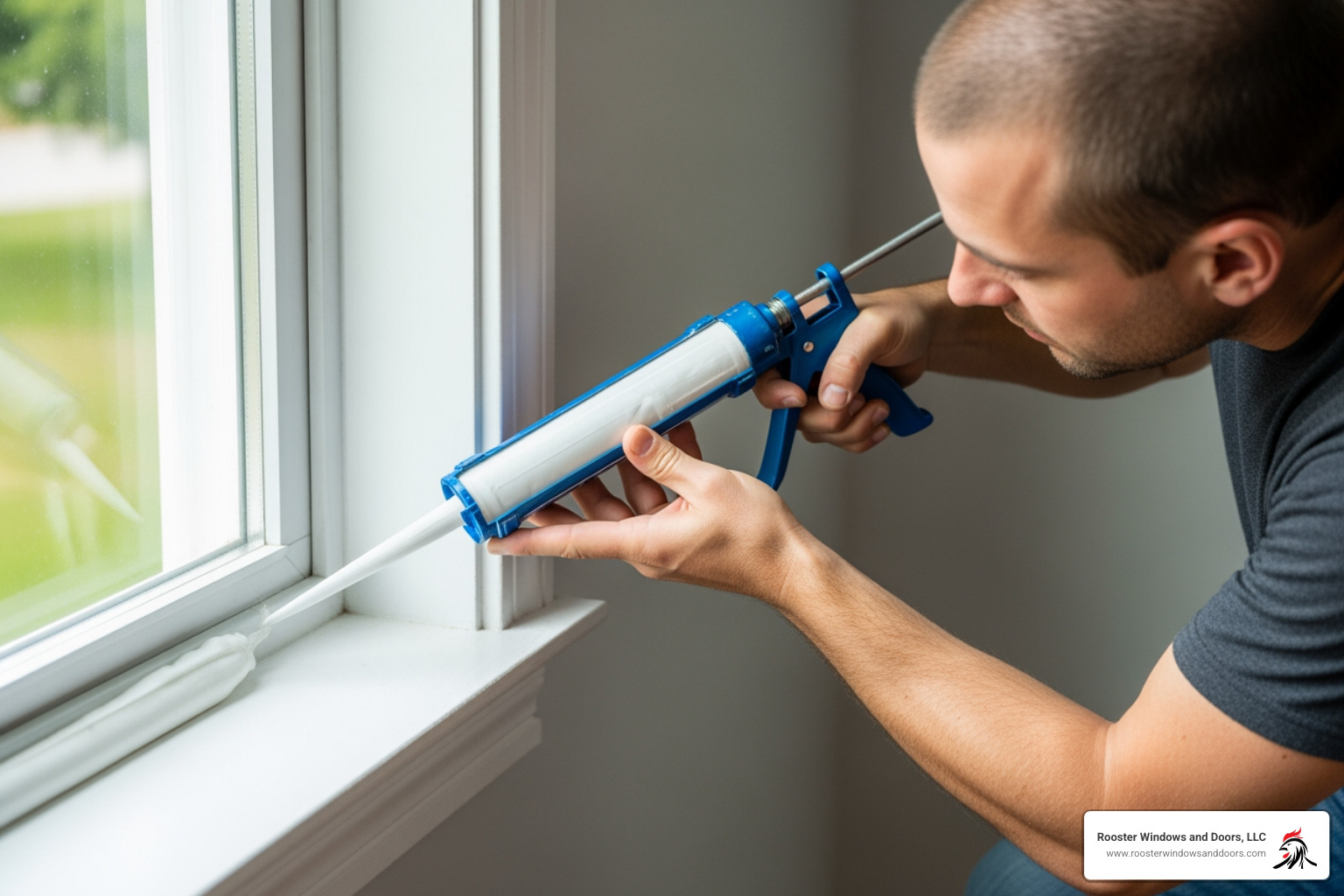
Sealing your basement windows is a manageable DIY task that improves comfort and protection.
Choosing the Right Materials to Seal Basement Windows
- Silicone Sealant: Flexible and moisture-resistant, but generally not paintable.
- Polyurethane Caulk: Superior for many applications, remains flexible, and is paintable for a seamless finish.
- Backer Rod: Essential for gaps exceeding 1/4 inch to provide a stable base for caulk.
- Non-Expanding Foam Sealant: Use “low expansion” foam for gaps up to 3 inches to avoid distorting window jambs.
- Weatherstripping: Ideal for movable parts like sashes; available in foam, V-strips, or rubber.
- Waterproofing Sealants: Specialized membranes or masonry sealants can prevent water from penetrating porous surfaces.
For more details, see the Energy Star guide on Sealing Air Leaks: Basement.
Step-by-Step Guide to Sealing Basement Windows
- Assess the Situation: Inspect for cracks, gaps, deteriorated caulk, or signs of water damage.
- Gather Your Materials: Collect caulk, a caulking gun, backer rod, cleaning supplies, and rags.
- Remove Old Sealants: Scrape away all old, cracked caulk and weatherstripping for proper adhesion.
- Clean the Window Frame: Use a mild detergent to remove dirt and mold. The surface must be dry before sealing.
- Apply Backer Rod: Press a closed-cell backer rod into gaps wider than 1/4 inch.
- Apply Caulk: Apply a continuous bead along seams where the frame meets the wall and glass.
- Smooth the Caulk: Use a wet fingertip or tool to smooth the bead immediately after application.
- Install Weatherstripping: Apply adhesive-backed strips to movable sashes for a tight seal.
- Insulate with Foam Sealant: Fill larger voids with non-expanding foam and trim excess once cured.
- Consider Window Film: Apply plastic film to older single-pane windows for extra insulation.
- Regular Maintenance: Inspect seals annually for cracking or wear. For more tips, see our guide on Window Maintenance.
Common Mistakes When Learning How to Seal Basement Windows
- Rushing Preparation: Skipping cleaning or old caulk removal leads to poor adhesion.
- Using Incorrect Materials: Avoid cheap acrylic caulk for exteriors or high-expansion foam around jambs.
- Ignoring Drainage: External issues like poor yard grading must be fixed alongside window sealing.
- Incorrect Caulk Application: Aim for a consistent 1/4 to 3/8 inch bead; avoid applying too much or too little.
- Skipping Backer Rods: Large gaps filled only with caulk will eventually crack.
- Neglecting Condensation: Sealing helps air leaks, but high humidity may require ventilation. Read more on Condensation on Windows.
- Forgetting Maintenance: Seals degrade over time and require periodic inspection.
Addressing Water Seepage and Window Well Drainage
Basement windows are vulnerable because they are often below ground level. Addressing root causes like window well drainage is essential.
Window Wells
Uncovered window wells trap debris and water, which can seep into your basement. Installing durable, weather-proof covers keeps debris out and prevents water from pooling against the wall. Learn more about Covers for Basement Windows.
Yard Grading and Hydrostatic Pressure
If your yard slopes toward the foundation, rainwater will accumulate and create hydrostatic pressure, pushing water through cracks. Ensure your yard slopes away from the house at least six inches for the first ten feet.
Gutters and Downspouts
Clogged gutters cause water to cascade down the side of your house. Ensure gutters are clean and downspouts extend several feet away from the foundation to divert water to a sloped area or storm drain.
Temporary Fixes vs. Permanent Waterproofing Solutions
Temporary Fixes
These DIY options provide immediate relief from drafts but require frequent replacement:
- Weatherstripping: Great for movable parts but wears out every year or two.
- Window Film: Creates an insulating barrier for winter months.
- Bubble Wrap: A quick insulator that adheres to glass with water.
- Draft Stoppers: Fabric tubes that block air at the bottom of the window.
- Interior Caulking: Temporarily seals air leaks but doesn’t stop external water intrusion.
Permanent Waterproofing Solutions
For long-term protection, consider these professional options from Rooster Windows and Doors:
- High-Quality Vinyl Windows: Modern double-paned vinyl windows are waterproof and offer superior insulation. They are a smart investment for decaying wood or steel windows.
- Glass Block Windows: These are mortared into place, creating a robust, leak-resistant, and maintenance-free barrier.
- External Drainage: Permanent solutions often involve yard grading and foundation repairs to keep water away from the window opening.
Explore our Basement Window options for more insights.
When to Consider Professional Window Replacement
Sometimes caulking isn’t enough. Here are scenarios where professional replacement is necessary:
Structural Rot and Decay
If wood frames show significant rot or warping, they cannot be saved with caulk. Replacement is the only way to restore structural integrity, especially in older homes in Arlington Heights or Elgin.
Egress Code Requirements
Livable basement spaces require egress windows for safety. These must meet specific size requirements (minimum 20″ wide, 24″ high, and 5.7 sq. ft. opening). Our team handles Egress Window Installation Complete Guide to ensure your home meets Chicago and suburban safety standards.
Significant Energy Loss
Windows over 20 years old are often inefficient. If drafts persist after sealing, investing in new, energy-efficient windows is more cost-effective in the long run.
Persistent Leaks and Foundation Issues
If water intrusion continues after you’ve sealed the windows and fixed drainage, there may be underlying foundation or installation issues. A professional assessment can diagnose the true source of the leak.
Aesthetics and Value
New windows improve curb appeal and home value. At Rooster Windows and Doors, we provide flawless installations that combine functionality with beauty for homes from Glenview to Naperville.
Frequently Asked Questions about Basement Sealing
What are the signs that my basement windows are leaking?
- Musty Odors: A damp smell often indicates moisture intrusion.
- Damp Spots: Look for discoloration or water rings on walls and floors.
- Efflorescence: White, powdery salt deposits on masonry surfaces.
- Visible Drafts: Air movement near window edges on windy days.
- Condensation: Excessive moisture on glass can signal air leaks or poor ventilation.
- Insect Entry: Pests entering through gaps indicate compromised seals.
- Water Pooling: Water on the windowsill or floor after rain.
Can I seal basement windows from the inside?
Yes, interior methods like caulking, weatherstripping, and window film are effective for controlling drafts and condensation. However, they typically do not address the source of external water intrusion. For true waterproofing, exterior sealing or full window replacement is often required.
Is caulk or spray foam better for window gaps?
- Caulk: Best for gaps 1/4 inch or less. Use high-quality silicone or polyurethane for narrow seams where the frame meets the wall.
- Spray Foam: Ideal for gaps between 1/4 inch and 3 inches. Always use low-expansion foam designed for windows and doors to avoid distorting the frame.
Using the right product for the specific gap size ensures a long-lasting, airtight seal.
Conclusion
Learning how to seal basement windows is an essential skill for Chicagoland homeowners. Whether you are preventing drafts or averting water damage, proper sealing makes your home more comfortable and energy-efficient.
While DIY sealing addresses many issues, persistent leaks or structural decay may require professional intervention. Rooster Windows and Doors, LLC specializes in high-quality, energy-efficient installations throughout Libertyville, Chicago, and Arlington Heights.
Don’t let leaky windows damage your home. Explore our Basement Window solutions and contact us today for expert assistance with your window and door needs.
