

Why Replacing Your Double Hung Windows is Worth the Effort
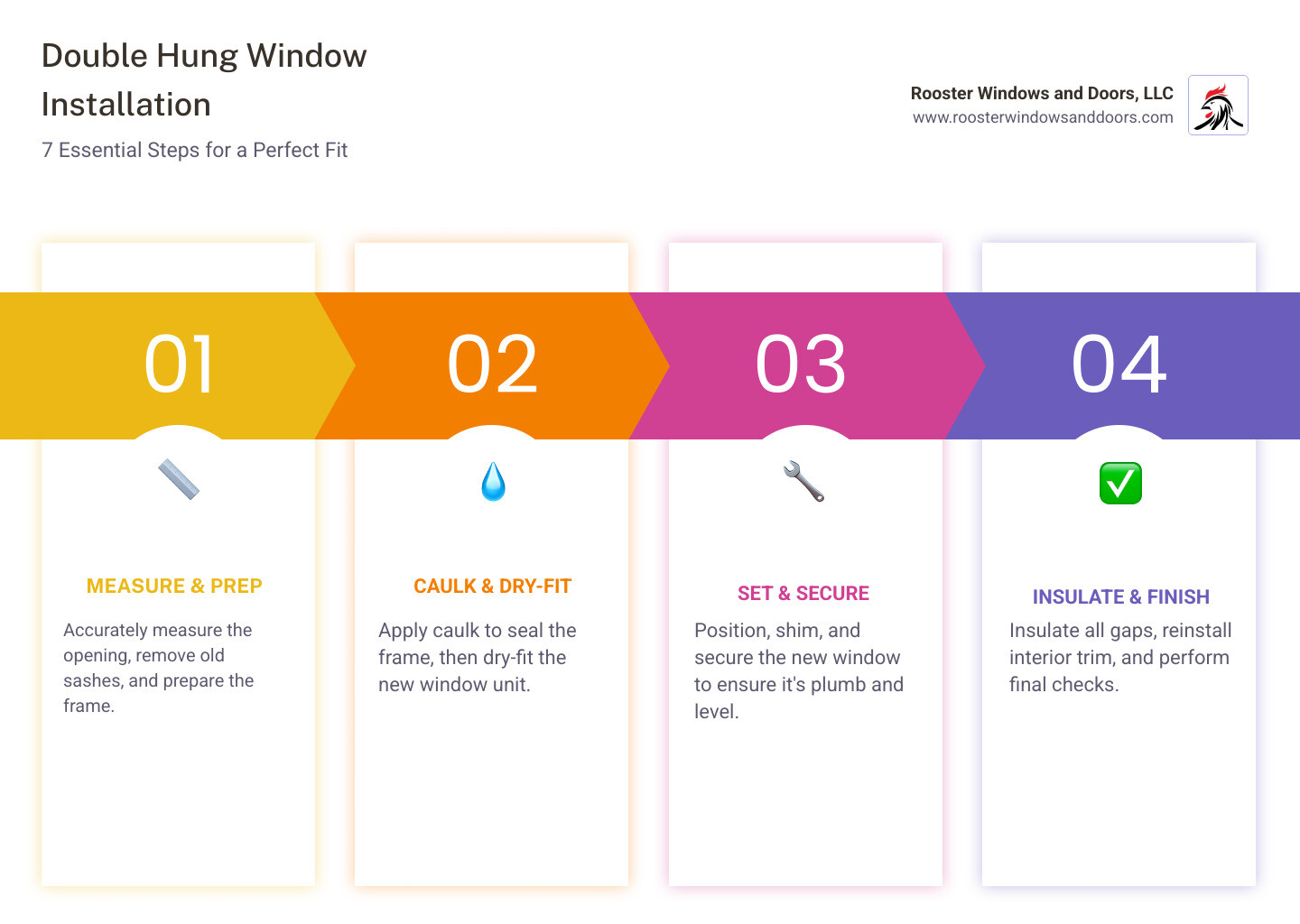
How to install replacement double hung windows involves these essential steps:
- Measure accurately – Width at top, middle, bottom (use smallest); height at left, middle, right (use smallest)
- Remove old window – Take out interior stops, lower sash, parting stop, and upper sash
- Prepare the opening – Clean debris, inspect for rot, apply flashing tape to sill
- Apply caulk – 3/8-inch bead of silicone caulk on blind stop and sill
- Set and secure – Place window, loosely fasten, check for square with shims, tighten screws
- Insulate and seal – Loosely pack fiberglass insulation, apply low-expansion foam to exterior gaps
- Finish – Reinstall trim, caulk interior, test window operation
Replacing old, drafty windows with new double hung units can dramatically improve your home’s energy efficiency and curb appeal. Properly installed windows prevent heat loss, while poorly fitted ones can lead to frame damage and high energy bills. The key to success is accurate measurement and careful installation—a common mistake for DIYers is imprecise measurement, which complicates the project.
There are two main installation methods: insert (pocket) replacement and full-frame replacement. Insert windows fit inside your existing frame and are ideal when the frame is sound. Full-frame replacement involves removing the entire old unit and is necessary when frames are damaged or rotted.
I’m Piotr Wilk from Rooster Windows and Doors, LLC. With over two decades of experience installing windows and doors in the Chicagoland area, I’ve handled countless projects on how to install replacement double hung windows for homeowners in Lake, Cook, and McHenry County. Understanding the process helps ensure a successful outcome, whether you do it yourself or hire a professional.
Key how to install replacement double hung windows vocabulary:
Before You Begin: Is It Time for a Replacement?
Before starting, it’s crucial to understand why you’re replacing your windows. Are they just outdated, or are they costing you money and comfort? The signs can be subtle at first but often point to a clear need for new windows.
One of the most common complaints we hear from homeowners in places like St. Charles and Naperville is about drafts. A breeze from a closed window is a tell-tale sign of compromised seals, leading to higher energy bills. If your heating or cooling system seems to be working overtime, inefficient windows could be the culprit.
Look for physical damage like warped frames, cracked glass, or windows that no longer seal properly. Water stains or decay around the frame point to moisture infiltration, which can cause significant damage. If you’re constantly hearing outside noise, your windows may lack adequate insulation.
For more on maintaining your current windows, check out our guides on Condensation on Windows and Window Maintenance.
Signs Your Double Hung Windows Need Replacing
Let’s dive deeper into those red flags:
- Visible Cracks or Damage: Any cracks in the glass or frame compromise the window’s integrity and insulation.
- Difficulty Operating: Windows that don’t glide smoothly can be a safety hazard and may indicate a warped frame or aging hardware.
- Drafts and Uneven Temperatures: Cold spots near windows in winter are a clear sign of drafts, which directly impact your energy bills.
- Condensation Between Panes: Moisture between the glass panes means the insulated seal has failed, drastically reducing energy efficiency. To learn more about glass options, read our article on Single Pane vs Double Pane.
- Peeling Paint or Rotting Wood: This signals water intrusion. If the wood is soft or paint is peeling, moisture is getting in and can lead to serious structural issues.
- Faulty Locking Mechanisms: Worn-out or broken locks pose a security risk and are a clear sign it’s time for an upgrade.
- Excessive Noise Penetration: Old, poorly insulated windows do little to block sound. New windows can make your home more peaceful.
Choosing Your Replacement Method: Insert vs. Full-Frame
Once you’ve decided to replace, you must choose an installation method: insert (or pocket) or full-frame. The right choice depends on your existing window frame’s condition.
Insert (Pocket) Replacement: This is a less invasive, DIY-friendly option. The new window is custom-built to fit inside the existing frame. We remove the old sashes and stops, but the original frame remains. This method is ideal when your existing frame is structurally sound, plumb, and square, with no rot. It’s quicker, generally less expensive, and doesn’t disturb your siding or trim. Learn more in our guide to Retro Fit Window.
Full-Frame Replacement: This method involves removing the entire window unit down to the rough opening. It’s necessary if your existing frame is rotted, damaged, or out of square, or if you want to change the window’s size or style. While more disruptive, it allows for a complete overhaul, addressing hidden issues and ensuring the best possible seal. It also provides a slightly larger glass area.
Here’s a quick comparison:
| Feature | Insert (Pocket) Replacement | Full-Frame Replacement |
|---|---|---|
| Cost | Generally lower (less labor, less material) | Generally higher (more labor, more material) |
| Difficulty | Intermediate (less disruptive, fewer structural concerns) | Advanced (more disruptive, potential structural repairs) |
| When to Use | Existing frame is sound, plumb, and square | Existing frame is rotted, damaged, or out of square; desire to change opening size/style |
| Disruption | Minimal to exterior/interior trim | Significant to exterior siding and interior trim |
| Glass Area | Slightly reduced (new frame sits within old) | Maximized (new window fits rough opening) |
Accurately Measuring: The First Step in How to Install Replacement Double Hung Windows
The saying “measure twice, cut once” is critical for window replacement. We say “measure three times, order once!” Accurate measurements are the most critical step, as an error can be a costly headache.
Here’s our expert advice for getting it right:
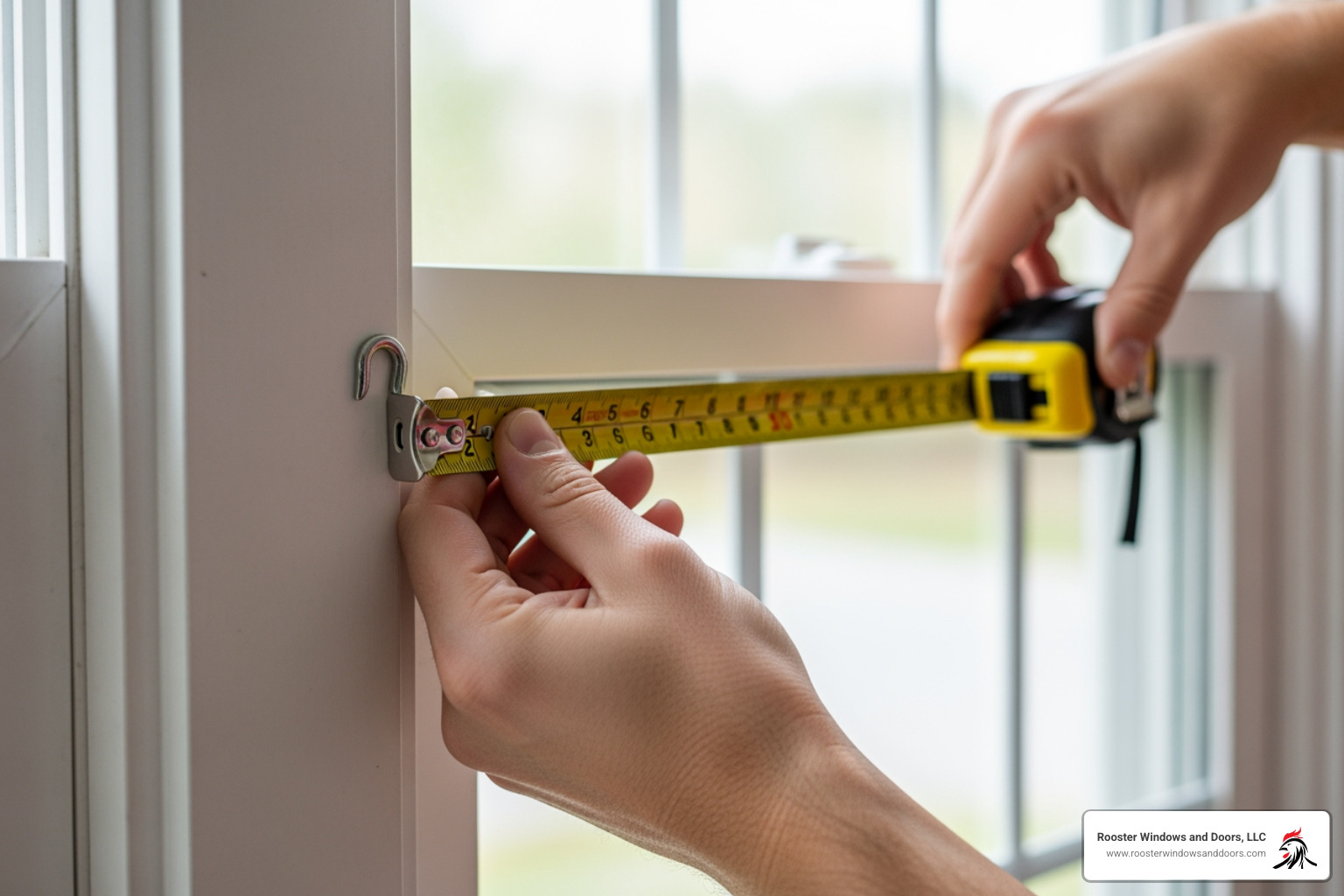
- Gather Your Tools: You’ll need a reliable tape measure, a level, a flashlight, and a notepad.
-
Measure Width (Side to Side):
- Open the lower sash.
- Measure the width between the side jambs at the top, middle, and bottom of the opening.
- Crucially, measure to the jamb, not to the interior trim pieces.
- Record all three measurements and use the smallest one when ordering.
-
Measure Height (Top to Bottom):
- Measure the height from the top jamb to the sill at the left, middle, and right.
- Again, record all three and use the smallest one.
-
Measure Depth (Front to Back):
- For insert windows, measure the depth of the existing frame from the blind stop to the interior trim. An incorrect depth measurement can prevent the window from sitting flush.
-
Check for Square:
- Measure diagonally from top-left to bottom-right, and then top-right to bottom-left.
- If the measurements differ by more than 1/2 inch, your opening is out of square. You may need a full-frame replacement.
-
Determine Sill Angle (for Sash Kits):
- If considering a sash replacement kit, you’ll need to find the angle of your windowsill using an angle finder to ensure the new sash sits correctly.
Order the new window 3/8-inch narrower and 1/4-inch shorter than your smallest measurements to allow for shimming and clearance. For unique sizes, we specialize in Custom Made Windows to fit your exact specifications.
Gearing Up: Tools and Materials for the Job
With measurements complete, it’s time to gather your tools and materials. Proper preparation ensures a smooth and safe installation.
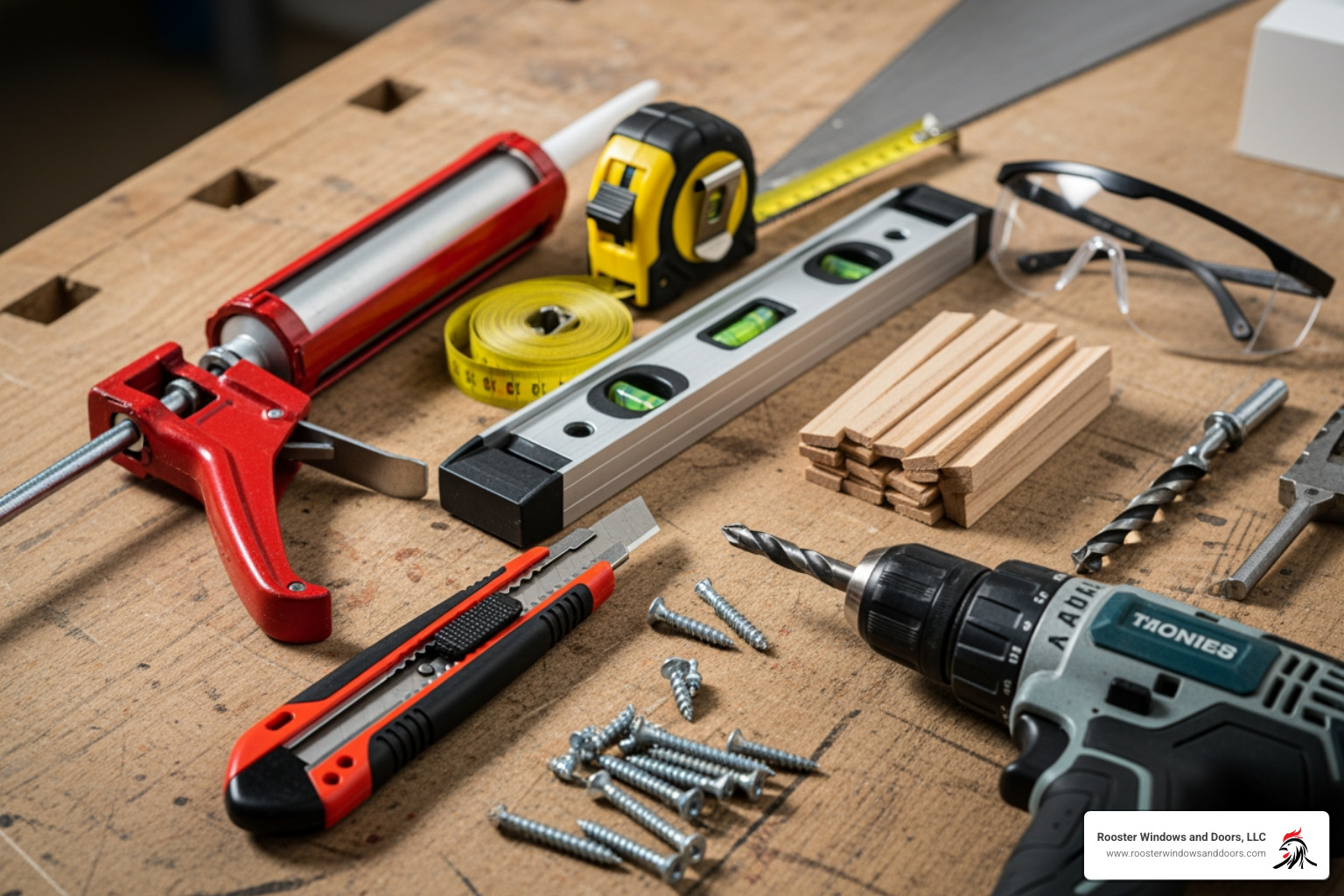
Here’s what you’ll need:
Essential Tools:
- Tape Measure
- Level (2-foot or 4-foot)
- Drill/Driver with bits
- Pry Bar
- Hammer
- Utility Knife with extra blades
- Caulk Gun
- Shims (wood or plastic)
- Safety Glasses
- Gloves
- Reciprocating Saw (for full-frame replacement)
- Shop Vacuum
- Chisel
Essential Materials:
- Replacement Double Hung Window Unit
- Low-Expansion Spray Foam Insulation (for windows/doors)
- Exterior-Grade Silicone Caulk
- Interior Latex Caulk
- Fiberglass Batt Insulation
- Wood Filler
- Flashing Tape
- New Trim (Optional)
- Drop Cloths/Plastic Sheeting
- Fasteners (screws and finish nails)
- Foam Backer Rod
With your workspace clear and supplies at hand, you’re ready to install your new double hung windows!
How to Install Replacement Double Hung Windows: A Step-by-Step Process
Now for the installation. This guide covers an insert replacement, the most common DIY method. Always wear safety glasses and gloves. For a complete overview, refer to our Install Replacement Windows Complete Guide.
Step 1: Removing the Old Window Sashes and Stops
The first step in how to install replacement double hung windows is carefully removing the old components.
- Remove Interior Stops: Score paint lines along interior stops with a utility knife, then gently pry them off. Label trim pieces if you plan to reuse them.
- Remove Lower Sash: Lift the lower sash and tilt it inward or maneuver it out of the frame. For older windows, cut the sash cords or release the spring balances.
- Remove Parting Stops: The parting stop is the strip separating the sashes. Score it with your knife and carefully pry it out.
- Remove Upper Sash: With the parting stop out, pull the upper sash down and remove it like the lower one.
- Remove Sash Weights/Pulleys (Older Windows): If your old windows had sash weights, open the weight pockets in the jambs to remove them. This is a good time to insulate these cavities.
Step 2: Preparing the Window Opening
Once the old window is out, you must prepare the opening.
- Clean the Opening: Use a shop vacuum to clean all debris, dust, and old caulk from the sill and jambs for proper sealant adhesion.
- Inspect for Rot and Damage: Inspect the sill and jambs for rot or damage. Minor rot can be repaired with wood hardener and epoxy filler. If you find extensive rot, stop. This likely requires a full-frame replacement and professional assessment to ensure a sound opening. For specific considerations, see our guide on Replacing Windows in a Brick House.
- Check for Level Sill: Place your level on the sill. If it’s not level, use shims to create a level surface for proper window operation.
- Apply Flashing Tape: Apply adhesive flashing tape to the sill, extending it up the side jambs slightly to create a moisture barrier.
Step 3: Dry-Fitting and Caulking the Frame
- Dry-Fit Your New Window: Carefully place the new window into the opening to ensure it fits correctly before applying caulk. It should slide in with a small, even gap. Remove the window after checking.
- Apply Silicone Caulk: Apply a continuous 3/8-inch bead of exterior-grade silicone caulk along the inside of the blind stop and the backside of the sill where the new window will rest. This caulk creates the primary weather barrier. For a detailed visual guide, resources like How to Install a Window can be helpful.
Step 4: Setting, Shimming, and Securing the New Window
- Place the Window: Set the new window into the opening, pressing it firmly against the caulk bead.
- Temporary Fastening: Loosely fasten the window with screws in the lower left and upper right corners to hold it for adjustments.
- Check for Plumb, Level, and Square:
- Level: Check the new window sill with your level.
- Plumb: Check the side jambs for vertical straightness.
- Square: The two diagonal measurements of the frame should be equal.
-
Adjust with Shims:
- Insert shims behind the screw holes, adjusting them until the window is level, plumb, and square.
- Drive screws through the remaining holes, snugging them up.
- Slide shims behind each remaining screw hole until the side jambs are straight.
-
Secure Installation Screws: Tighten all installation screws. Do not over-tighten, as this can warp the frame.
- Test Sash Operation: Test the sashes to ensure they slide easily and align perfectly. If not, loosen the screws, adjust the shims, and re-tighten.
The Finishing Touches: Insulation, Sealing, and Trim
These final steps are crucial for energy efficiency and a weatherproof seal. For more on maximizing savings, explore our guide to Energy Efficient Window Installation.
Ensuring an Airtight Seal with Insulation and Caulk
Proper insulation and sealing lock in energy efficiency.
- Insulate Gaps:
- Fiberglass Batt Insulation: Loosely pack fiberglass insulation into the larger gaps between the new window frame and the rough opening. Do not overpack insulation, as this can bow the frame and hinder operation.
- Low-Expansion Spray Foam: From the outside, apply window-and-door-specific spray foam into any remaining gaps. Don’t overfill. For larger gaps, use foam backer rod before caulking.
- Exterior Caulk Seal: Apply a continuous bead of exterior-grade silicone caulk around the entire window perimeter where it meets the siding. This creates a watertight seal. Do not cover any weep holes at the bottom of the window.
- Sill Adapter and Weep Holes: If your window has a sill adapter, install it now. Ensure any required weep holes are clear and unobstructed.
An energy-efficient window is only as good as its installation. New double hung windows from Rooster Windows and Doors, especially Energy Star Certified models, are manufactured for efficiency. However, proper sealing is required to reap those benefits. For more tips, see our article on How to Insulate Windows.
Reinstalling Interior Trim and Final Checks
Reinstalling the interior trim provides a finished look.
- Reinstall or Replace Trim: Reinstall your old trim or install new pieces, nailing them into place with finish nails.
- Caulk Interior Gaps: Apply interior latex caulk along the edges of the trim where it meets the window frame and wall to create a clean, finished look.
- Final Operational Check: Open and close both sashes several times to ensure they operate smoothly and lock securely.
- Clean Up: Remove protective films from the glass and frame. Clean the glass. For hard-to-reach exterior panes, our blog on How to Clean Outside Windows You Cannot Reach offers helpful solutions!
Avoiding Pitfalls and Knowing Your Limits
While a rewarding DIY project, window installation has costly pitfalls. It’s key to know common mistakes and when to call a professional.
Common Mistakes When Learning How to Install Replacement Double Hung Windows
Here are frequent errors to avoid:
- Incorrect Measurements: Ordering the wrong size window is a costly mistake. Measure multiple times and use the smallest dimensions to ensure a fit.
- Over-Tightening Screws: Over-tightening can distort vinyl frames, causing the sashes to bind or operate poorly. Screws should be snug, not overtightened.
- Neglecting Weatherproofing (Caulk and Insulation): Skimping on caulk and insulation will lead to air and water leaks, defeating the purpose of replacement.
- Not Checking for Level and Square: An improperly installed window won’t operate correctly and its seals will be compromised. Take the time to shim it correctly.
- Rushing the Final Inspection: A thorough final check of all functions and seals can catch small issues before they become big problems.
DIY vs. Professional Installation: When to Call for Help
Knowing your limits is important. Consider professional installation for how to install replacement double hung windows in these situations:
- Lack of Experience or Tools: If you’re new to home improvement, a pro can save you time, frustration, and costly mistakes.
- Structural Issues: Stop if you find structural issues like extensive rot. This requires expert repair before a window can be safely installed.
- Lead Paint Hazards: Homes built before 1978 may have lead paint, which requires certified professionals for safe handling and disposal.
- Complex Installations: Very large windows, unusual openings, or challenging exteriors like brick or stucco add significant complexity.
- Time Constraints: A pro can install multiple windows far more efficiently than a DIYer.
- Warranty Concerns: Many manufacturer warranties are improved when windows are installed by certified professionals.
- Peace of Mind: Hiring a pro provides peace of mind that the job is done right.
For information on professional services, review our Window Installation Services Complete Guide. We have Certified Window Installers who ensure flawless installations. Our Window Replacement Cost Ultimate Guide can also help you weigh your options.
Frequently Asked Questions about Double Hung Window Installation
Here are answers to common questions about replacing double hung windows:
How long does it take a professional to install a replacement window?
A professional can typically install a single replacement insert window in 1-2 hours, assuming no major repairs are needed to the existing frame. Their experience and specialized tools allow for this efficiency. A full-frame replacement or unforeseen issues can extend this timeframe.
Can I just replace the sashes instead of the entire window unit?
Yes, this is possible with a sash replacement kit. This option works well if your existing window frame is perfectly square, level, and free of rot. Sash kits are designed to fit into the existing frame, replacing only the movable parts, which can be a great way to update aesthetics and efficiency without a full tear-out.
What should I do if I find rot in the old window frame?
If you find minor rot, you can often repair it by removing the decayed wood, treating the area with a wood hardener, and filling it with an epoxy wood filler. However, if the rot is extensive and compromises the frame’s structural integrity, it is crucial to stop the installation. At this point, it’s best to consult a professional to assess the damage and determine if a full-frame replacement is necessary.
Conclusion
Replacing your double hung windows is a significant step toward a more comfortable, efficient, and appealing home. This guide on how to install replacement double hung windows has walked you through the entire process, from identifying the need for replacement to the final sealing touches, empowering you for a DIY project or to work with a professional.
Properly installed new windows offer lower utility bills, improved comfort by eliminating drafts, reduced outside noise, and a fresh look that boosts your home’s value. In the extreme Chicagoland weather, these benefits are necessities.
For a flawless, energy-efficient installation backed by decades of expertise, explore our Double Hung Windows and let the professionals at Rooster Windows and Doors handle the job. We are committed to providing high-quality, precise installations that ensure your home is beautiful, comfortable, and energy-smart for years to come.
