

Why Basement Window Cutting is More Than Just a Home Improvement Project
Basement window cutting is the process of creating a new opening in your foundation wall to install a larger, code-compliant egress window. Here’s what you need to know:
Quick Overview:
- Average Cost: $2,000 – $4,000 total (including cutting, window, and installation)
- Concrete Cutting: $800 – $2,500, depending on wall type
- Timeline: 1-3 days for complete installation
- Permit Required: Yes, for structural changes to foundation walls
- Professional Recommended: Essential for safety and code compliance
Key Requirements:
- Minimum opening: 3.8 square feet unobstructed area
- No dimension less than 15 inches
- Maximum sill height: 40 inches above floor
- Window well required for below-ground installations
- Proper drainage system essential
Whether you’re finishing your basement to meet safety codes or want to transform a dark space into a bright bedroom, cutting a basement window is a serious undertaking. It’s complex work that involves cutting through concrete, maintaining structural integrity, ensuring proper waterproofing, and meeting strict building codes. One wrong move can compromise your home’s foundation or lead to serious water intrusion.
With the cost of housing on the rise, many homeowners are renovating their basements. A properly installed egress window adds natural light and ventilation, provides a life-saving emergency exit, and is often required by law for basement living spaces.
But here’s the thing: this isn’t a DIY project. Professional concrete cutters use specialized equipment like wall-mounted concrete saws and ring saws to make precise cuts without compromising your foundation. They know how to avoid common mistakes, install proper drainage, and ensure your window meets all local building codes.
I’m Piotr Wilk, and with over two decades of residential window installation experience in the Chicagoland area, I’ve seen the difference between proper basement window cutting and jobs that lead to expensive repairs. This guide will walk you through everything you need to know, from codes and costs to why professional installation is absolutely essential.
Easy basement window cutting glossary:
Planning Your Project: Codes, Costs, and Considerations
Before any cutting begins, thorough planning is the most crucial step. This involves understanding building codes, structural requirements, and your budget. For homeowners in the Chicagoland area, adhering to local regulations is paramount.
Understanding Egress Window Building Codes
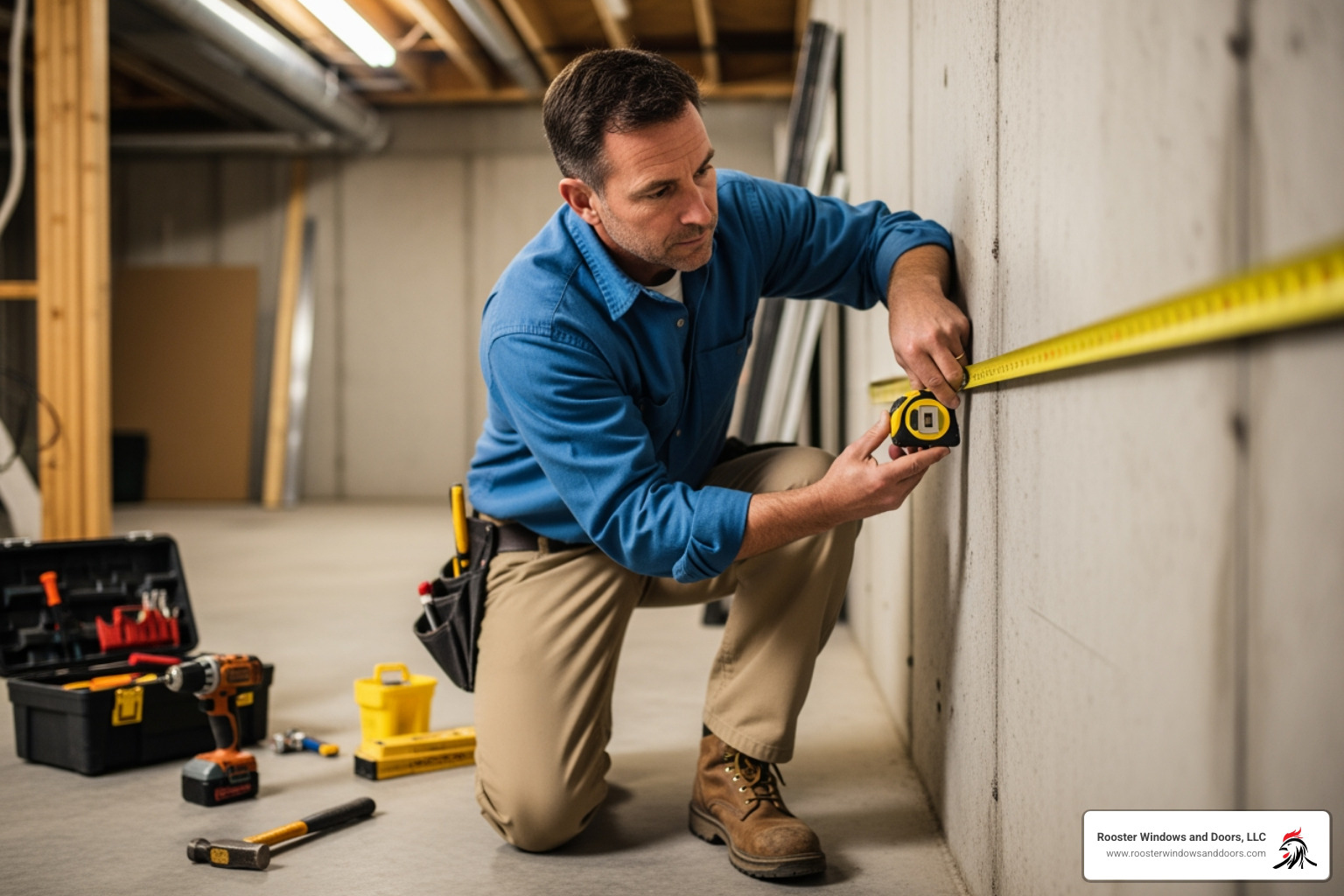
Building codes exist for your safety. Any alteration to a foundation wall requires a city permit to ensure the work complies with local standards and safeguards your home’s stability. Our team is familiar with permit requirements across Chicagoland, from Aurora to Waukegan. These local rules are often based on the International Residential Code (IRC), which sets national safety standards.
Egress windows are designed for emergency exit and have strict requirements:
- Minimum Opening Size: Must provide a minimum unobstructed opening of 3.8 square feet (0.35 m²).
- Minimum Dimensions: No dimension (height or width) of the clear opening can be less than 15 inches (380 mm).
- Maximum Sill Height: The bottom of the clear opening cannot be more than 40 inches (1.02 m) from the finished floor. A permanent step is required if it’s higher.
- Operability: Must open from the inside without keys, tools, or special knowledge.
- Window Well Requirements: If the window is below ground, a well is required. It must allow the window to open fully, have a horizontal projection of at least 22 inches (550 mm), include a ladder if deeper than 44 inches (1.12 m), and have a proper drainage system.
These rules ensure a safe exit during an emergency. Our Egress Window Installation Complete Guide provides more detail on these standards.
Estimating Your Project Costs
The cost of basement window cutting and installation varies based on window size, foundation material, and project complexity. Here’s a general breakdown:
| Project Aspect | Estimated Cost Range | Notes |
|---|---|---|
| Concrete Cutting | $800 – $2,500 | For cutting the opening. Cost depends on foundation thickness, rebar, and opening size. |
| Window Unit | $600+ | Price depends on window type, material, energy features, and size. |
| Window Well & Excavation | $500 – $1,000 | Includes digging and installing the window well. Deeper or complex excavations cost more. |
| Professional Installation (Total) | $2,000 – $4,000+ | Covers all labor for cutting, installation, sealing, and finishing. Complex projects may cost more. See our Egress Window Installation Cost guide for details. |
Permit fees also factor into the total cost. While the average cost is around $2,600, it’s crucial to get a detailed, on-site estimate for your specific project. We provide comprehensive quotes so you understand every aspect of the investment.
Choosing the Right Window Type
Selecting the right window is key to maximizing light and meeting safety codes. Our team can help you pick basement windows that fit your needs and local regulations.
- Casement Windows: Hinged on one side, they swing outward, providing the largest possible opening for their size. This makes them an excellent choice for egress, as they often meet code even in smaller frames.
- Sliding Windows: These sashes slide horizontally. They can meet egress requirements but typically need to be very wide to provide the minimum unobstructed opening.
- Hopper Windows: Hinged at the bottom and opening inward, these are great for ventilation but usually don’t meet egress size requirements. We offer Custom Hopper Windows for non-egress applications.
- Awning Windows: Hinged at the top and opening outward, they are similar to hoppers but can provide ventilation during light rain. They also struggle to meet egress size requirements unless very large.
For energy efficiency, we recommend windows with double or triple-pane glass, Low-E coatings, and insulated frames. Our Energy Efficient Window Installation page has more information. The right window improves your basement’s look and your home’s energy performance.
The Basement Window Cutting Process: A Step-by-Step Overview
Once planning is complete and permits are secured, the basement window cutting and installation begins. This is where precision, specialized tools, and expertise come into play.
Essential Tools for Basement Window Cutting
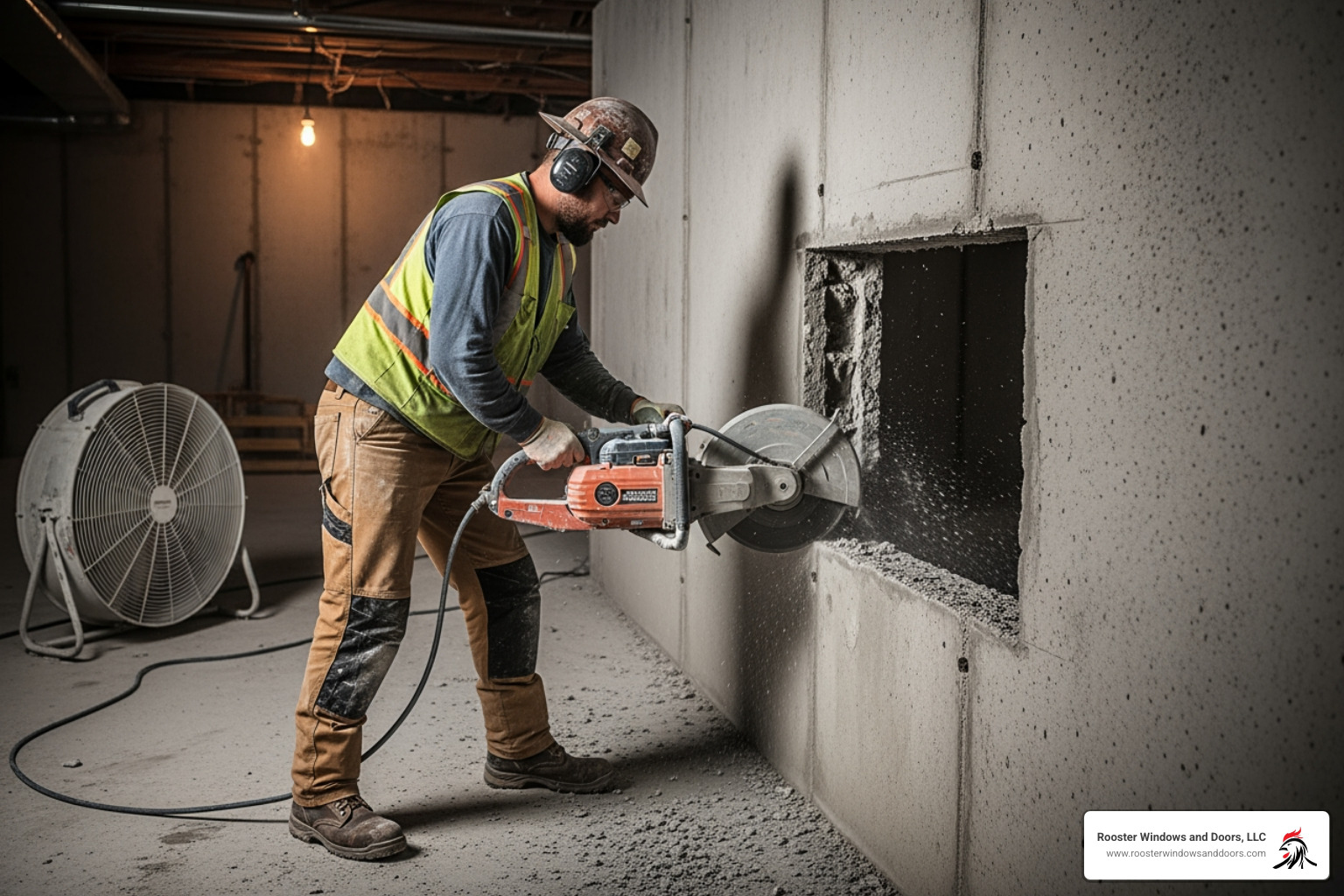
Cutting a concrete foundation requires heavy-duty, specialized equipment to ensure clean cuts and structural integrity. Here are the tools our professionals use:
- Concrete Saw (Wall-Mounted or Ring Saw): A wall-mounted saw ensures straight, level cuts for a snug window fit. A ring saw is invaluable for achieving precise 90-degree corners without overcutting, which can cause structural weakness and leaks.
- Sledgehammer: Used for breaking out the concrete section after it has been cut.
- Level: Essential for ensuring the new opening is perfectly horizontal and vertical for a square installation.
- Safety Gear: This includes safety glasses, face masks for dust, and ear protection. Safety is our top priority.
- Shovels and Excavation Equipment: Needed for digging the window well and preparing the site.
- Pressure-Treated Lumber: Used for building the buck frame, to which the window will be fastened.
From Cut to Completion: Installation and Finishing
Creating the opening is just one part of a multi-step process focused on a secure, watertight installation.
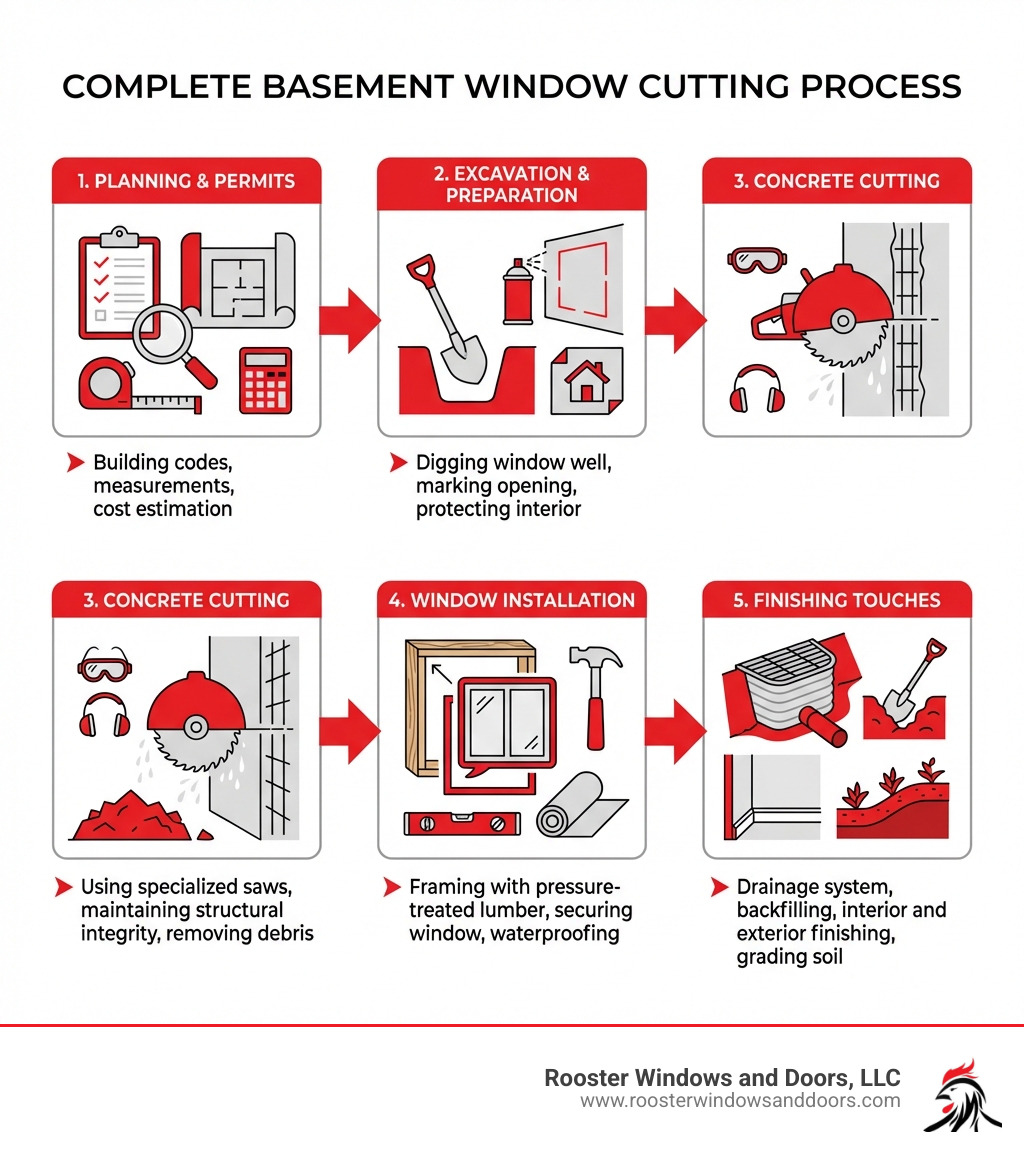
- Site Preparation: We call utility companies to mark underground lines. The exterior area is excavated for cutting and drainage. Inside, we protect your basement from dust and water with tarps.
- Marking the Opening: The new window’s exact dimensions are carefully marked on the concrete wall.
- Structural Support: For larger openings, temporary shoring may be installed to support the foundation during the cutting process.
- Concrete Cutting: Using specialized saws, our professionals make precise cuts. The cut-out concrete section is then carefully removed.
- Window Frame Installation (Buck Frame): A buck frame made from pressure-treated lumber is installed into the opening. This provides a solid, square surface for the new window. Our team follows all local requirements in Chicago, IL for proper frame installation.
- Window Installation: The new window is placed into the buck frame, leveled, and secured with screws and anchors.
- Waterproofing and Sealing: This is a critical step. We apply a high-quality waterproofing membrane, exterior-grade sealants, and flashing around the window to prevent water intrusion. Inside, expanding foam seals any gaps, providing an airtight seal and insulation. Our How to Insulate Windows guide offers more insights.
- Exterior Finishing: The window well is installed, connected to a drainage system, and backfilled. Pea gravel is added for drainage. We grade the soil to slope away from the foundation.
- Interior Finishing: We complete the interior with trim to cover exposed materials, seamlessly integrating the new window into your basement.
Poured Concrete vs. Concrete Block: What’s the Difference?
Your home’s foundation type significantly impacts the basement window cutting process, cost, and complexity. Chicagoland homes typically have either poured concrete or concrete block foundations, each with unique considerations.
Foundation Types and Cutting Complexity
- Poured Concrete Foundations: These solid walls are created by pouring concrete into forms. They are very strong, but cutting them requires specialized diamond-tipped saws and is labor-intensive. The presence of rebar (steel reinforcement) adds to the complexity and cost.
- Concrete Block Foundations (Cinder Block): These walls are built from stacked concrete masonry units (CMUs). Cutting a block wall can be less complex than poured concrete but still requires careful planning to maintain structural integrity. A professional can typically complete the cut in a couple of hours.
The cost difference between cutting poured concrete and concrete block reflects the labor and equipment needed. Poured concrete is denser and requires more powerful saws. Regardless of the type, installing a lintel or header above the new opening is crucial to support the wall’s weight and maintain structural integrity.
Key Challenges of Enlarging Existing Openings
Enlarging an existing window opening presents its own challenges and still involves significant structural work.
- Structural Headers and Lintels: When widening an opening, the existing header must often be replaced with a larger, stronger one to support the wider span. This involves temporarily supporting the structure while installing the new lintel.
- Maintaining Wall Integrity: Removing more of a load-bearing wall requires a careful assessment to ensure the foundation isn’t compromised. Our certified installers are trained to reinforce these openings correctly.
- Matching Exterior Finishes: On homes with brick or stone, enlarging an opening requires careful work to blend the new section with the existing exterior, which may involve specialized masonry.
- Unexpected Obstructions: We sometimes encounter hidden plumbing, electrical lines, or extra rebar. Our team is equipped to handle these surprises safely.
- Replacing Windows in Masonry Walls: Special care is needed when working with brick to avoid damage and ensure any repairs blend seamlessly. Our Replacing Windows in a Brick House guide covers this in detail.
Why Professional Installation is Non-Negotiable
While a DIY project might seem appealing, basement window cutting is a job for certified professionals. The risks of improper installation are too high to ignore.
Structural Integrity Risks and More
Improperly cutting a basement window can lead to costly and dangerous problems:
- Structural Damage: Incorrect cuts or inadequate reinforcement can compromise your home’s foundation, leading to cracks, settlement, or even collapse. A professional knows how to make precise cuts and install headers to maintain structural integrity.
- Water Intrusion and Mold: A poorly sealed window is an invitation for water, leading to dampness, mold, rot, and damage to your finished basement. Proper waterproofing with membranes, flashing, and high-quality sealants is critical.
- Code Violations and Safety Hazards: Ignoring building codes can result in fines and create serious safety hazards. An egress window that doesn’t meet requirements won’t function as a safe escape route and can complicate a future home sale.
- Increased Repair Costs: DIY mistakes are often far more expensive to fix than hiring a professional from the start. This includes repairing structural damage, mitigating water damage, and correcting code violations.
Our Certified Window Installers are licensed, insured, and experienced in basement window cutting. We understand Illinois building codes and ensure every project meets the highest standards for safety and quality. Our installations also come with warranties for your peace of mind.
Common Mistakes in Basement Window Cutting and Installation
Several common mistakes can derail a basement window cutting project:
- Overcutting Corners: When round saw blades cut beyond the corner line, it creates weak points that can crack and leak. Precision tools like ring saws prevent this.
- Improper Sealing and Waterproofing: Rushing the sealing process or using the wrong materials is a recipe for leaks.
- Inadequate Drainage in Window Wells: A window well without proper drainage will fill with water, putting pressure on the window and causing leaks. A connection to a drainage system is crucial.
- Ignoring Building Codes: Failing to get permits or meet egress requirements can lead to fines and safety risks. Always check with your local municipality in areas like Chicago or Naperville.
- Compromising Structural Support: Not installing a proper header is one of the most dangerous mistakes, potentially leading to foundational failure.
- Incorrect Measurements: Small measurement errors can result in a poor fit, creating gaps that compromise insulation and waterproofing.
Entrusting your project to professionals mitigates these risks and ensures a flawless, code-compliant installation.
Frequently Asked Questions about Basement Window Cutting
Here are answers to some of the most common questions we receive about basement window cutting and installation.
How long does it take to cut and install a basement window?
The timeline varies with project complexity, but here’s a general breakdown:
- Concrete Cutting: A professional can cut the opening in a couple of hours.
- Excavation: Digging the window well can take a few hours to a full day.
- Window Installation & Sealing: This step usually takes another half to full day.
- Finishing Work: Exterior backfilling and interior trim can add another day.
In total, most basement window cutting and installation projects are completed within 1 to 3 days. We work efficiently to minimize disruption while maintaining our high standards.
Does cutting a window weaken the foundation?
Not if it’s done correctly by professionals. A foundation is a load-bearing structure, so removing a section requires careful execution to prevent weakening.
To maintain structural integrity, we take several crucial steps:
- Professional Assessment: Our experts assess your foundation before any work begins.
- Temporary Shoring: For larger cuts, we may use temporary supports to bear the load during the process.
- Lintel and Header Installation: We install a robust steel or concrete lintel (header) above the opening. This beam redistributes the weight to the sides of the window, ensuring the foundation remains stable.
- Proper Framing: A pressure-treated lumber buck frame also adds to the structural integrity.
Improper cutting will weaken a foundation, which is why hiring experienced professionals for basement window cutting is a necessity. Our team ensures your home’s foundation remains sound.
How do you ensure a new basement window is waterproof?
Waterproofing is paramount, especially in Chicagoland’s unpredictable weather. We use a multi-layered approach to guarantee a watertight window:
- Exterior Waterproofing Membrane: We apply a self-adhering membrane around the rough opening to create a continuous moisture barrier.
- Flashing: Metal or vinyl flashing is installed to direct water away from the window opening.
- High-Quality Caulking: We use durable, exterior-grade sealant around the window’s perimeter for a flexible, watertight seal.
- Expanding Foam Sealant: From the interior, we fill gaps with low-expansion foam for an airtight and watertight barrier that also insulates.
- Proper Window Well Drainage: The window well is connected to a drainage system (like weeping tile) to direct water away from the foundation.
- Exterior Grading: We grade the soil to slope away from your home, preventing water from pooling near the window.
This comprehensive system protects your basement from moisture, ensuring a dry and comfortable space.
Conclusion
Starting on a basement window cutting project is a significant undertaking, but the rewards are immense. Beyond simply adding natural light and ventilation, a properly installed egress window transforms your basement into a safer, more usable, and more valuable part of your home. It provides a critical emergency exit, ensures code compliance for finished living spaces, and lifts the overall aesthetic and comfort of your lower level.
We’ve covered the essential steps, specialized tools, potential risks, and critical considerations involved in this complex process. From navigating building codes in Chicago and its surrounding areas to understanding the differences between poured concrete and concrete block foundations, it’s clear that this is a job best left to the experts.
At Rooster Windows and Doors, we pride ourselves on providing high-quality, flawless, and energy-efficient installations. Our team of certified installers has the expertise, experience, and specialized equipment to handle every aspect of your basement window cutting project with precision and care. We ensure structural integrity, meticulous waterproofing, and strict adherence to all local building codes, giving you complete peace of mind.
Don’t let the complexity of basement window cutting deter you from open uping your basement’s full potential. Let us help you transform your dark, underused space into a bright, safe, and beautiful extension of your home.
Ready to improve your basement’s safety, comfort, and value? Contact us today for a professional egress window installation that you can trust.
