

What Are Hopper Windows — and Are They Right for Your Home?
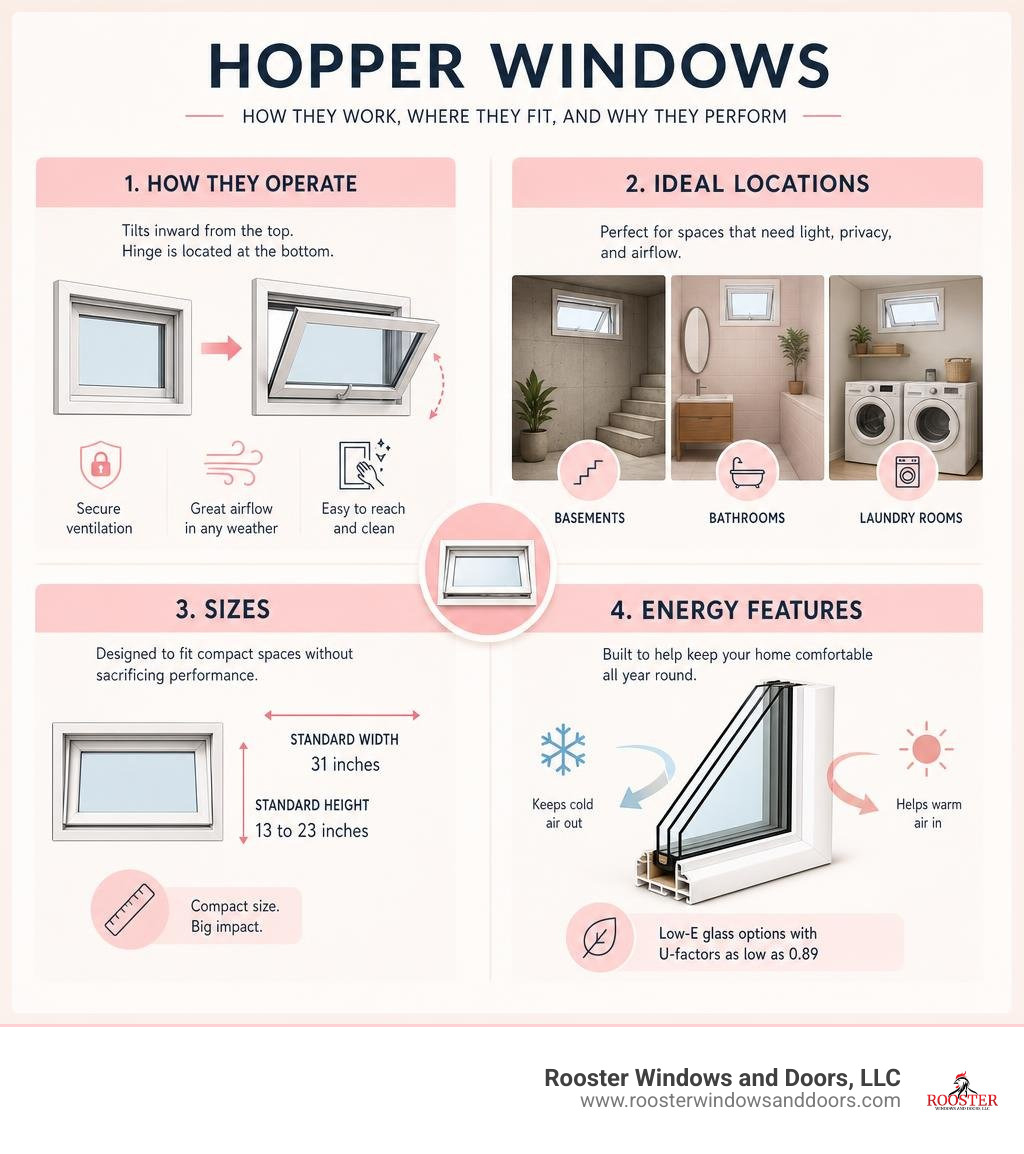
Hopper windows are small, single-sash windows that open by tilting inward from the top, with the hinge located at the bottom of the frame. They’re one of the most practical window choices for tight spaces like basements, bathrooms, and laundry rooms.
Here’s a quick overview of what makes them unique:
| Feature | Detail |
|---|---|
| How they open | Tilt inward from the top (hinge at bottom) |
| Best locations | Basements, bathrooms, laundry rooms |
| Standard width | 31 inches |
| Standard height | 13 to 23 inches |
| Key benefit | Full-width ventilation in compact spaces |
| Energy perk | Low-E glass options with U-factors as low as 0.89 |
They look similar to awning windows when closed — but they work in the opposite direction. Awning windows hinge at the top and push outward. Hopper windows hinge at the bottom and pull inward.
That single difference changes everything about where you use them, how they perform, and what they cost.
I’m Piotr Wilk, and over more than two decades of installing windows across the Chicagoland area, I’ve helped countless homeowners choose and install hopper windows in exactly the right spaces for their needs. In this guide, I’ll walk you through everything you need to know — from how they work to sizing, energy performance, and installation considerations.
Understanding Hopper Windows: Definition and Operation
To truly understand how a hopper window works, it helps to look at its construction. Unlike double-hung windows where sashes slide vertically, a hopper window utilizes a single sash that pivots on a bottom-mounted hinge. When you release the top latch, the entire window tilts inward toward your living space.
This simple, gravity-assisted design has a fascinating history. Invented in the 19th century, Hopper Windows were originally designed to shield homes from the heavy clouds of dust kicked up by early automobiles on unpaved dirt roads. By opening inward from the top, they allowed rising hot air to escape while redirecting incoming air upward, preventing street-level dust and debris from blowing directly onto the floor.
Today, they remain unmatched in their ability to provide excellent air circulation in small, below-grade, or ground-level spaces. If you want to dive deeper into their historical evolution and structural engineering, you can check out our Hopper Window Complete Guide.

Key Features of Hopper Windows
Modern engineering has refined these classic windows into highly secure, durable, and energy-efficient fixtures. When exploring your options, you will find several key operational features:
- Adjustable Tilt Angles: A standard hopper sash typically tilts open at a 30-degree angle for secure, everyday ventilation, but it can be released to a full 90-degree angle for maximum airflow or cleaning.
- Secure Locking Mechanisms: Because these windows are frequently installed at ground level, security is paramount. Quality manufacturers equip them with heavy-duty manual latches or double-handle locking systems that pull the sash tight against the frame.
- Reinforced Hardware: To support the weight of the glass when tilted inward, premium hoppers feature reinforced metal hinges fastened directly through the vinyl and internal metal reinforcement bars.
- Inward-Pulling Design: By pulling into the room rather than pushing out, the window sash remains protected from heavy winds and outdoor elements.
Ideal Locations for Hopper Windows
Where do these windows shine brightest? Because of their compact footprint and top-opening design, they are the go-to choice for specific areas of the home:
- Basements: Basements are notoriously difficult to ventilate. Standard sliding windows only allow half of the window area to open. A hopper window, however, opens across its entire width, maximizing the limited wall space available near the ceiling.
- Compact Bathrooms: Bathrooms require rapid moisture ventilation to prevent mold and mildew. Placing a hopper window high on the wall allows humid air to escape quickly while keeping the lower portion of the window private.
- Laundry Rooms: Washers and dryers generate significant heat and humidity. Installing a hopper window helps regulate the climate in these utility spaces. In fact, some specialized models even feature integrated dryer vent outlets directly in the glass or frame.
For homeowners looking to update these specific spaces, choosing high-quality Custom Hopper Windows can dramatically improve both comfort and property value.
Hopper vs. Awning: Key Differences
Because they look almost identical when closed, homeowners frequently confuse hopper windows with awning windows. However, their physical operation and performance in different weather conditions are entirely opposite.
| Feature | Hopper Windows | Awning Windows |
|---|---|---|
| Hinge Placement | Bottom of the frame | Top of the frame |
| Opening Direction | Tilts inward into the room | Projects outward to the exterior |
| Opening Mechanism | Manual latch (pull to open) | Rotary crank handle (turn to open) |
| Rain Protection | Poor (rain can slide into the home) | Excellent (sash acts as a protective roof) |
| Exterior Clearance | Requires zero outdoor space | Requires clearance for outward swing |
| Primary Seal Type | Weatherstripping | Compression seals |
Operational Differences
The most critical difference lies in where the window sash goes when open.
Because an awning window projects outward, it requires clear physical space on the exterior of your home. If you have a walkway, patio, or deck directly outside the window, an open awning window can create a hazardous physical obstruction.
A hopper window solves this issue entirely. Because it tilts inward, the exterior of your home remains completely flush. This makes hoppers perfect for tight alleyways, window wells, or areas close to outdoor landscaping.
Furthermore, the hardware reflects this difference. Awning windows typically utilize a rotary crank mechanism to push the window outward. Hopper windows are operated manually by releasing a top latch and pulling the sash inward, which is simpler and has fewer moving parts to maintain over time.
Weather Protection and Seals
How do they handle the elements? This is where the two styles diverge significantly:
- Rain Shielding: Awning windows are the undisputed champions of rainy-day ventilation. Because the sash hinges at the top and swings outward, it creates a natural glass canopy over the opening. You can leave an awning window open during a gentle summer rain without water entering your home. If you open a hopper window during a rainstorm, water will run down the tilted glass directly onto your windowsill.
- Debris Collection: Because hopper windows tilt inward like a funnel, they can occasionally catch falling leaves, dirt, or windblown debris. Awning windows naturally shed debris away from the opening.
- Airtight Seals: Awning windows typically use compression seals (similar to those on refrigerator doors). When you crank the window shut, the sash is pressed tightly against the frame, creating an exceptionally airtight seal. While high-quality hoppers feature excellent multi-chamber weatherstripping, their manual latching systems generally offer slightly less compression than a mechanical crank.
To explore premium options that balance these features, you can browse our Custom Hopper Windows.
Pros and Cons of Inward-Tilting Windows
Every window style involves a set of engineering trade-offs. To decide if Hopper Windows are the right choice for your upcoming home improvement project, it is essential to weigh their advantages against their limitations.
Advantages of Inward Opening
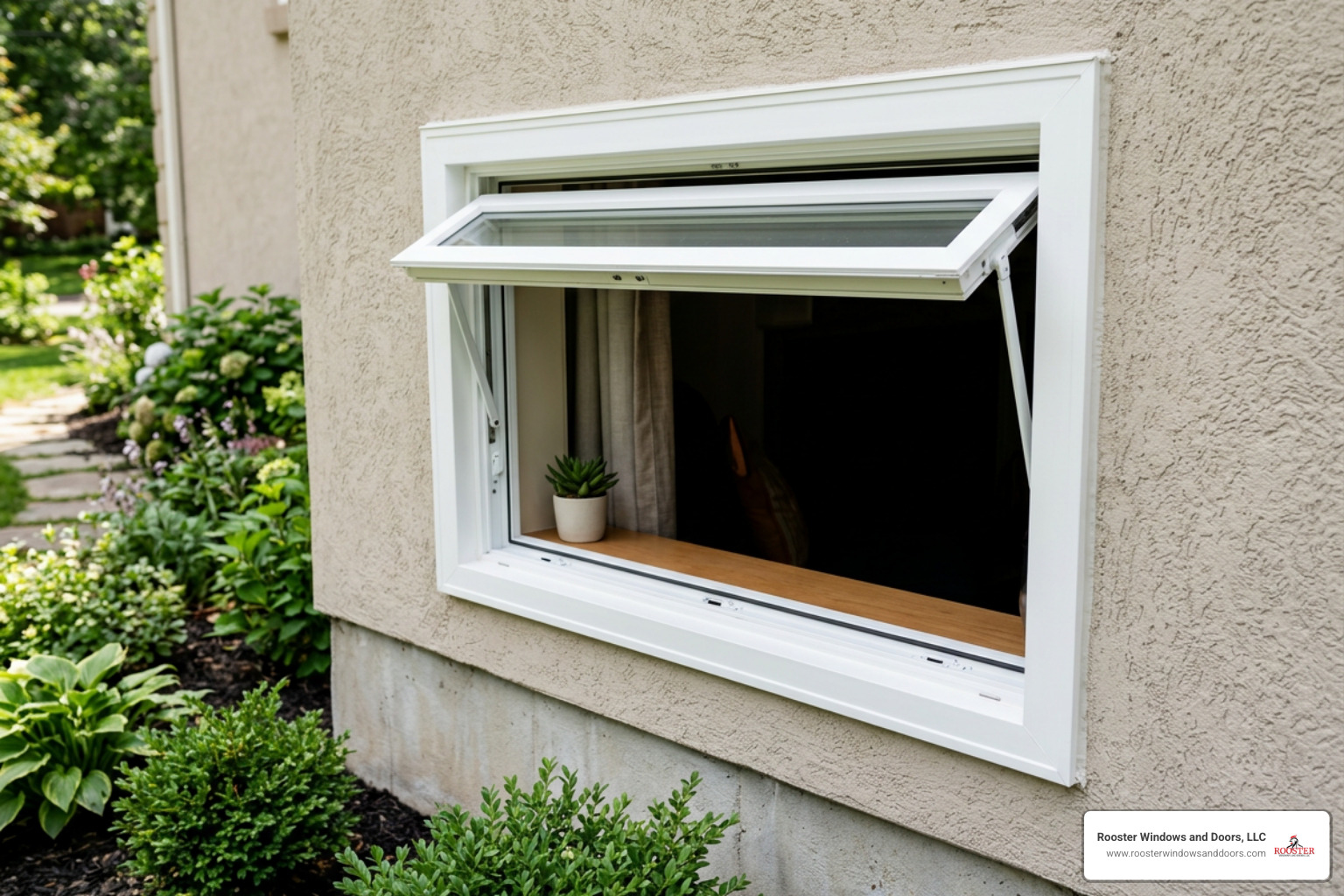
- Unmatched Ventilation: Unlike sliding or double-hung windows where half of the glass area always blocks the opening, a hopper window opens completely. You get 100% of the window’s physical area dedicated to bringing fresh air into your home.
- Effortless Cleaning: If you have ever tried to clean the outside of a basement window from the bottom of a tight, spider-web-filled window well, you know how unpleasant it can be. Because hopper windows tilt inward, you can easily clean both the interior and exterior glass surfaces from the comfort and safety of your room.
- Enhanced Security: Hopper windows are naturally difficult to breach from the outside. Their small physical size, combined with heavy-duty top latches and sturdy bottom hinges, makes them highly resistant to forced entry.
- Compact Footprint: They do not project into exterior walkways, making them safe for homes with active children, pets, or tight outdoor spaces.
If you are comparing compact window options and want to see how other traditional styles operate, take a look at our comparison of Double Hung vs Single Hung Windows or read our comprehensive Double Hung Windows Complete Guide.
Limitations and Space Constraints
- Interior Clearance: While they save space on the outside, they do project into your indoor living space when open. You must ensure there is adequate clearance from furniture, shelving, or plumbing fixtures.
- Window Treatments: Standard blinds, shades, or curtains can interfere with the inward swing of a hopper window. Homeowners often have to mount window treatments higher or wider than the window frame itself to allow the sash to clear.
- Egress Limitations: Due to their small standard sizes, basic hopper windows rarely meet the strict International Residential Code (IRC) requirements for emergency egress in basement bedrooms. However, specialized “reverse hopper” designs or models with quick-release removable sashes can sometimes meet these codes.
- Rain Susceptibility: As mentioned, they cannot be left open during heavy rain without risking water damage to your interior walls or flooring.
Sizing, Customization, and Energy Efficiency
When planning a window replacement, understanding dimensions and performance ratings is key to making an investment that lowers your utility bills and stands the test of time.
Standard and Custom Sizes
While custom sizes are readily available to fit unique masonry openings in older homes, standard sizing makes replacement projects much more straightforward.
The industry standard width for a basement hopper window is 31 inches, with heights typically ranging from 13 to 23 inches. These compact dimensions are specifically engineered to fit perfectly between the floor joists and the foundation line of standard residential basements.
When preparing for installation, the rough opening (the actual opening in your wall) should ideally be 0.5 inches wider and taller than the window frame itself. This allows our installation teams to properly level, shim, insulate, and seal the window for a flawless fit.
For homeowners with unique architectural requirements, we offer fully personalized solutions. You can explore our dedicated page on Custom Hopper Windows to see how we tailor these windows to your exact home specifications.
Thermal Performance and Glass Options
Gone are the days of drafty, single-pane basement windows that let cold winter air freeze your pipes. Modern vinyl Hopper Windows are engineered with advanced thermal technologies:
- Multi-Chambered Vinyl Frames: Premium vinyl frames feature internal chambers filled with insulating air or specialized bio-foam. This design prevents thermal transfer through the frame itself. Fusion-welded corners ensure the frame remains structurally sound and airtight for decades.
- Low-E Glass Coatings: Microscopically thin, metallic coatings applied to the glass reflect infrared heat. In the summer, they block solar heat from entering; in the winter, they reflect furnace heat back inside.
- Argon Gas Fill: The space between the double panes of glass is filled with dense, non-toxic argon gas, which insulates significantly better than plain air.
- Warm-Edge Spacers: Advanced spacer systems keep the glass panes apart while preventing condensation and mold growth along the edges of the window.
With these upgrades, modern hopper windows can achieve impressive U-factors as low as 0.89 and Solar Heat Gain Coefficients (SHGC) of 0.34. This level of performance easily earns them ENERGY STAR certification, helping you maintain a comfortable indoor climate year-round.
To learn more about maximizing your home’s thermal envelope, read about our Energy Efficient Window Upgrades and the benefits of upgrading to Triple Pane Windows.
Frequently Asked Questions about Basement Ventilation
What is the standard size of a basement hopper window?
The standard size for a basement hopper window is 31 inches wide by 13 to 23 inches high. This compact, horizontal shape is designed to fit precisely into the limited wall space above ground level in residential foundations.
If your home has non-standard openings – which is common in historic homes throughout communities like Lake Forest, Highland Park, or Evanston – custom-sized vinyl hoppers can be manufactured to match your exact masonry openings.
To understand how sizing and frame materials impact your overall project budget, take a look at our Window Replacement Cost Ultimate Guide.
Can a hopper window be used for emergency egress?
Generally, a standard hopper window is too small to meet the International Residential Code (IRC) requirements for emergency egress in basement living areas. To qualify as an egress window, a window must provide a minimum clear opening width of 20 inches, a height of 24 inches, and a total net clear opening of 5.7 square feet (or 5.0 square feet on ground level). You can review the current model-code language in the International Code Council’s IRC emergency escape and rescue opening section, though local amendments may vary.
However, there are exceptions. Some manufacturers offer specialized “reverse hopper” egress windows. These windows hinge at the top and swing inward up to 90 degrees, or feature quick-release hinges that allow the entire sash to be removed instantly in an emergency.
If you are remodeling a basement bedroom in Mundelein or Lake Zurich, it is crucial to consult with local building codes and professional installers to ensure compliance.
How do you clean and maintain a hopper window?
Maintaining a vinyl hopper window is remarkably simple. Because the window tilts inward, you can clean both sides of the glass from inside your home using a standard glass cleaner and a microfiber cloth.
To keep your hopper window operating flawlessly:
- Clean the Track: Vacuum the lower frame track occasionally to remove dust, insect debris, or dirt that may have settled inside.
- Inspect the Weatherstripping: Check the rubber seals and weatherstripping annually to ensure they remain pliable and free of tears.
- Lubricate the Hinges: Apply a light silicone-based lubricant to the metal hinges and latch mechanisms once a year to keep the movement smooth and quiet.
- Wash the Screen: Most hoppers come with a removable insect screen. Simply pop the screen out, rinse it with a garden hose, let it dry, and snap it back into place.
Conclusion
Whether you are looking to brighten up a dark laundry room in Arlington Heights, manage moisture in a bathroom in Schaumburg, or improve the energy efficiency of your basement in downtown Chicago, Hopper Windows offer an elegant, secure, and incredibly functional solution.
At Rooster Windows and Doors, LLC, we pride ourselves on delivering flawless, high-quality installations tailored to your home’s unique needs. We serve homeowners across the entire Chicagoland area — including Libertyville, Vernon Hills, Grayslake, Buffalo Grove, Deerfield, Gurnee, Waukegan, Antioch, Crystal Lake, Algonquin, Cary, McHenry, Woodstock, Huntley, Fox River Grove, Palatine, Northbrook, Glenview, Des Plaines, Mount Prospect, Hoffman Estates, and Barrington.
If you are ready to eliminate drafts, improve ventilation, and upgrade your home’s comfort, we are here to help. You can learn more about our local services on our Window Installation Chicago page, or take the first step toward transforming your home today by requesting a personalized estimate for Custom Hopper Windows.

