

Why Basement Window Replacement Can Transform Your Home
Basement window replacement is a home improvement project that addresses common problems like drafts, water leaks, rust, and poor energy efficiency while adding natural light and improving your home’s value. Whether you’re dealing with old, deteriorated windows or looking to create legal living space in your basement, replacing your windows can make a significant difference.
Quick Overview: What You Need to Know
- Common Problems: Old basement windows suffer from cold drafts, water leakage, rusty or rotted frames, difficult operation, and security vulnerabilities
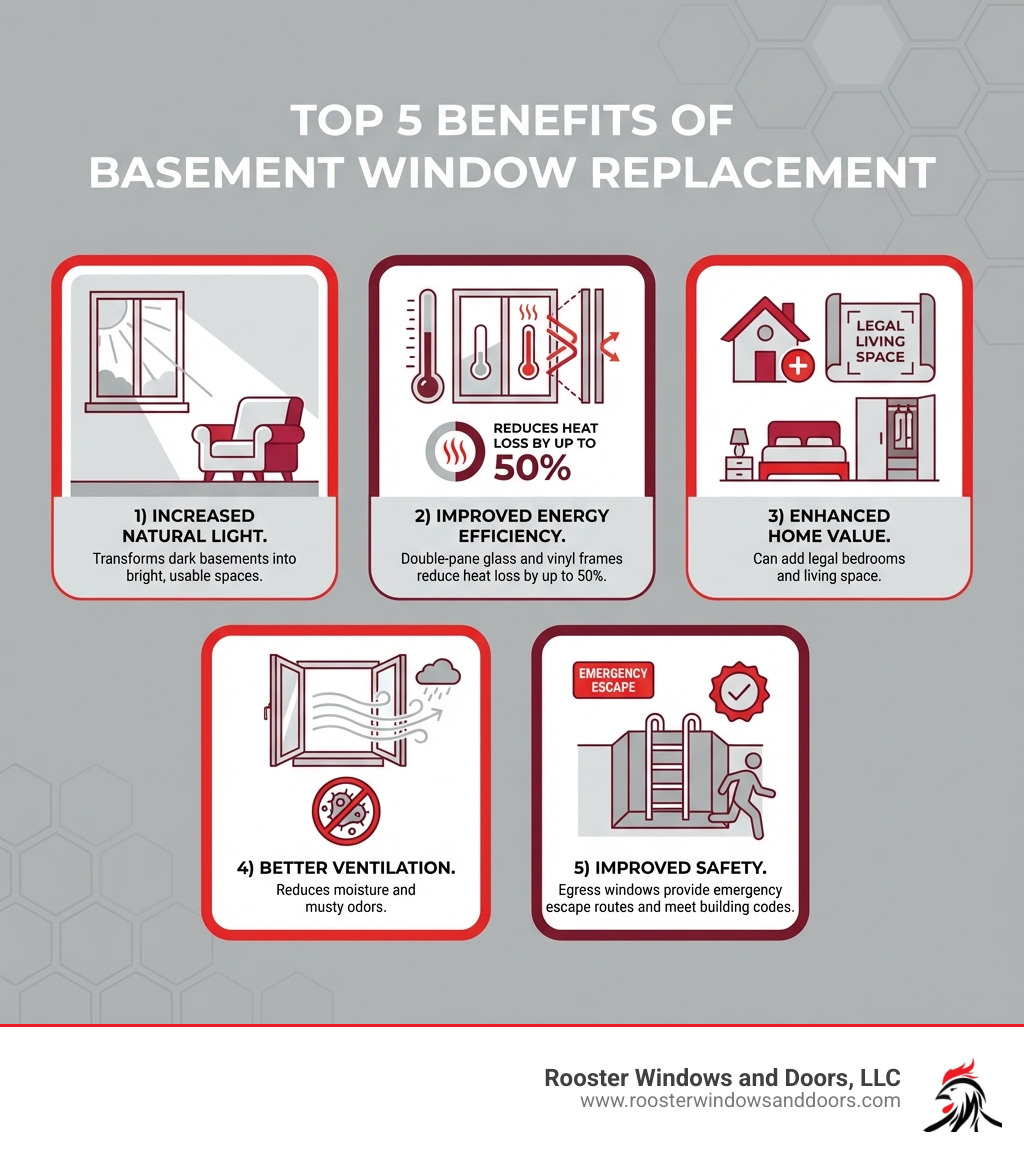
- Key Benefits: New windows provide better insulation, more natural light, improved ventilation, improved security, and can add value to your home
- Popular Window Types: Hopper, slider, awning, casement, and fixed windows are all suitable for basements
- Cost Range: Standard replacement windows start at $100-$300, while full egress window systems (including excavation and installation) can cost $6,000 or more
- Important Consideration: Egress windows are required for basement bedrooms and must meet specific building code requirements
Basements are often dark, damp spaces. With the right windows, they can become bright, comfortable living areas. Old basement windows—especially those with steel or wood frames—are significant energy losers. They leak air and moisture, making basements feel cold and unwelcoming.
Modern vinyl basement windows solve these problems. They feature reinforced frames that won’t rust or rot, double-pane insulated glass that prevents heat loss, and proper sealing that eliminates drafts. The result? A basement that feels like any other room in your home.
Beyond comfort, basement window replacement can open up your home’s potential. If you’re converting your basement into a bedroom or other living space, you’ll likely need egress windows—larger windows that meet building code requirements for emergency escape.
The process of replacing basement windows varies in complexity. A simple like-for-like replacement in an existing opening is straightforward. But enlarging an opening requires concrete cutting, excavation for window wells, and potentially structural reinforcement—work that demands specialized tools and expertise.
I’m Piotr Wilk, and for over two decades, I’ve specialized in residential window and door installation throughout the Chicagoland area, including countless basement window replacement projects. Whether you’re tackling a simple swap or a complex egress installation, this guide will walk you through everything you need to know.
Essential basement window replacement terms:
Pre-Project Planning: Assessing Your Needs and Options
Before starting your basement window replacement, consider your goals. Are you aiming for energy savings, more comfort, or creating a legal living space? Your goals will influence your window choice and project scope.
Old basement windows with single-pane glass are inefficient. Replacing them is a great first step toward a more comfortable, energy-efficient basement. Modern windows improve insulation, reduce drafts, and help prevent mold-causing condensation.
For a comprehensive overview of your options, we encourage you to explore our Basement Windows Complete Guide. It’s packed with insights to help you make informed decisions.
Choosing Your Window Type
One of the most exciting parts of basement window replacement is choosing the right style. The best choice depends on the specific needs of your basement space, including ventilation, light, security, and egress requirements.
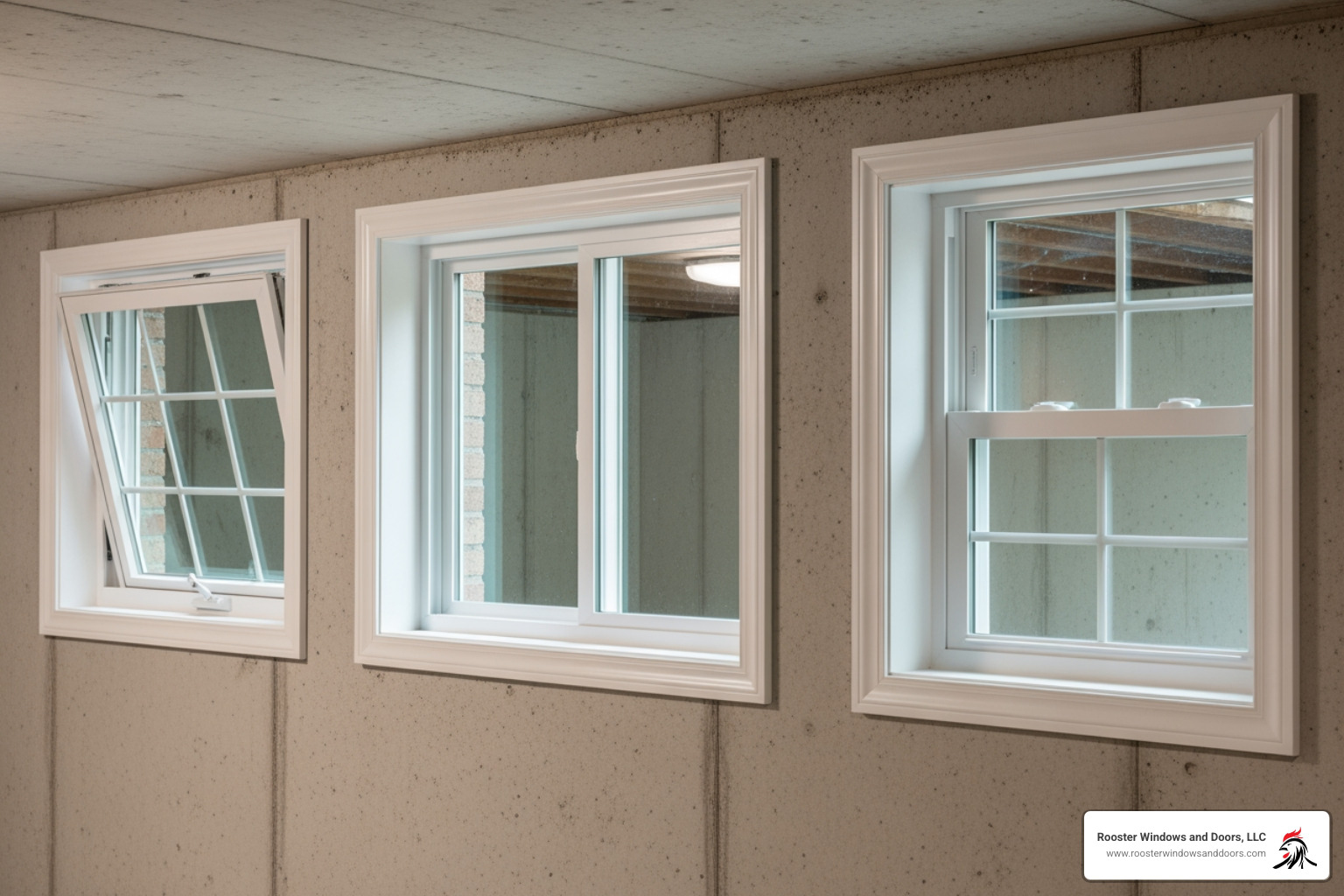
Here are the most common types suitable for basements:
- Hopper Windows: These are small, horizontally oriented windows hinged at the bottom, opening inward from the top. Think of them as an upside-down awning window. They’re excellent for ventilation in areas where privacy is key or space is limited, like bathrooms or utility rooms. We even offer Custom Hopper Windows to fit your unique needs.
- Slider Windows: As the name suggests, these windows slide open horizontally. They are a very common choice for basements, especially for wider openings, as they offer good ventilation and a decent amount of light. They’re often seen as an economical option.
- Awning Windows: Hinged at the top, awning windows open outward from the bottom. This design allows for ventilation even during light rain, as the pane acts like a protective awning. They provide good insulation and noise reduction.
- Casement Windows: Hinged on the side, casement windows crank open outward, providing excellent ventilation and an unobstructed view. They are a popular choice for egress windows because they can offer a large, clear opening.
- Fixed Windows (Picture Windows): These windows do not open. They are ideal for maximizing natural light and insulation in areas where ventilation isn’t necessary, like cold rooms or storage spaces. They offer the best energy efficiency and an unobstructed view.
- Glass Block Windows: Known for their unique aesthetic, security, and privacy, glass block windows are an excellent option for basements. They let in natural light while deterring intruders and providing insulation. They are weather-tight and maintenance-free.
When picking out your windows, consider the purpose of the room. A finished basement bedroom will have different needs than a laundry room or storage area.
Key Considerations for Your Basement Window Replacement
Once you have a style in mind, it’s time to think about the specifics that will ensure your new windows perform optimally in a basement environment.
- Frame Materials:
- Vinyl Frames: We highly recommend vinyl for basement window replacement. Why? They are incredibly durable, resistant to rust and rot (a common problem with old steel or wood frames in damp basement environments), and require very little maintenance. They won’t peel, chip, or corrode, making them a long-lasting, worry-free choice.
- Wood Frames: While aesthetically pleasing, wood frames can be susceptible to rot and require regular maintenance, which can be a hassle in a basement.
- Fiberglass Frames: A strong and durable option, fiberglass offers good insulation but can be more expensive than vinyl.
- Glazing Options (Glass): The glass is where much of your window’s energy efficiency comes from.
- Double-Pane Glass: This is the standard for modern, energy-efficient windows. Two panes of glass with a sealed air or gas-filled space between them provide significantly better insulation than single-pane windows, helping prevent heat loss and cold drafts.
- Triple-Pane Glass: For maximum energy efficiency and sound reduction, triple-pane windows offer an additional layer of glass and gas.
- Low-E (Low-Emissivity) Coating: This microscopic coating on the glass reflects heat, keeping your basement warmer in winter and cooler in summer, without sacrificing natural light.
- Argon Gas: Filling the space between glass panes with inert argon gas (instead of air) further improves insulation because argon is denser and less conductive than air.
- Energy Efficiency: Look for ENERGY STAR
e rated windows. These windows meet strict energy efficiency guidelines set by the EPA and Department of Energy. They are designed to reduce heat transfer, lower your utility bills, and improve comfort. For more on this, see our guide on Energy Efficient Window Installation. - Security Features: Basements can be vulnerable entry points. Consider windows with strong locks, reinforced frames, and even laminated glass for improved security against break-ins. Motion-activated lighting and window well covers can also add layers of protection.
- Window Wells: If your basement windows are below grade, a window well is essential. It allows light into the basement and, for egress windows, provides a clear path for escape. Proper drainage in the window well is crucial to prevent water accumulation against your foundation. For options to protect your window wells, explore Covers for Basement Windows.
Navigating Building Codes and Project Costs
A basement window replacement project, especially if it involves enlarging an opening or adding an egress window, requires navigating local building codes and understanding costs. This step is vital for safety and legality.
Understanding Egress Window Requirements for Chicagoland & Illinois
While some building code examples you may see online reference other regions, Rooster Windows and Doors operates in the Chicagoland area and throughout Illinois. Here, ensuring safety and compliance with local building codes is paramount. When converting a basement space into a bedroom or a habitable living area, egress windows are a non-negotiable safety feature. They provide an emergency exit in case of fire or other hazards.
Generally, for egress windows in Illinois and the Chicagoland area, you’ll need to meet requirements similar to these principles (for detailed national standards, see the International Residential Code):
- Minimum Opening Area: The window must provide an unobstructed opening of at least 5.7 square feet (approx. 22″ x 24″ is a common minimum size for the actual opening).
- Minimum Dimensions: No single dimension (height or width) of the clear opening can be less than 20-24 inches (check your specific local code for exact numbers).
- Sill Height: The bottom of the clear opening cannot be higher than 44 inches from the finished floor of the room. If it is, a permanent step or ladder must be installed to facilitate easy escape.
- Operability: The window must be operable from the inside without the use of keys, tools, or special knowledge.
- Window Wells: If the bottom of the window well is below grade, a window well is required. It must allow for easy exit (typically at least 36 inches projection from the window, and if deeper than 44 inches, it may require a ladder). Proper drainage is also critical for window wells to prevent water from pooling against your foundation.
It’s unlawful to use a basement as a bedroom without meeting egress requirements. We stress the importance of checking with your local municipal building department in Chicagoland or Illinois for precise, up-to-date requirements, as they can vary by location. For a deeper dive into these crucial safety features, our Egress Window Installers Best Guide is an excellent resource.
The Cost of Basement Window Replacement
The cost of basement window replacement can vary significantly depending on the scope of work. A simple like-for-like swap will naturally be less expensive than enlarging an opening and installing a full egress system.
Here’s a breakdown of typical costs you might encounter:
- Window Unit Cost: This can range from $100 for a basic hopper window to $1,000+ for a high-efficiency vinyl window or a specialized egress window.
- Installation Labor: This can be a significant portion of the cost, especially for complex installations.
- Excavation Costs: If you need to install or enlarge a window well, excavation is required. This can range from $800 to $2,000, depending on soil conditions, accessibility, and the size of the well. Encountering rocks or utility lines can increase this.
- Concrete Cutting Costs: Enlarging an existing opening or cutting a new one into a concrete foundation is specialized work. This can range from $1,500 to $3,000, varying with the size of the cut and whether structural reinforcement (like a new lintel) is needed.
- Window Well Cost: The window well itself, plus any necessary drainage, can add to the overall expense.
- Full Egress System Cost: A complete egress window system, including excavation, the window well, a ladder (if needed), and the window installation, can cost around $6,000 or more. This is a comprehensive project that ensures both safety and code compliance.
- Permit Costs: Don’t forget permit fees! These typically range from $200-$500 and are essential for any structural changes or egress window installations to ensure the work meets local building codes.
| Cost Factor | Standard Replacement (Avg.) | Egress Installation (Avg.) |
|---|---|---|
| Window Unit | $100 – $500 | $300 – $1,000+ |
| Installation Labor | $100 – $300 | $300 – $1,000+ |
| Excavation | $0 | $800 – $2,000 |
| Concrete Cutting | $0 | $1,500 – $3,000 |
| Window Well (Material & Install) | $0 | $350 – $450+ |
| Total Estimated Cost | $200 – $800 | $3,000 – $7,000+ |
Note: These are estimated ranges. Actual costs will vary based on your specific project, location within Chicagoland/Illinois, and chosen materials.
While the upfront cost might seem daunting, this is an investment in your home’s safety, comfort, and value. For more detailed information on budgeting, check out our Egress Window Installation Cost and How Much Does It Cost to Install Replacement Windows? guides.
The Step-by-Step Guide to Basement Window Replacement
Ready to roll up your sleeves? Whether you’re doing a simple swap or a more complex upgrade, understanding the process is key. Safety first, always! Wear appropriate personal protective equipment (PPE) like gloves, safety glasses, and hearing protection, especially when working with power tools or concrete.

Step 1: Removing the Old Window
This is where the change begins. Old basement windows, particularly metal-framed ones common in houses built in the 1950s and later, can be stubborn. They were often set into temporary wooden frames that have since deteriorated or rusted.
- Remove the Sash: Carefully remove the old window sash (the movable part of the window) from its frame. For metal windows, you might need to pry it out or cut any pins. For older wooden windows, they might be hinged.
- Cut the Old Frame: For metal frames, you’ll likely need an angle grinder to cut through the bottom of the old metal frame. This helps loosen it from the concrete.
- Clean the Opening: Once the frame is removed, chisel away any remaining concrete or mortar that’s clinging to the opening. You want a clean, unobstructed space.
- Prepare the Sill: The sill is the bottom of the window opening. If it’s uneven or damaged, you might need to repair it. For a proper seal and drainage, we often recommend coating the opening surfaces with a siloxane masonry sealer. If you’re replacing windows in a brick home, the process will have some unique considerations, which you can learn more about in Replacing Windows in a Brick House.
Step 2: Enlarging the Opening (If Necessary)
This is the big leagues of basement window replacement and often necessary for egress windows. Enlarging an opening, especially in a concrete foundation, is a complex job that requires precision, specialized tools, and often structural reinforcement. This is where professional expertise truly shines.
- Marking the New Opening: Based on your window’s dimensions and local building codes, carefully mark the new, larger opening on your foundation wall. Double-check all measurements!
- Concrete Cutting Techniques: This involves using powerful concrete saws, often with diamond blades, to cut through the foundation wall. It’s a messy, dusty, and noisy job. Professionals will use wet saws to minimize dust and ensure clean cuts. Be aware that rebar, embedded pipes, or electrical wiring might be present, requiring careful assessment.
- Structural Support & Lintel Installation: Cutting a larger opening means you’re removing part of the structural integrity of your foundation. A new lintel (a horizontal support beam) must be installed above the new opening to bear the weight of the wall above. This is crucial for maintaining your home’s structural integrity.
- Excavation for Window Wells: If your new, larger window will be below grade, you’ll need to excavate for a window well. This involves digging a large hole outside the new opening to allow light in and provide egress. Proper drainage for the window well is paramount to prevent future water issues. Our guide on Window Well Companies Near Me can help you find experts in this area.
Step 3: Installing the New Window
With the opening prepared (or enlarged), it’s time for the grand finale: installing your new, beautiful basement window.
- Preparing the Frame: Ensure the new window frame is clean and ready. Apply a continuous bead of high-quality sealant around the perimeter of the rough opening where the window will sit.
- Setting the Window: Carefully lift the new window into the opening. This might require two people, especially for larger windows. Ensure it’s centered and flush with the exterior.
- Shimming for a Level Fit: Use shims (small pieces of wood or plastic) to level and plumb the window within the opening. This is critical for proper operation and a tight seal.
- Securing the Window: Once the window is perfectly positioned, secure it to the rough opening using screws through the pre-drilled holes in the window frame. Ensure screws are long enough to bite into the framing but not so long they cause issues.
- Sealing and Insulating: Apply expanding foam insulation around the perimeter of the window frame, filling any gaps between the frame and the rough opening. Then, apply exterior-grade caulk around the outside of the window frame to create a weatherproof seal. Never seal the bottom of the exterior sill; this needs to remain open for drainage.
- Interior and Exterior Finishing: On the interior, you’ll finish the trim around the window. On the exterior, depending on your home’s siding, you might need to install brickmould, siding, or other finishing materials to create a seamless look.
For a comprehensive guide on installing replacement windows, you can consult our Install Replacement Windows Complete Guide.
Frequently Asked Questions about Basement Windows
How do new basement windows add value to a home?
New basement window replacement is more than just an aesthetic upgrade; it’s a smart investment in your property. Here’s how it adds value:
- Increased Property Value: Modern, energy-efficient windows are a selling point for potential buyers. They signal a well-maintained home and can increase your home’s overall market value.
- Creating Legal Living Space: The most significant value add often comes from installing egress windows. This allows you to legally convert your basement into additional bedrooms or habitable living areas, drastically increasing your home’s square footage and potential resale value. A basement with a legal bedroom can command a much higher price than one without.
- Improved Curb Appeal: While basements are often out of sight, new, clean windows can improve the overall exterior appearance of your home, especially if visible from the outside.
- Energy Efficiency as a Selling Point: Buyers are increasingly conscious of energy costs. New windows with features like Low-E glass and argon gas are a tangible benefit that can lead to lower utility bills, making your home more attractive.
What are the advantages of vinyl frames and double-pane glass?
The combination of vinyl frames and double-pane glass is a powerhouse for basement window replacement, offering numerous advantages that make them a top choice for homeowners:
- Vinyl Frames:
- Rot-Proof and Rust-Proof: Unlike wood or old steel frames, vinyl is impervious to moisture, meaning it won’t rot, rust, or corrode. This is particularly crucial in the damp environment of a basement.
- Low Maintenance: Vinyl doesn’t need to be sanded, painted, or stained. A simple wipe-down is usually all that’s required to keep them looking new. This saves you time and effort over the lifespan of the windows.
- Durability: Reinforced vinyl frames are incredibly tough and designed to withstand the elements, ensuring your windows last for decades.
- Energy Efficient: Vinyl is an excellent insulator, helping to reduce heat transfer and contributing to lower energy bills.
- Double-Pane Glass:
- Superior Insulation: Two panes of glass separated by an inert gas (like argon) create an insulating barrier that significantly reduces heat loss in winter and heat gain in summer. This keeps your basement more comfortable year-round.
- Reduced Heat Loss: With better insulation, your HVAC system won’t have to work as hard, leading to noticeable savings on heating and cooling costs.
- Prevents Condensation: By keeping the interior glass surface warmer, double-pane windows significantly reduce the likelihood of condensation forming on the inside of your windows. This is a common problem with single-pane basement windows and can lead to mold and mildew. Learn more about preventing Condensation on Windows.
- Noise Reduction: The air or gas space between the panes also helps to dampen outside noise, contributing to a quieter, more peaceful basement environment.
Can I install a basement window myself?
The question of DIY basement window replacement versus hiring a professional is a common one, and the answer largely depends on the complexity of your project and your comfort level with home improvement tasks.
- DIY Feasibility (Simple Replacement): If you’re undertaking a simple, like-for-like basement window replacement where the existing opening is the correct size and requires no structural modifications, a skilled DIYer might be able to handle it. Removing an old window and installing a new one in a prepared opening can be a rewarding project.
- Simple Replacement vs. Structural Changes: The moment your project involves enlarging the opening, cutting into a concrete foundation, or installing an egress window, the complexity skyrockets. These tasks require specialized tools, in-depth knowledge of structural integrity, and adherence to strict building codes.
- Required Skills: You’ll need masonry skills, precise measuring abilities, and a good understanding of framing and sealing techniques.
- Specialized Tools: Concrete saws, jackhammers, heavy-duty shims, and specialized lifting equipment might be necessary for larger projects. These tools can be expensive to rent and dangerous to operate without proper training.
- Risks of Improper Installation:
- Water Damage: Incorrect sealing or drainage can lead to water infiltration, causing costly damage to your foundation, framing, and interior finishes.
- Structural Issues: Improperly enlarged openings or neglected lintel installation can compromise the structural integrity of your home, leading to cracks, sagging, or even collapse.
- Code Violations: Failing to meet egress window requirements can result in fines, make your basement unsafe, and prevent you from legally using the space as a bedroom or rental.
- When to Hire a Professional: For any project involving structural changes, concrete cutting, or egress window installation, we strongly recommend hiring Certified Window Installers. Professionals have the experience, tools, and knowledge to ensure the job is done safely, correctly, and up to code. They can also handle permits and warranties, giving you peace of mind. While the initial investment is higher, it can save you significant time, stress, and potential repair costs down the line.
Conclusion
From tackling persistent drafts to changing a dark dungeon into a bright, inviting living space, basement window replacement is a powerful home improvement. We’ve explored the common problems with old windows, the myriad benefits of upgrading, the different types available, and crucial considerations like energy efficiency, security, and building codes. We’ve also walked through the steps of replacement, from removing the old to installing the new, highlighting the complexities of enlarging openings for egress windows.
This project is about more than just swapping out glass and frames; it’s about a complete change of space. It’s about bringing natural light and fresh air into an often-overlooked area of your home, enhancing comfort, improving safety, and significantly adding to your property’s value.
While some simple replacements can be a DIY endeavor, the complexity of ensuring a flawless, energy-efficient, and code-compliant installation, especially when enlarging openings or dealing with concrete, often calls for expert hands. For a result that truly transforms your basement and stands the test of time, trust the seasoned professionals at Rooster Windows and Doors. We’re dedicated to providing high-quality, flawless, and energy-efficient installations with a wide variety of options to suit your specific needs throughout the Chicagoland area.
Ready to brighten up your basement and open up its full potential? Explore our Window Installation services today.
