

Your Quick Guide to Aluminium Sliding Window Latch Replacement
A faulty aluminium sliding window latch is a common issue that, when fixed, can significantly improve your home’s security and functionality. Here are the essential steps for replacement:
- Identify: Determine the exact type of latch you have.
- Gather: Collect the correct replacement latch and necessary tools.
- Remove: Carefully take out the old, broken latch.
- Install: Securely fit the new latch into place.
- Test: Ensure the new latch operates smoothly and locks securely.
Sliding windows are a popular choice, with an estimated 40% of residential windows being sliding types. This means many homeowners will eventually need to replace a latch. A broken latch is a security risk, and replacing it promptly restores your peace of mind.
I’m Piotr Wilk of Rooster Windows and Doors, LLC. With over two decades of experience helping Chicagoland homeowners, we’re experts in repairs like aluminium sliding window latch replacement, ensuring your home is secure and functional.
Here’s a visual summary of the steps to replace your latch:
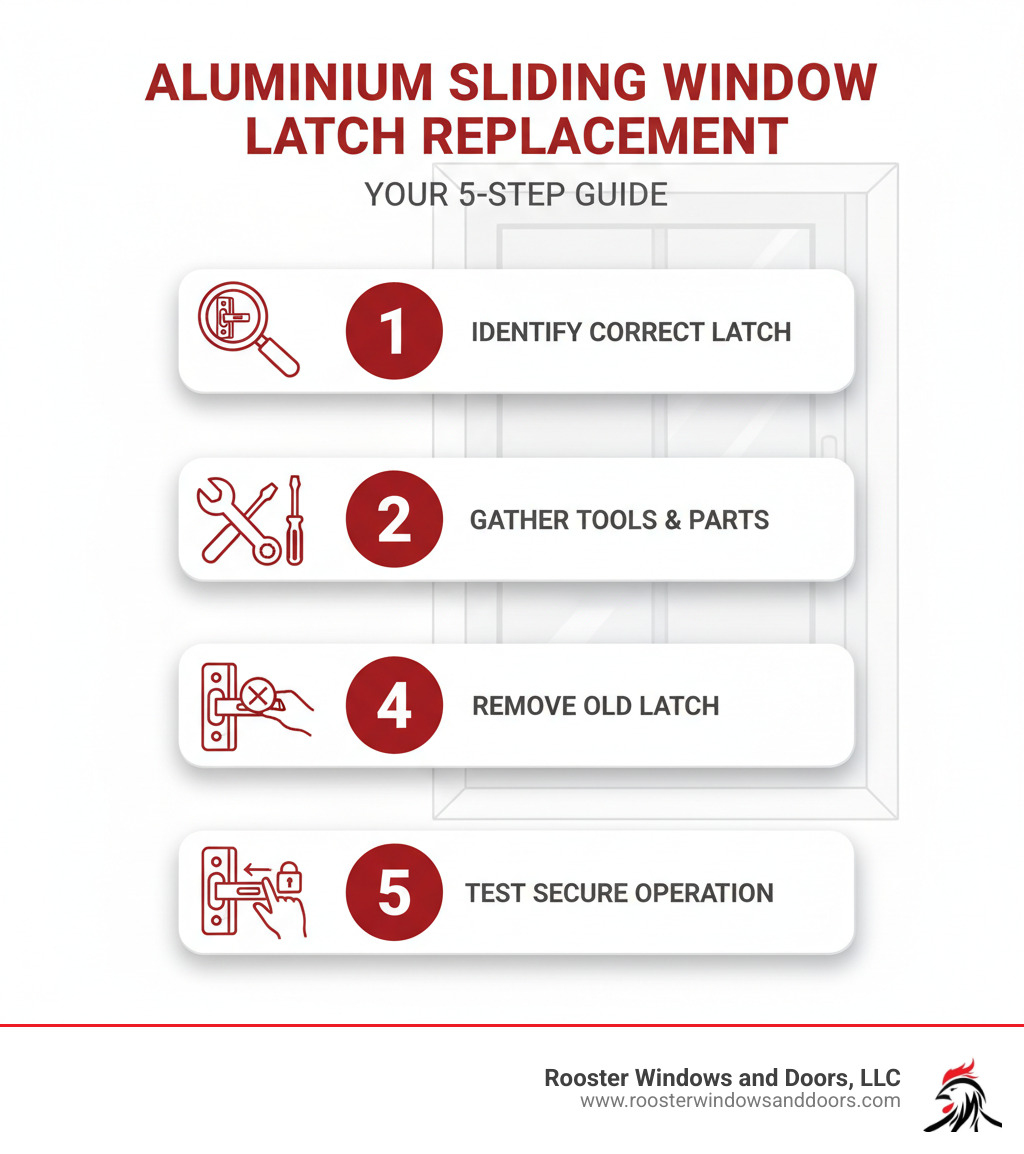
Aluminium sliding window latch replacement word guide:
- replacement mullions for windows
- install replacement windows
- how much does it cost to install replacement windows
Is It Time for a Replacement? Signs Your Latch is Failing
Window latches work quietly to keep your home secure and sealed from drafts. But like any mechanical part, they eventually wear out. So, how do you know it’s time for an aluminium sliding window latch replacement? Here are the clear warning signs to watch for.
A latch that won’t lock is the most serious red flag. If it won’t engage or feels loose, your home’s security is compromised. An open uped window is an open invitation for trouble.
A loose or wobbly latch is another sign. A good latch feels solid; if yours wiggles, its internal mechanisms are likely failing, preventing it from catching properly.
Visible cracks or breaks are a clear indicator. While durable, aluminum can crack from age or impact. This damage will only worsen over time.
Rust or corrosion can seize the mechanism. While aluminum resists corrosion, other latch components may not. Rust often appears near the end of the hardware’s 10 to 20-year lifespan.
If your window doesn’t seal properly, you’ll notice drafts or condensation. A bad latch prevents the sash from pulling tight against the frame, hurting your home’s energy efficiency and increasing utility bills.
Finally, if the latch is difficult to operate—stiff, sticky, or noisy—it’s a sign of internal wear or dirt buildup. While cleaning can help, the mechanism may be worn out.
Replacing a faulty latch restores peace of mind. Knowing your windows are secure and smooth makes your home feel safer. For more on keeping windows in top shape, check out our Window Services.
Gearing Up: Tools and Parts for the Job
Proper preparation is key to avoiding frustrating mid-project trips to the hardware store. Gathering the right parts and tools first will ensure a smooth process.
How to Identify the Correct Replacement Latch
Finding the correct replacement latch is crucial, as they are not one-size-fits-all. Here’s how to get it right.
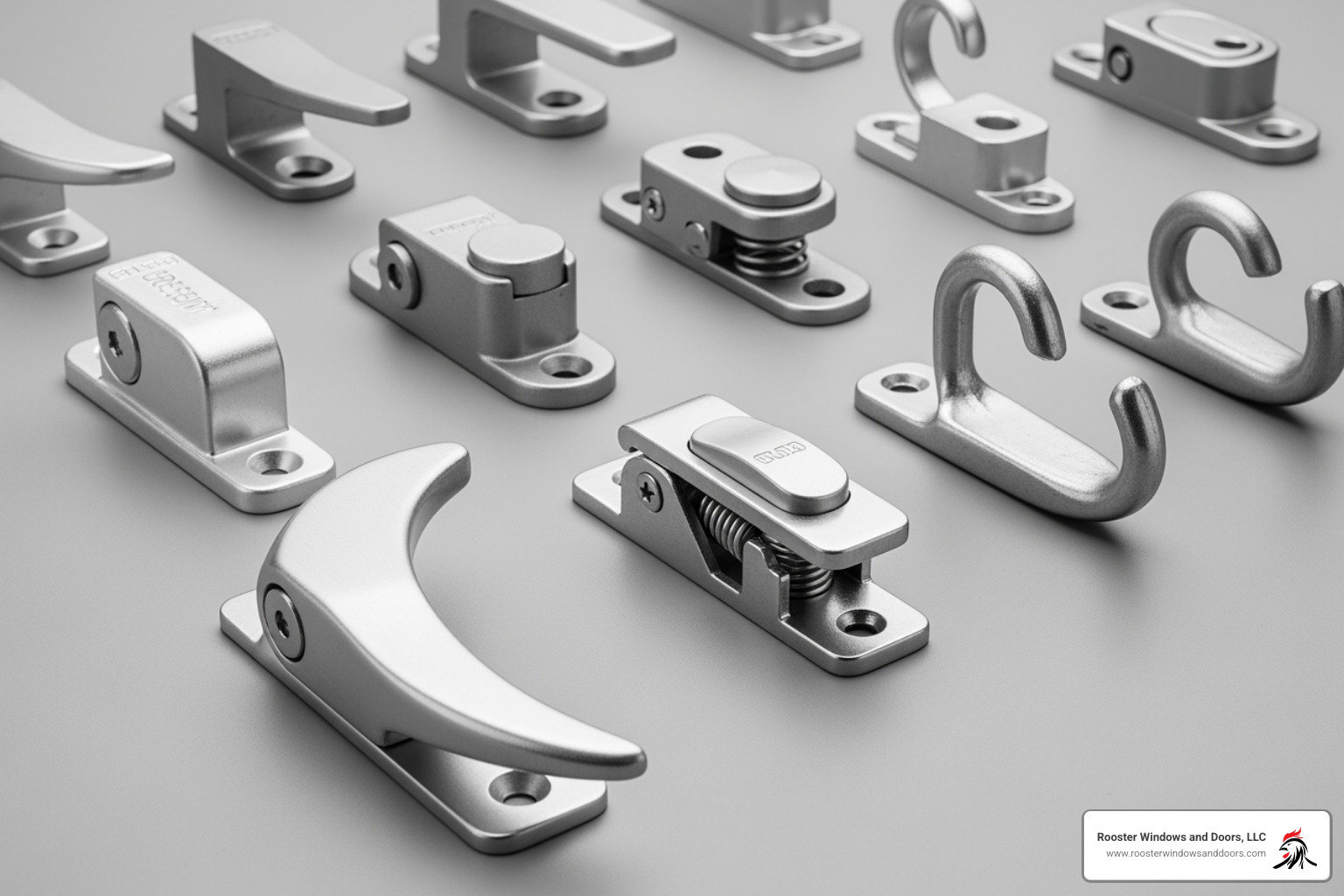
First, take photos of the latch from every angle. Capture any brand names or model numbers stamped on it. These photos are invaluable when shopping.
Next, measure precisely. Use a measuring tape for the latch’s overall dimensions, but the critical measurement is the screw hole spacing—the exact distance between the centers of the screw holes. Common spacings are 2-9/16″, 1-3/8″, or 2-1/16″. Being off even slightly means the new latch won’t fit. Also measure the latch extension and the keeper (the part it grabs onto).
Identify the latch type. Common types include crescent latches (curved lever), spring-loaded latches (snaps into place), and hook latches (hook rotates into a catch).
Check the handing—whether the latch is for the left or right side. Some are non-handed (universal), but others are specific. Also, match the finish color (e.g., white, black, bronze) to keep your window looking cohesive.
A time-saving tip: look for brand names on the window or latch (e.g., Airlite, Alumalite, Dowell). This can narrow your search significantly.
Local hardware stores carry generic latches, but online suppliers offer a wider selection. Resources like the Sliding Window Hardware catalog are useful. If you know the brand, check the manufacturer’s website for parts.
Essential Tools and Materials
Once you have the new latch, gathering tools is simple. You only need a few basics for this aluminium sliding window latch replacement.
- Screwdriver set (Phillips and flathead) is essential. For stubborn screws, a power drill helps, but use a gentle touch.
- Measuring tape for double-checking.
- Safety glasses are non-negotiable to protect your eyes.
- Cleaning cloth to wipe down the frame.
- Silicone lubricant (spray or grease) for the new latch’s moving parts.
- Your new replacement latch and new screws. Most latches include screws; if not, get new ones that match the original size to avoid stripping the frame.
With your tools and parts ready, you’re set for a smooth installation.
The Step-by-Step Guide to Aluminium Sliding Window Latch Replacement
With your tools and new latch ready, it’s time for the aluminium sliding window latch replacement. First, prioritize safety. Clear your workspace and take proper precautions if working on an upper-story window.
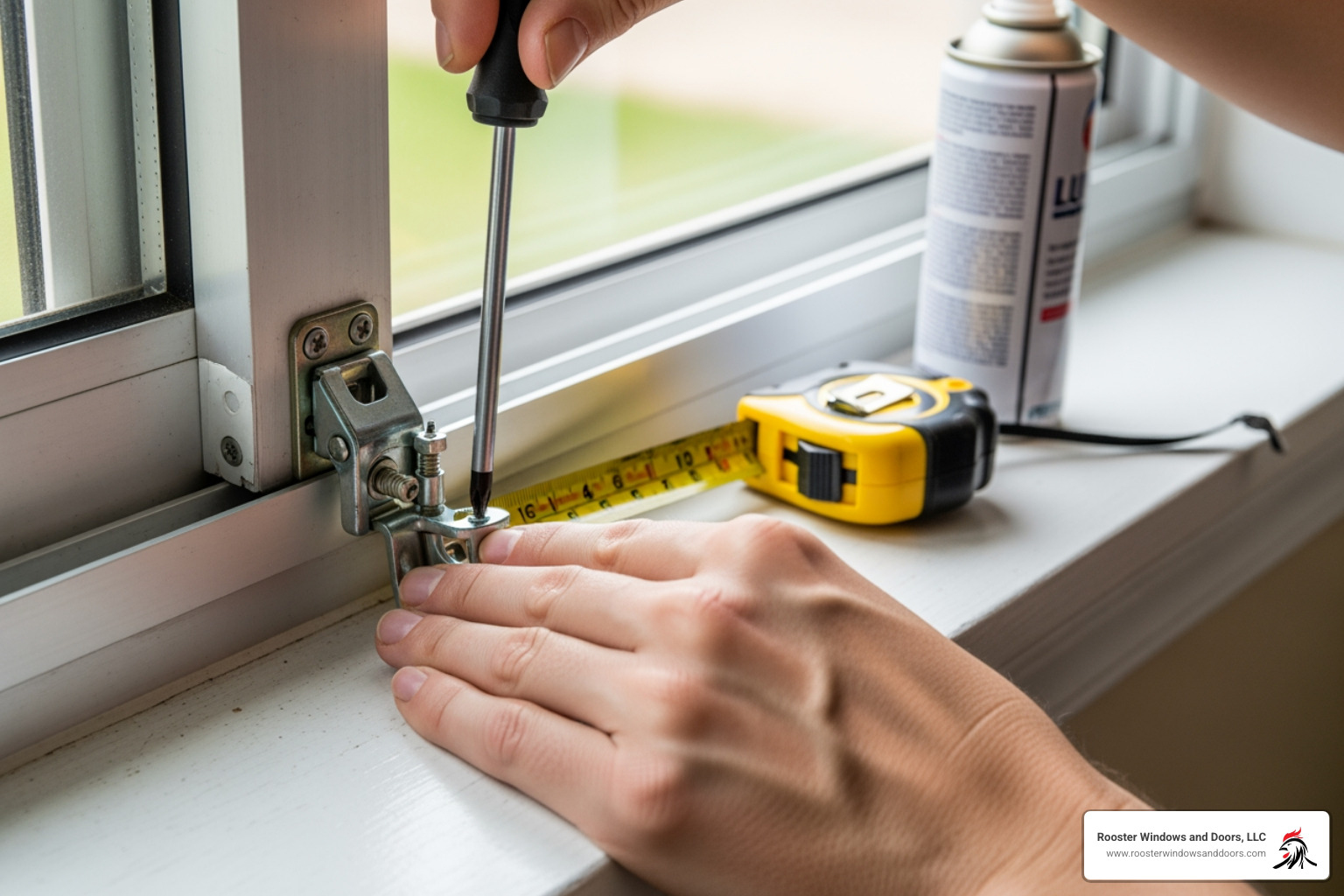
Step 1: Removing the Old Window Latch
First, open the window as much as possible to access the latch and screws easily.
Next, remove the screws holding the old latch. For rusted screws, apply penetrating oil and wait a few minutes. Use a screw extractor for stripped heads. Patience is key.
With the screws out, the old latch should lift off. If it’s stuck, gently pry it with a flathead screwdriver, being careful not to damage the frame. If there’s a separate keeper, remove it as well.
Now, clean the frame surface. Wipe away all dirt and dust where the new latch will sit. Check the screw holes; if they’re stripped, you may need larger screws or to fill and re-drill the holes.
For more detailed guidance on window repairs, check out our guide to replacing windows.
Step 2: Installing the New Latch
Position the new latch on the clean surface, aligning the screw holes perfectly with the holes in the frame. Proper alignment is crucial.
Insert the new screws, preferably the ones included with the latch. Hand-tighten them first to hold the latch in place.
Important: do not overtighten. After hand-tightening, gradually snug up the screws. Overtightening can strip the holes in the aluminum frame or crack the new latch.
If there’s a separate keeper, install it on the opposing sash. It must align perfectly with the latch when the window is closed.
Finally, test the new latch. Slide the window open and closed. Engage and disengage the latch to ensure it catches securely and operates smoothly. When locked, the window should form a tight seal. If something feels off, make small adjustments now to prevent future issues.
Troubleshooting and Proactive Maintenance
Even experienced DIYers can face issues during an aluminium sliding window latch replacement. After installation, a little maintenance will extend your new latch’s life.
Common Problems During Aluminium Sliding Window Latch Replacement
Here are common problems and how to solve them:
- Misaligned screw holes: For minor differences, you can try widening the holes on the latch itself. For larger gaps, fill the old holes with epoxy, let it dry, and drill new pilot holes.
- A latch that won’t catch the keeper: This is typically an alignment problem. Loosen the keeper’s screws, adjust its position slightly, and re-tighten. Also, clear any debris that might be blocking the latch. If this doesn’t work, the window frame may have warped, which could require professional help.
- Stripped screw holes: These can be fixed by using slightly thicker or longer screws. For severely stripped holes, insert a plastic wall plug before driving the screw.
- A stiff mechanism: If a new latch feels stiff, apply a small amount of silicone-based lubricant to its moving parts. Avoid oil-based products, which attract dirt.
If problems persist or you suspect a structural issue, it’s wise to consult an expert. Our certified installers in Chicagoland can help. Find certified window installers here.
Proactive Care: Extending Your Latch’s Lifespan
You’ve put in the work to replace your latch, so let’s make sure it lasts! Regular maintenance can significantly extend the life of your new hardware.
- Regular cleaning prevents buildup. Every few months, wipe the latch with a damp cloth.
- Annual lubrication with a silicone-based product is key. Apply a small amount to all moving parts.
- Check for loose screws seasonally. Tighten them as needed, but don’t overtighten.
- Inspect for wear while cleaning. Look for cracks or bends to catch problems early.
This simple maintenance can help your aluminium sliding window latch replacement last for its full 10-20 year average lifespan. For more tips, see our Window Maintenance tips.
DIY vs. Professional Installation: Making the Right Choice
Successfully replacing a latch yourself is satisfying. While DIY projects are popular, the smartest decision is sometimes recognizing when to call a professional.
Cost Considerations:
For a DIY aluminium sliding window latch replacement, your only cost is the part. Basic latches can be as cheap as $5-$16, while specialized ones might cost $50-$90 or more. This makes DIY a budget-friendly option. Professional installation costs more, as you’re paying for expertise, tools, and labor. However, this includes peace of mind and the assurance of a job done right.
Time Commitment:
Consider your time. The replacement itself may only take an hour, but research, sourcing the part, and potential troubleshooting can add significant time to a DIY project. A professional can usually complete the job in under an hour.
Skill Level:
Replacing a basic latch is a straightforward, beginner-friendly project. If you can use a screwdriver and follow instructions, you can likely handle it. Professionals bring advanced skills, allowing them to handle complex installations and spot underlying issues.
When to Call a Professional:
While we encourage DIY for minor repairs, sometimes calling a professional is necessary.
- If the window frame is damaged (cracked, warped, or rotting), a new latch won’t fix the root cause.
- For multiple replacements or recurring issues, a professional can diagnose the underlying problem.
- With custom or obscure hardware, professionals have better access to specialty suppliers.
- If security is your primary concern, a professional can recommend more robust locking mechanisms.
- Energy efficiency is also key. If a new latch doesn’t create a proper seal, a professional can fix the issue. Rooster Windows and Doors, LLC specializes in energy-efficient installations across Illinois, from Bolingbrook to Libertyville, ensuring your home stays comfortable.
- If you’re short on time or confidence, calling a professional is a perfectly valid choice.
The right choice depends on your comfort, budget, and the project’s complexity. For more on costs, see our Window Replacement Cost: Ultimate Guide.
Conclusion
Completing an aluminium sliding window latch replacement yourself is satisfying. It’s not just about saving money; it’s about making your home more secure and functional. That firm click of the new lock is a reminder of a job well done.
This guide covered everything from identifying parts to installation and troubleshooting. With simple annual maintenance, your new latch will last for years.
However, not every project is a DIY task. For damaged frames, custom hardware, or multiple window issues, professional expertise is crucial. If you’re considering an upgrade to high-quality, energy-efficient windows, Rooster Windows and Doors, LLC helps homeowners throughout Chicagoland. We ensure flawless installations that improve your home’s comfort and performance.
Don’t let a faulty latch compromise your home’s safety. Whether you do it yourself or call a pro, getting it fixed is what matters. Ready for a more comprehensive solution? Explore your Window Replacement options with us to keep your windows in top condition.
