

A Pane in the Glass: Your Guide to Window Installation Costs
How Much Does It Really Cost to Put In New Windows?
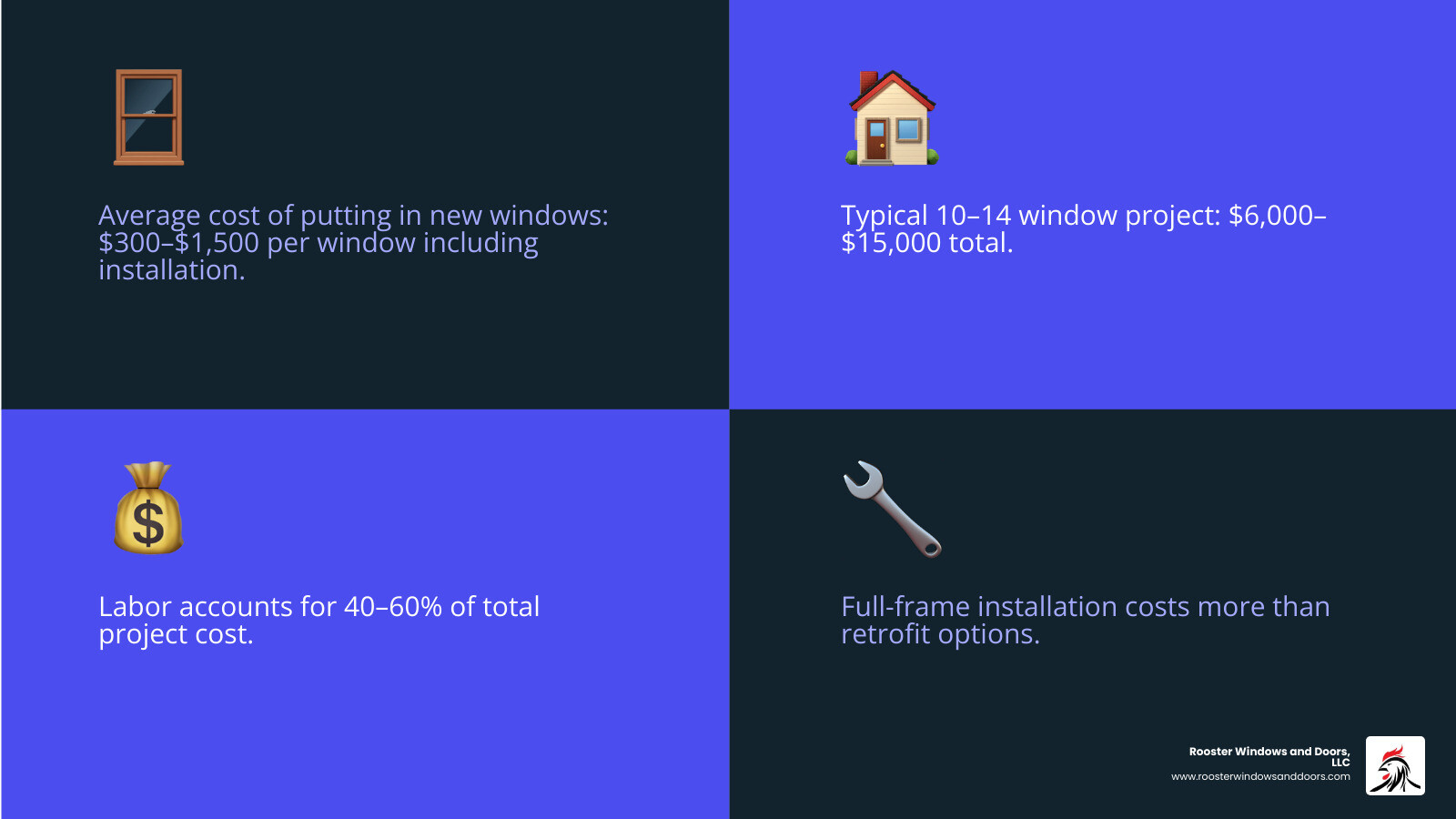
The cost of putting in new windows typically falls between $300 and $1,500 per window, including installation. Most homeowners spend between $232 and $740 per window for standard replacements, while larger or more complex projects can push costs higher.
Here’s a quick snapshot to help you budget:
| Project Scope | Estimated Total Cost |
|---|---|
| 1 window | $300 – $1,500 |
| 6–8 windows | $4,500 – $6,000 |
| 10–14 windows | $6,000 – $15,000 |
| 25 windows | $18,000 – $20,000 |
A few factors that move the needle most:
- Window style (bay windows cost far more than single-hung)
- Frame material (vinyl is most affordable; wood and fiberglass cost more)
- Installation type (full-frame replacement costs more than retrofit)
- Glass features (double-pane, triple-pane, Low-E coatings add to the price)
- Labor (typically 40–60% of your total project cost)
New windows are not a one-size-fits-all purchase. Prices vary widely depending on what you choose and who installs them. That’s exactly why this guide exists — to help you understand every piece of the puzzle before you get a quote.
I’m Piotr Wilk, and with over two decades of hands-on residential window and door installation experience across the Chicagoland area, I’ve helped hundreds of homeowners navigate the cost of putting in new windows without overpaying or cutting corners. In the sections below, I’ll break down every cost factor so you know exactly what to expect.
Breaking Down the Average Cost of Putting in New Windows
When we talk about the cost of putting in new windows, we have to look at the “big picture.” For a typical home in areas like Libertyville or Naperville, you aren’t just buying a piece of glass; you’re buying a system that protects your home from the Illinois elements.
For a standard project involving 14 windows—a common number for a three-bedroom home—homeowners often see quotes ranging from $8,000 to $15,000. If you are looking at premium materials or complex architectural styles, that number can climb toward $20,000.
To help you visualize where your project might land, consider these tiers:
- Budget Tier ($300 – $500 per window): Usually involves basic vinyl windows with standard double-pane glass and “pocket” installation.
- Mid-Range Tier ($600 – $1,000 per window): High-quality vinyl or composite frames, better energy efficiency ratings, and professional full-frame installation.
- Premium Tier ($1,100 – $2,500+ per window): Custom wood or fiberglass frames, triple-pane glass, designer hardware, and complex structural modifications.
For a deeper dive into these numbers, check out our Window Replacement Cost Ultimate Guide.
Cost of Putting in New Windows by Frame Material
The material of your window frame is one of the most significant price drivers. In the Chicagoland climate, where we deal with humid summers and freezing winters, material choice affects both your upfront cost of putting in new windows and your long-term maintenance.
- Vinyl ($400 – $900 installed): The most popular choice for a reason. It’s affordable, low-maintenance, and offers excellent insulation. High-quality vinyl can recover up to 76% of its cost in home resale value.
- Wood ($900 – $2,000+ installed): The gold standard for aesthetics, especially in historic areas like Evanston or Lake Forest. While beautiful, wood requires regular painting or staining to prevent rot and can cost significantly more.
- Fiberglass ($600 – $1,500 installed): Extremely durable and expands/contracts at the same rate as glass, which helps maintain the seal. It’s pricier than vinyl but lasts up to 40 years.
- Aluminum ($300 – $800 installed): Lightweight and modern. While older aluminum windows were poor insulators, modern versions with thermal breaks are much more efficient, though still generally less common in residential Chicagoland homes than vinyl.
- Composite ($500 – $1,200 installed): Made from a mix of wood fibers and plastic, these offer the look of wood with the durability of vinyl.
If you’re trying to balance aesthetics with a budget, we recommend reading Quality on a Dime: How to Score Great Windows Without the Hefty Price Tag.
Pricing Variations by Window Style
Not all windows are created equal. A window that opens (operable) will almost always cost more than one that stays shut (fixed) because of the extra hardware and weatherstripping required.
- Single-Hung ($270 – $700): Only the bottom sash moves. These are the most budget-friendly operable windows.
- Double-Hung ($350 – $800): Both sashes move, making them easier to clean. They are the standard for most Illinois homes. For more on this specific style, see Don’t Get Hung Up: Your Guide to Twin Double Hung Window Installation Costs.
- Casement ($500 – $1,200): These crank outward. They offer excellent ventilation and a tight seal but cost more due to the mechanical cranking system.
- Sliding ($325 – $1,000): These slide horizontally on a track. They are simple, durable, and often used in modern home designs.
- Picture ($300 – $1,000+): These don’t open. While the window itself is simpler, large picture windows often require thicker, tempered glass which can drive up the price.
- Bay and Bow ($1,500 – $7,000): These are architectural statements. Because they involve structural work and multiple window units joined together, the labor and material costs are high.
Labor and Installation Factors Influencing Your Quote

When you look at a quote for the cost of putting in new windows, don’t be surprised if the labor costs look high. In the window industry, labor typically accounts for 40% to 60% of the total project price. This isn’t just for “carrying the window to the hole.” It covers the removal of the old unit, the disposal fees, the structural shimming to ensure the window is level, and the high-grade insulation and caulking that keeps your energy bills low.
There are two primary ways we install windows:
- Retrofit (Pocket) Installation: We fit the new window into the existing frame. This is faster and cheaper, but it only works if your current frames are in great shape (no rot or water damage).
- Full-Frame Installation: We strip everything back to the rough opening. This costs about 10-15% more but allows us to inspect for hidden rot and maximize the glass area of the new window.
According to Window Replacement Cost [2026 Data] | Angi, homeowners should also budget for “hidden” labor tasks like site protection (covering your furniture) and debris disposal, which are essential for a flawless finish.
The Impact of Glass Features and Energy Efficiency
The glass is where the real “magic” happens for your utility bills. In Illinois, where we experience extreme temperature swings, the type of glass you choose is vital.
- Double-Pane vs. Triple-Pane: Most modern windows are double-pane. Triple-pane windows are about 15% more expensive but offer superior noise reduction and insulation.
- Low-E Coatings: This is a microscopic metallic layer that reflects heat. In the summer, it keeps heat out; in the winter, it keeps heat in.
- Gas Fills: We often fill the space between panes with Argon or Krypton gas. These gases are denser than air and act as a better thermal barrier.
Replacing old single-pane windows with Energy Star standards and savings can reduce your energy bills by an average of 13%. Plus, you may be eligible for federal tax credits of up to $600 for installing Energy Star “Most Efficient” windows.
Hidden Cost of Putting in New Windows: Size and Location
Where the window is located in your home can change the price faster than you can say “scaffolding.”
- Upper Floors: Installing windows on the second or third story of a home in Arlington Heights or Chicago requires more safety equipment and time, which increases labor costs.
- Structural Repairs: If we find rot in the wood framing around the window, expect to pay an additional $250 to $800 per opening for repairs.
- Egress Requirements: Basement windows often need to meet “egress” codes for safety, which might involve digging a window well. You can find more details on this in our Egress Window Installation Cost guide.
- Brick Homes: Replacing windows in a brick house requires extra care to avoid damaging the masonry. We’ve detailed these unique challenges in our article on Cost to Replace Windows in Brick House.
Maximizing ROI and Long-Term Savings
Is the cost of putting in new windows worth it? From a financial perspective, the answer is usually a resounding yes. Most homeowners see a 70% to 85% return on investment (ROI) when they sell their home. Beyond the resale value, the daily savings are impressive. Heat lost or gained through windows accounts for 25% to 30% of a home’s total heating and cooling energy use.
To get the most bang for your buck, consider these strategies:
- Bulk Discounts: It is almost always cheaper per window to replace 10 windows at once than to do one window every year. This is because we can streamline the labor and material delivery.
- Seasonal Timing: Demand for window installation peaks in the spring and fall. Scheduling your project in the winter can sometimes lead to better pricing or faster lead times.
- Energy Audits: Before you replace everything, get an energy audit. It might reveal that you only need to replace specific windows to see a massive improvement in comfort.
For a full breakdown of the financial side, read How Much Does It Cost to Install Replacement Windows.
Frequently Asked Questions about Window Replacement
Is it cheaper to replace all windows at once?
Yes. When we replace windows in bulk, the “setup” time for the crew is spread across more units. You’ll save on labor and often qualify for bulk pricing on the windows themselves. Plus, your home will have a consistent look, and your energy efficiency will improve uniformly across the house.
How long do new windows typically last?
Most high-quality vinyl or wood windows last 15 to 20 years. Fiberglass windows are the marathon runners of the group, often lasting up to 40 years. The lifespan depends heavily on the local climate and how well the windows were originally installed. A poor seal can lead to moisture infiltration, which ruins even the most expensive window.
Should labor account for 60% of the total price?
While it might seem high, 40% to 60% is a standard range for professional installation. This reflects the complexity of the work—especially in older homes in the Chicagoland area where openings might be “settled” or out of square. Paying for expert labor ensures your warranty remains valid and that the window actually performs at its rated energy efficiency.
Conclusion
The cost of putting in new windows is an investment in your home’s future. At Rooster Windows and Doors, LLC, we pride ourselves on providing high-quality, flawless, and energy-efficient installations across the entire Chicagoland area—from Elgin to Waukegan and everywhere in between.
We understand that every home is unique, whether you’re looking for a simple vinyl replacement in Schaumburg or a custom wood installation in a historic Wilmette home. Our goal is to provide you with options that suit your needs and a finished product that adds long-term value to your property.
Ready to see how new windows can transform your home? Visit our Window Installation page to learn more about our process and how we can help you achieve a more comfortable, energy-efficient home.
