

What Basement Bulkhead Replacement Really Costs (And What Drives the Price)
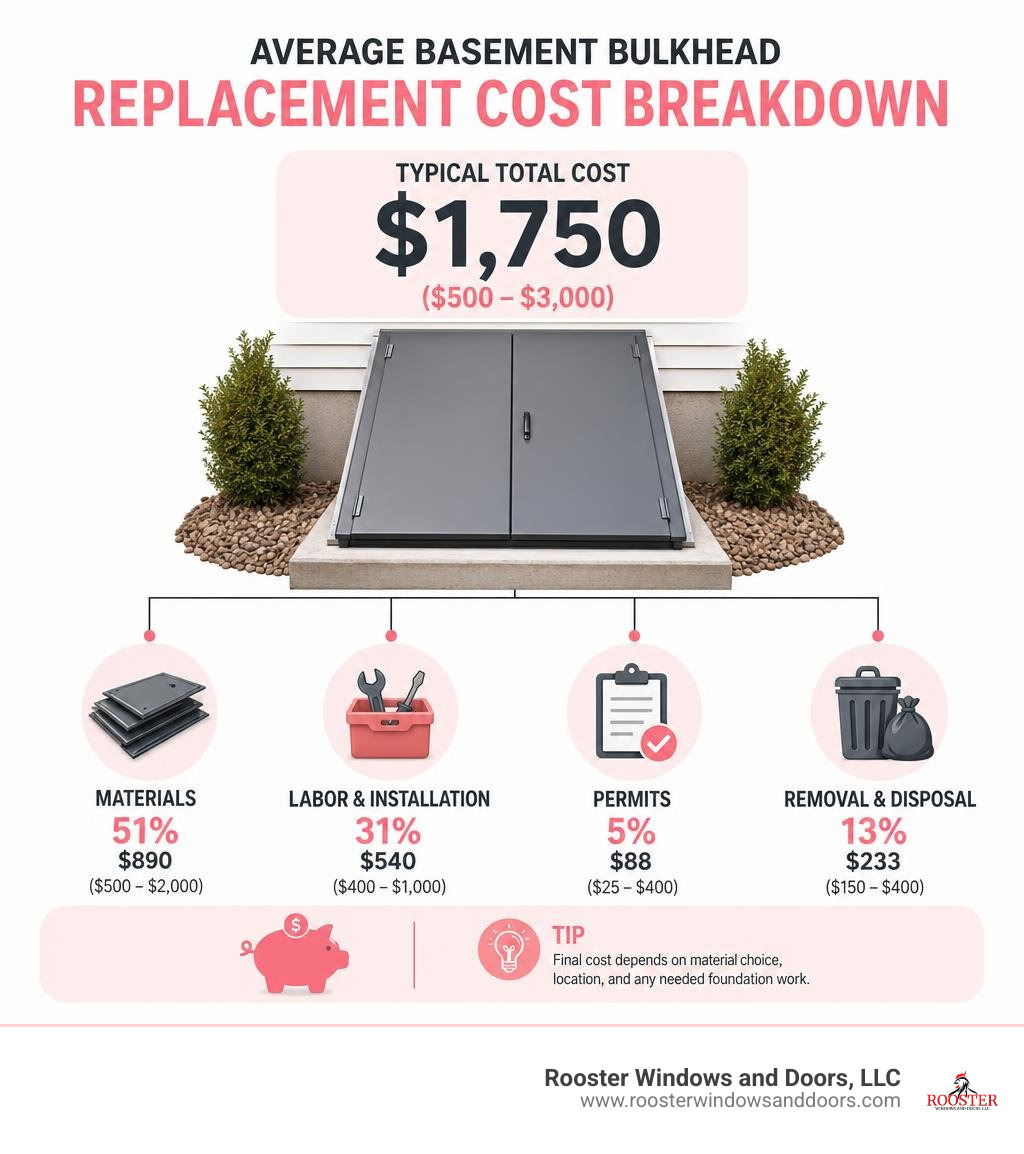
Basement bulkhead replacement cost typically falls between $500 and $3,000, with most homeowners paying around $1,750 for a new door and professional installation.
Here’s a quick breakdown before we dive deeper:
| Cost Item | Typical Range |
|---|---|
| Total replacement (door + labor) | $1,300 – $3,000 |
| Bulkhead door (materials only) | $500 – $2,000 |
| Labor and installation | $400 – $1,000 |
| Permits | $25 – $400 |
| Removal and disposal | $150 – $400 |
| Concrete work (if needed) | $2 – $10 per sq ft |
Your final number depends on the door material you choose, your location, and whether the surrounding foundation needs any repairs.
A worn-out bulkhead door isn’t just an eyesore. It’s an open invitation for water, pests, and cold air to move right into your basement. And when a small problem like a leaky seal or a rusted hinge gets ignored, it can quietly turn into something far more expensive — like foundation damage or chronic moisture issues.
I’m Piotr Wilk, and with over two decades of residential door and window installation experience across the Chicagoland area, I’ve seen how basement bulkhead replacement cost surprises homeowners who didn’t plan ahead. Understanding what goes into that price — before you call a contractor — puts you in a much stronger position.
Relevant articles related to basement bulkhead replacement cost:
- cost of replacing exterior door and frame
- cost of replacing sliding door
- cost to replace closet doors
What is a Basement Bulkhead and When Does It Need Replacement?
A basement bulkhead — also commonly referred to as a cellar door, hatchway, or sloping basement entrance — is an exterior entryway that leads directly down into your basement. This structure typically consists of a set of sloped, double doors mounted over an exterior concrete stairwell.
Historically, bulkheads were designed to allow homeowners to move heavy appliances, firewood, and large furniture directly into the basement without dragging them through the main living areas of the house. Today, they continue to serve this practical purpose while also acting as a crucial emergency egress point, a source of natural ventilation, and a protective barrier against the elements.
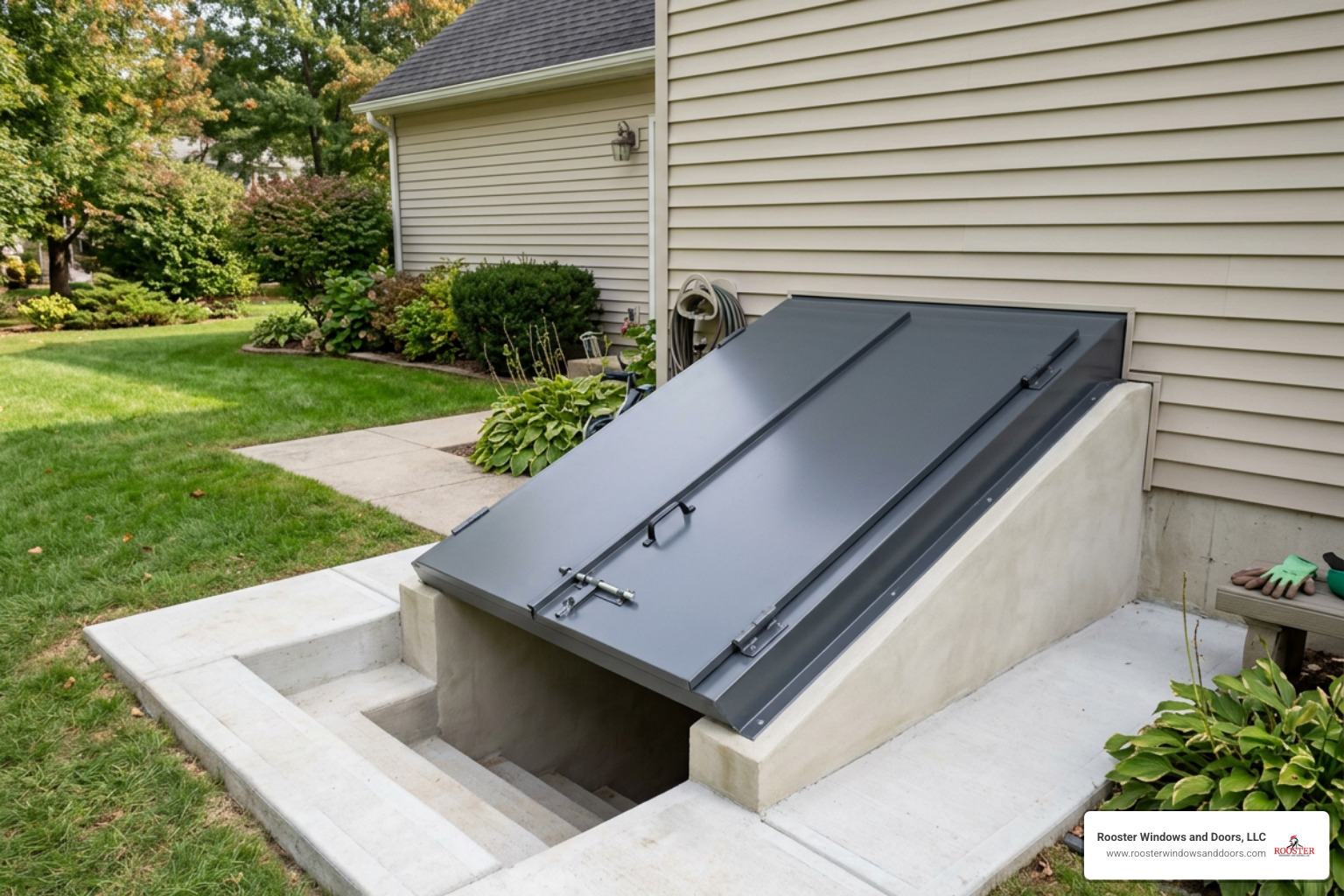
Because they are installed at an angle and sit low to the ground, bulkhead doors bear the brunt of local weather. In the Chicagoland area, our doors must withstand freezing winter snows, spring thaws, and intense summer downpours. Over time, this constant exposure causes materials to degrade.
Recognizing the early warning signs of bulkhead deterioration can save you from a major basement flood or structural failure. Here is what you should look out for:
- Rust and Corrosion: While minor surface rust can often be sanded and painted, deep corrosion that eats through the metal frame or doors compromises both security and weatherproofing.
- Warped or Rotten Wood: If you have an older wooden bulkhead, moisture will eventually penetrate the grain, leading to soft spots, structural sagging, and mold.
- Difficulty Opening or Closing: Doors that stick, scrape, or fail to sit squarely in their frames indicate that either the hinges have failed or the surrounding foundation has shifted.
- Water Leaks and Gaps: Visible gaps between the doors or around the concrete foundation plates allow rainwater to pour directly onto your cellar stairs, leading to pooling water at the base of your foundation.
- Peeling or Bubbling Paint: This is often the very first warning sign that moisture is trapped beneath the protective coating of a steel door, indicating that rust is starting to form underneath.
When these issues advance beyond basic repairs, a full replacement becomes necessary to protect your home’s structural integrity. Neglecting a failing bulkhead can lead to water pooling against your foundation walls, which can ruin finished basement spaces or damage nearby structural elements. If you are assessing your entire lower-level entryway system, you may also want to review our Basement Windows Complete Guide to ensure your basement remains dry, bright, and secure.
Average Basement Bulkhead Replacement Cost in 2026
When calculating your budget for 2026, the national average basement bulkhead replacement cost sits at $1,750, with a typical project range of $1,300 to $3,000 for professional installation. This is significantly less expensive than installing a brand-new bulkhead where none existed before, as a replacement project avoids major excavation, retaining wall construction, and heavy concrete pouring.
However, costs can vary based on regional labor rates and local climate demands. Across the Midwest, homeowners typically spend between $1,100 and $2,900 for a standard replacement. In comparison, coastal regions or areas with exceptionally high labor rates can see prices climb from $1,700 to $4,000.
For more detailed national pricing data, you can consult How Much Does Bulkhead Replacement Cost? (2026) – HomeGuide.
To help you compare your options, here is a breakdown of typical costs, lifespans, and maintenance needs by material type:
| Material | Material Cost Range | Expected Lifespan | Maintenance Requirements | Best For |
|---|---|---|---|---|
| Wood | $500 – $1,500 | 10 – 15 Years | High (Regular painting/sealing) | Historical homes, budget DIY |
| Steel | $900 – $1,600 | 15 – 30+ Years | Moderate (Rust prevention/painting) | Security, durability, classic look |
| Fiberglass | $1,000 – $2,000 | 20 – 30 Years | Low (Occasional cleaning) | Wet climates, low-maintenance |
| Plastic / Polyethylene | $1,200 – $1,500 | 15 – 25 Years | Low (No rust or rot) | Impact resistance, low-maintenance |
Material Choices and Their Impact on Basement Bulkhead Replacement Cost
The material you select is the largest variable in your upfront material expenses. Each option comes with distinct advantages and long-term maintenance commitments.
Steel Bulkhead Doors ($900 – $1,600+)
Steel is the industry standard for bulkhead doors, famously manufactured by brands like Bilco. These doors offer unmatched security and rugged durability. They are highly resistant to forced entry and can easily withstand heavy snow loads. However, steel requires regular maintenance. To prevent rust, you must periodically scrape, prime, and paint the metal, especially along the bottom edges where water tends to sit.
Fiberglass Bulkhead Doors ($1,000 – $2,000+)
Fiberglass doors provide steel-like strength without the risk of rust or corrosion. They are lightweight, making them incredibly easy to open and close, and they do not require regular painting. This makes fiberglass an excellent choice for the humid, wet conditions often found in Chicagoland basements. While the upfront cost is higher, the lack of ongoing maintenance makes it a highly cost-effective long-term investment.
Wood Bulkhead Doors ($500 – $1,500)
Wooden bulkheads are often chosen for historical homes to maintain architectural accuracy. While they have a lower initial purchase price, wood is highly susceptible to rot, warping, and insect damage when placed in direct contact with concrete. If you choose wood, it is critical to use pressure-treated lumber and high-quality protective sealants to shield the wood from masonry moisture.
Plastic / Polyethylene Bulkhead Doors ($1,200 – $1,500)
High-density polyethylene doors are virtually indestructible, rust-proof, and rot-proof. They never need painting and resist denting from falling branches or hail. However, some homeowners find their aesthetic appearance less appealing than traditional steel or wood, and they can occasionally expand or contract slightly during extreme Midwestern temperature swings.
When upgrading your exterior doors, it is also the perfect time to evaluate your basement’s overall energy efficiency and light. Upgrading old, drafty basement windows alongside your bulkhead can dramatically improve your basement’s comfort. Take a look at our Basement Window Replacement Guide 2026 to see how modern window styles can complement your new bulkhead door.
Labor and Installation Factors Affecting Basement Bulkhead Replacement Cost
Professional labor typically accounts for $400 to $1,000 of your total replacement cost. A standard, straightforward replacement takes a professional crew about 4 to 8 hours to complete. However, several real-world factors can complicate the installation and drive labor prices higher:
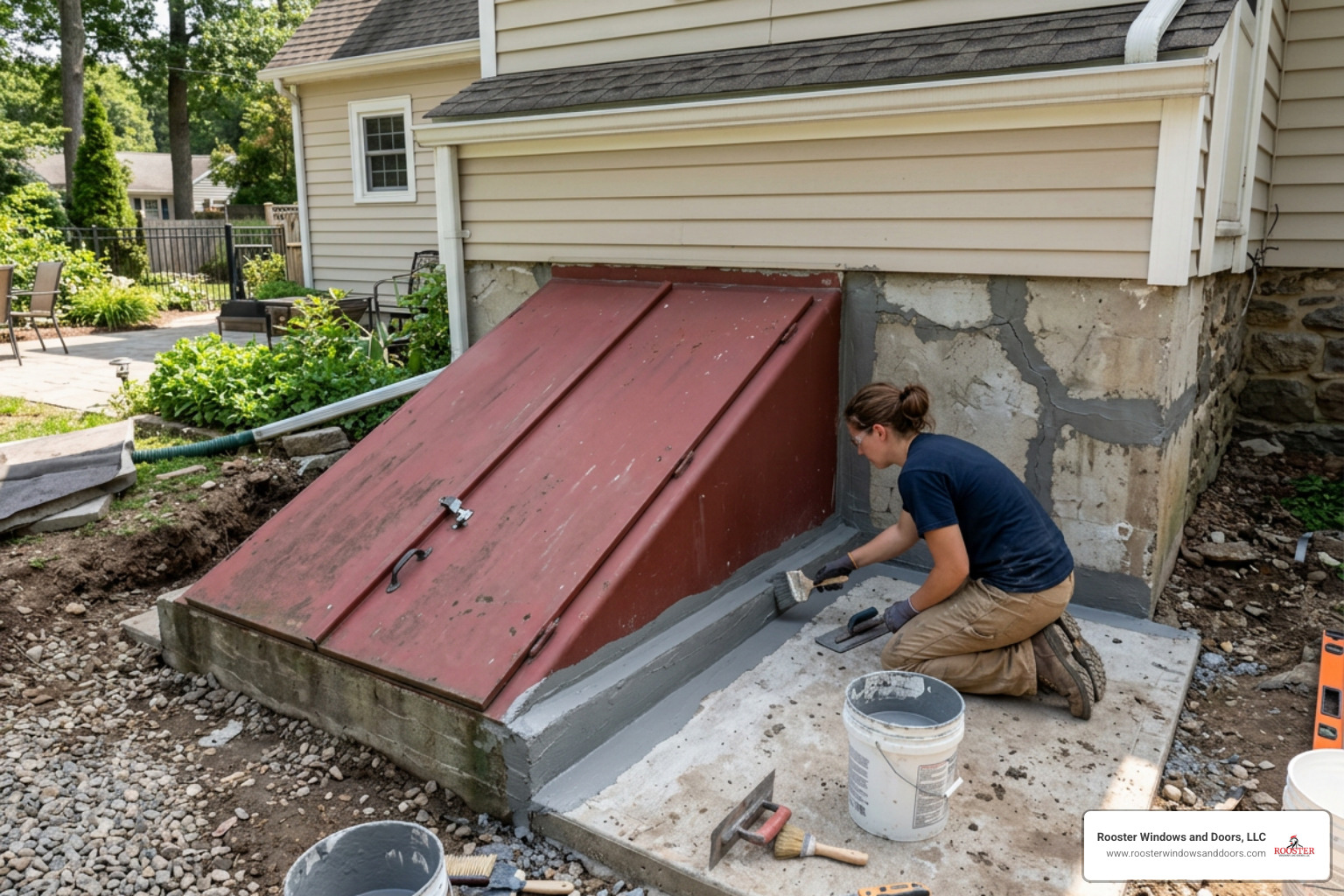
- Foundation and Masonry Condition: If the concrete foundation rim (the casting) where the bulkhead frame mounts is cracked, crumbling, or unlevel, it must be repaired before the new door can be bolted down. Applying fast-setting grout to rebuild a damaged concrete sill can add $250 to $800 to the project.
- Shoring and Structural Support: In older homes, the bulkhead entryway may support a portion of the surrounding rim joist or wall. If structural support is compromised, temporary shoring or header replacement may be required, which can increase labor costs significantly.
- Custom Sizing: Standard, pre-fabricated doors are the most affordable option. If your basement opening is an unusual size or has settled unevenly over the decades, a custom-sized door or custom masonry adjustments will be required, increasing both material and labor costs.
For a deeper dive into how complex site conditions affect your installation budget, read Basement Bulkhead Installation Cost: A Comprehensive Guide – Archie Remodels.
Using professional contractors ensures that your bulkhead is perfectly level, tightly sealed, and anchored securely to your foundation. This prevents water from seeping behind the frame and rotting your home’s sill plates.
Additional Expenses and Cost-Saving Strategies
When budgeting for a bulkhead replacement, it is wise to set aside an extra 10% to 20% for hidden expenses that may arise once the old door is removed.
Here are the most common additional costs to keep in mind:
- Permits and Inspections ($25 – $400): Most municipalities in our service areas, from Naperville to Waukegan, require a building permit for structural or exterior door replacements. This ensures the door meets local emergency egress codes.
- Disposal Fees ($150 – $400): Tearing out a heavy, rusted steel door and its concrete anchors requires proper disposal. Contractors typically include this in their initial bid, but it is always smart to double-check.
- Grading and Drainage ($1 – $4 per sq ft): If rainwater naturally pools around your cellar door, the ground must be regraded so that water slopes away from the entrance. Poor grading is the number one cause of bulkhead leaks.
- Waterproofing and Sealing: Applying high-quality polyurethane caulk, self-adhesive flashing membranes, and waterproof concrete coatings around the new frame is essential to keep your basement dry.
If you are dealing with water pooling near your basement entrance, you may also need to address nearby window wells. A failing window well can dump water right next to your foundation, leading to basement flooding. Check out our guides on how to Stop the Flood with Expert Window Well Replacement in Chicago and Window Wells for Basement Windows: From Egress Safety to Curb Appeal to learn how to coordinate your home’s exterior drainage systems.
How to Save Money on Your Bulkhead Replacement
While we never recommend cutting corners on structural integrity or waterproofing, there are several smart ways to keep your costs down:
- Choose Standard Sizes: Measure your existing opening carefully. Ordering a standard-sized, pre-fabricated door kit is significantly cheaper than ordering a custom-built unit.
- Time Your Project Strategically: Schedule your replacement during the late fall or early spring. Contractors are often busiest during the summer, meaning you may secure better rates and faster scheduling during the off-season.
- Bundle Projects: If you need to replace basement windows, exterior doors, or perform foundation repairs, hiring the same contractor to handle multiple projects at once can save you hundreds of dollars in mobilization fees.
- Handle the Prep and Finish Work Yourself: You can save on labor by clearing the area around the bulkhead, removing nearby landscaping obstructions, and painting the new steel door yourself once the professional installation is complete.
Frequently Asked Questions About Bulkhead Replacement
How long does a new bulkhead door typically last?
A high-quality bulkhead door can last anywhere from 15 to 50 years, depending on the material, the quality of the installation, and how well it is maintained.
- Steel doors typically last 15 to 30 years. However, if they are kept clean, free of debris, and repainted every few years to prevent rust, they can easily last 40 years or more.
- Fiberglass and composite doors are highly durable and can last 30 to 50 years with virtually no maintenance other than occasional washing.
- Wooden doors have the shortest lifespan, usually lasting 10 to 15 years before moisture from the concrete and soil causes the wood to rot.
Is it cheaper to replace just the door or the entire assembly?
If the concrete foundation, sills, and steel side castings (the frame) are in excellent, structurally sound condition, you can save money by purchasing a door-only replacement kit. This option can cut your material costs in half.
However, if the metal frame is heavily rusted, warped, or separating from the concrete, replacing just the doors is a temporary band-aid. A compromised frame will continue to leak water and drafty air. In most cases, installing a complete, integrated door-and-frame assembly is the only way to guarantee a completely watertight seal.
Can homeowners save money by doing a DIY bulkhead replacement?
Yes, handy homeowners with mid-level carpentry and masonry skills can save approximately 40% to 50% on labor costs by installing a basic bulkhead door kit themselves.
Here is a quick overview of the process to help you decide if you are ready to tackle it:

While DIY is possible, it comes with significant risks. Bulkhead doors must be perfectly square and level to seal properly. Even a tiny 1/8-inch misalignment can create a gap that lets in rain, snow, mice, and cold drafts. Furthermore, cutting into old concrete foundation walls or handling structural sills requires specialized tools, like angle grinders and hammer drills. For most homeowners, hiring a professional team is the best way to ensure a code-compliant, worry-free installation.
Conclusion
Replacing a worn-out basement bulkhead is a smart investment that protects your home from water damage, improves security, and boosts your property’s curb appeal. While the basement bulkhead replacement cost requires some upfront budgeting, the long-term peace of mind of having a dry, secure basement is well worth the investment.
At Rooster Windows and Doors, LLC, we pride ourselves on providing high-quality, flawless, and energy-efficient door and window installations. We serve homeowners across the entire Chicagoland area, including Libertyville, Lake Forest, Highland Park, Vernon Hills, Grayslake, Mundelein, Lake Zurich, Buffalo Grove, Deerfield, Gurnee, Waukegan, Antioch, Crystal Lake, Algonquin, Cary, McHenry, Woodstock, Huntley, Fox River Grove, Arlington Heights, Palatine, Schaumburg, Evanston, Northbrook, Glenview, Des Plaines, Mount Prospect, Hoffman Estates, Barrington, and Chicago.
If your cellar door is starting to show signs of rust, rot, or leaks, don’t wait for the next heavy storm to cause an expensive basement flood. Explore our professional Rooster Windows and Doors Replacement Services today to schedule a consultation with our experienced team. We’ll help you find the perfect, durable solution to keep your home safe and dry for decades to come.


