

Why Hurricane Impact Awning Windows Are Worth Knowing About
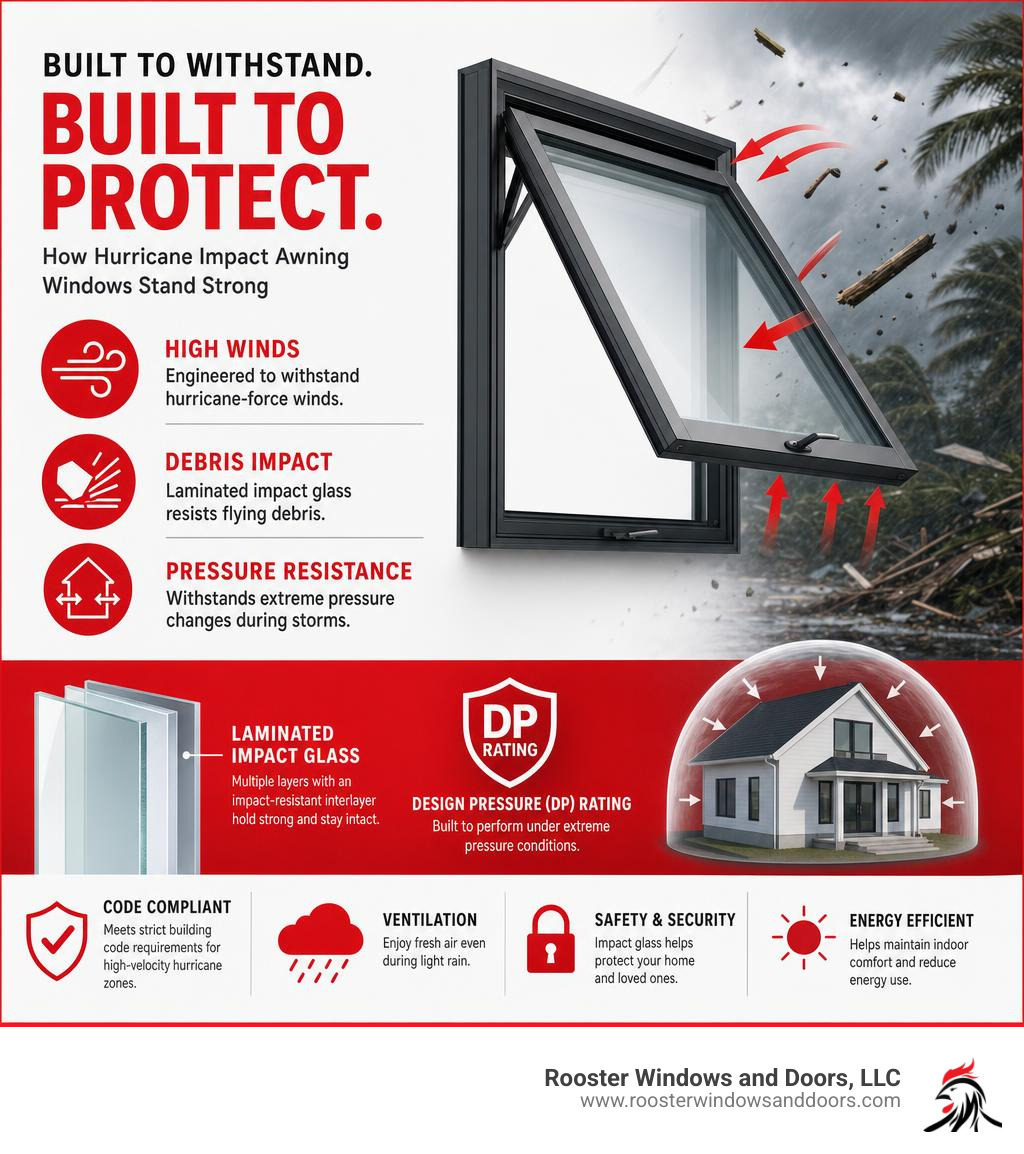
Hurricane impact awning windows are specially engineered windows built to withstand hurricane-force winds, windborne debris, and severe storms — while still letting fresh air into your home.
Quick answer for homeowners researching impact awning windows:
| Feature | What to Know |
|---|---|
| What they are | Top-hinged windows with laminated impact glass and reinforced frames |
| Hurricane protection | Rated for winds up to 150 MPH; resist flying debris and pressure changes |
| Key certifications | Miami-Dade NOA, Florida Building Code, HVHZ compliance, AAMA Gold |
| Design pressure | Ranges from +/-65 to +/-80 PSF depending on product |
| Energy efficiency | U-Factors as low as 0.28; block up to 99% of UV rays |
| Best use cases | Kitchens, bathrooms, coastal homes, high-wind zones |
| Big advantage over standard windows | Ventilation even during light rain — no shutters needed |
Unlike standard awning windows, impact-rated versions use laminated glass and heavily reinforced frames. They don’t just open and close — they protect.
Homeowners in storm-prone regions often discover this difference the hard way. One homeowner in Corpus Christi, TX, whose home sat directly in the path of Hurricane Harvey, reported that their impact windows held without a single crack throughout the entire storm.
That’s the difference the right window can make.
My name is Piotr Wilk, and I work with Rooster Windows and Doors, LLC, where our team has spent over two decades installing residential windows and doors across the Chicagoland area — including advising homeowners on high-performance options like hurricane impact awning windows that combine storm resilience with everyday livability. In this guide, I’ll walk you through everything you need to make a confident, informed choice.
What Are Hurricane Impact Awning Windows?
At their core, awning windows are defined by their unique operation: they are hinged at the top of the frame and swing outward from the bottom. This creates a mini-awning or canopy over the opening. It is a brilliant design that allows you to enjoy fresh air and ventilation even during a light rain shower without letting water inside.
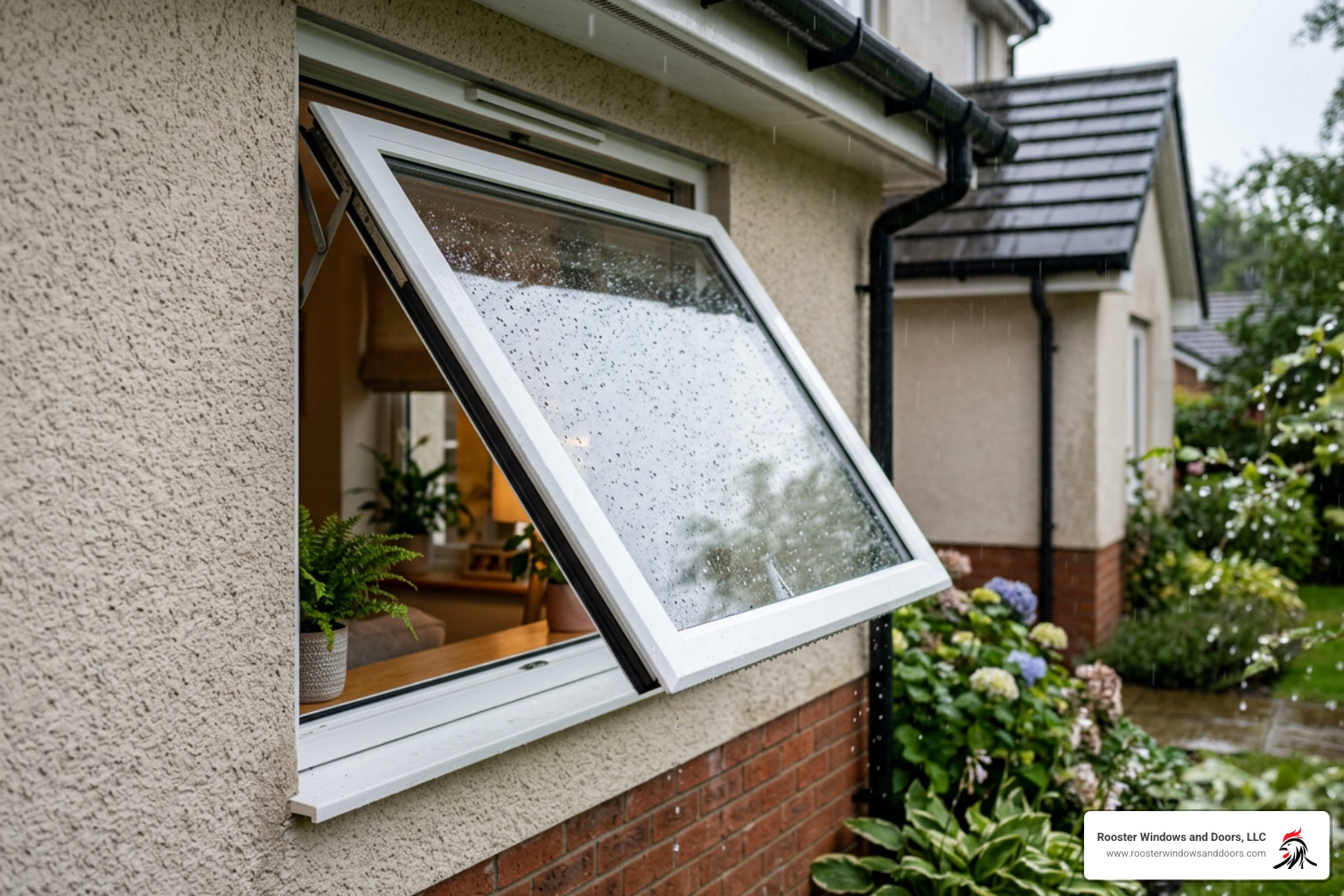
However, a standard awning window is not built to survive severe weather. That is where hurricane impact awning windows come into play.
Unlike standard windows, an impact-rated awning window is engineered with heavy-duty structural reinforcement and laminated impact-resistant glass. This glass is made by bonding two panes of glass together with a strong, transparent interlayer (usually polyvinyl butyral or PVB). If an object strikes the window, the outer glass may crack, but the interlayer keeps the window sealed and intact, preventing wind, rain, and flying debris from breaching your home.
By combining this shatter-resistant glass with extra-thick, multi-chambered vinyl or reinforced aluminum frames, these windows deliver unmatched structural integrity. To explore how these systems elevate both the security and aesthetic appeal of your home, you can Learn more about top-rated awning impact windows.
Key Features and Performance Ratings of Impact Awning Windows
When you are shopping for high-performance windows, you will run into a lot of technical terms and acronyms. Understanding these ratings is crucial to ensuring you get the level of protection your home actually needs.
To prove they can stand up to extreme forces, these windows undergo rigorous testing to meet strict building standards, such as the Florida Building Code and Miami-Dade County specifications. To see how manufacturers build products to survive these harsh tests, you can Read about certified coastal performance standards.
Here are the primary ratings and certifications you should look for:
- Miami-Dade NOA (Notice of Acceptance): This is widely considered the gold standard for wind and impact testing in the United States. A window with a Miami-Dade NOA has been proven to withstand the harshest hurricane conditions.
- Florida Product Approval (FBC): Similar to the NOA, this certification verifies that the window complies with the structural safety standards of the Florida Building Code.
- HVHZ (High Velocity Hurricane Zone) Compliance: This rating indicates the window is certified for use in areas subject to the most severe wind speeds and pressure changes.
- AAMA Gold Certification: Issued by the American Architectural Manufacturers Association, this seal verifies that the window has been independently tested and meets premium standards for air infiltration, water resistance, and structural integrity.
Understanding Design Pressure (DP) and HVHZ Ratings for Hurricane Impact Awning Windows
One of the most important metrics for any storm-rated window is its Design Pressure (DP) rating. Design pressure refers to the amount of wind load and structural pressure a window can safely withstand before failing.
During a severe storm, wind blowing against your home creates massive positive pressure on the outside, while wind rushing past can create negative suction pulling the window outward. DP ratings are measured in Pounds per Square Foot (PSF).
For example, a high-quality impact awning window might carry a performance rating of +65 / -75 PSF or even up to a maximum design pressure of 80 -/+ PSF. To put that in perspective, a standard window with a DP 30 rating is only tested to withstand about 45 PSF of pressure for 10 seconds. In contrast, our impact-rated awning windows are rated to withstand wind speeds of 150 MPH or higher.
During testing, the window is subjected to a “missile impact test” where a large piece of lumber is fired at the glass, followed by thousands of cycles of positive and negative pressure. This ensures that even if the glass is cracked, the window will not blow out, preventing catastrophic structural failure of your home’s roof and walls.
Frame Materials and Glass Options for Hurricane Impact Awning Windows
The performance of your window relies heavily on the materials used to build it. You generally have two primary choices for frame materials:
Vinyl Frames
High-quality vinyl frames are multi-chambered, meaning they have built-in air pockets that provide excellent thermal insulation. Vinyl is incredibly low-maintenance; unlike wood, it will never rot, chip, peel, or warp when exposed to humidity and rain.
Aluminum Frames
Aluminum frames offer exceptional structural strength and slimmer profiles, allowing for larger glass areas. However, because metal conducts heat, they are generally less energy-efficient than vinyl unless they are built with a thermal break.
Advanced Glass Options
The glass package is where the real magic happens. Aside from the heavy-duty laminated impact glass, you can customize your windows with:
- Low-E (Low-Emissivity) Coatings: Microscopically thin metallic coatings that reflect heat back to its source, keeping your home cooler in the summer and warmer in the winter.
- Argon Gas Fills: Inserting dense argon gas between the glass panes significantly improves the thermal boundary, helping the window achieve a U-factor as low as 0.28.
- 99% UV Block: The laminated interlayer naturally filters out up to 99% of harmful ultraviolet rays, protecting your furniture, flooring, and artwork from fading.
To see how these advanced glass and frame combinations can lower your utility bills year-round, Explore energy-efficient window installations.
Awning vs. Casement Impact Windows: A Direct Comparison
If you love the look of crank-out windows, you will likely find yourself choosing between awning windows and casement windows. While they look similar when closed, they operate differently and serve distinct purposes.
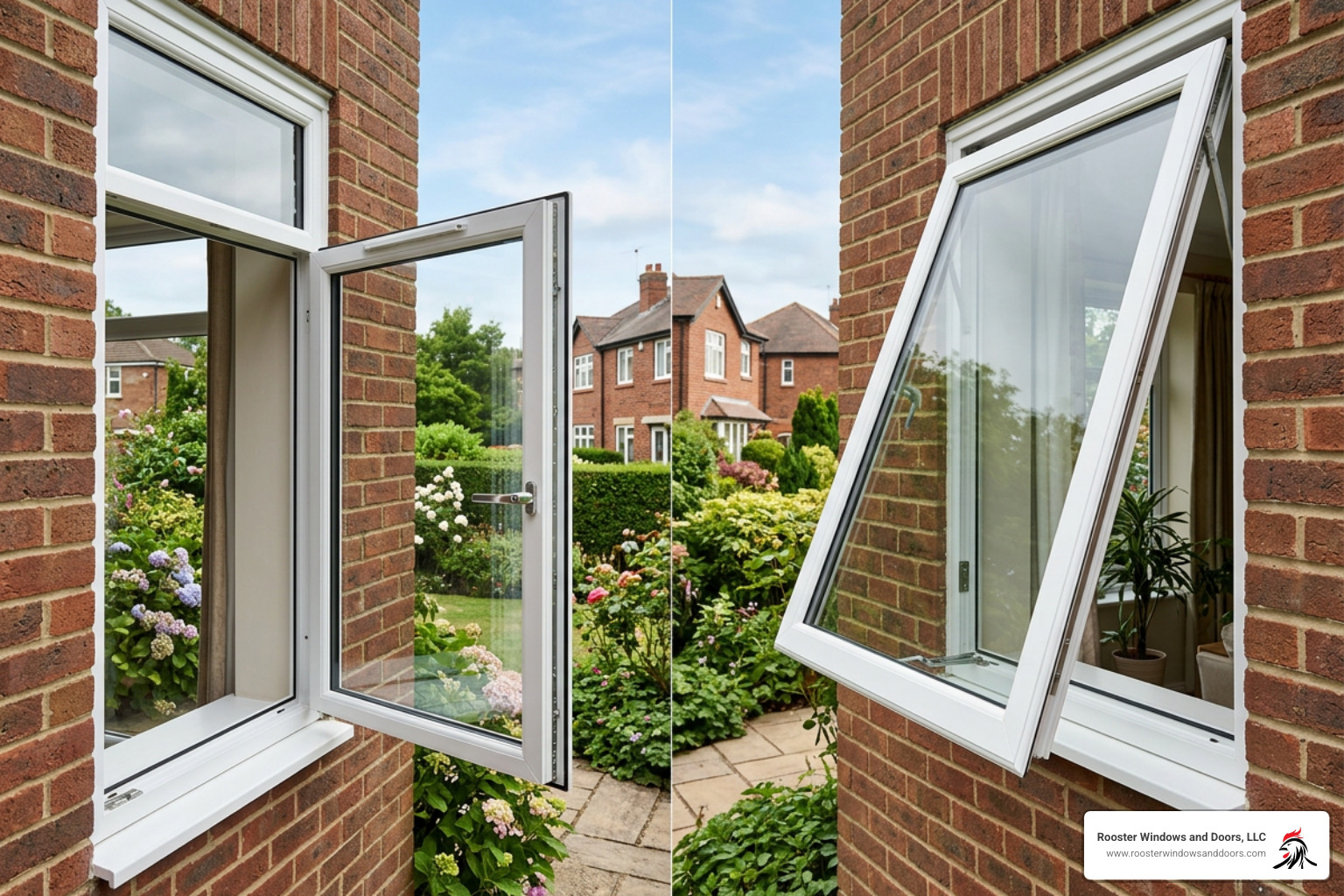
The main difference is the hinge placement. Casement windows are hinged on the side and open outward like a door, whereas awning windows are hinged at the top and open outward from the bottom.
Because of this, awning windows are wider than they are tall, making them perfect for horizontal openings. Casement windows, on the other hand, are taller than they are wide. Both styles lack a center rail or meeting sash, giving you beautiful, unobstructed views of the outdoors.
| Feature | Hurricane Impact Awning Windows | Hurricane Impact Casement Windows |
|---|---|---|
| Hinge Location | Top of the frame | Side of the frame |
| Opening Direction | Outward from the bottom | Outward from the side |
| Rain Protection | Excellent (can remain open in light rain) | Poor (rain will blow inside) |
| Best Dimensions | Wider-than-tall openings | Taller-than-wide openings |
| Ventilation Style | Catches rising air currents | Directs side breezes indoors |
| Max Standard Sizes | Up to 48″ x 36″ or 48″ x 60″ | Up to 37″ x 74 1/4″ |
To help you decide which configuration works best for your home’s layout, you can Compare with types of casement windows or Learn about impact casement and awning configurations to see how they can be combined.
Installation, Insurance, and Energy Efficiency Benefits
Investing in hurricane impact awning windows is about more than just surviving the next big storm. It is an upgrade that pays daily dividends in comfort, safety, and energy savings.
First, let’s talk about energy efficiency. With a 0.28 U-Factor, these windows act as a powerful thermal barrier. They keep the conditioned air inside your home where it belongs, which can significantly reduce your heating and cooling costs. In fact, switching to ENERGY STAR certified impact windows can reduce residential cooling loads by up to 35% in hot climates.
Additionally, many insurance companies recognize the structural protection of impact-rated windows and offer substantial premium discounts to homeowners who install them. Because these windows seal the home envelope against high-wind pressures, they drastically reduce the risk of water damage and roof blowouts.
Other everyday benefits include:
- Incredible Noise Reduction: The thick laminated glass acts as an acoustic barrier, dampening outside noises like traffic, lawnmowers, and barking dogs.
- Corrosion-Resistant Hardware: High-quality impact windows feature stainless-steel hinges and operators that resist wear and tear, even in humid or coastal environments.
- Enhanced Security: The same laminated glass that resists flying tree branches will easily defeat a burglar’s crowbar or hammer.
If you are planning a complete home upgrade, you might also want to Check if triple pane options are worth it and Learn about Energy Star windows to maximize your long-term return on investment.
Frequently Asked Questions about Hurricane Impact Awning Windows
Can you open awning impact windows during a storm?
You should never open any window during a severe storm, hurricane, or high-wind event. While awning windows are fantastic for providing ventilation during a light, vertical rain shower, they must be fully closed and locked during a storm.
When closed, the multi-point locking mechanism pulls the sash tightly against the weatherstripping, creating a pressurized, water-tight seal. Opening the window during high winds exposes the frame to extreme forces that could damage the hardware or allow dangerous wind pressure to enter your home.
How much do hurricane-rated awning windows cost?
Hurricane-rated windows require a larger upfront investment than standard, non-impact windows due to the advanced laminated glass, reinforced frames, and heavy-duty hardware. However, they eliminate the need to purchase, store, and install ugly storm shutters. They also add immediate equity to your home, lower your energy bills, and can qualify you for insurance discounts.
To get a better idea of how to budget for your project, you can View our window replacement cost guide.
Do impact awning windows reduce outside noise?
Yes, exceptionally well! The laminated glass used in hurricane impact awning windows features a PVB interlayer that disrupts sound waves as they travel through the pane. This creates a highly effective acoustic barrier. Homeowners are often shocked by how quiet their homes become after installation, with street traffic, sirens, and storm noises reduced to a faint whisper.
Conclusion
Whether you are looking to protect your home from severe Midwestern storms, reduce your energy bills, or simply enjoy a quiet, draft-free living space, hurricane impact awning windows are an exceptional investment.
At Rooster Windows and Doors, LLC, we pride ourselves on delivering high-quality, flawless, and energy-efficient installations. We offer a wide variety of custom options—including frame colors, hardware finishes, and grid patterns—tailored specifically to your home’s unique style.
We proudly serve homeowners throughout the Chicagoland area, including Libertyville, Lake Forest, Highland Park, Vernon Hills, Lake Zurich, Arlington Heights, Schaumburg, Evanston, and Chicago. If you are ready to upgrade your home’s protection and comfort, please Schedule a consultation at our locations to speak with one of our local window experts today.

