

Is Upgrading to Triple Glazed French Doors Actually Worth It?
French doors triple glazed with three panes of glass are one of the most effective ways to cut heat loss, reduce noise, and boost comfort in your home — and in May 2026, they’re more accessible than ever.
Quick answer: Are triple glazed French doors worth it?
| What you want | What triple glazing delivers |
|---|---|
| Lower energy bills | U-values as low as 0.74 W/m²K vs. ~1.4 for standard double glazing |
| Quieter rooms | Up to 30% noise reduction vs. older double glazing |
| Better security | Multi-point hook locks and toughened safety glass as standard |
| Year-round comfort | Less condensation, fewer draughts, more stable indoor temperatures |
| Future-proof home | Meets Passive House and Future Homes Standard performance levels |
So yes — for most homeowners replacing old or draughty doors, the upgrade is worth it. But the details matter. The right frame, glass spec, and installation make all the difference between a door that performs and one that just looks good.
This guide walks you through everything: what makes triple glazing genuinely better, what to look for before you buy, and how to judge whether the cost makes sense for your home.
I’m Piotr Wilk, and through more than two decades of residential window and door installation across the Chicagoland area with Rooster Windows and Doors, I’ve helped countless homeowners evaluate exactly this kind of upgrade — including many who switched to french doors triple glazed and immediately noticed the difference in warmth and quiet. Let’s get into what you actually need to know.
french doors triple glazed: what they are and who they suit
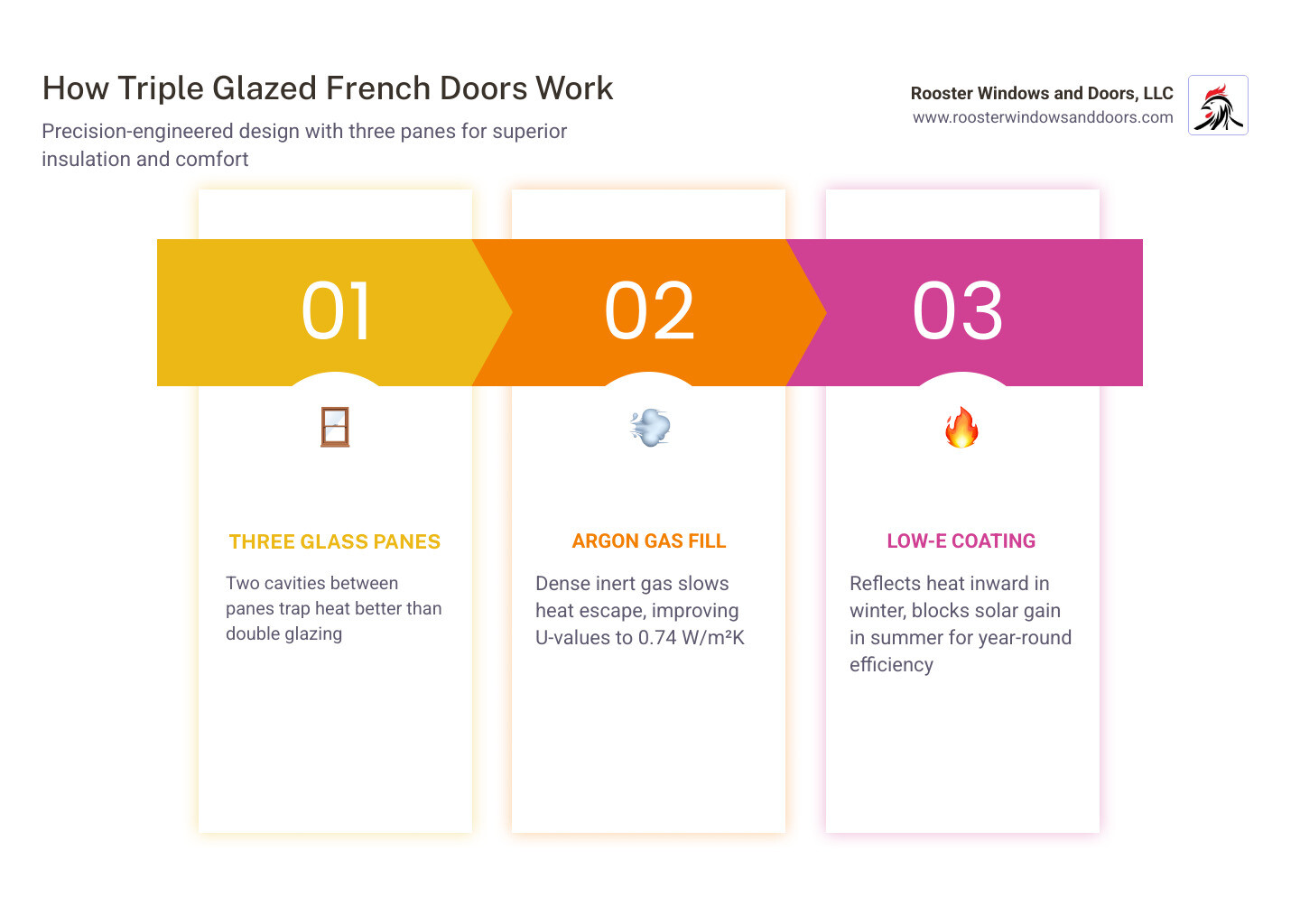
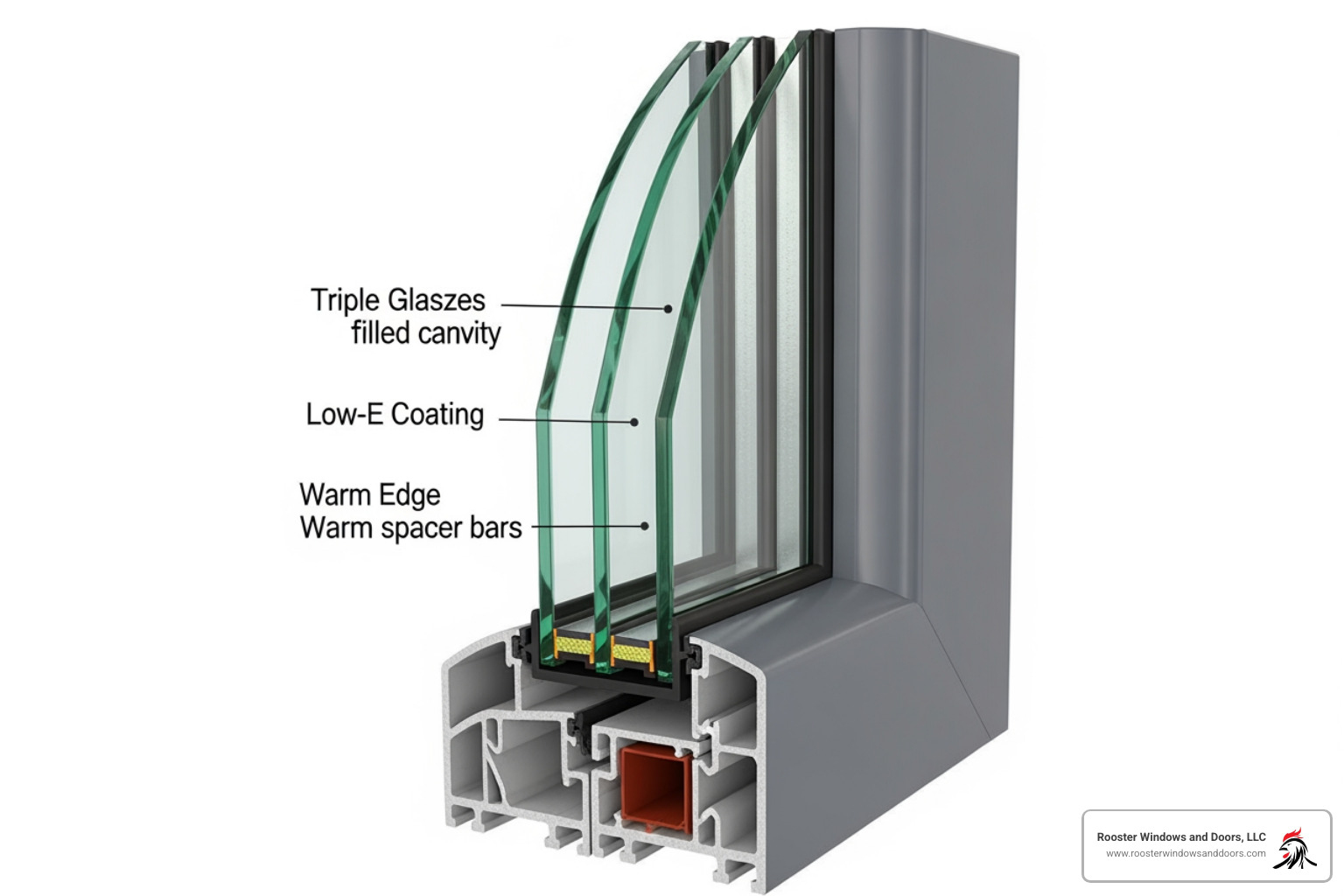
When we talk about french doors triple glazed, we aren’t just talking about adding a random piece of glass to a door. It is a precision-engineered system. A true triple-glazed unit consists of three panes of glass separated by two distinct cavities. These cavities are usually filled with an inert gas like argon or krypton, which is much denser than air and acts as a massive speed bump for heat trying to escape your living room.
To make these doors truly “high performance,” the glass is treated with a low-emissivity (low-E) coating. This microscopic metallic layer reflects heat back into your home during our freezing Illinois winters while bouncing solar heat away during those humid July afternoons. We also look for “warm edge” spacer bars—the little strips that hold the glass apart. Unlike old-school aluminum spacers that acted like cold-conductors, modern warm edge spacers are made of composite materials that prevent thermal bridging at the edges of the glass.
These doors are particularly suited for:
- Renovations in older homes: If you live in a classic home in Lake Forest or Highland Park, you know how drafty those old patio entrances can be.
- New builds and Passive Houses: For projects aiming for ultra-low energy consumption, triple glazing is often the baseline requirement.
- Large-scale patio access: Because French doors are essentially giant windows you can walk through, they represent a huge portion of your wall’s surface area. If that area isn’t well-insulated, your HVAC system will be working overtime.
What Are French Doors? They are a timeless design, but the modern triple-glazed version is a far cry from the thin, rattling wooden doors of the past.
How french doors triple glazed differ from standard double glazing
The jump from double to triple glazing isn’t just a 50% increase in glass; it’s a total shift in frame engineering. Standard double glazing typically achieves a U-value (a measure of heat loss) of around 1.4 W/m²K. In contrast, french doors triple glazed can reach as low as 0.8 W/m²K or even 0.74 W/m²K in high-end systems like the Liniar 90mm range.
The extra pane creates a second buffer zone. However, you can’t just “squish” three panes into a frame designed for two. If the cavity width is too small, the thermal and sound performance actually drops. High-quality triple glazing requires a wider glazing cavity—often 37mm (about 1.5 inches) or more—and a deeper frame profile to support the significant extra weight. We often see frames reaching 90mm in depth to accommodate the heavy-duty glass units and provide enough internal air chambers to stop convection currents.
Triple Pane Windows follow the same logic, providing a level of thermal resistance that double glazing simply cannot match when the temperature drops below zero.
When french doors triple glazed make the most sense
In the Chicago suburbs, we experience some of the most dramatic temperature swings in the country. From “Polar Vortex” winters to scorching summers, our homes are under constant thermal stress. Triple glazing makes the most sense if:
- Your home is exposed: If your backyard in Huntley or Woodstock faces open fields with high winds, triple glazing provides the structural rigidity and airtightness needed to stop that “whistling” wind sound.
- You live near noise: If your home is near the Metra lines or busy roads in Arlington Heights or Des Plaines, triple glazing can reduce outside noise by up to 30% compared to older double glazing.
- You want maximum comfort: If you like to sit near your patio doors to read or drink coffee, triple glazing eliminates that “cold spot” feeling where the glass feels like a block of ice.
The real benefits: insulation, quieter rooms, and better year-round comfort
The primary reason our customers in places like Libertyville and Mundelein choose french doors triple glazed is the sheer performance boost. When you compare a standard door (1.4 U-value) to a high-performance triple-glazed door (0.74 to 0.79 U-value), you are essentially cutting the heat loss through that opening in half.
Research shows that triple glazing can enhance energy efficiency by up to 50% in certain conditions. This isn’t just about the glass; it’s about the entire system. High-performance units like those from Norrsken or Liniar achieve whole-door Ud values below 0.80 W/m²K, meeting the strict criteria for Passive House standards.
| Feature | Standard Double Glazed | Triple Glazed French Doors |
|---|---|---|
| Typical U-Value | 1.4 W/m²K | 0.74 – 1.2 W/m²K |
| Noise Protection | Standard | Up to 42 decibels |
| Glass Thickness | ~24mm – 28mm | 36mm – 56mm |
| Condensation | Possible on inner pane | Virtually eliminated |
| Frame Depth | 70mm | 90mm |
Energy performance and lower heat loss
The secret to the energy performance of french doors triple glazed lies in the combination of Low-E glass, argon gas fill, and airtight seals. Modern frames often use a “floating mullion” design, which allows both doors to open fully without a central bar, yet still maintains a perfect seal when closed.
Patented bubble gaskets and multi-chambered frames (sometimes with up to six or more insulating air chambers) ensure that heat doesn’t bypass the glass through the frame itself. This level of insulation significantly lowers utility bills over the long term, making your home “future-ready” for increasingly strict energy codes.
Noise reduction and everyday comfort
Noise is a major factor in home comfort. French doors triple glazed offer noise protection up to 42 decibels—which is twice as effective as standard 70mm doors. This is a game-changer for homeowners in bustling areas like Evanston or Chicago.
By using different thicknesses of glass in the three panes (for example, a 4mm-3mm-4mm sandwich), the unit can disrupt different sound frequencies more effectively than a symmetrical double-glazed unit. This creates a “library quiet” atmosphere inside, even if the neighbors are mowing the lawn or the local traffic is peaking.
Security, durability, and weather resistance
Don’t let the elegant look of French doors fool you; these are built like tanks. Because triple-glazed units are heavy, the frames must be reinforced—often with galvanized steel—to prevent warping or sagging over time.
Security is also a top priority. Most modern french doors triple glazed come standard with high-security multi-point locking systems and hook locks. The glass itself is typically toughened safety glass, which is incredibly difficult to break. Additionally, features like trickle ventilation allow for controlled airflow without compromising the security or thermal integrity of the door.
What to check before you buy triple glazed French doors
Before you sign a contract, you need to look past the price tag and check the technical specifications. Not all triple glazing is created equal. Some manufacturers “squish” a third pane into a frame designed for double glazing, which results in smaller air gaps and diminished thermal performance.
Key things to look for include:
- Frame Material: uPVC is low-maintenance and highly insulating; timber offers classic aesthetics but requires more care; aluminum is sleek but needs a high-quality “thermal break” to prevent heat loss.
- Frame Depth: Look for a 90mm profile if you want the best performance. This depth allows for the thickest glass units (up to 56mm) and the best insulation.
- Hardware Quality: The hinges must be adjustable in multiple directions (up, down, left, right). Because triple-glazed doors are heavy, they may settle slightly after installation, and adjustable hardware allows for easy realignment.
- Drainage Systems: A pressure-equalized rainscreen system is superior to simple face seals. It ensures that any moisture that gets into the frame has a clear path to exit, preventing rot or internal damage.
Frame design matters as much as the glass
The frame is the skeleton of your door. For french doors triple glazed, we recommend multi-chambered uPVC profiles reinforced with steel. This provides “torsion control,” ensuring the door stays square and operates smoothly for decades.
We also look for triple weather seals. While most doors have two, a third “center” seal divides the gap between the sash and the frame, creating an extra barrier against wind and protecting the internal hardware from corrosive exterior air.
Choosing the right style, size, and specification
French doors are highly customizable. You can choose:
- Opening Direction: Inward opening is great for balconies; outward opening saves space inside your room.
- Thresholds: If you have family members with mobility issues, look for Part M compliant low thresholds that provide a seamless transition between inside and out.
- Aesthetics: From classic white uPVC to modern “Crittall-style” designs with slim sightlines, there is a style for every home.
French Windows can also be matched to your doors to create a cohesive look across your entire home.
French doors triple glazed vs sliding patio doors
The debate between French doors and sliding doors usually comes down to space and access.
- French Doors: Provide a 100% clear opening, which is perfect for moving furniture or hosting parties. They offer a classic, symmetrical look.
- Sliding Doors: Better for tight spaces where you don’t have room for a door to swing open. They often allow for larger panes of glass and wider views.
French Doors vs Sliding Doors is a choice that depends on your specific layout in your Cary or McHenry home.
Cost, value, and payback: are triple glazed French doors worth it?
Let’s talk numbers. In our experience, UK homeowners typically spend between £2,000 and £3,500 for the supply and installation of high-quality triple-glazed French doors. In the U.S. market, particularly in the Chicago area, costs can vary based on the material (fiberglass, steel, or uPVC) and the complexity of the installation.
While the upfront cost is higher than double glazing, the long-term value is significant. You aren’t just paying for glass; you are paying for:
- Reduced Energy Bills: The savings accumulate every single month for the 25+ year lifespan of the door.
- Resale Appeal: Energy efficiency is a massive selling point for modern homebuyers.
- Maintenance Savings: High-quality uPVC or fiberglass doors won’t rot, swell, or need painting.
What affects the total installed price
Several factors will influence your final quote:
- Size: Custom heights (up to 95 inches) or widths will increase the price.
- Material: Composite oak or high-grade fiberglass usually costs more than standard white uPVC.
- Structural Work: If we need to widen an existing opening or install a new lintel, the labor costs will rise.
- Glazing Spec: Moving from a standard 1.2 U-value unit to an ultra-efficient 0.74 unit involves a premium.
When paying more upfront is the smarter choice
If you plan on staying in your home for more than five years, the “extra pane” is almost always the smarter choice. This is especially true if you are trying to fix a specific problem like a drafty room or excessive street noise.
Double Glazed French Doors Are the Best Way to Stop the Draft, but triple glazing takes that protection to the next level. If you’re building a new home in a community like Gurnee or Waukegan, starting with triple glazing ensures you won’t need to upgrade again for decades.
Frequently Asked Questions About french doors triple glazed
Are triple glazed French doors really better than double glazed?
Yes, in terms of thermal performance and noise reduction. They offer a significantly lower U-value (around 0.8 vs 1.4) and can be up to 30% quieter. However, they are heavier and more expensive, so the “better” choice depends on your budget and how long you plan to stay in the home.
Will triple glazed French doors fit my existing opening?
In most cases, yes. While the frames are deeper (often 90mm), they are designed to fit standard residential apertures. During our initial survey, we check the structural integrity of your wall to ensure it can handle the extra weight of the triple-paned units.
Do triple glazed French doors need special installation or maintenance?
Installation must be precise. Because the doors are heavy, the frame must be perfectly level and square to prevent the glass from putting uneven pressure on the seals. Maintenance is minimal—standard cleaning of the glass and uPVC, and an occasional drop of oil on the hinges and locking points is usually all that’s required.
Conclusion: the extra pane pays off when performance matters
Investing in french doors triple glazed is about more than just aesthetics; it’s about creating a home environment that is quiet, warm, and secure. Whether you are in a high-wind area of Algonquin or a busy street in Schaumburg, the benefits of that third pane of glass are felt every single day.
At Rooster Windows and Doors, we specialize in high-quality, flawless installations across the entire Chicagoland area. We don’t just “fit” doors; we ensure they are engineered to perform for the long haul. If you’re looking for French doors inspiration and options or want to explore French window ideas and next steps, we are here to help you make the right choice for your home.
The extra pane isn’t just an “add-on”—it’s an investment in your home’s future. When performance matters, triple glazing is the gold standard.
