

What Are Picture Windows? A Clear Answer Before We Dive In
What are picture windows is one of the most common questions homeowners ask when exploring ways to bring more light and views into their home — and the answer is simpler than you might think.
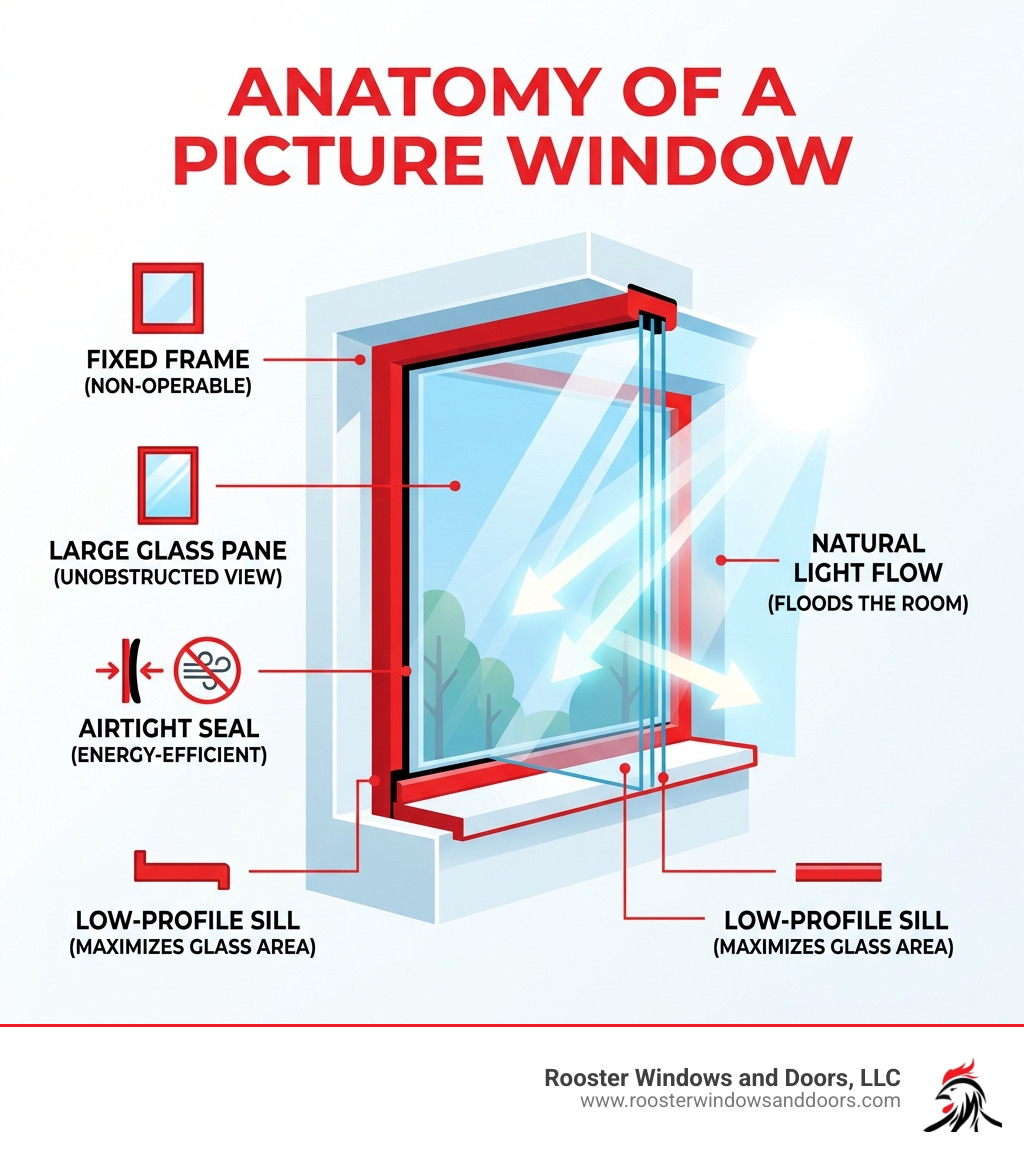
A picture window is a large, fixed-pane window that does not open. It is designed to give you an unobstructed, frame-like view of the outdoors while flooding your interior with natural light. Because it has no moving sashes, hinges, or hardware, it creates an airtight seal that makes it one of the most energy-efficient window styles available.
Here is a quick snapshot of what defines a picture window:
- Fixed and non-operable — it does not open or close
- Large glass surface — low-profile frames maximize the view
- No mullions or grilles (unless added for style) — clean, uninterrupted sightlines
- Highly energy-efficient — no gaps or moving parts to let air through
- Versatile — works as a standalone feature or combined with operable windows
- Available in many sizes and shapes — from standard rectangles to circles, arches, and custom forms
Picture windows are sometimes called fixed windows, fixed-pane windows, or fixed frame windows — these terms all refer to the same basic concept.
Think of it this way: a picture window frames your outdoor view the same way a painting frames a scene on a wall. That is exactly where the name comes from.
I’m Piotr Wilk, and over more than two decades of residential window installation across the Chicagoland area, I’ve helped hundreds of homeowners understand what are picture windows and how to use them effectively to transform a space. In the sections below, I’ll walk you through everything you need to know — from sizing and materials to energy performance and design combinations.
What Are Picture Windows and How Do They Work?
At its core, a picture window is a study in simplicity. Unlike a casement window that cranks out or a double-hung window that slides up and down, a picture window is stationary. It is “fixed” directly into the window frame. This lack of moving parts is exactly what allows these windows to reach sizes that would be structurally impossible for operable windows.
When we talk about how they work, we are really talking about how they perform. Because there are no sashes to move, there are no weatherstripping seals to wear down over time or gaps for the biting Chicago wind to whistle through. They work by acting as a permanent, transparent thermal barrier between your cozy living room and the Illinois elements.
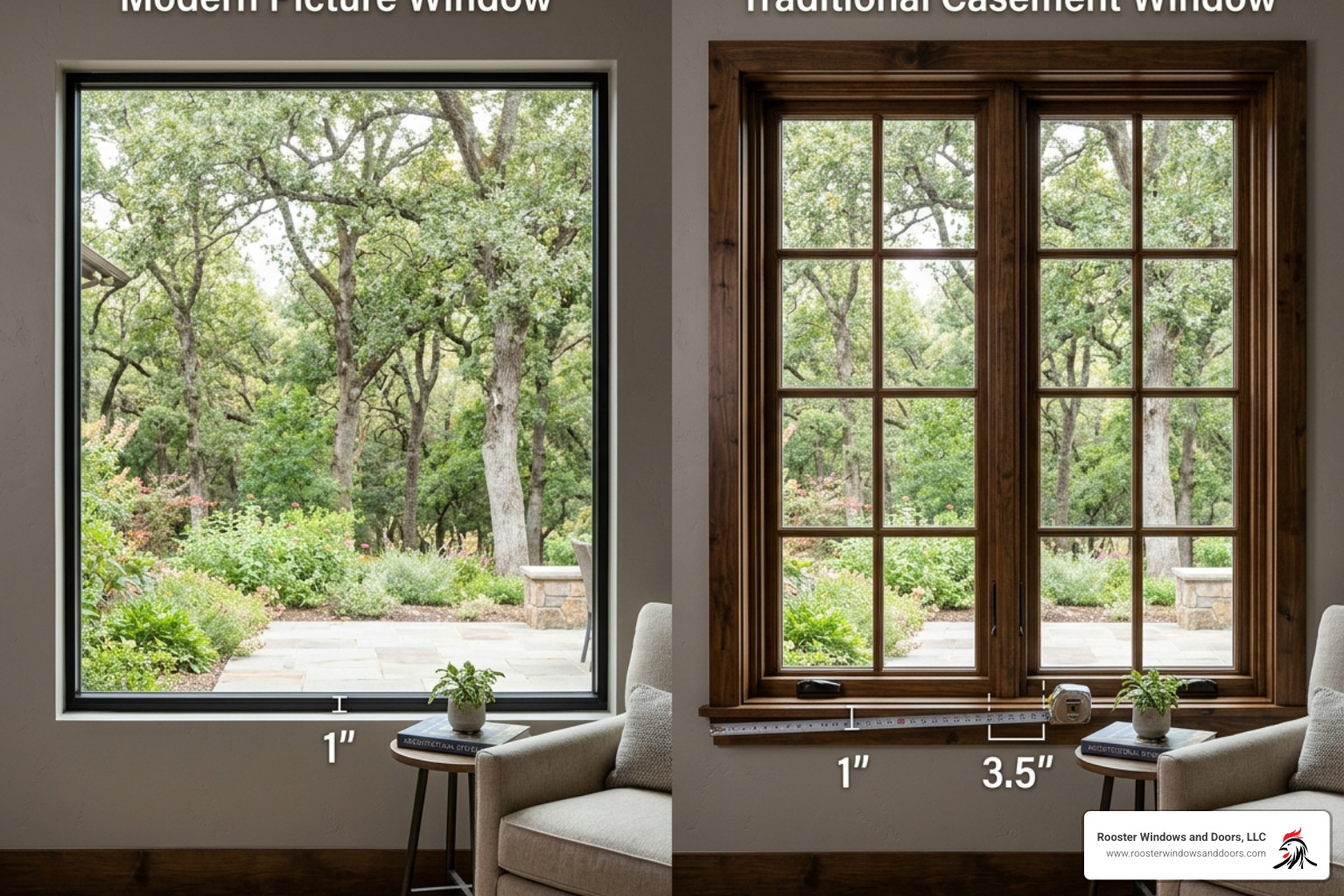
The design often features low-profile frames. In the industry, we call these “narrow sightlines.” The goal is to minimize the amount of wood, vinyl, or composite material you see so that the focus remains entirely on the glass. This makes them the ultimate choice for homeowners in places like Lake Forest or Naperville who want to showcase a manicured backyard or a lakeside view.
If you are looking for something truly unique for your home’s architecture, you can explore Custom Picture Windows to see how these fixed panes can be tailored to any opening.
Defining the Picture Window vs. Fixed Window
While people often use the terms interchangeably, there is a subtle professional distinction between a “picture window” and a “fixed window.”
A picture window typically features a very slim, low-profile frame. Its primary job is to maximize the glass area. It’s designed to stand alone as a focal point.
A fixed window, on the other hand, often has a thicker frame. Why? To match the profile of operable windows like casements or double-hungs sitting right next to it. If you have a row of windows and want them all to look identical from the curb, a fixed window uses a thicker “sash” frame so the glass lines up perfectly with the windows that actually open.
Common Placements for What Are Picture Windows
Where should you put them? In our experience installing windows from Elgin to Joliet, certain spots in a home just cry out for a picture window:
- Living Rooms: This is the classic choice. A large central picture window can act as the “anchor” for your furniture arrangement.
- Dining Areas: Nothing beats natural light during a Sunday brunch.
- Stairwells and Entryways: These are often “light-starved” areas. A tall, narrow picture window can turn a dark staircase into a bright architectural feature.
- Over the Kitchen Sink: If you don’t need to reach over the counter to open a window for a breeze, a picture window provides a massive, clear view of the kids playing in the yard while you do the dishes.
- Vaulted Ceilings and High Walls: In rooms with tall ceilings, we often install “transom” picture windows high up on the wall. Since you can’t reach them anyway, their inoperability isn’t a drawback—it’s an advantage for security and efficiency.
The Practical Benefits of Fixed-Pane Windows
Aside from the obvious beauty, there are hard-hitting practical reasons to choose a window that doesn’t open.
- Unmatched Security: Since there are no latches to jemmy and no sashes to lift, picture windows are arguably the most secure windows in your home. Short of breaking the glass, there is no way to “open” them from the outside.
- Superior Airtight Seal: Because the glass is glazed directly into the frame and doesn’t move, air infiltration is virtually zero.
- Boosted Home Value: According to a 2024 survey of U.S. realtors, homeowners who install high-quality brand-name windows often see a premium from buyers. They improve curb appeal and make interiors feel significantly larger and airier.
- Lower Cost for Size: Interestingly, picture windows are often the least expensive window type per square foot. Because they lack complex mechanical hardware and screens, you get more “glass for your buck” compared to a casement window of the same size.
Maximizing Energy Efficiency in What Are Picture Windows
In the Chicagoland climate, energy efficiency isn’t just a buzzword—it’s a survival tactic for your heating bill. Picture windows are the gold standard here.
Several models regularly make the Energy Star’s Most Efficient list. When selecting yours, look for a low U-factor (which measures how well the window keeps heat inside) and a high-performance glass package. For example, high-performance Low-E glass coatings can filter out up to 95% of harmful UV rays. This doesn’t just keep your home cooler; it prevents your furniture and hardwood floors from fading.
We often recommend filling the space between double or triple panes with Argon gas. This invisible gas is denser than air and acts as a powerful insulator, reducing thermal transmittance. In fact, some modern composite materials used in these frames have 700 times less thermal transmittance than aluminum, ensuring your home stays warm in the winter and cool during those humid Illinois summers.
Maintenance and Longevity
One of the best things about picture windows? You can practically forget about them. With no moving parts, there is nothing to oil, no hinges to tighten, and no tracks to vacuum out.
With quality vinyl or fiberglass frames, these windows can easily last 35+ years. Vinyl is particularly popular in our area because it resists rot, warping, and corrosion—essential for handling our extreme temperature swings. Cleaning is also simplified; since the exterior is one flat sheet of glass, a quick squeegee twice a year (usually in spring and fall) is all it takes to keep your view crystal clear.
Design Versatility: Sizes, Shapes, and Combinations
Don’t think you’re limited to a simple rectangle. The world of what are picture windows is surprisingly geometric. Because they are stationary, we can create them in specialty shapes like circles, arches, triangles, and even hexagons.
Popular Combinations for Ventilation
The biggest “con” of a picture window is the lack of airflow. The solution? The Combination Window.
We often design “window banks” where a large central picture window is flanked by two operable windows. This gives you the “big view” in the middle and the “big breeze” on the sides.
| Combination Type | Best For | Benefit |
|---|---|---|
| Picture + Casements | Living Rooms | Maximizes view with high airflow from the sides. |
| Picture + Awnings | Modern Homes | Allows for ventilation even during a light rain. |
| Picture + Double-Hung | Traditional Homes | Matches classic Chicago architecture while adding light. |
| “End Vent” Sliders | Wide Openings | A large fixed center with sliding sashes on both ends. |
Sizing Limitations and Custom Shapes
How big can you go? Solo fixed frames can reach impressive dimensions—up to 9 feet 4 inches wide by 8 feet high.
However, there is a technical rule we follow called the United Inch Limitation. For many high-end picture windows, the combined height and width cannot exceed 168 inches. For example, if you want a window that is 106 inches wide, the maximum height would be 62 inches (106 + 62 = 168). The minimum size is usually around 22 combined inches. This ensures the structural integrity of the glass and frame remains flawless over decades of use.
Material Selection and Customization Options
The frame material you choose dictates both the look and the performance of your window.
- Vinyl: The most popular choice in the Midwest. It’s affordable, low-maintenance, and offers great insulation.
- Fiberglass: Incredibly strong and can be painted. It has a very low expansion rate, meaning it won’t budge even when it’s -20°F outside.
- Wood: Offers a timeless, warm aesthetic for historic homes in places like Evanston or Arlington Heights.
- Fibrex® Composite: A specialized material that combines the strength of wood with the low maintenance of vinyl. It’s particularly noted for having 700 times less thermal transmittance than aluminum.
Glass and Grille Customization
You can further tailor your windows with:
- Triple-Pane Glass: Extra insulation for those particularly cold Northbrook winters.
- Decorative Grilles: While many people love the “no-grille” look for a modern feel, adding grilles can help a new window match a traditional Tudor or Colonial home.
- Privacy Glass: Great for bathrooms where you want the light but not the “view” from the neighbors.
Impact on Home Value and Curb Appeal
Replacing old, drafty windows with modern picture windows is one of the highest-return home improvements you can make. It modernizes the “face” of your home instantly. Whether you are in a mid-century modern in Schaumburg or a new build in Naperville, adding a panoramic glass feature creates an interior-exterior connection that buyers absolutely love. As we mentioned, realtors consistently report that quality windows like the ones we install provide a significant premium during resale.
Frequently Asked Questions About Picture Windows
Do picture windows open for ventilation?
No, by definition, picture windows are fixed and do not open. If you love the look but need a breeze, we recommend a combination unit where the central picture window is paired with operable casement or awning windows.
How much do picture windows typically cost in 2026?
Costs vary based on size, frame material, and glass options. A standard-sized vinyl picture window might start in the mid-hundreds, while a massive, custom-shaped fiberglass unit with triple-pane glass can reach several thousand dollars. Factors like labor and the number of windows also impact the final investment.
Are picture windows more energy-efficient than double-hung windows?
Yes, generally they are. Because they are permanently sealed and have no moving sashes, there are no air gaps. This makes them the most energy-efficient style on the market.
Conclusion
Understanding what are picture windows is the first step toward transforming your home into a bright, energy-efficient sanctuary. Whether you want to frame a stunning Illinois sunset or simply lower your monthly utility bills, these fixed-pane wonders offer a unique blend of beauty and brawn.
At Rooster Windows and Doors, LLC, we pride ourselves on providing high-quality, flawless installations across the entire Chicagoland area. From Libertyville to Aurora, we help homeowners choose the perfect materials and configurations to suit their specific needs.
If you’re ready to bring a new perspective to your home, Start your project with custom picture windows today. We look forward to helping you frame your world.
