

Engineering Excellence in Awning Impact Windows
When we talk about awning impact windows, we aren’t just talking about a window that looks nice; we are talking about a sophisticated piece of safety equipment. The engineering behind these units is what separates them from the standard windows you might find at a big-box hardware store.
The “impact” in the name comes primarily from the use of laminated glass. This isn’t your everyday single-pane glass. It consists of two layers of glass bonded together with a tough, clear plastic interlayer–usually Polyvinyl Butyral (PVB). If a heavy object, like a tree limb or wind-borne debris, hits the window, the glass may crack, but the PVB interlayer holds the fragments together. This prevents the “envelope” of your home from being breached, which is critical during high-wind events.
In regions with strict building codes, such as the High-Velocity Hurricane Zone (HVHZ), these windows must pass rigorous missile impact testing. This involves firing a 9-pound 2×4 stud at the glass at 50 feet per second. Only the strongest designs earn their Florida Product Approval (FPA) or similar certifications.
Furthermore, the structural integrity of the frame is measured by its Design Pressure (DP) rating. A higher DP rating means the window can withstand greater positive and negative wind pressure. Many of the high-end awning impact windows we install feature DP ratings ranging from +/-50 to over +/-65, meaning they can stay intact during Category 5 wind speeds exceeding 200 mph. Proper Window Installation is the final piece of this engineering puzzle, ensuring that the reinforced frame is anchored securely into your home’s structure to transfer those immense loads safely.
Superior Energy Efficiency in Awning Impact Windows
In the Chicagoland area, from Naperville to Evanston, we deal with extreme temperature swings. Awning impact windows are some of the most energy-efficient operable windows on the market today. Because they close by pressing the sash firmly against the frame (a compression seal), they have much lower air infiltration rates than sliding windows.
We recommend several Energy Efficient Window Upgrades to maximize your comfort:
- Low-E Glass Technology: This microscopic coating reflects infrared light (heat) while letting visible light through. It keeps the heat out during our humid Illinois summers and keeps the warmth inside during the freezing winters.
- Argon Gas Fill: The space between the glass panes is often filled with argon gas, which is denser than air and provides superior thermal insulation.
- Thermal Breaks: In aluminum frames, a thermal break–a non-conductive material placed between the interior and exterior sections of the frame–prevents heat from “bridging” through the metal.
- UV Radiation Blocking: The laminated glass required for impact resistance naturally blocks up to 99% of harmful UV rays, protecting your furniture, rugs, and artwork from fading.
For the ultimate in thermal performance, many homeowners are opting for Triple Pane Windows, which add a third layer of glass and a second insulating air space to further reduce energy loss.
Customizing Your Awning Impact Windows for Home Style
Safety doesn’t have to be boring. Modern awning impact windows offer a wealth of customization options to match the architectural style of your home, whether you live in a traditional house in Lake Forest or a modern condo in downtown Chicago.
When considering an Awning Window Replacement, you can choose from various frame colors beyond standard white. Bronze, black, and silver anodized finishes are popular for creating a sleek, contemporary look. Decorative grilles (or “muntins”) can be placed between the glass panes to give the appearance of divided lites without making the glass harder to clean.
You can also customize the glass itself. Privacy frosting is a great choice for bathrooms, while various glass tints (gray, bronze, or green) can further reduce solar heat gain and add a touch of sophistication. We also offer high-performance screening options like BetterVue, which provides 20% better airflow and 10% clearer views than standard screens. For more help choosing the right look, check out A Comprehensive Guide to the Best Window Replacement Options.
Material Selection and Coastal Performance

Choosing the right material for your awning impact windows depends on your budget, aesthetic preference, and the specific environment of your home. While we don’t have salt spray from the ocean in Illinois, we do deal with road salt and high humidity near Lake Michigan, making corrosion resistance a factor.
| Feature | Aluminum Impact Windows | Vinyl Impact Windows |
|---|---|---|
| Durability | Exceptional; won’t warp or rot | Very high; resists chipping and peeling |
| Maintenance | Low; requires occasional cleaning | Very low; virtually maintenance-free |
| Frame Profile | Thinner; allows for more glass | Thicker; multi-chambered for insulation |
| Coastal Performance | Excellent with powder-coat finishes | Excellent; impervious to salt and moisture |
| Thermal Value | Good (with thermal breaks) | Excellent (naturally insulating) |
Aluminum is favored for its incredible strength-to-weight ratio. It allows for thinner frames and larger expanses of glass. To prevent corrosion, high-quality aluminum frames are powder-coated, often tested to withstand 3,000+ hours of continuous salt spray.
Vinyl is the “energy efficiency king.” High-quality vinyl impact windows feature multi-chambered frames that trap air, providing a natural barrier against heat transfer. Vinyl is also impervious to moisture, meaning it will never rust, pit, or corrode, making it a “set it and forget it” option for many homeowners in the Chicagoland area.
Financial Benefits and Installation Standards
Investing in awning impact windows is one of the few home improvements that pays for itself in multiple ways. First, there are the immediate energy savings. By reducing air leakage and blocking solar heat, these windows can reduce your monthly cooling costs by up to 35%.
Second, many insurance providers offer substantial premium discounts for homes equipped with impact-resistant openings. In some regions, homeowners save between $300 and $1,350 annually on their insurance. Furthermore, independent real estate analyses suggest that impact-resistant windows can increase your property’s resale value by 3% to 7%. For a deeper dive into the numbers, see our Window Replacement Cost Ultimate Guide. Most homeowners see a full return on investment within 4 to 6 years.
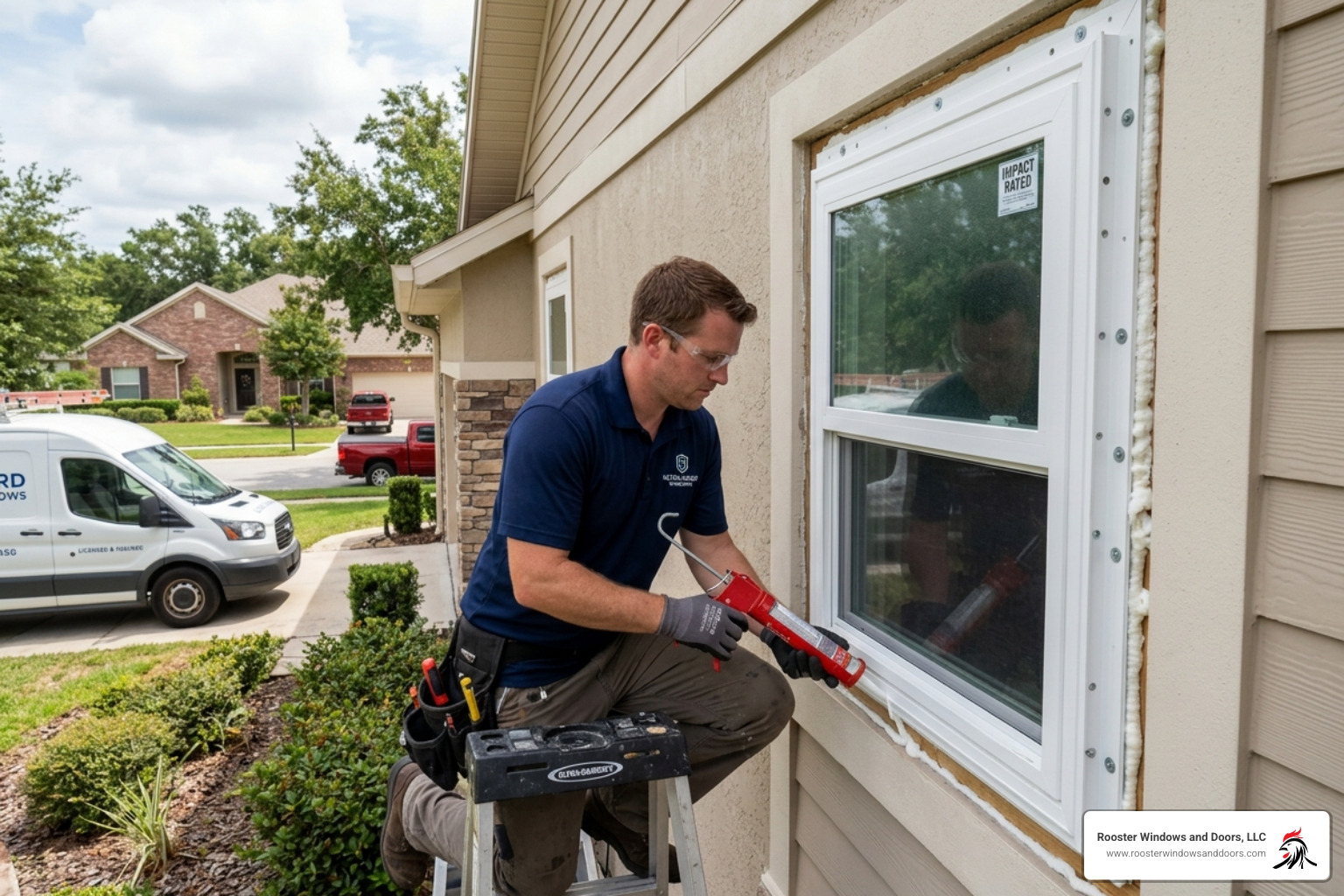
However, these benefits are only realized if the installation is done correctly. At Rooster Windows and Doors, we adhere to the highest installation standards. This includes:
- Precision Sealing: Using high-grade sealants and EPDM foam weather stripping to ensure no air or water can penetrate the rough opening.
- Code Compliance: Ensuring every window meets local Illinois building codes and manufacturer specifications.
- Professional Anchoring: Using the correct fasteners and spacing to ensure the window remains in the wall even under extreme pressure.
Frequently Asked Questions about Awning Windows
Can awning impact windows be left open during rain?
Yes! This is one of their most beloved features. Because they are hinged at the top and open outward from the bottom, the sash acts like a little roof (or an awning) over the opening. This sheds rainwater away from your home while still allowing for natural ventilation. It’s perfect for letting in a cool breeze during a summer afternoon shower. However, we always recommend closing and locking them during major storms or high-wind events to ensure full protection.
How much noise reduction do impact-resistant awning windows provide?
If you live near a busy street in Chicago or under a flight path near O’Hare, you will love awning impact windows. The same PVB interlayer that protects you from debris also acts as a sound dampener. Combined with the thick laminated glass and the tight compression seals of the awning design, these windows can reduce exterior noise by 35 to 40 decibels. It’s often the first thing homeowners notice after installation—the house suddenly feels much quieter and more peaceful.
What maintenance is required for windows in coastal environments?
Even in the Chicagoland area, your windows need a little love to last 30+ years. We recommend washing the frames with mild soap and water at least twice a year to remove dust and environmental residue. Every 3–4 months, you should lubricate the hinges and the crank mechanism with a silicone-based lubricant. Finally, inspect the weatherstripping annually to ensure it remains pliable and provides a tight seal.
Conclusion
At Rooster Windows and Doors, LLC, we believe that your home should be your sanctuary—safe, quiet, and beautiful. Awning impact windows offer a unique blend of modern style and heavy-duty protection that standard windows simply cannot match. Whether you are looking for the sleek lines of aluminum or the high-performance insulation of vinyl, we provide the expert craftsmanship and energy-efficient options you need for long-term peace of mind.
Ready to upgrade your home’s safety and style? Schedule a consultation for your window project with our team today, and let us help you find the perfect fit for your Chicagoland home.
