

Bay vs Bow Windows: What’s the Difference at a Glance
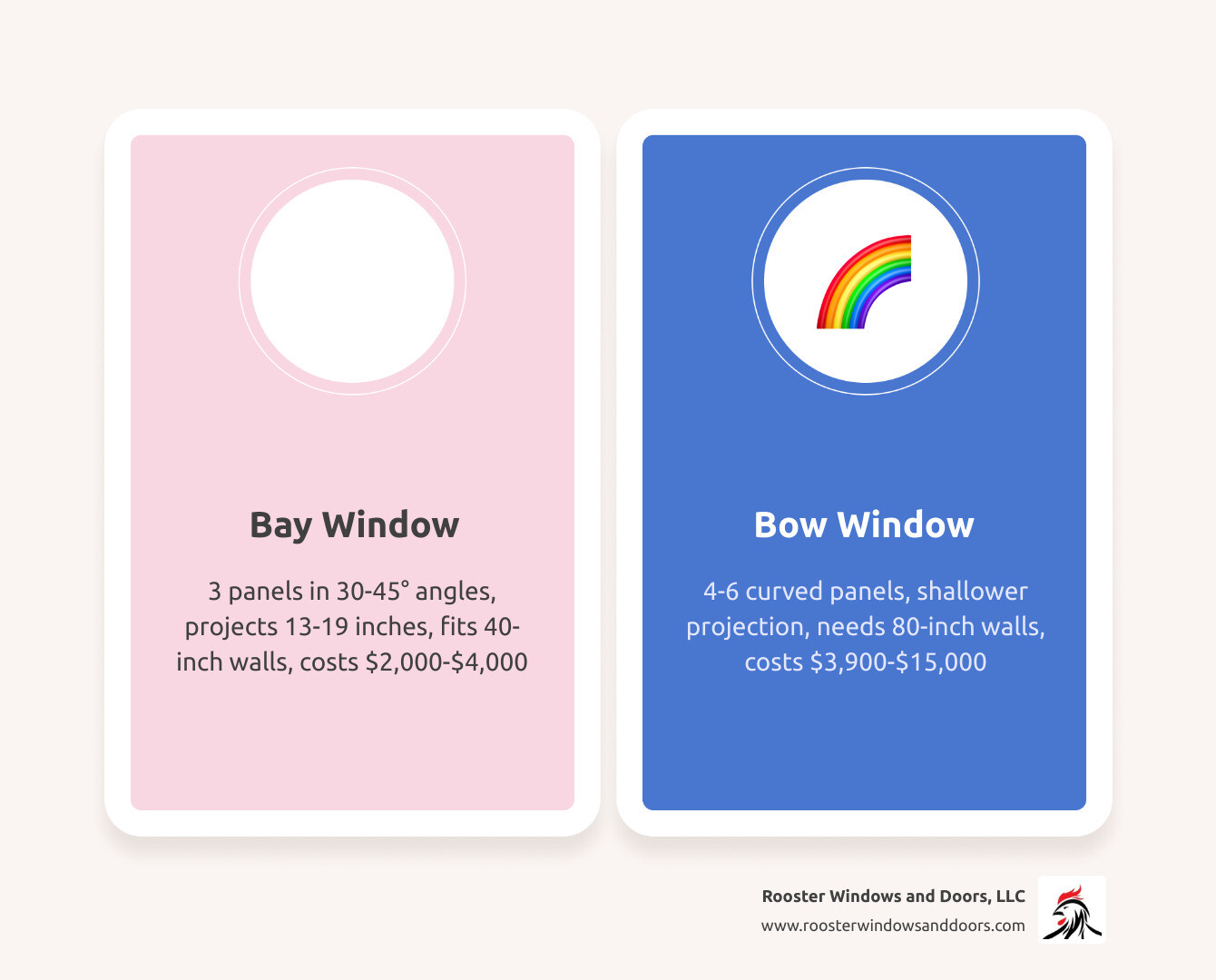
Bay vs bow windows are both multi-panel windows that project outward from your home’s exterior wall — but they differ in shape, panel count, space requirements, and cost.
Here’s a quick side-by-side comparison:
| Feature | Bay Window | Bow Window |
|---|---|---|
| Number of panels | 3 | 4 to 6 |
| Shape | Angular | Curved |
| Minimum wall space | 40 inches | 80 inches |
| Projection depth | 13–19 inches | Less than bay |
| Average cost | $2,000–$4,000 | $3,900–$15,000 |
| Best architectural fit | Modern, transitional, craftsman | Victorian, colonial, traditional |
In short: Bay windows are angular, more affordable, and fit smaller wall spaces. Bow windows are curved, more expensive, and need more room — but deliver a softer, more panoramic look.
If you’ve ever stood outside a home and struggled to tell those projecting windows apart, you’re not alone. Most homeowners can’t distinguish them at a glance — yet the choice between the two affects your budget, your interior layout, and the entire feel of your home’s exterior.
I’m Piotr Wilk, and with over two decades of hands-on window installation experience across the Chicagoland area, I’ve helped hundreds of homeowners navigate exactly this bay vs bow windows decision. Read on for everything you need to choose confidently.
Defining the Styles: What Are Bay and Bow Windows?
To the untrained eye, any window that sticks out from the side of a house might look the same. However, as we move through April 2026, homeowners in the Chicagoland area are increasingly looking for specific architectural “statements.” Understanding the fundamental definitions is the first step in making that statement correctly.
What is a Bay Window?
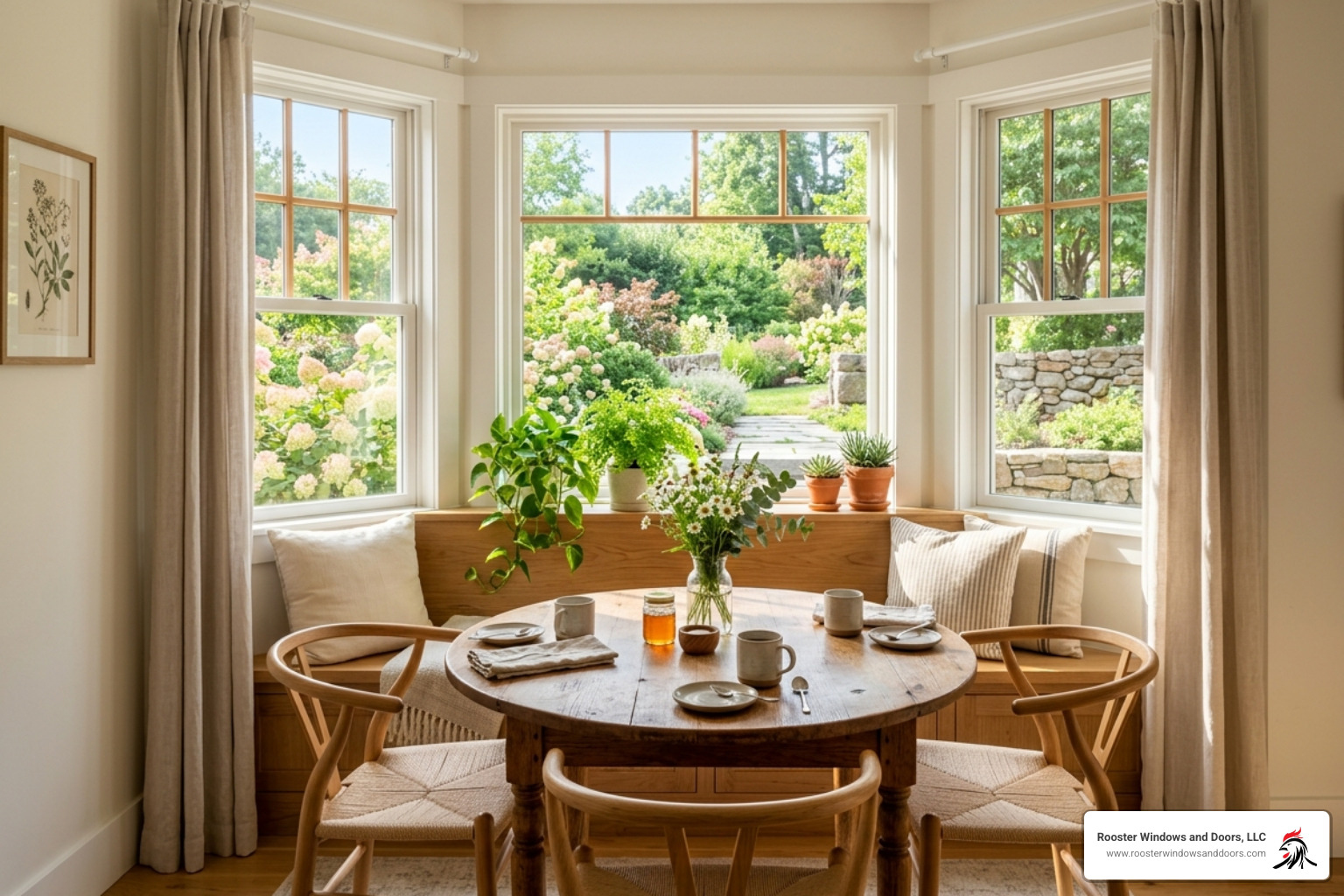
A bay window is a combination of three windows of varying widths that extend outward from an exterior wall. The classic configuration features a large, fixed “picture” window in the center, flanked by two smaller windows—usually double-hung or casement styles—set at an angle. This creates a distinct, boxy, or polygonal shape.
Because they project further out than their counterparts, they are famous for creating “alcoves” inside the home. Think of that perfect sun-drenched breakfast nook or a cozy reading bench. You can find more info about bay window options to see how these three-panel beauties can transform a flat wall into a functional retreat.
What is a Bow Window?
If a bay window is a sharp, angular hexagon, a bow window is a gentle, sweeping arc. Often referred to as “compass windows,” bow windows typically consist of four, five, or six window panels of equal size. These panels are joined at small angles (usually around 10 degrees) to create a curved appearance rather than a sharp corner.
According to research on Bay Vs. Bow Windows: Which Are Best for You?, bow windows are essentially a specialized, more complex evolution of the bay window. They offer a panoramic view that feels more like a “wall of glass” and can even be wrapped around the corner of a building to create a turret-like effect.
Key Structural and Design Differences Between bay vs bow windows
When we sit down with homeowners in Libertyville or Naperville, the conversation usually moves from “how it looks” to “how it fits.” The structural requirements for these two styles are vastly different.
Space and Projection
One of the most critical factors is the amount of wall space you have available. A bay window is relatively compact; it requires a minimum of 40 inches of flat wall space. Because of its sharp 30-degree or 45-degree angles, it projects significantly further from the house—usually between 13 and 19 inches. This deep projection is what provides that extra interior floor space or “bay” for a seat.
Conversely, a bow window is a wide-format feature. You generally need at least 80 inches of horizontal wall space to accommodate the gentle curve of 4 to 6 panels. While it is much wider, it doesn’t “stick out” as far as a bay window, making it a better choice if you have a narrow walkway or driveway right outside the window.
Structural Support and Installation
Because these windows hang off the side of your house, they can’t just be “popped in” like a standard double-hung. They are heavy. For years, these windows required bulky wooden knee braces underneath for support.
However, modern engineering has given us the steel-cable suspension system. Since the late 80s, we’ve been able to use high-tension cables attached to the home’s framing above the window to “hang” the unit securely. This allows for a much cleaner look on the exterior. We also pay close attention to corner connectors and weatherstripping; with so many joints between panels, professional sealing is the only way to prevent the drafty Chicago winters from creeping in.
Cost Comparison and Material Impact
Let’s talk numbers. In the current April 2026 market, the price gap between bay vs bow windows remains significant due to the complexity of the units and the amount of glass involved.
Typical Price Ranges
- Bay Windows: Generally cost between $2,000 and $4,000 for a standard installation. They are more budget-friendly because they only involve three panels and simpler framing.
- Bow Windows: These are the “luxury” option, averaging $3,900 but easily climbing to $15,000 for high-end, six-lite configurations with custom finishes.
Material Matters
The frame material you choose impacts both your upfront Bay Window Installation cost and your long-term energy bills.
- Aluminum: The most affordable entry point, averaging around $850 per window unit, but less thermally efficient in Illinois winters.
- Vinyl: A crowd favorite in the Chicagoland area. It’s low-maintenance, energy-efficient, and costs roughly $1,132 per unit.
- Wood: The gold standard for aesthetics in historic homes (like those in Lake Forest), but carries a higher price tag of $1,244+ per unit and requires more upkeep.
- Fiberglass: The most durable and stable option, coming in at around $1,286 per unit. It handles the extreme temperature swings of the Midwest without expanding or contracting.
Glass is the most expensive component of these windows. Because bow windows have more panels and more glass surface area, they will always be the costlier investment.
Choosing the Right Fit for Your Home’s Architecture
Choosing between bay vs bow windows isn’t just about the checkbook; it’s about the soul of your home.
Architectural Style
As noted in The Difference Between Bay and Bow Windows, the “vibe” of your home should dictate the window.
- Bay Windows have a modern, angular, and bold silhouette. They fit perfectly in transitional, cottage, craftsman, or contemporary homes. Their sharp lines complement the “clean” look that many homeowners in Schaumburg and Aurora are currently chasing.
- Bow Windows are the epitome of Victorian and Colonial elegance. Their soft, rounded curve is a hallmark of traditional architecture. If you want your home to look like a grand estate on the East Coast or a heritage home in Evanston, the bow window is your best friend.
Room-Specific Placement
Where are you putting it?
- The Kitchen: A “box bay” window is a classic choice above a kitchen sink. It gives you a deep ledge for herbs and plants while opening up the view of the backyard.
- The Living Room: If you want a focal point that “wows” guests, a large bow window creates a panoramic view that brings the outside in.
- The Bedroom: Bay windows are perfect for creating a private reading nook or a built-in bench with storage underneath.
Frequently Asked Questions about Bay and Bow Windows
Can you replace a bay window with a bow window?
Yes, you can, but it isn’t a simple “swap.” Because a bow window is typically much wider (requiring 80 inches vs. the bay’s 40 inches), your contractor will likely need to resize the structural opening in your wall. This involves moving studs and potentially adjusting the header (the beam that supports the weight above the window). If you are considering this, we recommend a Bow Window Replacement consultation to ensure your home’s structural integrity remains intact.
Do bay vs bow windows increase home value?
Absolutely. In the 2026 real estate market, these are considered “luxury” upgrades. They increase curb appeal, making the home look more expensive from the street. Inside, they add perceived square footage and flood the home with natural light. While a bow window might offer a slightly higher ROI due to its “wow factor,” both styles are top-tier choices for increasing a home’s resale value.
What are the best window treatments for bay vs bow windows?
Standard blinds won’t work here. Because each panel is set at an angle, you need individual treatments for each pane of glass.
- Cellular Shades: Excellent for energy efficiency and fit snugly within the frames.
- Roman Shades: Add a touch of soft fabric and elegance, especially in dining rooms.
- Custom Shutters: These provide the best light control and privacy, though they are a larger investment. The trick is to mount the treatments to each individual sash so you can still operate the windows for ventilation.
Conclusion
Whether you choose the sharp, modern lines of a bay window or the elegant, sweeping curve of a bow window, you are making a transformative investment in your home. These aren’t just windows; they are architectural features that change how you experience your living space.
At Rooster Windows and Doors, LLC, we pride ourselves on providing flawless, energy-efficient installations across the Chicagoland area—from Libertyville to Joliet and everywhere in between. We understand the structural demands of the Illinois climate and the aesthetic needs of our local neighborhoods.
Ready to see the difference for yourself? Schedule your bow window replacement today and let our team help you find the perfect fit for your home’s unique style. Don’t get bent out of shape over the decision—let us handle the heavy lifting and the precision engineering for a finish that’s nothing short of perfection.
