
What Are Window Wells for Basement Windows (and Why Do They Matter)?
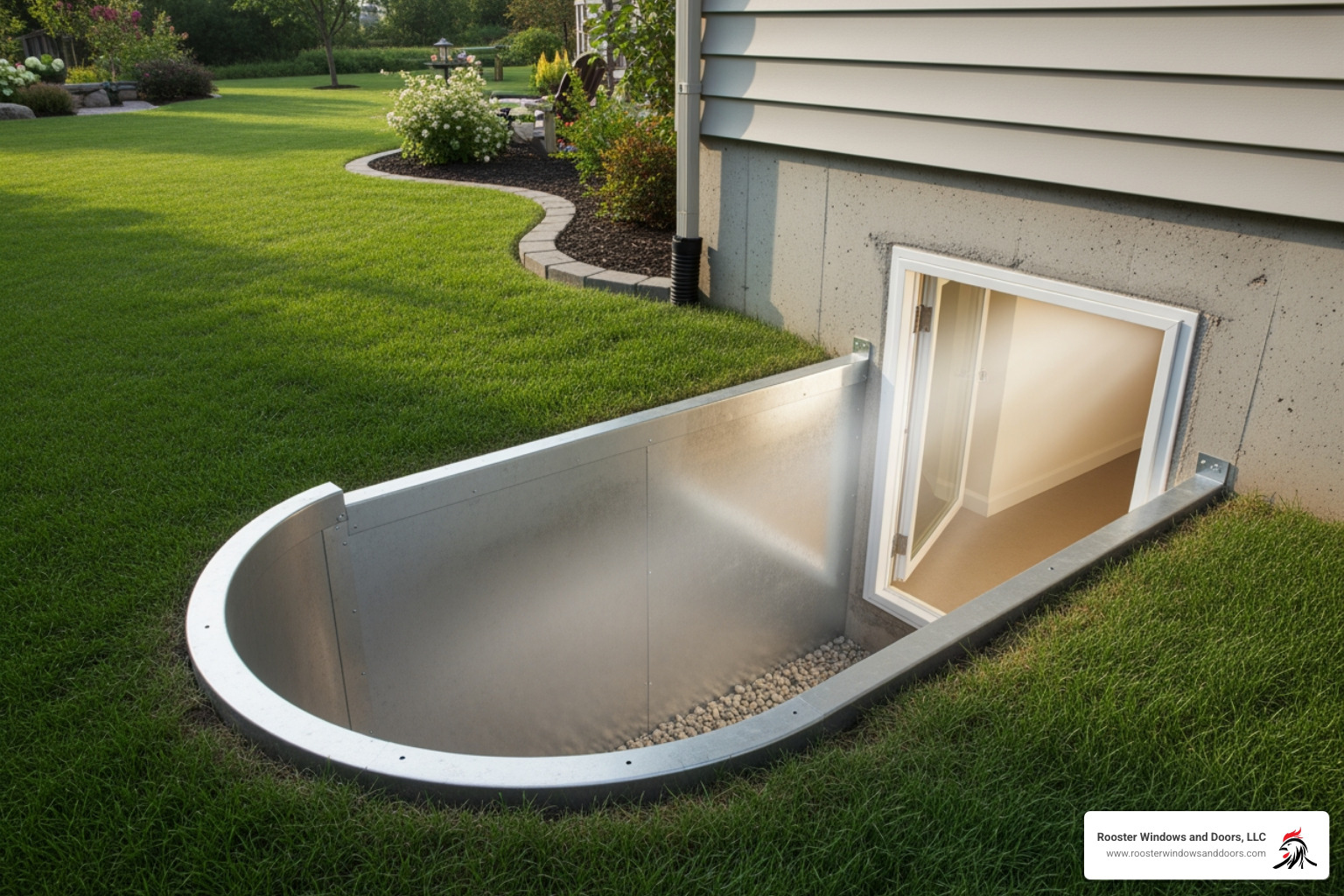
Window wells for basement windows are curved or rectangular barriers installed against your foundation wall, creating an open space that lets light, air, and emergency access reach below-grade windows.
Here’s a quick overview of what you need to know:
| Topic | Quick Answer |
|---|---|
| What they do | Allow light, ventilation, and emergency egress for below-grade basement windows |
| When required | Any basement bedroom or habitable space must have an egress-compliant window well |
| Key materials | Galvanized steel, high-density polyethylene, fiberglass, decorative stone |
| Egress size (US) | Minimum 36″ projection, widths from 42″–80″, up to 96″ deep |
| Egress size (Canada) | Minimum 760 mm (30 in) clearance, opening area of at least 0.35 m² |
| Typical cost | $1,000–$5,500 depending on size, material, excavation, and drainage |
| Main risks without one | Water intrusion, poor ventilation, code violations, no emergency exit |
Most homeowners don’t think about window wells until there’s a problem — water pooling against the foundation, a dark basement that feels like a cave, or a building inspector flagging a code violation. By then, the fix is more expensive and more disruptive than it needed to be.
The good news: the right window well does a lot more than just meet code. It brings natural light into your basement, protects your foundation from moisture, improves air quality, and — when chosen thoughtfully — can genuinely add to your home’s curb appeal.
I’m Piotr Wilk, and with over two decades of residential window and door installation experience across the Chicagoland area, I’ve helped countless homeowners navigate the selection and installation of window wells for basement windows to meet both safety codes and aesthetic goals. In the sections below, I’ll walk you through everything you need to make a confident, informed decision.
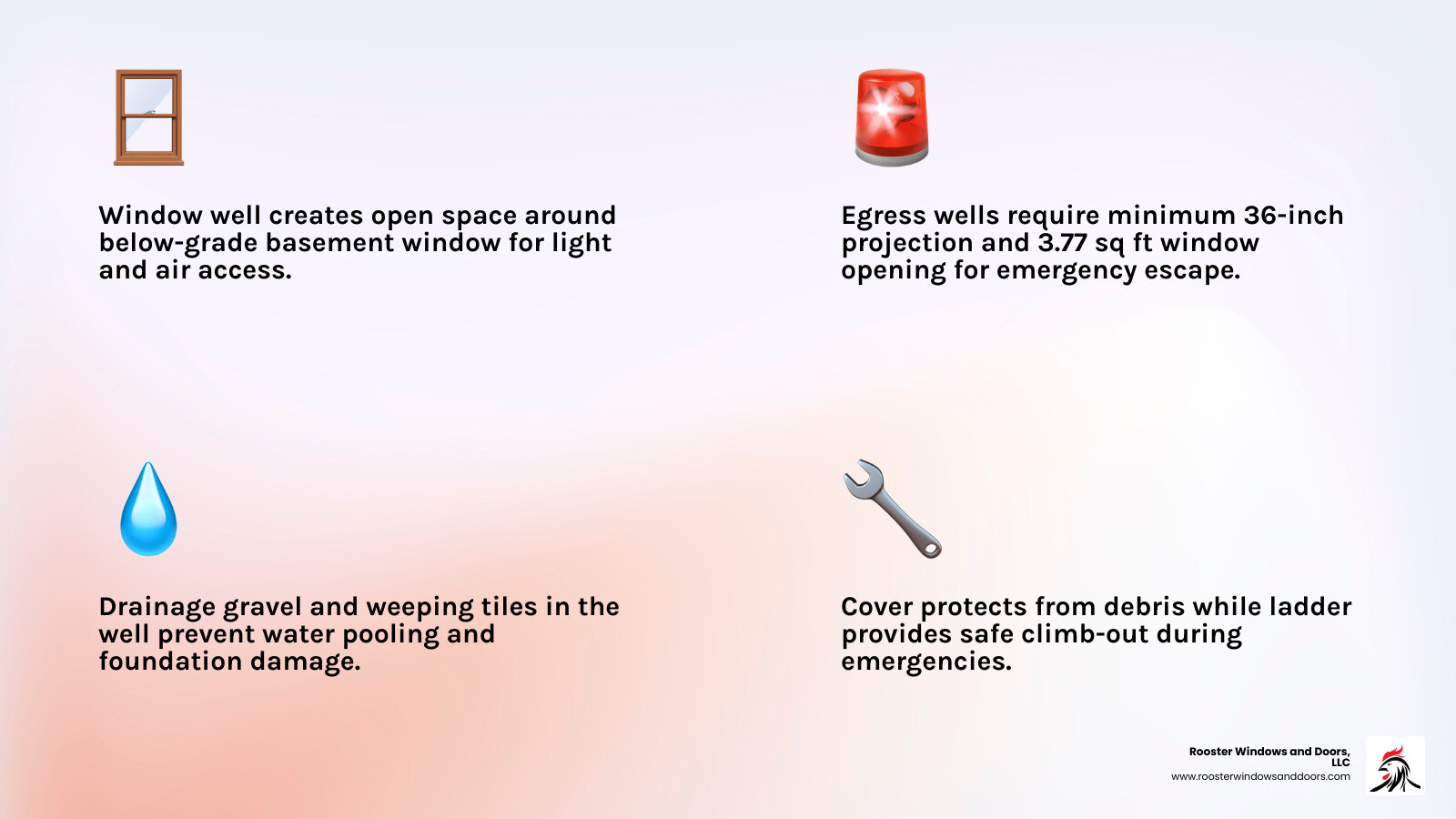
Essential window wells for basement windows terms:
Understanding Window Wells for Basement Windows and Their Benefits
If you have a basement with windows that sit at or below the ground level, you’ve likely seen those half-moon structures outside. While they might look like simple “holes in the ground,” they are actually hardworking components of your home’s exterior. At Rooster Windows and Doors, we see them as the unsung heroes of basement living.
Natural Light and Air Circulation
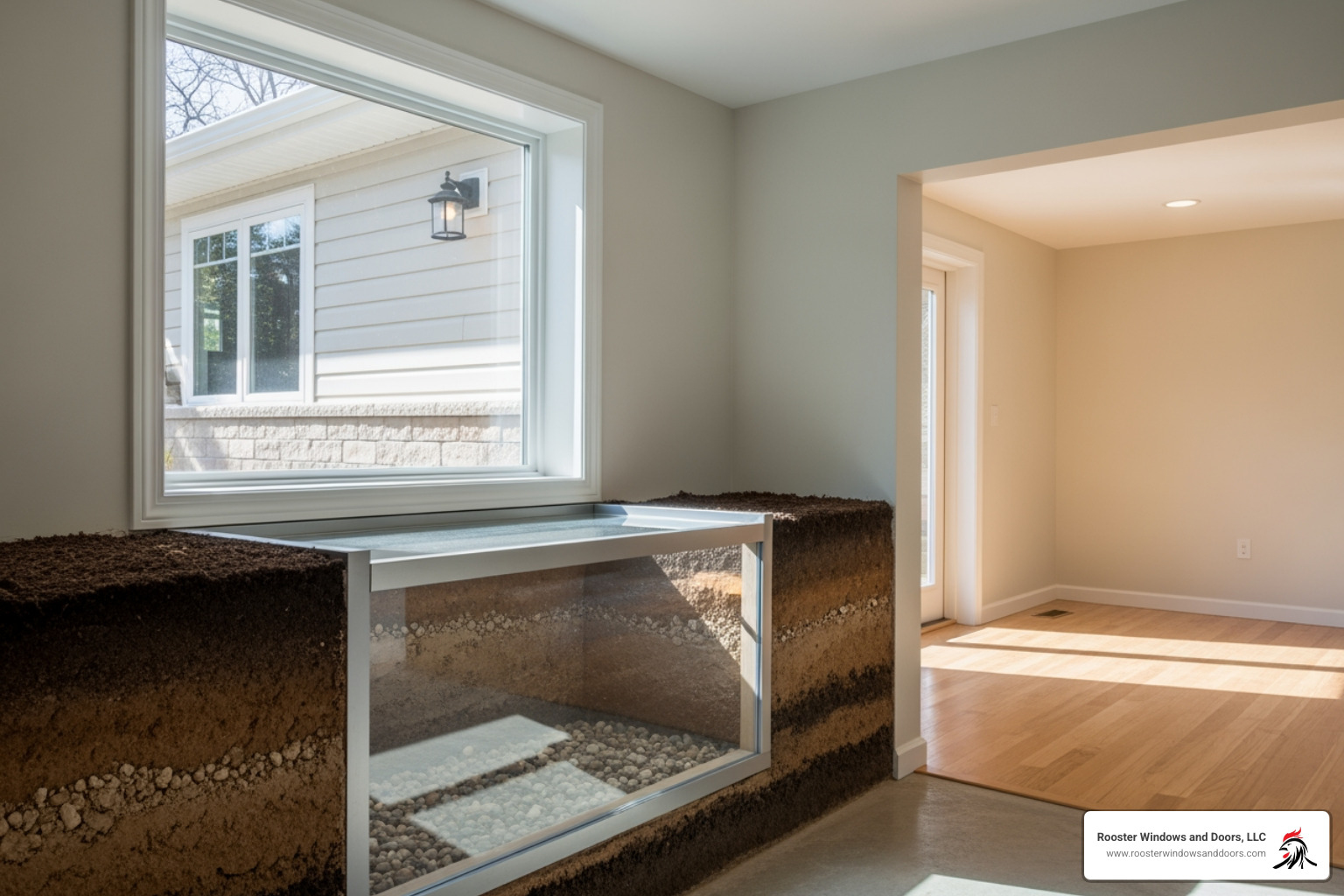
The most immediate benefit of a well-designed window well is the transformation of a dark, “dungeon-like” basement into a bright, inviting living space. By holding back the soil, the well allows sunlight to reach deep into the room. This is especially effective when paired with reflective white liners or light-colored materials. Beyond light, window wells facilitate essential ventilation. According to our Basement Windows Complete Guide, proper airflow prevents stale air and reduces the “basement smell” often caused by stagnant humidity.
Moisture Prevention and Foundation Protection
Water is the primary enemy of any foundation. Without a proper well, soil sits directly against your Basement Window, leading to wood rot, rusted frames, and eventually, leaks. A high-quality window well acts as a dam, keeping damp earth away from the glass and frame. When integrated with a drainage system, it diverts rainwater away from the foundation, significantly reducing the risk of basement flooding during the heavy storms we often see in the Chicagoland area.
Energy Efficiency
It might surprise you, but a well-installed window well contributes to your home’s thermal performance. By keeping the window area dry and providing a buffer against the elements, it helps maintain more consistent indoor temperatures. Modern wells paired with energy-efficient windows can lower your heating and cooling costs by reducing drafts and moisture-related heat loss.
Building Codes and Egress Requirements
When we talk about window wells for basement windows, safety isn’t just a suggestion — it’s the law. If you are converting your basement into a bedroom, home office, or any habitable space, local building codes (typically based on the International Residential Code or IRC) require an “egress” window.
An egress window is essentially an emergency exit. For this exit to be functional, the window well must provide enough space for a person to climb out and for a firefighter in full gear to climb in.
Key Egress Dimensions (US Standards)
To be IRC compliant, your egress window well must meet these minimums:
- Horizontal Dimensions: Minimum of 9 square feet.
- Projection: The well must extend at least 36 inches out from the foundation wall.
- Ladder/Steps: If the well is deeper than 44 inches, it must have a permanent ladder or steps. These steps cannot encroach more than 6 inches into the required 36-inch projection.
For a deeper dive into these regulations, check out our Egress Window Installation Complete Guide.
Choosing Egress Window Wells for Basement Windows
When selecting an Egress Window Well, you aren’t just looking for a piece of metal. You are looking for a safety system. We recommend wells with integrated steps or “Grip/Step” designs. These built-in features are often safer and more durable than bolt-on ladders.
Dimensions for these wells vary widely to suit different window sizes, with widths ranging from 42″ to 80″ and depths up to 96″. Choosing the right size ensures that when you perform your Egress Window Installation, the final result is fully code-compliant and safe for your family.
Types of Window Well Materials and Designs
Gone are the days when your only choice was a piece of rusty corrugated metal. Today, we offer a wide variety of materials that balance durability with aesthetics.
| Material | Durability | Aesthetics | Key Features |
|---|---|---|---|
| Galvanized Steel | High | Basic | Cost-effective, often comes with 30-year warranties. |
| High-Density Polyethylene (Plastic) | High | Moderate | Maintenance-free, won’t rust or rot, lightweight. |
| Fiberglass/Resin | Very High | High | Can mimic stone textures, extremely strong, resists collapsing. |
| Decorative Stone/Concrete | Very High | Excellent | Provides a high-end look, adds value to the home. |
Galvanized Steel and Metal Wells
These remain a popular choice due to their strength and price point. Modern galvanized steel is treated to resist rust for decades. For non-egress areas like utility rooms, compact semi-circle or elongated metal wells are efficient and unobtrusive.
Modular and Polyethylene Systems
Products like the StakWEL® Window Wells allow for modular stacking. This is perfect for deep foundations where you need to match a specific height. Being made of high-density polyethylene, they are maintenance-free and impervious to soil chemicals.
Aesthetic Window Wells for Basement Windows and Curb Appeal
If you want your basement to feel like an extension of your upper floors, consider decorative options. RockWell Window Wells feature a stone-like texture that looks and feels like real masonry. These one-piece rigid structures are UV-protected and rust-proof.
You can further enhance the look by:
- Planter Designs: Some wells, like the ScapeWEL®, feature a terraced design that allows you to plant flowers or shrubs directly into the well.
- Reflective Finishes: White-coated steel reflects more light into the basement than darker materials.
- Lighting: Adding waterproof LED strips inside the well can create a beautiful glow at night, making the basement feel less like a basement and more like a garden-level suite.
Integrating these designs with your Windows for Basement project can significantly boost your home’s market value.
Installation Process and Cost Factors
Installing window wells for basement windows is a labor-intensive process that requires precision. While it might look like a DIY weekend project, the complexities of drainage and structural integrity usually call for professional expertise.
The Step-by-Step Process
- Site Assessment: We check for underground utility lines and evaluate the soil type and slope of your yard.
- Excavation: We dig a hole significantly larger than the well to allow for a proper drainage base. This often involves disposing of several cubic yards of soil.
- Drainage System: This is the most critical step. We typically install a drainage pipe that connects to your home’s weeping tile system or a sump pump. A thick layer of washed gravel is added to the bottom to facilitate fast water runoff.
- Securing the Well: The well is bolted to the foundation using heavy-duty masonry anchors and sealed with high-grade caulking to prevent soil from seeping behind the liner.
- Backfilling: We fill the exterior of the well with gravel and soil, tamping it down to prevent future settling.
What Affects the Price?
The Egress Window Installation Cost typically ranges from $1,000 to $5,500. Factors that influence your quote include:
- Excavation Depth: Deeper wells require more digging and more material.
- Material Choice: Decorative stone-look wells cost more than standard galvanized steel.
- Drainage Complexity: Connecting to an existing weeping tile system is more labor-intensive than a simple gravel pit.
- Concrete Cutting: If we are enlarging a window for egress, the cost of diamond-blade concrete sawing is a significant factor.
For a detailed breakdown of what to expect, see Your Step-by-Step Guide to Egress Window Installation.
Maintenance, Common Problems, and Protective Covers
A window well is only as good as its maintenance. Neglected wells can quickly become a liability.
Common Problems and Solutions
- Debris Accumulation: Leaves, grass clippings, and trash can clog your drainage layer. Regularly clear out your wells to ensure water can reach the drain.
- Clogged Drains: If water stands in your well after a rain, your drain is likely blocked. You may need to replace the top layer of gravel or snake the drain line.
- Weed Growth: Soil that washes into the well can sprout weeds. Using a solid-bottom well or a heavy gravel layer helps prevent this.
- Liner Separation: Over time, the well may pull away from the foundation. We recommend checking the seals annually and recaulking if necessary.
The Importance of Protective Covers
We cannot overstate the importance of Covers for Basement Windows. A high-quality cover provides several benefits:
- Safety: Prevents children, pets, and wildlife from falling into the well.
- Cleanliness: Keeps out rain, snow, and wind-blown debris.
- Security: Adds an extra layer of protection against intruders.
Options include clear polycarbonate covers that allow 100% light transmission or heavy-duty safety grates. For egress wells, the cover must be easily removable from the inside without the use of tools, keys, or special knowledge.
As you plan for the future, keeping an eye on these components is part of a smart Basement Window Replacement Guide 2026 strategy.
Frequently Asked Questions about Window Wells
How do I keep water from filling up my window well?
The key is a three-pronged approach:
- Drainage: Ensure you have a functional drain pipe connected to your weeping tiles.
- Covers: Use a Window Well Cover to keep rain from entering the well directly.
- Grading: Ensure the ground around the well slopes away from the foundation and that your gutters are clean and discharging water at least 5-10 feet away from the house.
Do all basement windows require a window well?
Not necessarily. If your basement windows are entirely above the “finished grade” (the ground level), you don’t need a well. However, if any part of the window is at or below the ground, a well is essential to prevent soil contact and water damage.
What is the difference between egress and non-egress wells?
Size and accessibility. A non-egress well is designed solely for light and ventilation and is usually much smaller (often only 24 inches in projection). An egress well is a life-safety device; it is much larger (minimum 36-inch projection) and must include a way to climb out, such as a ladder or steps.
Conclusion
At Rooster Windows and Doors, LLC, we believe that your basement shouldn’t feel like an afterthought. Whether you are in Libertyville, Naperville, or right in the heart of Chicago, we provide high-quality, energy-efficient installations that prioritize your family’s safety and your home’s beauty.
From navigating complex egress codes to selecting the perfect decorative stone finish, our team brings professional craftsmanship to every project. Don’t settle for a dark, damp basement or a safety hazard.
If you are looking for the best Basement Window Replacement Contractors in the Chicagoland area, we are here to help. Contact our experts for a basement window consultation today and let’s transform your basement together.
