

Why Knowing How to Clean a Double Hung Window Makes the Job Easy
Knowing how to clean a double hung window correctly saves you time, prevents damage, and gets you a streak-free result every time. Here’s the quick version:
- Unlock the window and raise the bottom sash a few inches
- Press the tilt latches inward and pull the bottom sash toward you
- Lower the top sash a few inches, press its tilt latches, and tilt it in
- Clean the top sash first — exterior glass, then interior — then repeat for the bottom sash
- Return the top sash first, snap it into the track, then do the same for the bottom sash
- Lock the window when done
That’s the core process. The rest of this guide covers the right tools, cleaning solutions, track and frame care, and what not to do.
Double-hung windows are one of the most popular window styles in American homes — and for good reason. Their tilt-in sashes let you clean both sides of the glass from inside your home. No ladders. No risky reaching out of upper-story windows.
But plenty of homeowners still struggle with streaks, stuck sashes, or dirty tracks because they skip a few key steps. This guide walks you through the whole process, start to finish.
I’m Piotr Wilk, and with over 20 years of hands-on experience installing and servicing windows in the Chicagoland area, I’ve seen every common mistake homeowners make when learning how to clean a double hung window. Understanding how your window works mechanically is the foundation for cleaning it safely and effectively — which is exactly what we’ll cover next.

Easy how to clean a double hung window glossary:
Essential Tools and Solutions for a Streak-Free Shine
Before you even touch the window lock, you need to gather the right supplies. Using the wrong tools is the fastest way to turn a quick cleaning job into a frustrating afternoon of chasing lint and smears. We recommend a “less is more” approach when it comes to chemicals, but a “more is better” approach when it comes to the quality of your cloths.
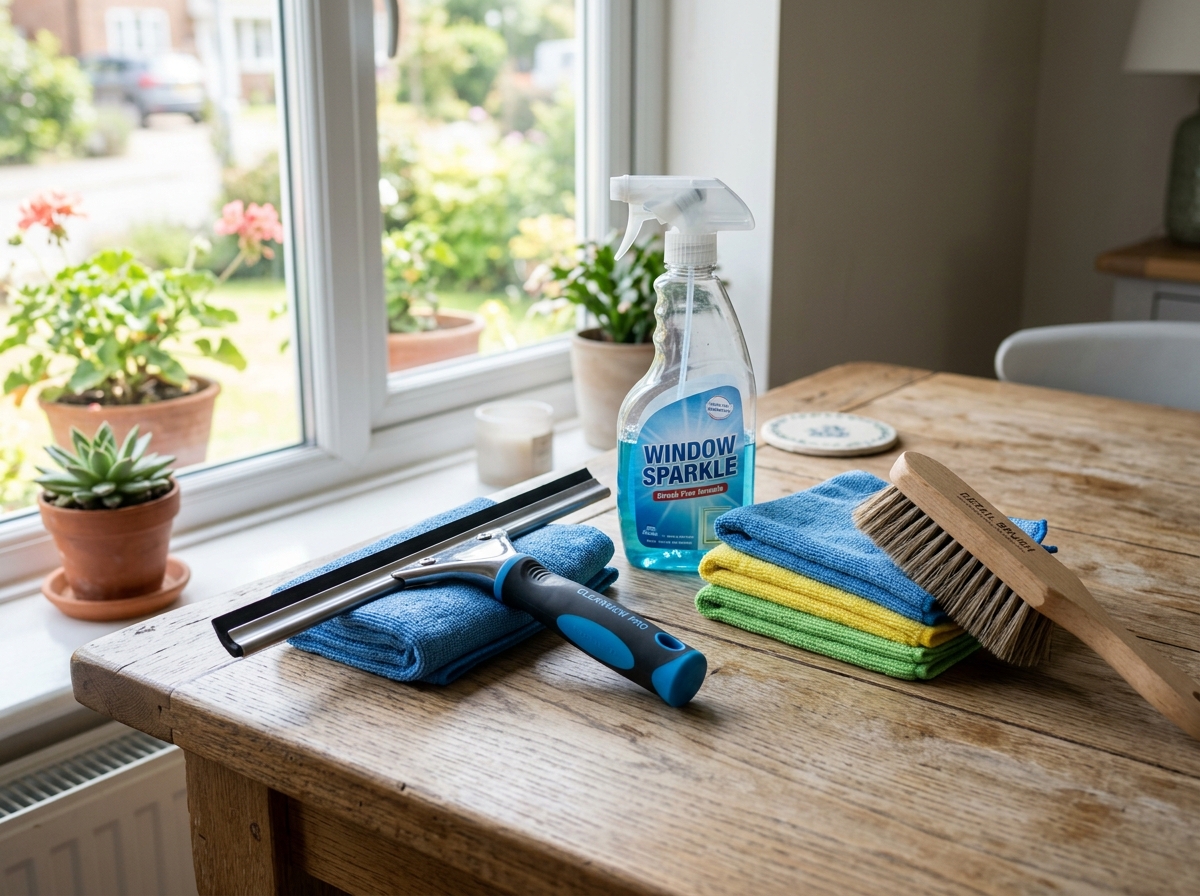
To get professional results, we suggest having these items ready:
- Microfiber cloths: These are the gold standard. Unlike paper towels, they don’t leave behind tiny fibers or lint.
- Squeegee: If you have large panes of glass, a squeegee with a fresh rubber blade is the secret to that “invisible glass” look.
- Vacuum with brush attachment: Essential for cleaning out the tracks and sills before you introduce any liquids.
- Soft-bristled brush: A clean paintbrush or an old toothbrush works wonders for tight corners and hardware.
- Bucket and spray bottle: For mixing and applying your solutions.
Proper Window Maintenance starts with the right chemistry. While there are many commercial products on the market, some of the best results come from simple ingredients you likely already have in your pantry.
Homemade Solutions vs. Commercial Cleaners
Many homeowners in Chicago and the surrounding suburbs ask us if they should buy specialized sprays or stick to DIY mixes. The truth is, both can work, but you must avoid anything with heavy ammonia if you have vinyl frames or specialized glass coatings.
| Feature | Homemade Vinegar Mix | Ammonia-Free Commercial Spray |
|---|---|---|
| Main Ingredients | Distilled water, White vinegar | Specialized surfactants |
| Streak Resistance | High (if using distilled water) | Moderate to High |
| Cost | Very Low | Moderate |
| Scent | Vinegar (dissipates quickly) | Usually “Fresh” or Citrus |
| Best For | Heavy grime and hard water | Quick touch-ups |
Our Pro Recipe for Streak-Free Glass: Mix one part distilled white vinegar with ten parts warm distilled water. If your windows are particularly greasy (common in kitchens), add two drops of mild dish soap. For a faster drying time that helps prevent streaks on hot days, you can add a tablespoon of rubbing alcohol to the mix. To mask the vinegar scent, a few drops of lemon or lavender essential oil work beautifully.
Materials to Avoid
In our years of providing Modern Double Hung Windows, we’ve seen well-intentioned cleaning do permanent damage. Never use the following:
- Abrasive pads or steel wool: These will cause microscopic scratches that make the glass look cloudy over time.
- Razor blades: While tempting for removing paint specks, one wrong angle can permanently gouge the glass or slice through the weatherstripping.
- Ammonia-based products: These can damage the finish on vinyl frames and degrade the seals in Vinyl Double Hung Windows.
- Power washers: Never use a pressure washer on your windows. The high pressure can blow out the seals, leading to foggy glass (broken seals) and water damage inside your walls.
Step-by-Step Guide: How to Clean a Double Hung Window
Now that your toolkit is ready, it’s time to get to work. The magic of the double-hung design is the tilt-in feature. This allows you to stay safely inside while cleaning the exterior glass.
First, clear the area. Remove any blinds, shades, or curtains that might get in the way. If you have interior grilles (the decorative grids), remove those gently by lifting them away from the glass.
- The Dry Run: Start by vacuuming the tracks, sills, and the frame. If you apply wet cleaner to a dusty track, you’ll just create a muddy mess that’s harder to clean.
- Unlock and Prep: Unlock the window. Lift the bottom sash about 3 to 4 inches. This is a critical step—most tilt latches won’t engage if the sash is sitting all the way at the bottom.
- Engage Tilt Latches: Locate the small sliding buttons (tilt latches) on the top rail of the bottom sash. Slide them toward the center of the window.
- Tilt the Bottom Sash: Gently pull the top of the sash toward you. It should swing inward. Pro Tip: Do not let the sash hang unsupported. Rest it on a sturdy chair or have a partner hold it at a 90-degree angle. Tilting it further than 90 degrees can put undue stress on the balance system.
- Tilt the Top Sash: Slide the top sash down about 6 inches. Locate its tilt latches (usually on the very top of the sash) and pull it toward you until it rests on the bottom sash.
If you run into trouble here, check our Double Hung Window Repair Complete Guide for troubleshooting tips on stuck mechanisms.
Mastering the Tilt-In Feature for Exterior Access
The reason many homeowners search for how to clean a double hung window is to avoid the dreaded ladder. When both sashes are tilted in, you have full access to the exterior glass of the top sash and the exterior glass of the bottom sash.
Some modern windows use “wash assist tabs” instead of sliding latches. If your window has these, you’ll slide the tabs into the track to release the sash. Regardless of the hardware, the goal is the same: interior access to exterior surfaces. This is especially vital for residents in multi-story homes in areas like Evanston or Naperville, where exterior ladder work can be dangerous.
The Best Order for How to Clean a Double Hung Window
To prevent double work, follow this specific order: Top sash first, exterior glass first.
- Why the top sash? If you clean the bottom sash first, water and cleaner from the top sash will inevitably drip down and ruin your hard work.
- Exterior first: The outside of the window is almost always dirtier. Cleaning it first allows you to see the remaining smears on the interior glass more clearly.
The Technique:
- Spray your solution onto your microfiber cloth (not directly onto the glass) to avoid over-spray on the wood or vinyl frames.
- Wipe the glass in a zig-zag motion, starting from the top and working your way down.
- Use a squeegee for a final pass if desired. Wipe the squeegee blade with a dry cloth after every single stroke to prevent “ghost streaks.”
- Buff the glass with a fresh, dry microfiber cloth. If you see a streak, breathe on the glass to create a bit of moisture and buff it out quickly.
Cleaning Frames, Tracks, and Screens
A clean pane of glass looks terrible if it’s surrounded by a filthy frame. Furthermore, gunk in the tracks can lead to hardware failure.
The Tracks and Sills
Once the sashes are tilted in, you have a clear view of the jamb liners (the side tracks). Use your vacuum brush to get the loose bugs and dust out. For stubborn dirt, use a soft-bristled brush dipped in a mix of warm water and mild detergent.
Pay close attention to the weep holes. These are small holes on the exterior bottom of the frame designed to let water drain out. If these are clogged with dirt or mulch, water can back up and cause wood rot or mold. Poke a small wire or a toothpick through them to ensure they are clear.
The Screens
You can’t truly master how to clean a double hung window without addressing the screens. Screens act like filters, catching pollen and dust before they hit your glass.
- Remove the screen (see our guide on How to Remove a Double Hung Window Screen).
- Take it outside and gently hose it down.
- Use a soft brush and soapy water to scrub away bird droppings or stuck-on debris.
- Let them dry completely before reinstalling. Reinstalling wet screens will just cause water spots on your freshly cleaned glass.
Maintaining Hardware and Smooth Operation
While the window is open, take a moment to inspect the hardware. If the locks feel “gritty” or the sashes are hard to slide, it’s time for a little TLC.
- Polish Hardware: Use a damp cloth to wipe down locks and handles.
- Lubricate: Apply a very light coat of silicone-based lubricant to the tracks. Do not use WD-40 or oil-based lubricants, as these attract dust and will eventually gum up the works.
- Check the Balance: If a sash feels heavy or won’t stay up, the balance system might need adjustment. Our Double Hung Windows Complete Guide explains how these tension systems work.
Frequently Asked Questions about How to Clean a Double Hung Window
How often should double-hung windows be cleaned?
For most homeowners in the Chicagoland area, we recommend a thorough cleaning twice a year—once in the spring to remove winter salt and grime, and once in the fall to clear out summer pollen and dust. If you live near a busy road in Chicago or close to the lake where salt spray is an issue, you may want to do a quick exterior wipe-down every three months. Consistent Window Maintenance extends the life of your seals and frames.
What should I do if my window sash won’t tilt in?
If you pull the tilt latches and the window won’t budge, don’t force it. Usually, this is caused by one of two things:
- The sash isn’t raised high enough to clear the frame.
- There is debris wedged in the track. Try vacuuming the side tracks thoroughly. If it still won’t tilt, the sash might be “out of square,” meaning the frame has shifted. In this case, consult our Double Hung Window Repair Complete Guide or call a professional to avoid breaking the glass.
Is it safe to clean second-story windows from the inside?
Yes! That is the primary benefit of the double-hung design. However, safety still matters. Always ensure the sash you are cleaning is properly supported. Never lean your body weight against a tilted sash, as it is only held in by the pivot pins at the bottom. If you have very large, heavy windows, it’s helpful to have a second person assist with holding the sashes while you wipe. For more tips on those hard-to-reach spots, check out How to Clean Outside Windows You Cannot Reach.
Conclusion
Mastering how to clean a double hung window is about more than just aesthetics; it’s about protecting your investment. By using the tilt-in feature correctly, choosing the right microfiber tools, and keeping your tracks clear of debris, you ensure your windows remain easy to operate and energy-efficient for decades.
If you find that your windows are foggy between the panes, drafty even when locked, or the frames are showing signs of rot, cleaning might not be enough. At Rooster Windows and Doors, LLC, we specialize in providing high-quality, flawless, and energy-efficient installations across the Chicagoland area—from Joliet to Waukegan and everywhere in between.
Whether you need a Double Hung Window Repair or you are ready to Upgrade Your View, we offer a wide variety of Double Hung Windows to suit your home’s unique style and needs. Keep those views clear, and don’t hesitate to reach out to us for your next home improvement project!
