

The Real Difference Between Single Hung vs Double Hung Windows (And Why It Matters)
Single hung vs double hung window choices come down to four key factors: how they open, how you clean them, how much they cost, and how well they insulate your home.
| Feature | Single Hung | Double Hung |
|---|---|---|
| Sashes that open | 1 (bottom only) | 2 (top and bottom) |
| Easier to clean | No (top requires outdoor access) | Yes (both tilt inward) |
| Typical cost per window | $100 – $400 | $150 – $650 |
| Better ventilation | No | Yes |
| More energy efficient | Slightly (fewer moving parts) | Comparable with modern seals |
| Best for upper floors | No | Yes |
The difference sounds simple. But choosing the wrong type for your home can cost you money, comfort, and headaches down the road.
Both window styles are extremely popular in Chicagoland homes. They look almost identical from the street. But they work very differently — and those differences matter a lot depending on where the window goes, who lives in your home, and what your budget looks like.
I’m Piotr Wilk, and over more than two decades of installing windows across Lake, Cook, and McHenry County, I’ve helped hundreds of homeowners navigate the single hung vs double hung window decision for every room in the house. In this guide, I’ll walk you through everything you need to know to make the right call.
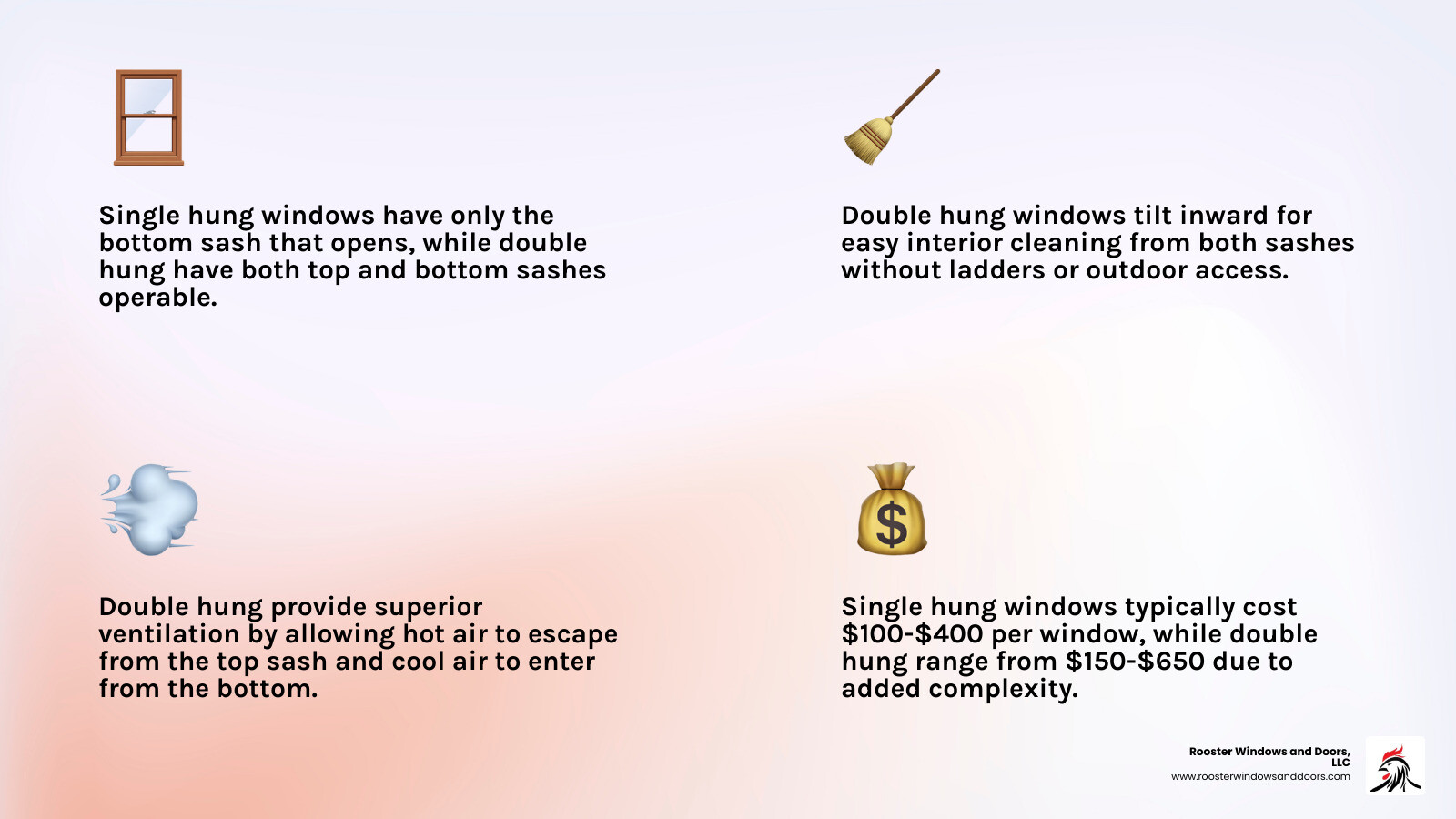
Quick single hung vs double hung window terms:
Understanding the Single Hung vs Double Hung Window
When we talk about “hung” windows, we are referring to the sashes—the moveable parts of the window that hold the glass. In a vertical sliding window, these sashes move up and down. While both styles look remarkably similar from a distance, the Single-Hung vs. Double-Hung Window Differences lie entirely in how many of those sashes actually move.
For homeowners in Illinois, from the historic streets of Evanston to the newer developments in Naperville, these windows are the bread and butter of residential architecture. They offer a traditional aesthetic that fits almost any home style, whether you’re looking at a classic Victorian or a modern Craftsman. The frames can be made from various materials, but vinyl windows remain a top choice for our customers due to their durability, low maintenance, and excellent thermal properties.
What is a Single Hung Window?
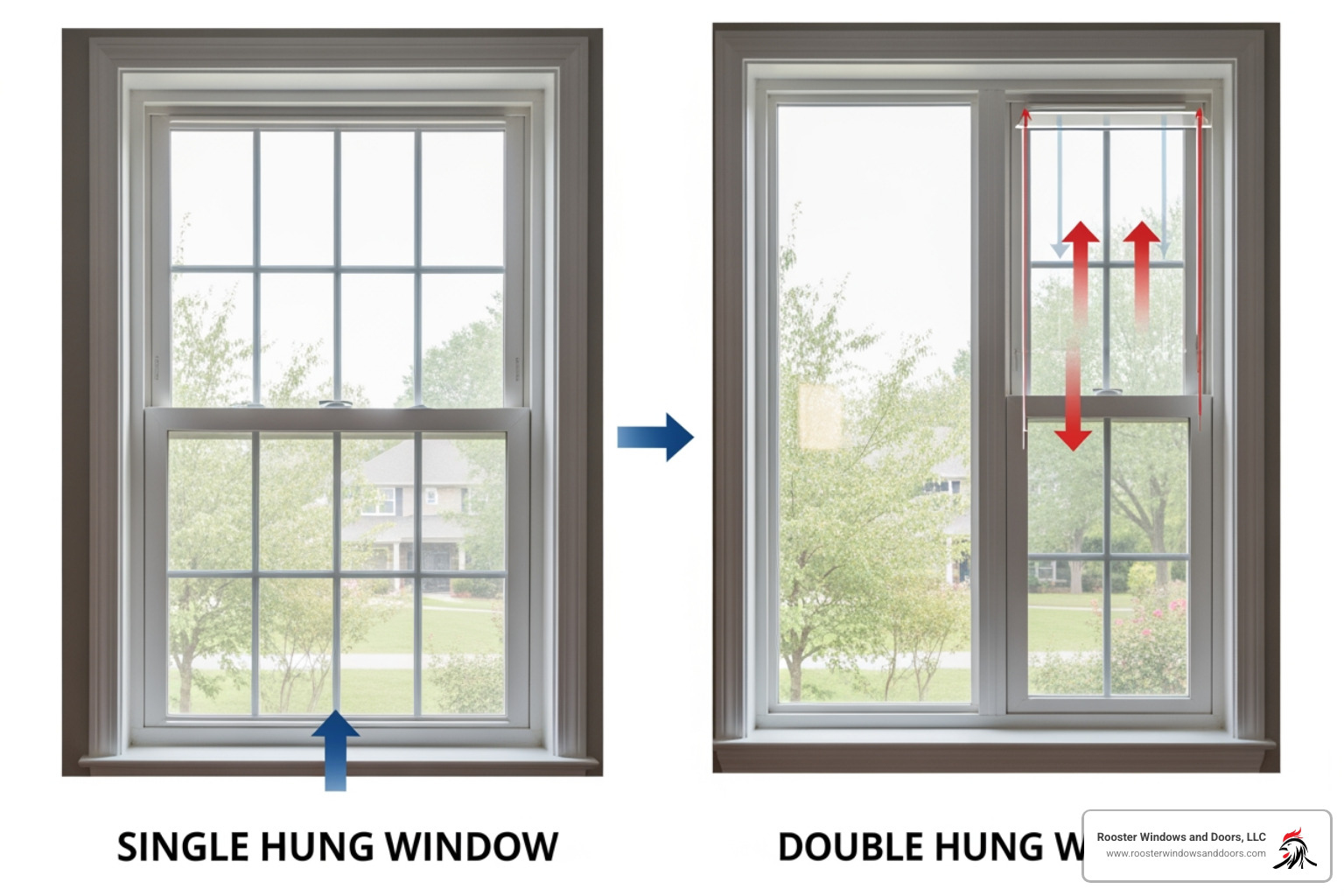
A single-hung window is the classic standard. It features a stationary top sash and an operable lower sash. To open it, you simply slide the bottom part up. Because the top part of the window is built directly into the frame, it is incredibly sturdy.
Historically, single-hung windows have been a hallmark of Craftsman homes and are frequently used in new construction because they are a cost-effective design. If you are working on a tight budget for a large project in Bolingbrook or Elgin, choosing a Double Hung Vs Single Hung Windows approach where you use single-hung on the first floor can save you a significant amount of money upfront.
What is a Double Hung Window?
A double-hung window offers dual operability. This means both the top and bottom sashes can slide up and down independently. At first glance, this might seem like a minor luxury, but it provides modern convenience that single-hung windows simply can’t match.
The standout feature of most modern double-hung windows is the tilt-in sash. Both the top and bottom pieces can lean inward toward the room. This is a game-changer for upper floor accessibility. If you live in a two-story home in Schaumburg or Arlington Heights, you know the struggle of trying to clean the outside of a second-story window. With a double-hung model, you can clean both sides of the glass while standing safely inside your house. For a deeper dive into these features, check out our Double Hung Windows Complete Guide.
Key Performance Differences: Ventilation and Cleaning
The way a window opens dictates how well it moves air and how much effort it takes to keep it looking like new. In the humid Illinois summers or the crisp autumns of Lake Forest and Joliet, these performance factors become very apparent.
Ventilation Benefits of the Double Hung Window
One of the coolest physics tricks a window can perform is the “stack effect.” Because double-hung windows allow you to open both the top and bottom sashes at the same time, they create a natural convection current. Cool air enters through the bottom opening, while warm air (which naturally rises) is pushed out through the top.
This makes double-hung windows the superior choice for moisture control and odor removal. We often recommend them for:
- Bathrooms: To quickly vent steam and prevent mold.
- Kitchens: To usher out cooking odors and heat.
- High-ceiling rooms: To help circulate air that would otherwise stay trapped at the top of the room.
For residents looking for the best airflow solutions, our Double Hung Windows Chicago Ultimate Guide covers how to maximize these ventilation patterns in local urban environments.
Maintenance and Cleaning for a Single Hung vs Double Hung Window
Let’s be honest: nobody likes climbing ladders. If you have single-hung windows on your second or third story, cleaning the exterior of that fixed top sash requires a long ladder, a pressure washer, or a professional cleaning service. This adds a “hidden cost” to single-hung windows over time.
Double-hung windows eliminate this hassle. Using simple tilt-latches, you can pull the sashes toward you and wipe them down in minutes. Furthermore, if a sash ever gets damaged, the Double Hung Window Repair Complete Guide shows that replacing an operable sash is often much simpler than repairing a fixed one. Easy cleaning inside and out isn’t just a marketing slogan; it’s a practical reality that saves you hours of labor every year.
Cost Analysis and Energy Efficiency
When comparing the single hung vs double hung window, the financial picture involves more than just the price tag. You have to consider the initial investment versus the long-term resale value and energy savings.
According to the Cost Versus Value 2024 report, the average vinyl window replacement project in our region has a high ROI, with approximately 67.1% of the cost recouped at resale. High-quality windows aren’t just an expense; they are an investment in your property’s equity.
Pricing and Installation Factors
Typically, there is a 10-20% price gap between the two styles. Single-hung windows usually cost between $100 and $400, while double-hung ranges from $150 to $650 per unit. The higher price for double-hung is due to the manufacturing complexity—they require more moving parts, specialized balances, and more weatherstripping.
Installation labor also plays a role. While the process is similar, double-hung windows require precise leveling to ensure both sashes slide and tilt correctly. For a detailed breakdown of what to expect during the process, see our guide: Don’t Get Hung Up: Your Guide to Twin Double Hung Window Installation Costs. If you’re a DIY enthusiast, you might find our instructions on How to Install Replacement Double Hung Windows helpful, though we always recommend professional installation to protect your warranty.
Thermal Performance and Air Leakage
A common question we get in Chicagoland is: “Which one will keep my house warmer in the winter?”
Historically, single-hung windows were considered more energy-efficient because they have fewer moving parts and, therefore, fewer places for air to leak. The top sash is permanently sealed to the frame. However, modern manufacturing has closed this gap. High-quality double-hung windows now feature advanced weatherstripping and interlocking sashes that provide an incredibly tight seal.
To maximize efficiency, look for:
- Low-E Coatings: Reflects infrared light to keep heat inside during winter and outside during summer.
- Argon Gas: A dense gas between panes that insulates better than plain air.
- U-factor: Look for a lower number, which indicates better insulation.
While single-hung windows might have a slight edge in energy efficiency facts due to the stationary seals, the difference is often negligible when you choose premium vinyl frames from a trusted installer.
Choosing the Right Style for Your Home
Your choice should also be guided by the architectural soul of your home. A historic home in Libertyville has different needs than a new build in Aurora.
Best Locations for a Single Hung vs Double Hung Window
We often help our clients “mix and match” to get the best of both worlds. Here is how we usually break it down:
- First Floor: Single-hung windows are excellent here. Since you can easily clean them from the outside while standing on the ground, you don’t necessarily need the tilt-in feature. They also offer great security because the top sash is unmovable.
- Second Story and Above: Double-hung is the clear winner. The ability to clean from the inside is worth every penny of the extra 20% cost.
- Safety for Children: Double-hung windows are actually safer for homes with small children or pets. You can open the top sash for ventilation while keeping the bottom sash closed and locked, preventing accidental falls.
- Behind Sinks or Counters: If a window is hard to reach (like over a kitchen sink), a single-hung window might be easier to operate since you only have to worry about the bottom latch.
For those looking to customize the look, the Double Hung Options Guide explores aesthetic choices like “cottage sashes,” where the top and bottom glass are different heights to add historic charm. You can also learn about the Sash-Tastic Savings: Unpacking the Benefits of Vinyl Double Hung Windows to see how these choices impact your long-term budget.
Frequently Asked Questions about Window Types
Is the extra cost of double-hung windows worth it?
For most homeowners, yes. The long-term value comes from the cleaning convenience and the superior ventilation control. If you plan on staying in your home for more than five years, the time saved on maintenance and the added resale appeal usually outweigh the initial price difference.
Which window type is better for safety with children?
As mentioned, the double-hung window is superior for fall prevention. By opening only the upper sash, you get fresh air without creating an opening low enough for a child to reach. Always ensure your Double Hung Window Locks Complete Guide is followed to keep the sashes securely closed when not in use.
Can I mix single-hung and double-hung windows in one house?
Absolutely! Many of our clients in suburbs like Wheaton and St. Charles use double-hung windows on the upper floors and single-hung on the ground floor. This balances the budget while ensuring the windows that are hardest to reach are the easiest to clean. As long as the frame material and color match, they look identical from the exterior.
Conclusion
Choosing between a single hung vs double hung window shouldn’t be a source of stress. If you prioritize a lower upfront cost and have easy access to your windows from the outside, single-hung is a reliable, classic choice. If you want the ultimate in ventilation, safety, and easy maintenance—especially for multi-story homes—double-hung windows are the gold standard.
At Rooster Windows and Doors, LLC, we pride ourselves on providing flawless, energy-efficient installations across Chicagoland. Whether you are in Waukegan, Joliet, or anywhere in between, we can help you assess your home’s specific needs and provide a professional recommendation.
Ready to transform your home? Check out our Upgrade Your View: A Comprehensive Guide to Replacing Double Hung Windows or visit our Double Hung Windows service page to see the high-quality options we offer. We don’t just install windows; we install peace of mind.
