

Why Homeowners Convert Basement Windows to Egress (And How to Do It Right)
Converting a basement window to egress is one of the smartest upgrades you can make to your home — and in many cases, it’s required by law.
Here’s a quick overview of what the process involves:
- Check your local building code for minimum egress window size requirements
- Pull a permit before making any structural changes to your foundation
- Call 811 to mark underground utilities before any digging
- Excavate outside the existing window opening
- Cut the foundation wall to enlarge the opening to code-compliant dimensions
- Install a header to support the structure above the new opening
- Set the window, bucks, and flashing for a weathertight fit
- Add a window well with drainage if the window sits below grade
- Schedule a building inspection to confirm code compliance
The minimum requirements under the International Residential Code (IRC) are clear: your egress window must have a net clear opening of at least 5.7 square feet, be at least 20 inches wide and 24 inches tall, and have a sill no more than 44 inches above the finished floor.
Miss any one of those specs, and the window doesn’t qualify — no matter how close it comes.
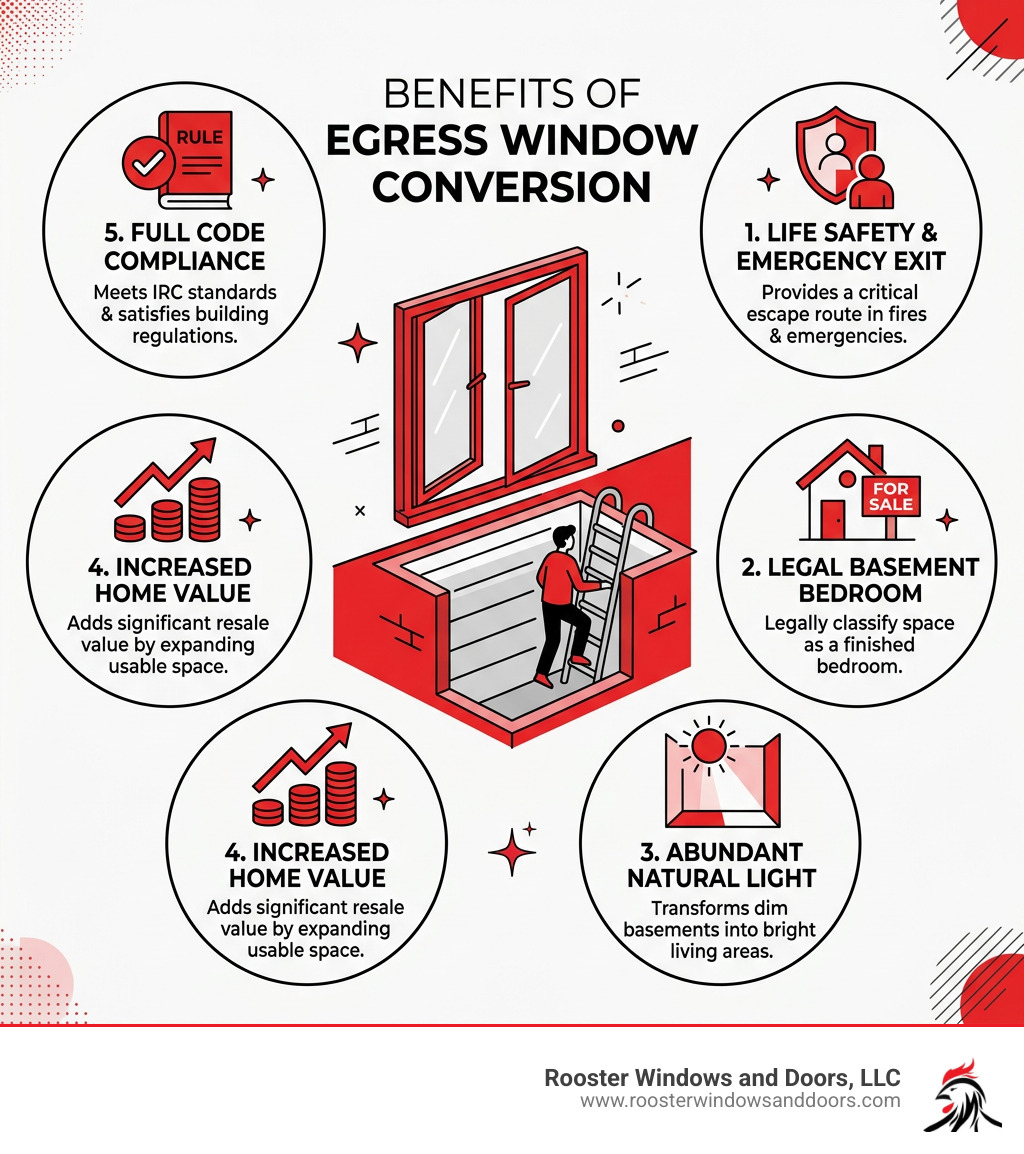
Beyond safety, there’s a real financial reason to care. A finished basement bedroom can add significant resale value to your home. But without a proper egress window, that room cannot legally be listed as a bedroom. That’s money left on the table.
I’m Piotr Wilk, and with over two decades of residential window and door installation experience across the Chicagoland area, I’ve helped countless homeowners convert basement windows to egress safely, correctly, and up to code. In this guide, I’ll walk you through everything you need to know — from sizing requirements to installation steps to what it’ll cost.
Explore more about convert basement window to egress:
Understanding the Requirements to Convert Basement Window to Egress
When we talk about an “egress” window, we aren’t just talking about a window that looks nice. We are talking about a life-saving exit. In the event of a fire or emergency, this window is the difference between being trapped and getting out safely. It’s also the entry point for a firefighter wearing a full oxygen tank and gear.
To ensure that window actually works when it matters most, the International Residential Code standards set very specific rules. If you’re planning to convert basement window to egress, you need to choose a window style that maximizes the opening without requiring a massive hole in your foundation.
| Window Style | Egress Suitability | Pros | Cons |
|---|---|---|---|
| Casement | Excellent | Opens 90 degrees; easiest to meet 5.7 sq ft | Needs side clearance in the well |
| Sliding | Good | Simple operation; classic look | Must be very wide to meet clear opening specs |
| Hopper | Limited | Great for ventilation | Often too small; hinges can block exit path |
| In-Swing | Excellent | Ideal for tight wells | Can interfere with interior furniture |
For most of our clients in Chicago and the surrounding suburbs, we recommend a high-quality basement window in a casement style. Because the entire sash swings open like a door, you can meet the code requirements with a much smaller overall window frame than you could with a slider.
Minimum Size and Code Specifications
The “Magic Numbers” for egress are non-negotiable. Even if your window is 5.6 square feet, it will fail an inspection. Here is the breakdown of what the law requires for a compliant egress basement window complete guide:
- Net Clear Opening: At least 5.7 square feet. This is the actual space you can crawl through, not the size of the glass or the frame.
- Minimum Width: 20 inches.
- Minimum Height: 24 inches.
- Maximum Sill Height: 44 inches from the finished floor. If your window is higher than this, you’ll need to install a permanent step to meet code.
In some cases, if the window is at “grade floor” (meaning the bottom is right at ground level), the requirement might drop to 5.0 square feet, but for 99% of basement conversions, 5.7 is the standard to hit. These dimensions ensure a firefighter in full kit can enter while a resident is exiting.
Local Building Codes and Permits
Living in the Chicagoland area means dealing with specific local municipalities, from Naperville to Arlington Heights. While most follow the IRC, some towns have stricter rules regarding structural changes.
Whenever you convert basement window to egress, you are likely cutting into the foundation of your home. This is a structural modification. You must obtain a permit. This isn’t just bureaucratic red tape; it’s for your safety. An inspector will verify that the header is installed correctly so your house doesn’t sag over the new opening.
Before any shovel hits the dirt, we always emphasize calling the 811 utility marking hotline. Hitting a gas line or a fiber-optic cable is a quick way to turn a home improvement project into a neighborhood-wide emergency. If you’re looking for professional help, our team at Rooster Windows and Doors handles the egress window installation process from start to finish, ensuring all local Illinois codes are met perfectly.
The Step-by-Step Process of a Basement Window Conversion
Converting a standard, tiny “slit” window into a full egress exit is an intensive process. It’s essentially surgery for your home’s foundation.
Preparing to Convert Basement Window to Egress
The first step is excavation. We have to dig a hole large enough to accommodate the new window well. This usually involves removing about 5 to 10 cubic yards of dirt. That’s a lot of wheelbarrow trips!
During this phase, we are also looking at your home’s drainage. If you have a high water table or poor soil drainage, we need to plan for a drainpipe that connects to your home’s weeping tile or sump system. This prevents your new egress window from becoming a basement aquarium during a heavy Illinois thunderstorm. For a more detailed look at these prep steps, check out your step by step guide to egress window installation.
Installation and Finishing Touches
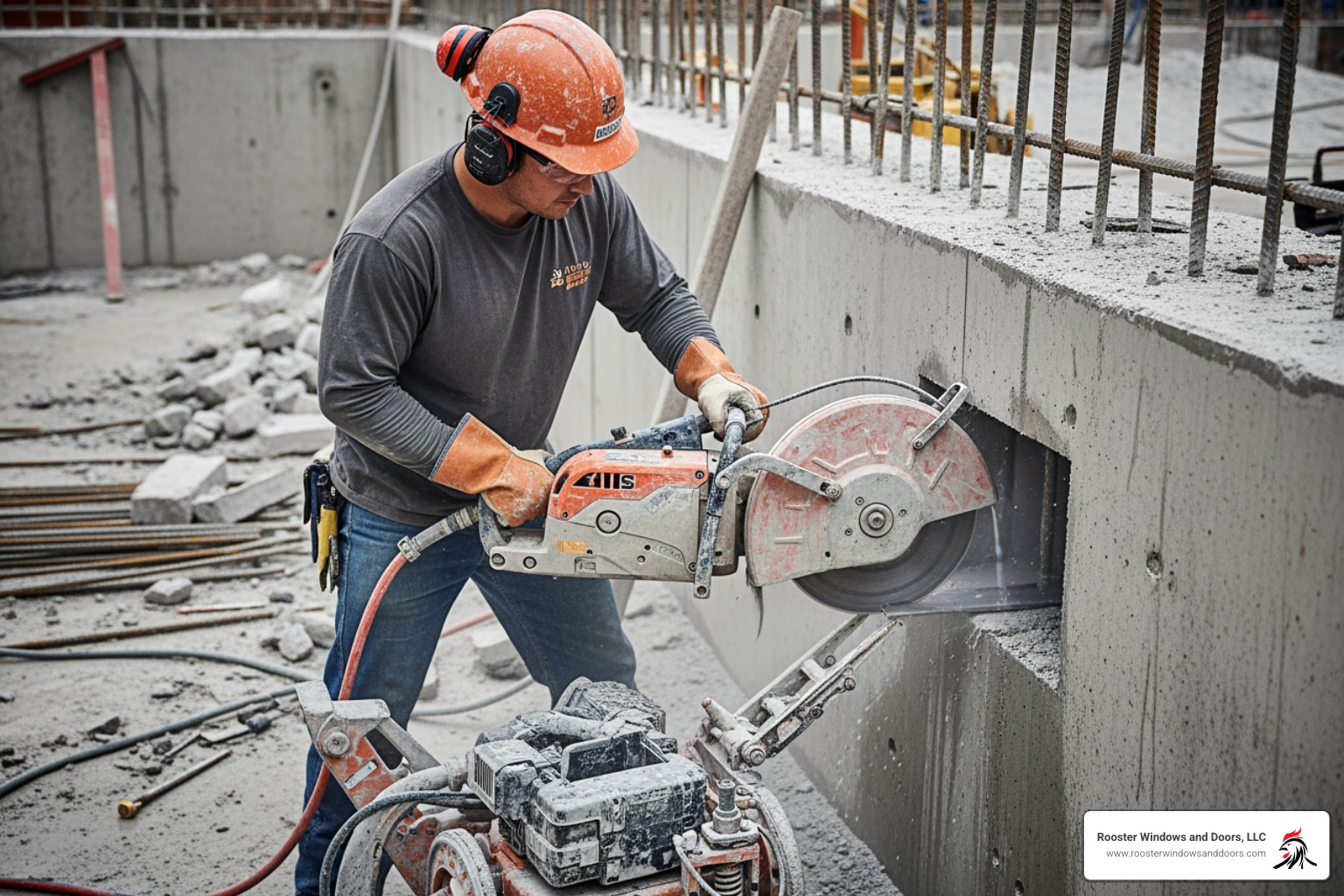
Once the hole is dug and the utilities are cleared, it’s time to cut egress window basement walls. We use specialized hydraulic or high-powered electric saws with diamond blades to ensure a clean, straight cut.
After the opening is made:
- Install the Header: This is a structural beam that supports the weight of the wall above the window.
- Mount the Window Buck: This is a frame (usually made of pressure-treated lumber or composite) that sits inside the concrete opening and provides a surface to fasten the window.
- Flashing and Waterproofing: We apply high-grade flashing tape and sealants to ensure no water can seep between the window and the foundation.
- Set the Window: The window is leveled, shimmed, and secured.
- Interior Finishing: This involves adding the how to install new basement window trim and drywall returns to make the new window look like it was always part of the room.
Window Wells, Drainage, and Maintenance
If your basement window is below ground level (which most are), you need a window well. This isn’t just a corrugated metal ring; it’s a vital part of the escape route.
Essential Components for a Safe Well
According to code, a window well must provide at least 9 square feet of clear floor area, with a minimum projection of 36 inches from the wall. This ensures there is enough room for a person to climb out and move away from the building.
Key components include:
- Ladders: If the well is deeper than 44 inches, a permanently attached ladder or stairs are required.
- Drainage: A layer of 3/4-inch clean stone at the bottom, often with a drainpipe leading to the foundation drainage system.
- Covers and Grates: While not always required by code, they are highly recommended to keep kids, pets, and debris out. Any cover must be easily removable from the inside without the use of a key or tool. You can find specialized covers for basement windows that are strong enough to stand on but light enough for a child to push off in an emergency.
If you are looking for local experts to handle the exterior portion of the job, there are many window well companies near me in the Chicagoland area that specialize in these specific installations.
Long-Term Maintenance to Convert Basement Window to Egress
Once your window is in, you can’t just forget about it. To ensure it remains a safe exit for years to come, follow this maintenance checklist:
- Clear Debris: Regularly remove leaves, twigs, and trash from the bottom of the well. Clogged drainage is the #1 cause of basement window leaks.
- Inspect Seals: Check the caulking around the window frame annually. Illinois winters can be brutal on sealants.
- Check the Ladder: Ensure the ladder remains securely fastened to the well wall.
- Pest Screens: Keep an eye on your screens to make sure critters aren’t trying to make a home in your well.
For more tips on keeping your basement windows in top shape, see our basement window replacement guide 2026.
Professional vs. DIY: Costs and Risks
We love a good DIY project as much as anyone, but when it comes to converting a basement window to egress, the stakes are incredibly high.
The egress window installation cost typically ranges from $1,500 to $8,000. Why the big gap? It depends on whether you are enlarging an existing opening or cutting a brand-new one through 10 inches of poured concrete.
The Risks of DIY
If you choose to DIY, you need to rent a concrete chainsaw or a large circular saw. These tools are dangerous and produce an incredible amount of dust and slurry. Common DIY mistakes include:
- Uneven Cuts: Leading to windows that don’t fit or seal properly.
- Structural Damage: Cutting a hole without properly supporting the house can lead to cracked drywall and shifting door frames upstairs.
- Water Intrusion: If the flashing isn’t perfect, water will find its way into your basement.
Why Professional Installation Matters
When you hire a professional, you aren’t just paying for labor; you’re paying for peace of mind. Professional installers provide:
- Warranties: If the window leaks or the seal fails, it’s covered.
- Flawless Seals: We use industrial-grade sealants and techniques that are hard to replicate with store-bought kits.
- Foundation Safety: We know how to reinforce the opening to maintain the integrity of your home.
If you are wondering who installs egress windows near me, look for a company like Rooster Windows and Doors that has a proven track record in the specific soil conditions of Illinois.
Frequently Asked Questions about Egress Conversions
Does an egress window add value to my home?
Absolutely. In the Chicago market, adding an egress window to a basement allows you to legally count that space as a bedroom. On average, a legal basement bedroom can increase your home’s value by $15,000 to $25,000, depending on the square footage. It significantly increases the marketability of your home, as buyers are always looking for that “extra” room for guests or an office.
Can any window type be used for egress?
No. As mentioned earlier, the window must meet specific “net clear opening” dimensions. A standard double-hung window often fails because the two sashes block half the opening. Awning windows are also tricky because the hardware often restricts how far they can open. Casement windows are generally the “gold standard” for egress because they offer the most exit space for the smallest frame size.
Conclusion
At Rooster Windows and Doors, LLC, we believe your basement should be more than just a storage space for old holiday decorations. By choosing to convert basement window to egress, you are investing in the safety of your family and the financial future of your home.
Whether you are in Libertyville, Naperville, or right in the heart of Chicago, our team is dedicated to providing flawless, energy-efficient installations. We offer a wide variety of styles to ensure your new window doesn’t just meet code — it looks beautiful, too.
Ready to bring some light into your basement and secure your family’s safety? More info about egress window installation is just a click away. Let us help you do it right the first time.

