

Why the Egress Window 5.7 Square Feet Standard Exists
An egress window 5.7 square feet minimum net clear opening is the building code standard that could save your life—and it’s the key requirement you must meet when converting a basement into legal living space or adding a bedroom to your home.
Quick Answer: Egress Window 5.7 Square Feet Requirements
- Minimum net clear opening area: 5.7 square feet (820.8 square inches)
- Minimum height: 24 inches
- Minimum width: 20 inches
- Maximum sill height: 44 inches from the floor
- Exception: Ground-floor windows can be 5.0 square feet minimum
- Must open: From the inside without keys or tools
If you have been looking for ways to make your home safer or add value and marketability to your property, you’ve likely encountered the egress window requirement. This isn’t just bureaucratic red tape—it’s a life safety mandate designed to provide emergency escape routes during fires and other disasters, and to allow first responders wearing full protective gear to enter your home if needed.
The International Residential Code (IRC) sets these specific dimensions because they’re the minimum size needed for an average adult to crawl through in an emergency. Many homeowners find that their existing basement windows—especially in older homes—fall short of these requirements, which becomes a critical issue when converting a basement into a bedroom, family room, or any habitable space.
The standard focuses on net clear opening, which is the actual usable space when the window is fully open. This is not the same as the window frame size. A casement window measuring 24 inches by 34 inches can meet the requirement, while a double-hung or sliding window might need to be 3 feet wide by 5 feet tall to achieve the same net clear opening due to how they operate.
Understanding the egress window 5.7 square feet rule is essential whether you’re planning a basement renovation, replacing old windows, or ensuring your home meets current safety codes. Non-compliance can lead to failed inspections, legal liability, difficulty selling your home, and most importantly, increased risk to your family’s safety.
I’m Piotr Wilk, and over two decades of installing windows and doors in the Chicagoland area, I’ve helped countless homeowners steer the complexities of egress window 5.7 square feet compliance to create safe, code-compliant living spaces. Every egress window project we complete combines life-saving safety standards with the energy efficiency and quality craftsmanship your home deserves.
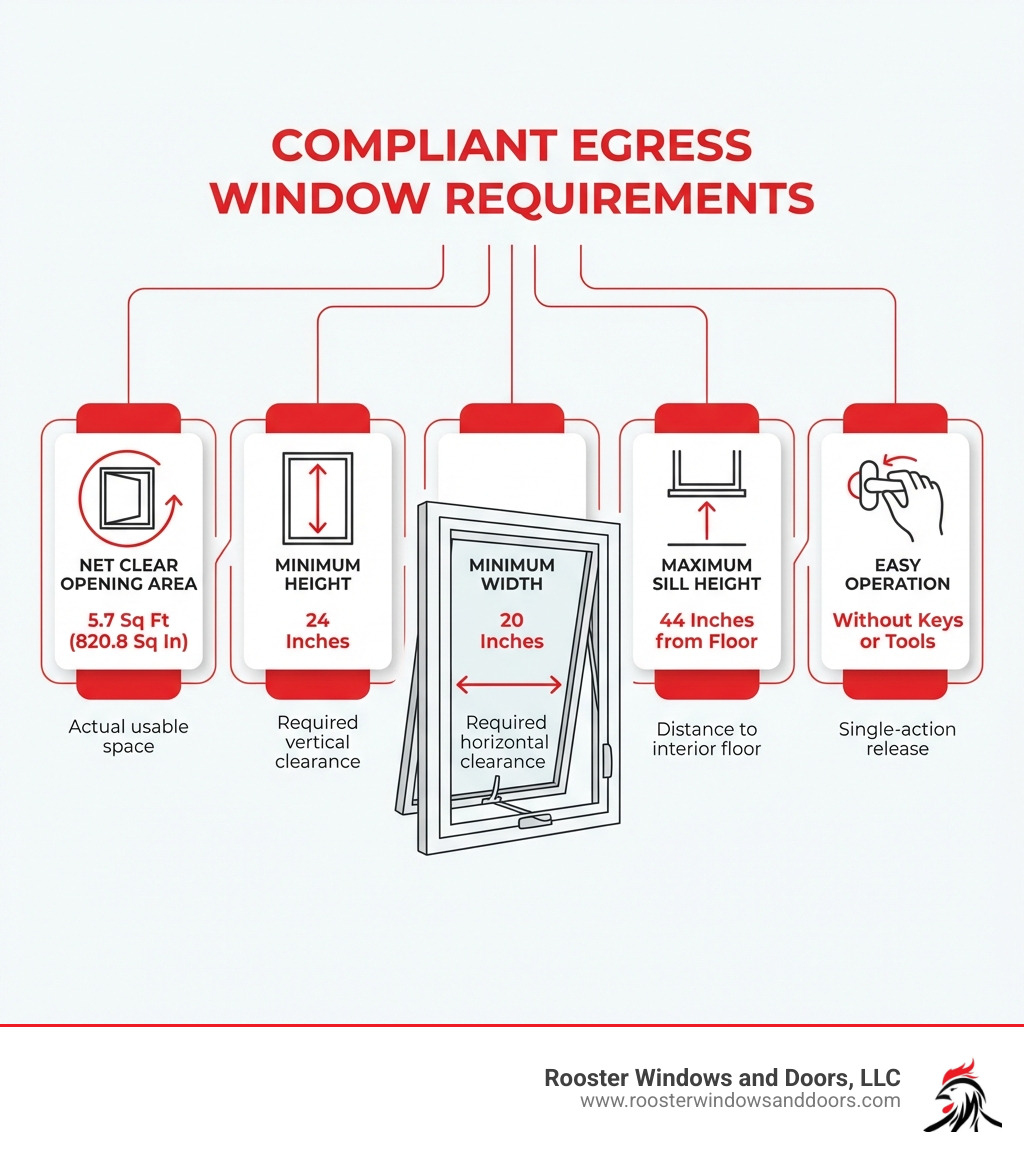
Key terms for egress window 5.7 square feet:
What is an Egress Window and Why is it a Lifesaver?
An egress window is a vital safety feature, known in building codes as an Emergency Escape and Rescue Opening (EERO). Its purpose is to provide an escape route during emergencies like fires when primary exits are blocked, providing a crucial lifeline.
But the function of an egress window is dual-sided. While it serves as an exit for you and your family, it also acts as an entry point for first responders, such as firefighters, who may need to access your home quickly with their equipment. This is why the dimensions are so specific—they need to accommodate a firefighter in full protective gear.
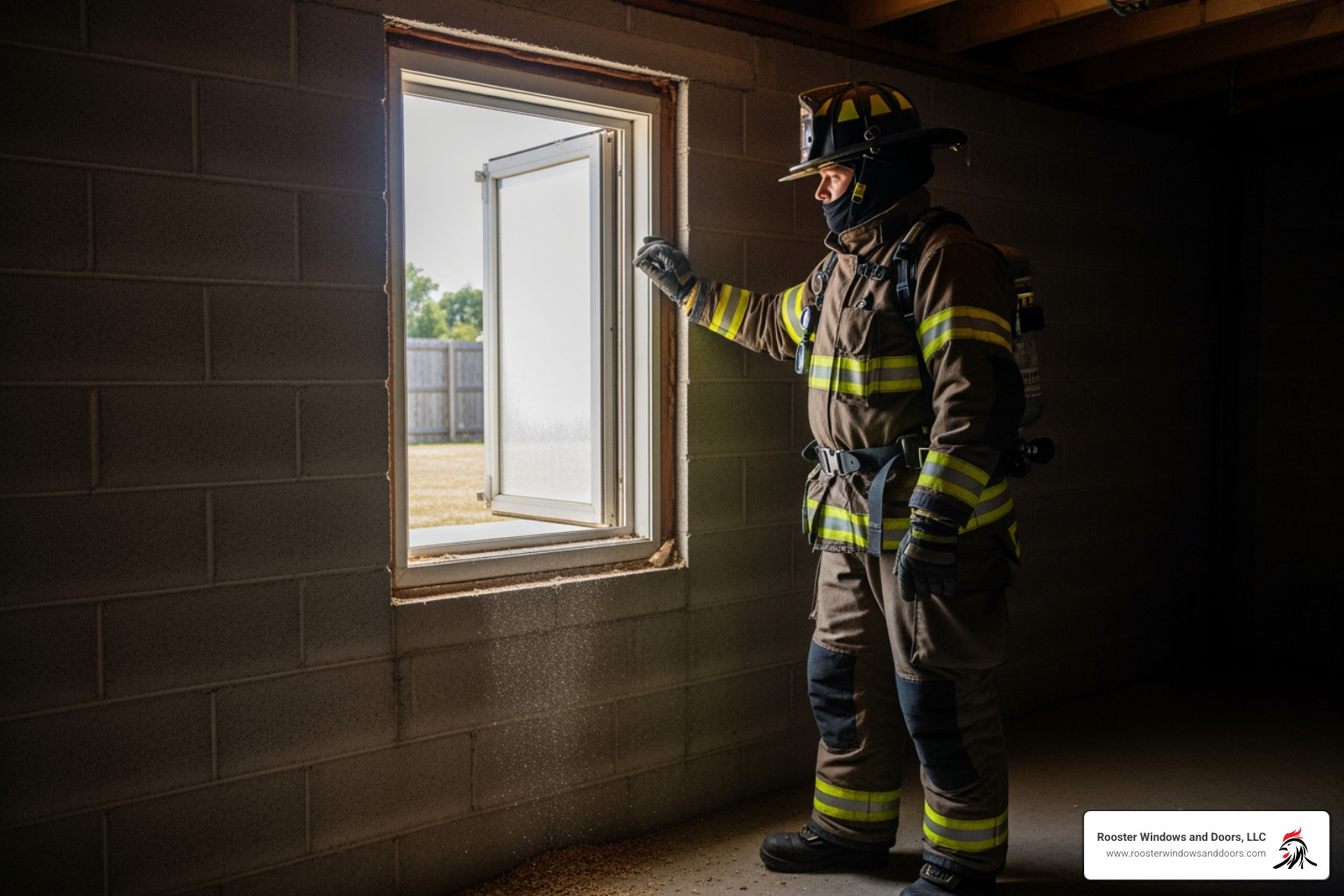
Ensuring your home has proper fire safety measures is paramount. Egress windows are a cornerstone of code compliance when converting basements or attics into habitable spaces or adding bedrooms. Without a compliant egress window, a bedroom cannot legally be considered a bedroom—a critical factor for homeowners across Chicagoland and Illinois. We can help you understand your project’s requirements. More info about Basement Windows.
The Critical Difference: Net Clear Opening vs. Window Size
When we talk about an egress window 5.7 square feet requirement, we’re not referring to the overall dimensions of the window frame. This is a common and critical misconception. The code specifically refers to the net clear opening—the actual, unobstructed free space available when the window is fully open.
Think of it this way: if you have a window that measures 30 inches wide by 60 inches tall (a total of 1800 square inches or 12.5 square feet), but the window frame, sash, and operating mechanisms only allow an opening of 20 inches wide by 30 inches tall, your net clear opening is only 600 square inches (4.17 square feet). This would not meet the egress window 5.7 square feet rule.
How sashes and frames reduce the opening depends on the window type. A double-hung or sliding window only opens halfway, so you need a much larger window to achieve the required net clear opening compared to a casement window. Calculating this usable space accurately is crucial, which is why professional installation is so important. We always ensure the window we install provides the required clear opening, not just the overall size.
Implications of Non-Compliance
Ignoring egress window requirements has serious safety and financial implications. A non-compliant window can trap occupants in an emergency, leading to tragic results. Legally, you could face liability if an incident occurs. Financially, a non-compliant space will likely fail a home inspection, complicating resale, devaluing your property, or requiring costly fixes. Local authorities in areas like Libertyville, Aurora, and Naperville can also impose fines for code violations. We help you avoid these issues by ensuring your project is compliant from the start.
Decoding the Egress Window 5.7 Square Feet Rule
The egress window 5.7 square feet rule is the cornerstone of emergency escape and rescue opening requirements in most residential settings across the United States. This standard is primarily governed by the International Residential Code (IRC), which many local jurisdictions, including those in our Chicagoland service area, adopt and enforce. It’s a non-negotiable life safety mandate designed to protect occupants and aid first responders.
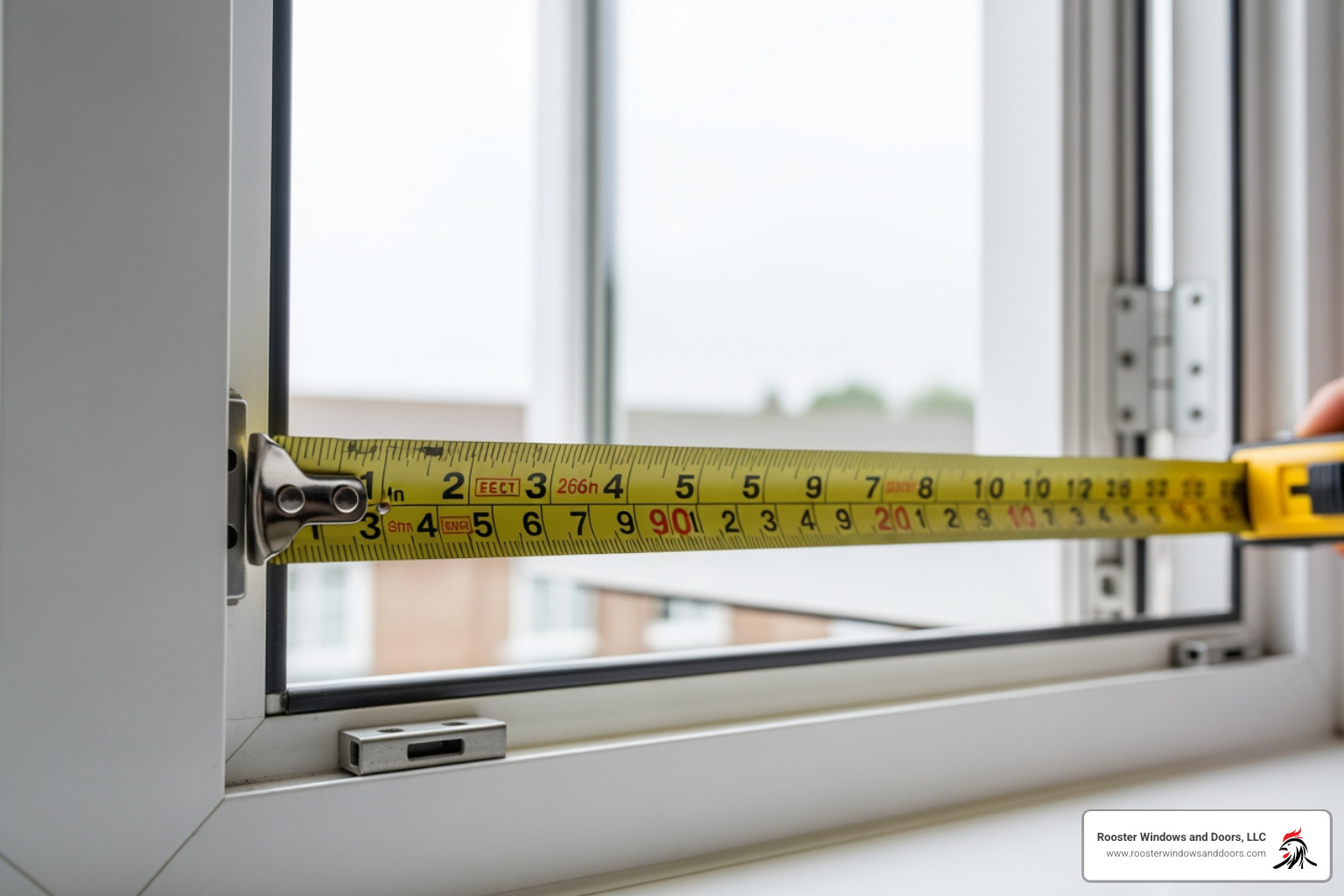
Understanding this rule isn’t just about a single number; it’s about a combination of specific dimensions that work together to ensure a safe passage. The International Residential Code (IRC) is the guiding document for these standards.
The 5.7 Square Feet Minimum Net Clear Opening
So, what exactly does “5.7 square feet” mean? It’s the minimum net clear opening area – the unobstructed space available for escape or rescue when the window is fully open. This specific area, equivalent to 820.8 square inches, isn’t arbitrary. It’s determined by safety experts to be the smallest opening through which an average adult can comfortably crawl to escape, and through which a firefighter in full gear, possibly with equipment, can enter.
To calculate this area, you multiply the net clear opening height by the net clear opening width. For example, if your window has a clear opening height of 24 inches and a clear opening width of 34.2 inches, you get 820.8 square inches, meeting the 5.7 square feet requirement.
Minimum Height and Width Dimensions
While the 5.7 square feet area is paramount, it must be achieved through specific minimum height and width dimensions. The IRC requires:
- Minimum net clear opening height: 24 inches (610 mm)
- Minimum net clear opening width: 20 inches (508 mm)
Both of these minimums must be met simultaneously. You can’t have a 60-inch tall window that’s only 15 inches wide, even if the total area exceeds 5.7 square feet. A common misconception is that if one dimension is very large, the other can be smaller. However, the code dictates that the opening must be at least 24 inches tall and at least 20 inches wide to ensure a person can physically fit through. These dimensions interact; for instance, a window that is exactly 24 inches high would need to be at least 34.2 inches wide (24″ x 34.2″ = 820.8 sq in / 144 = 5.7 sq ft) to meet the area requirement.
The Ground Floor Exception: The 5.0 Square Feet Rule
There’s a slight but important exception to the egress window 5.7 square feet rule for windows located on the ground floor. For these grade-level openings, the minimum net clear opening requirement is reduced to 5.0 square feet (720 square inches).
Why the reduction? It’s primarily because ground-floor windows offer easier and quicker access from the outside for rescuers, and a shorter drop to the ground for occupants. The urgency for maximum clearance is slightly less critical than for basement or upper-floor windows.
A “grade-floor window” is typically defined as one where the sill height is not more than 44 inches above or below the ground level immediately next to the opening. This means if your home in Naperville or Schaumburg has a ground-floor bedroom, the egress window would need a minimum of 5.0 square feet of clear opening, still adhering to the 24-inch minimum height and 20-inch minimum width.
Maximum Sill Height and Operability
Beyond the opening dimensions, the IRC also specifies requirements for the egress window’s placement and function:
- Maximum Sill Height: The bottom of the clear opening must be no more than 44 inches (1118 mm) from the finished floor. This ensures that the window is accessible to all occupants, including children, and can be reached without needing a step stool or other assistance during an emergency. We make sure this measurement is precise during our installations.
- Operability: An egress window must be easily operable from the inside without the use of keys, tools, or special knowledge. This means no complicated latches, locks that require a key, or mechanisms that are difficult to figure out under stress. The window must open smoothly and quickly.
These requirements are designed to eliminate any barriers to a swift escape. For homeowners considering window replacements in their Illinois homes, understand that replacement windows must still meet these egress requirements, or at least not reduce the effective, lawful means of egress that was required when the dwelling was originally built. More info about Window Replacement.
Beyond the Window: Essential Requirements for Egress Systems
An egress window 5.7 square feet compliant opening is a fantastic start, but for many installations, especially in basements, the window itself is only one part of a larger safety system. When the bottom of the window opening is below ground level, a window well becomes a critical component.
Window Well Specifications
A window well is essentially an excavation around the egress window that allows the window to open fully and provides a clear space for occupants to climb out. These wells also have stringent requirements:
- When a well is required: If the finished sill height of the egress window is below the adjacent ground elevation, a window well is mandatory.
- Minimum Area and Projection: The well must have a minimum horizontal area of 9 square feet. It also needs a minimum projection of 36 inches (from the window to the back of the well) and a minimum width of 36 inches. These dimensions ensure there’s enough space for someone to maneuver out of the window and onto a ladder or steps.
- Allowing Full Opening: The window well must be large enough to allow the egress window to be fully opened without obstruction. This means no part of the window, when open, should impede the clear space within the well.
We understand the nuances of these specifications and ensure our window well installations in places like Elmhurst, Addison, and throughout our service area meet or exceed these critical safety standards.
Ladders and Steps for Deep Wells
If a window well is deeper than 44 inches (1118 mm) below the ground level, it must be equipped with a permanently affixed ladder or steps. This is to ensure that anyone escaping through the window can easily climb out of the well to safety.
Here are the specifications for ladders and steps:
- Ladder Specifications:
- Must be permanently attached.
- Must not be obstructed by the open window or well cover.
- Minimum inside width of at least 12 inches.
- Must project at least 3 inches from the area well wall.
- Rungs should be spaced no more than 18 inches apart.
- Step Dimensions:
- Minimum width of 12 inches.
- Minimum tread depth of 5 inches.
- Maximum riser height of 18 inches.
These details are vital for ensuring a swift and safe exit. We make sure all components of your egress system are installed correctly and safely.
Keeping it Clear: Rules for Bars, Grilles, and Screens
Security is a natural concern for homeowners, especially with large egress windows or in basement settings. However, any bars, grilles, or screens placed over an egress window opening must not compromise its function as an emergency exit.
The rules are clear:
- Releasable from inside: Any security device must be easily releasable or removable from the inside without the use of a key, tool, or special knowledge. This means no fumbling for keys in the dark or needing a screwdriver during a panic.
- Maintaining Minimum Opening: The device must not reduce the net clear opening dimensions below the required 5.7 square feet (or 5.0 square feet for ground-level) or the minimum 24-inch height and 20-inch width.
We work with products that balance security with safety, ensuring your egress window system in places like Arlington Heights or Bolingbrook provides both peace of mind and code compliance. More info about Covers for Basement Windows.
Choosing the Right Window for Your Egress Needs
Selecting the right type of window is crucial when planning for an egress window 5.7 square feet installation. Not all window styles are equally suited to meet the specific clear opening requirements, and some require significantly larger overall dimensions to achieve the same egress capability. Beyond compliance, we also consider energy efficiency and the overall aesthetic of your home. Our professional installation ensures that your chosen window performs optimally in all aspects. More info about Window Installation.
Here’s a comparison of common window types:
| Window Type | Typical Size Needed to Meet 5.7 sq ft Net Clear Opening | Pros | Cons |
|---|---|---|---|
| Casement | Approx. 24″ H x 34″ W (or similar) | Maximizes clear opening for its overall size; Excellent ventilation; Good for tight spaces/basements. | Can swing outward into path; Requires special egress hinges to open fully; Can be more expensive. |
| Sliding | Approx. 48″ H x 68″ W (or larger) | Easy operation; Good ventilation; Less expensive than casement (for overall frame size). | Only opens halfway, requiring a much larger overall window to meet egress; Can be difficult to clean the exterior of the fixed pane. |
| Double-Hung | Approx. 60″ H x 48″ W (or larger) | Classic aesthetic; Easy to clean; Good ventilation. | Only opens halfway (one sash), requiring a much larger overall window for egress; Can be heavy to lift if very large. |
Casement Windows: The Egress Champion
Casement windows are often considered the “egress champion” for good reason. They are hinged on the side and crank outward, providing a large, unobstructed opening relative to their overall size. This outward swing allows them to maximize the net clear opening, making them ideal for meeting the egress window 5.7 square feet rule, especially where the rough opening might be smaller.
However, a standard casement window might not open wide enough. This is where special “egress hinges” come into play. These hinges allow the sash to swing almost 90 degrees, sitting completely to one side of the frame and ensuring the full clear opening is achieved. This makes them a top choice for basement egress windows in homes throughout Chicagoland.
Sliding and Double-Hung Windows
While popular for their traditional aesthetics and ease of use, sliding and double-hung windows present more challenges for egress. Their fundamental design means that only one sash opens at a time, effectively limiting the clear opening to approximately half of the total window area.
For example, a typical 3-foot wide by 5-foot tall double-hung window might only provide about 3 square feet of net clear opening, significantly less than the required 5.7 square feet. To achieve the egress window 5.7 square feet clear opening, you would need a much larger overall sliding or double-hung window – often requiring a rough opening that is roughly twice the size of a comparable casement window. This can make them less practical or more costly if significant structural modifications are needed to enlarge the opening.
When considering these types, it’s crucial to calculate the usable space accurately. We always measure the actual opening provided by the operable sash, ensuring compliance.
Special Considerations for Your Egress Window 5.7 Square Feet Project
Every egress window project has its unique considerations:
- Replacement Windows: When replacing an existing window, the new one must meet current egress requirements if the space is a bedroom or habitable basement. However, replacement windows can sometimes be exempt from maximum sill height requirements if they are the largest standard size that fits the existing frame and maintain or increase the opening area. It’s a nuanced area, and we ensure your replacement windows in areas like Grayslake or Lake Zurich meet all applicable codes.
- Grandfathered Codes: While some older structures might have “grandfathered” status for existing, non-compliant windows, any renovation, conversion of space (e.g., unfinished basement to a bedroom), or new construction will trigger the need to meet current building codes. It’s always safest to upgrade.
- Fully Sprinklered Buildings: In some specific scenarios, typically in multi-family dwellings or certain residential units (Group R-2 and R-3 occupancies), a fully sprinklered building might have exceptions to individual egress window requirements for sleeping rooms or basements. However, this is rare for single-family homes and always requires explicit verification with local authorities.
- Importance of Local Code Verification: The International Residential Code (IRC) provides the baseline, but local building codes in Illinois, and specific municipalities like Chicago, Evanston, or Joliet, can have amendments or additional requirements. We always emphasize the importance of verifying the exact codes enforced by your local authority having jurisdiction. This ensures your project is fully compliant and avoids any surprises during inspection. The International Building Code (IBC) also plays a role in commercial and larger residential projects.
Frequently Asked Questions about the 5.7 Sq Ft Rule
How do I know if my basement needs an egress window?
If your basement contains any habitable space, it likely requires an egress window. This is especially true for any sleeping rooms (bedrooms). According to the International Building Code (IBC) and International Residential Code (IRC), every sleeping room and basement with habitable space must have at least one operable emergency escape and rescue opening. This is a non-negotiable requirement for converting a basement into a legal living area, which includes family rooms, dens, and home offices, not just bedrooms. If you’re in Libertyville, Chicago, or any of our service areas and are considering finishing your basement, we can help you determine the specific egress needs for your project. More info about our Basement Windows Complete Guide.
How much does installing an egress window that meets the 5.7 square feet requirement cost?
The cost of installing an egress window can vary significantly depending on several factors, but it’s an investment in safety and property value. Key factors influencing the cost include:
- Window Type and Material: Casement windows, often ideal for egress, can have different price points based on material (vinyl, fiberglass, wood) and features.
- Foundation Material (Concrete Cutting): If you’re installing a new egress window or enlarging an existing opening in a concrete foundation, specialized concrete cutting is often required, which adds to the cost. For block foundations, the process might be different but still involves structural modifications.
- Need for a Window Well and Excavation: For basement egress windows, a window well is almost always needed. This involves excavation, the cost of the well itself, drainage, and potentially a ladder or steps.
- Labor and Permits: Professional installation ensures code compliance and quality, but labor costs will be a factor. Additionally, obtaining the necessary building permits from your local municipality (e.g., in Waukegan, Elgin, or St Charles) is crucial and comes with associated fees.
- Site-Specific Challenges: Soil conditions, utility lines, and landscaping can all impact the complexity and cost of excavation.
While we can’t give an exact figure without understanding your specific project, we can assure you that we provide transparent, detailed estimates for all our egress window installations. More info about Egress Window Installation Cost.
How do Canadian egress codes compare to the US standard?
While the principle of providing an emergency escape is universal, the specific dimensions for egress windows can differ between countries. For example, in Canada, the National Building Code of Canada (NBCC) generally requires a minimum unobstructed opening area of 0.35 m² (approximately 3.8 square feet). Additionally, no dimension (height or width) of the clear opening can be less than 380 mm (approximately 15 inches).
This is different from the US standard of egress window 5.7 square feet (0.53 m²) and the minimum 24-inch height and 20-inch width specified by the IRC. Although the Canadian requirements are numerically smaller, the underlying safety principle remains the same: the opening must be large enough for safe passage. These are general guidelines, and provincial or local codes in Canada might have additional requirements, much like our local codes here in Illinois can amend the IRC. For our customers in Chicagoland and throughout Illinois, always verify local US codes, which typically follow the 5.7 sq ft IRC standard, to ensure full compliance.
Conclusion
Understanding the egress window 5.7 square feet rule is more than just knowing a number; it’s about safeguarding your family, enhancing your home’s value, and ensuring compliance with vital safety regulations. This specific requirement, along with the minimum height, width, sill height, and window well specifications, forms a comprehensive system designed for your protection.
Safety is paramount, and code compliance is not just a legal obligation but an investment in your peace of mind and property. A properly installed egress window provides a critical escape route in emergencies and allows first responders the necessary access.
At Rooster Windows and Doors, we pride ourselves on delivering high-quality, flawless, and energy-efficient installations. We ensure that every egress window 5.7 square feet project we undertake in Libertyville, Chicago, and across our entire Chicagoland service area meets all local building codes, providing you with a beautiful, functional, and most importantly, safe addition to your home. Don’t get boxed in by outdated windows or non-compliant spaces. Let us help you open up new possibilities for safety and comfort.
Schedule your egress window installation project with us today, and experience the difference of expert craftsmanship and unwavering commitment to your safety.
