

Why Your Window Sill Matters More Than You Think
Exterior window sill replacement is a critical home maintenance task that protects your home from water damage, prevents costly structural repairs, and improves energy efficiency. Here’s what you need to know:
Quick Answer: Replacing Your Exterior Window Sill
- Assess the damage – Check for soft spots, cracks, peeling paint, or visible rot
- Gather tools and materials – You’ll need a pry bar, saw, caulk gun, replacement sill material, and safety gear
- Remove the old sill – Cut away damaged sections carefully to avoid harming the window frame
- Install the new sill – Cut to size, ensure proper drainage slope, secure with screws or nails
- Seal and finish – Apply exterior-grade caulk, prime, and paint for weather protection
Typical Cost: Under $100 per window for DIY, several hundred dollars for professional installation
Time Required: 2-4 hours per window
Your window sills are your home’s first line of defense against water. When they fail, moisture can seep into walls, causing rot, mold, and costly structural damage. A bad sill also creates air leaks, increasing your energy bills.
Fortunately, replacing a damaged sill is a manageable project. Acting early prevents bigger problems later.
I’m Piotr Wilk, and with over two decades of experience installing windows and doors in the Chicagoland area, I’ve handled countless exterior window sill replacement projects. I know how a properly installed sill protects a home from expensive repairs.
If you want a broader overview of how windows protect your home from the elements, the background information in Window is a helpful general resource.
Exterior window sill replacement basics:
- install replacement windows
- how much does it cost to install replacement windows
- best replacement windows for brick homes
Is Your Window Sill Failing? Key Signs to Look For
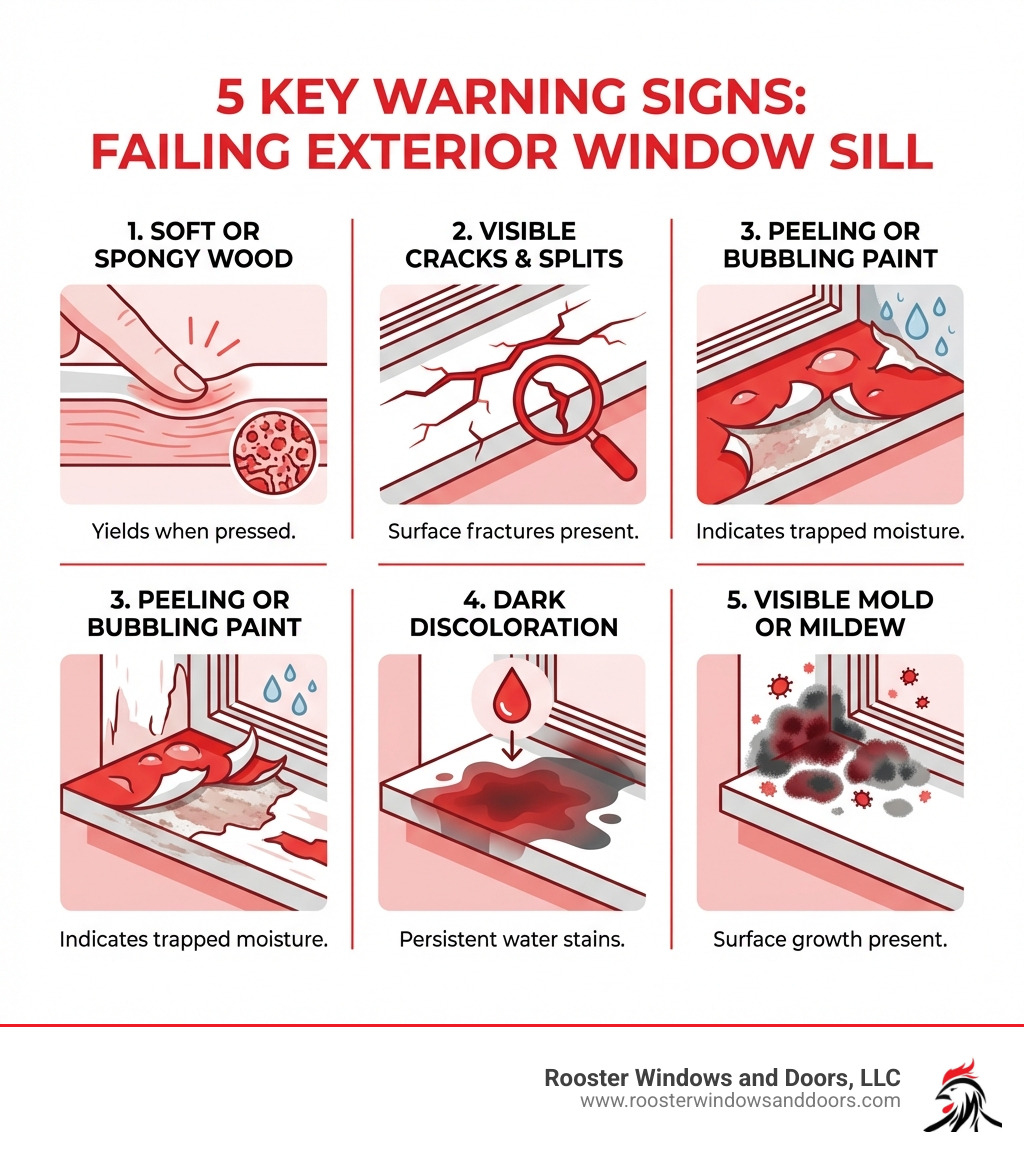
Before we dive into the nitty-gritty of exterior window sill replacement, let’s play detective! Knowing the common signs of a failing window sill can save you a lot of headache (and money) down the line. A damaged sill can lead to serious issues, including mold growth, structural damage, and increased energy bills. So, what should you be looking for?
Here are the tell-tale signs that your exterior window sill might be waving the white flag:
- Wood Rot: Press on the wood. If it feels soft, spongy, or crumbles, you have rot. This is a common issue in the Chicagoland climate, often caused by poor drainage or failed caulking.
- Cracks and Splits: These are not just cosmetic. Cracks allow water to seep in and cause deeper damage.
- Peeling or Bubbling Paint: Paint that is peeling or bubbling indicates moisture is trapped underneath, pushing the paint off the surface.
- Discoloration or Water Stains: Dark spots or streaks on the sill or the wall below are clear signs of improper water drainage.
- Mold or Mildew Growth: Fuzzy black or green growth is a health hazard and a sure sign of a persistent moisture issue.
- Drafts or Increased Energy Bills: A damaged sill can cause air leaks, leading to drafts and higher energy costs.
- Sagging or Loose Fit: A sill that sags or feels loose indicates structural weakening and requires immediate attention.
Catching these issues early can prevent further damage to your home and improve its curb appeal. For more on moisture issues, check out our guide on Condensation on Windows.
Preparing for Your Project: Materials, Tools, and Costs
Ready to tackle your exterior window sill replacement? Excellent! Preparation is key to any successful home improvement project. Before you grab your hammer, let’s talk about what you’ll need and what to expect.
A DIY exterior window sill replacement generally costs under $100 per window for materials if you already own the necessary tools. This is a significant saving compared to several hundred dollars per window for professional installation. For a moderate skill level, you can expect the project to take about 2 to 4 hours per window.
Regardless of whether you’re a seasoned DIYer or a beginner, safety should always come first. Make sure to wear safety glasses to protect your eyes from debris, work gloves to prevent cuts and splinters, and a dust mask, especially when cutting or sanding.
Gathering Your Tools and Materials
Having the right tools and materials at hand will make your exterior window sill replacement project much smoother. Imagine trying to cut a perfect line with a dull saw – it’s no fun!
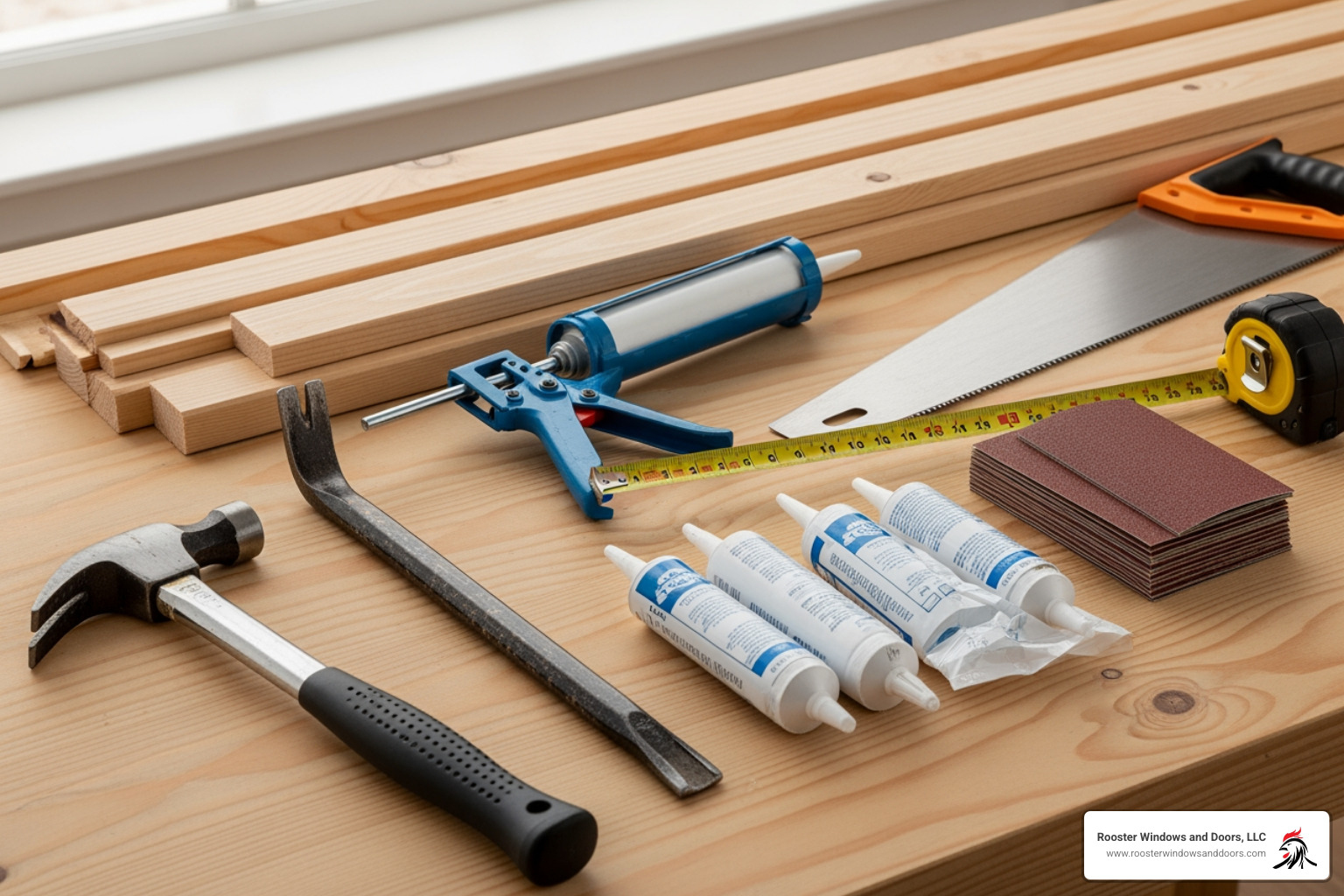
Here’s a comprehensive list of what you’ll likely need:
Essential Tools:
- Pry bar and Hammer: For gently removing the old sill and trim.
- Utility Knife: To cut through old caulk and trim.
- Oscillating Multi-tool: Invaluable for precise cuts, especially for embedded sills.
- Reciprocating Saw: For cutting larger sections of a rotted sill.
- Circular Saw / Handsaw / Jigsaw: For cutting the new sill material to size.
- Caulk Gun: For applying exterior-grade caulk.
- Drill/Driver: For drilling pilot holes and securing the new sill.
- Measuring Tape and Layout Square: For accurate measurements and marking cuts.
- Level: To ensure your new sill is level and has the correct slope.
- Chisel: For cleaning out remaining wood pieces.
- Sander (or sandpaper): For smoothing the new sill and any patched areas.
Necessary Materials:
- Replacement Sill Material: This could be wood (redwood, cedar, or pressure-treated lumber), PVC, or composite.
- Exterior-Grade Caulk: High-quality silicone or acrylic latex caulk for outdoor use.
- Wood Filler or Epoxy: For repairing minor rot in the frame.
- Primer: Crucial for wood sills to protect against moisture.
- Exterior Paint or Stain: To match your home’s trim and protect the sill.
- Wood Screws or Galvanized Nails: Exterior-grade fasteners that won’t rust.
- Shims: For leveling and filling gaps.
- Minimal-Expansion Foam: To insulate and support the new sill.
- Wood Preservative (for wood sills): To treat new wood before installation.
Choosing the Right Sill Material
The material you choose for your exterior window sill replacement can make a huge difference in its longevity and maintenance. We’ve seen a variety of materials used in homes across the Chicagoland area, each with its own pros and cons.
Here’s a breakdown to help you decide:
| Material Type | Durability | Maintenance | Cost | Aesthetic Appeal | Weather Resistance | Rot Resistance |
|---|---|---|---|---|---|---|
| Wood | Good (especially cedar, redwood, treated) | High (regular painting/sealing) | Moderate | Classic, natural, customizable | Good (if well-maintained) | Low (prone to rot if not maintained) |
| PVC/Vinyl | Excellent | Low (just cleaning) | Moderate-High | Modern, uniform | Excellent (impervious to water) | Excellent (won’t rot, no insects) |
| Composite | Excellent (engineered for durability) | Low (just cleaning) | Moderate-High | Mimics wood, uniform | Excellent (moisture & insect resistant) | Excellent (won’t rot, no insects) |
| Aluminum | Excellent (immune to rot) | Very Low (just cleaning) | High | Modern, industrial | Excellent (won’t rust/corrode) | Excellent (immune to rot) |
| Concrete | Superior (long-lasting) | Very Low (virtually maintenance-free) | High | Robust, natural stone look | Excellent (weather-resistant) | Excellent (no rot, no insects) |
Wood sills offer a classic look but require regular maintenance (painting/sealing) to prevent rot.
PVC/Vinyl sills are a low-maintenance, durable option highly resistant to rot, moisture, and insects, making them ideal for harsh weather.
Composite sills blend wood fibers and plastic, offering the look of wood with the durability and resistance of synthetic materials.
Aluminum sills are extremely durable, rot-proof, and maintenance-free, though they can be noisy in rain.
Concrete or stone sills are exceptionally durable and weather-resistant but are heavy and can crack in extreme freeze-thaw cycles.
Considering the diverse weather conditions we experience in the Chicagoland area, materials with strong moisture and rot resistance are often preferred for exterior window sill replacement. For a deeper dive into window material options, explore our Comprehensive Guide to the Best Window Replacement Options.
Your Step-by-Step Guide to Exterior Window Sill Replacement
While some sills can be replaced without removing the window, the approach depends on the window’s construction and damage extent. Always inspect the frame for rot, as this influences the project scope. Use the old sill as a template for a proper fit. Let’s walk through the process of exterior window sill replacement step by step. For a detailed visual guide, we recommend a resource like This Old House’s tutorial on How to Replace a Rotted Windowsill.
Step 1: Removing the Old Sill for Your Exterior Window Sill Replacement
This is where the fun (and sometimes the mess) begins! The goal is to remove the damaged sill while causing minimal disturbance to the surrounding window frame and siding.
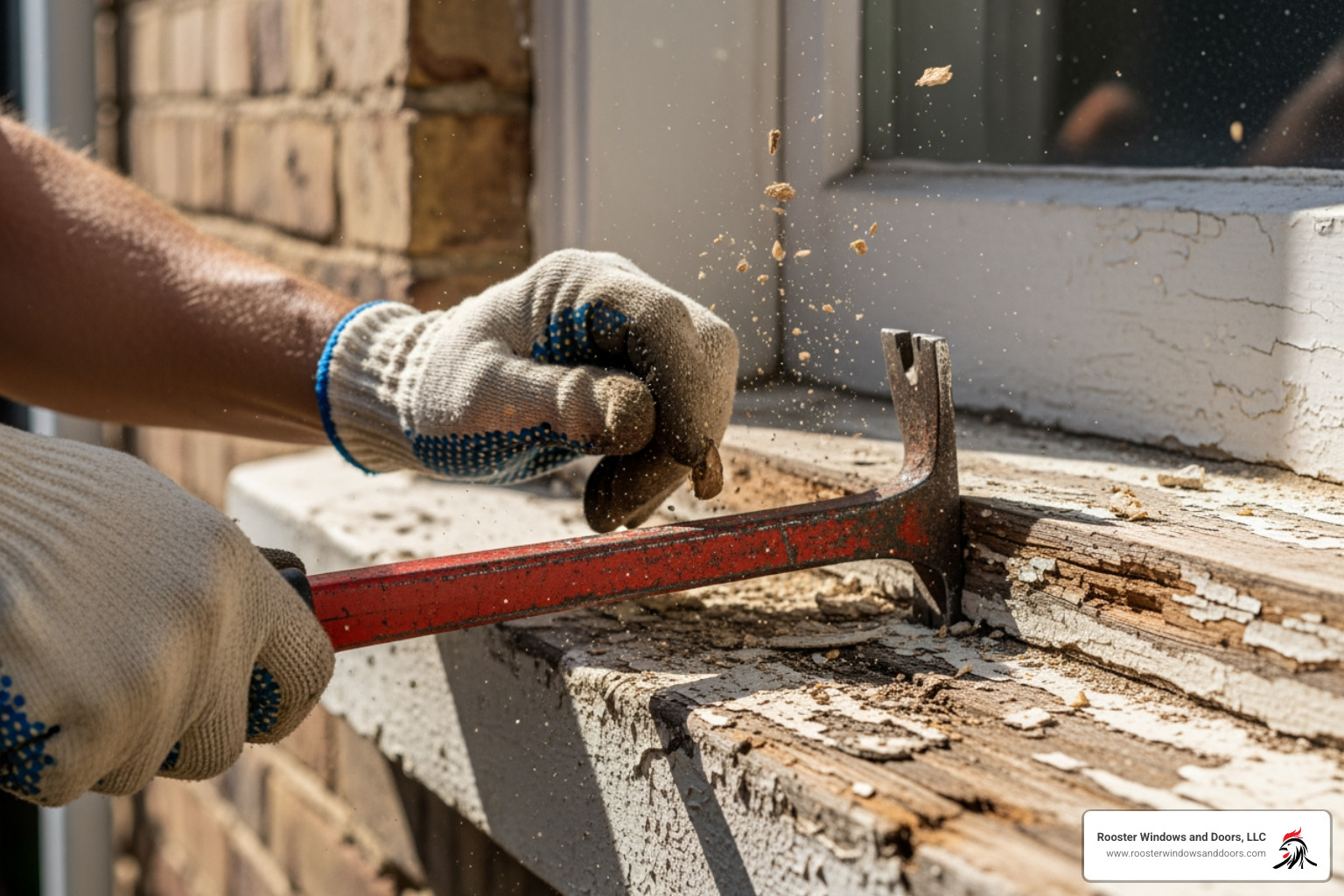
- Break the Caulk Seal: With a utility knife, cut the old caulk seal where the sill meets the frame and siding to prevent damage during removal.
- Remove Surrounding Trim: Gently pry off any trim blocking the sill. Try to keep it intact for reuse.
- Assess the Sill’s Attachment: Determine if the sill is nailed in or embedded under the frame, which will affect removal.
- Cut the Sill (if necessary): For stubborn sills, use an oscillating multi-tool or reciprocating saw to cut the sill into sections for easier removal.
- Pry Out the Old Sill: Use a pry bar to lift and remove the old sill pieces. Driving screws into the sill can provide leverage points for your pry bar.
- Remove Remaining Pieces: Use a hammer, chisel, and end nippers to clear out any remaining wood bits and old nails.
Take your time with this step. Careless removal can damage the surrounding window frame, leading to a much larger (and more expensive) repair.
Step 2: Preparing the Opening
Once the old sill is out, it’s time for some serious cleanup and inspection. This step is crucial for ensuring your new sill has a solid, stable, and dry foundation.
- Clean Thoroughly: Scrape away all debris, old caulk, and wood remnants from the opening.
- Inspect for Further Damage: Carefully check the window frame, jambs, and wall structure for any rot or water damage.
- Remove All Rotten Wood: It is critical to remove all rotted wood to prevent it from spreading to the new sill.
- Repair Minor Frame Damage: Use a two-part epoxy wood filler for minor rot or imperfections in the frame, then sand it smooth.
- Ensure the Area is Clean, Dry, and Level: The opening must be completely clean, dry, and level before installing the new sill. Use shims to level the base if needed. Proper preparation is key to a long-lasting exterior window sill replacement.
Step 3: Installing the New Sill for Your Exterior Window Sill Replacement
This is where your home starts to get its smile back! Precision is your best friend in this step to ensure a watertight and aesthetically pleasing finish.
- Measure and Cut the New Sill: Use the old sill as a template or measure the opening to cut your new sill material. It’s wise to cut it slightly larger and trim for a perfect fit.
- Create a Drip Edge (for wood sills): Cut a shallow groove along the underside of a wood sill, about 1/2 inch from the front. This drip edge directs water away from the house.
- Ensure Proper Slope: The new sill must have a slight downward slope (around 5 degrees) away from the house to ensure proper water drainage.
- Prime All Surfaces (for wood sills): Before installation, prime all sides of a wood sill with an exterior primer for maximum moisture protection.
- Dry Fit the Sill: Place the new sill in the opening without fasteners to check for a snug fit and proper slope. Adjust as needed with trimming or shims.
- Apply Sealants and Adhesives: Apply a generous bead of exterior-grade silicone caulk where the sill will meet the frame.
- Secure with Screws or Nails: Slide the new sill into place. Secure it with exterior-grade screws or galvanized nails, drilling pilot holes first to prevent splitting.
The Perfect Finish: Sealing and Long-Term Maintenance
You’re almost there! Once your new sill is installed, the finishing touches are what make it truly durable and professional-looking.
- Seal All Gaps: Apply a smooth bead of exterior-grade caulk along all edges where the new sill meets the window frame and siding to create a watertight seal.
- Paint or Stain (for wood sills): After the caulk cures, apply at least two coats of high-quality exterior paint or stain to your wood sill.
- Replace Trim: Reattach any trim you removed. Fill nail holes, sand smooth, then caulk and paint.
- Professional Finish Tips:
- Measure twice, cut once.
- Use quality materials for a longer-lasting result.
- A clean, dry, and level surface is fundamental.
- Attention to detail in caulking and painting makes a big difference.
Long-Term Maintenance:
Regular maintenance is key to a long-lasting sill:
- Regular Inspections: Check your sills twice a year for cracks, peeling paint, or soft spots.
- Cleaning: Clean sills regularly with mild detergent to remove dirt and debris.
- Resealing: Reapply caulk every 2-3 years or as soon as you notice cracks or gaps.
- Touching Up Paint/Stain: For wood sills, touch up the paint or stain every few years to maintain the protective barrier.
For more comprehensive advice on keeping your windows in top shape, explore our guide to Window Maintenance.
Sill Repair vs. Full Window Replacement: Making the Right Call
Sometimes, an exterior window sill replacement is all you need. Other times, it signals a larger problem. It’s often more cost-effective to replace the entire window if you have multiple issues.
Consider a full window replacement if:
- Extensive Frame Damage: If rot has spread into the window frame, jambs, or wall, a sill replacement isn’t enough. The compromised structure requires a full-frame window installation.
- Poor Insulation or Outdated Materials: If your windows are old, single-pane, or inefficient, a full replacement offers superior insulation and energy savings that a new sill alone cannot provide.
- Multiple Problems: If you’re dealing with drafts, operational issues, and a damaged sill, a full replacement is the most sensible long-term solution.
- Desire for a Full Upgrade: New windows can dramatically improve your home’s curb appeal and energy performance.
A full replacement addresses the entire window unit, ensuring better overall performance. New windows offer superior insulation and energy efficiency, a key focus at Rooster Windows and Doors.
For more details on the benefits of new windows, check out our Energy Efficient Window Installation guide and learn about the Cost to Replace a Window.
Frequently Asked Questions about Exterior Window Sill Replacement
We hear a lot of questions about window sills! Here are some of the most common ones we get from homeowners in Illinois:
Can a window sill be repaired instead of replaced?
Yes, for minor rot or small cracks, you can use epoxy wood filler after removing the soft wood. However, if the rot is extensive or the sill is structurally compromised, a full replacement is the better, more durable solution.
How do I ensure my new window sill drains water properly?
Proper drainage is crucial.
- Sill Slope: Ensure the sill has a slight downward slope (5-15 degrees) away from the house.
- Drip Edge/Groove: For wood sills, cut a groove on the underside to help water drip off cleanly.
- Weep Holes: If your window has them, make sure weep holes are clear to let trapped water escape.
- Proper Caulking: Seal gaps, but consider leaving small drainage openings at the bottom edge of the sill where it meets the siding.
How much does exterior window sill replacement cost?
The cost varies.
- DIY Cost: If you do it yourself, materials like the sill, caulk, and paint typically cost under $100 per window.
- Professional Cost: Professional installation can range from several hundred dollars per window, covering labor, materials, and expertise for a flawless result in the Chicagoland area.
Protect Your Home with a Flawless Installation
Completing an exterior window sill replacement is a rewarding project that significantly improves the functionality and aesthetics of your home. You’re not just fixing a piece of wood; you’re shoring up your home’s defenses against the elements, boosting its energy efficiency, and enhancing its curb appeal.
For many homeowners, this is a manageable DIY task. But for those facing extensive damage, structural concerns, or who simply prefer the peace of mind that comes with expert craftsmanship, our team at Rooster Windows and Doors is here to help. We pride ourselves on providing high-quality, flawless, and energy-efficient installations, offering a wide variety of options to suit your specific needs and the unique demands of the Chicagoland climate.
Whether you’re looking to replace a single sill or considering a full window upgrade, we’re dedicated to ensuring your home is protected and beautiful for years to come. For extensive damage or a full upgrade, consider a professional Window Replacement with us.
