

Why Basement Windows Matter More Than You Think
Windows for basement spaces are often overlooked during home renovations, yet they play a crucial role in changing a dark, damp storage area into a comfortable, functional living space. Choosing the right basement windows can dramatically improve natural light, ventilation, energy efficiency, and safety—while also adding significant value to your home.
Quick Answer: The Best Windows for Basement Spaces
When choosing basement windows, consider these top options:
- Hopper Windows – Hinged at the bottom, open inward; excellent for ventilation and security
- Sliding Windows – Horizontal operation; easy to use, modern look, ideal for wider openings
- Casement Windows – Side-hinged, crank-operated; superior seal and ventilation
- Egress Windows – Required for bedrooms; larger size for emergency exits
- Fixed (Picture) Windows – Non-opening; maximizes light where ventilation isn’t needed
Key factors to consider:
- Energy efficiency (U-factor, SHGC ratings)
- Ventilation needs and moisture control
- Local building codes and egress requirements
- Material durability (vinyl, fiberglass, wood)
- Security features and proper installation
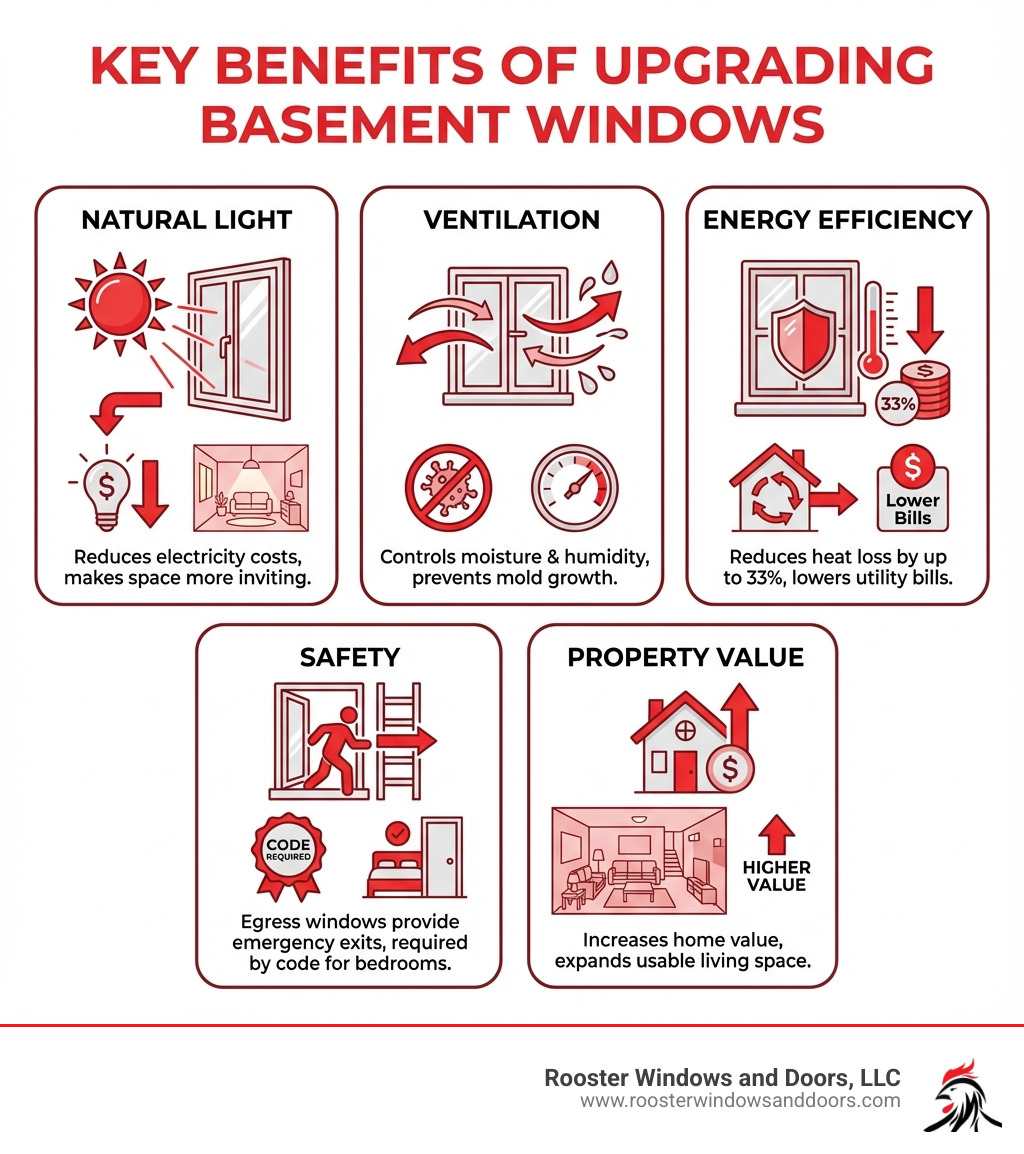
Basements have evolved from dank cellars into valuable living spaces over the past 50 years. However, they remain notorious for problems with water intrusion, cold temperatures, humidity, and poor air quality. The right windows address all these issues—bringing in natural light to reduce electricity costs, providing ventilation to manage moisture and prevent mold, and improving insulation to reduce heat loss (which can account for up to one-third of total heat loss in homes with uninsulated basement walls).
Whether you’re finishing a basement for the first time, updating outdated windows, or ensuring your space meets current safety codes, understanding your window options is essential. The difference between a dreary basement and a bright, comfortable living area often comes down to the quality and type of windows you choose.
I’m Piotr Wilk, and for over two decades, I’ve specialized in residential window and door installation throughout the Chicagoland area, including extensive experience with windows for basement spaces in homes across Lake, Cook, and McHenry Counties. My team at Rooster Windows and Doors has helped countless homeowners transform their basements from neglected storage areas into beautiful, functional living spaces.
Glossary for windows for basement:
Why the Right Windows are a Game-Changer for Your Basement
Imagine a basement that feels less like a dungeon and more like an extension of your home. That’s the power of selecting the right windows for basement areas. They’re not just holes in the wall; they’re vital components that influence everything from your utility bills to your family’s health and safety.
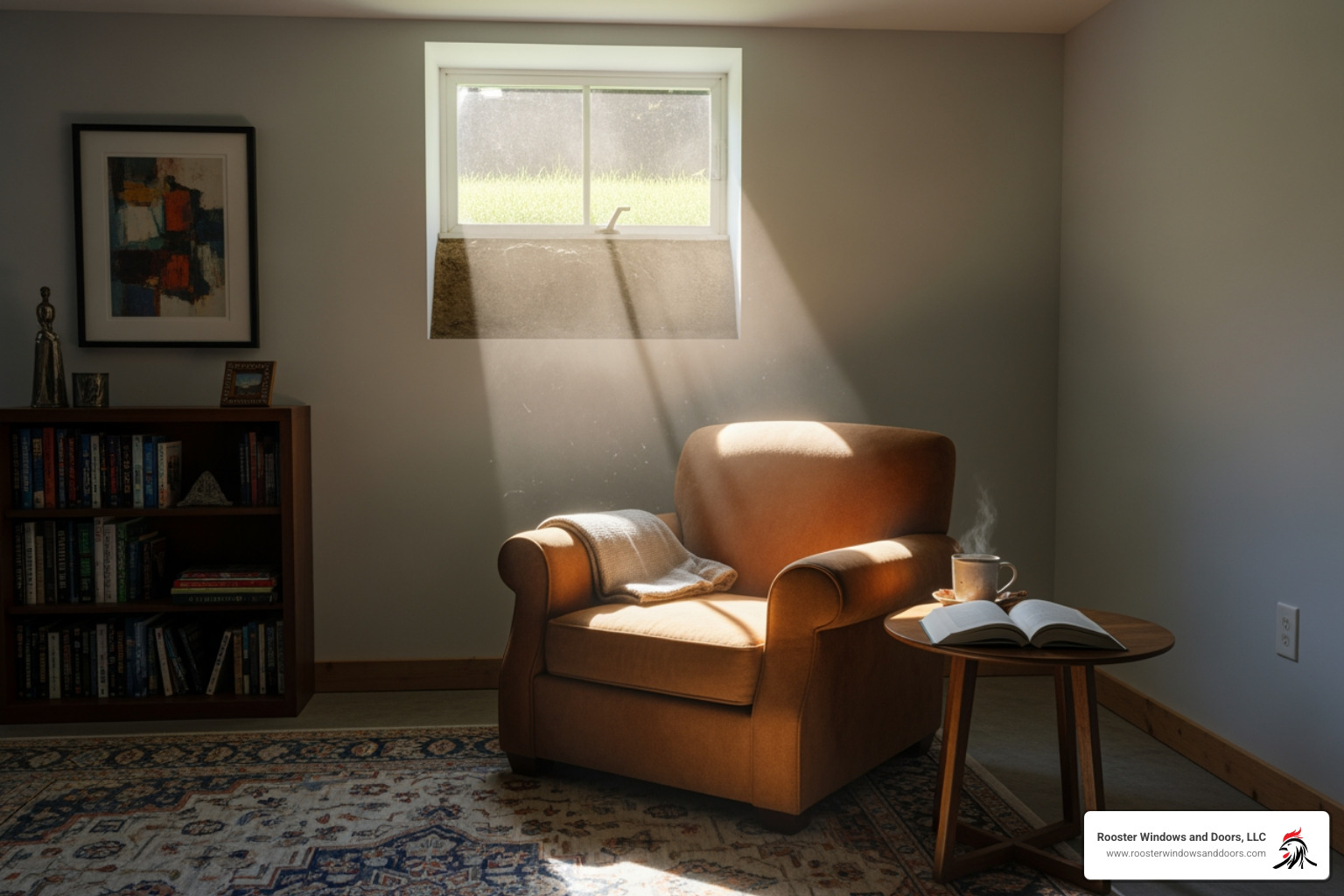
Natural light is perhaps the most immediate benefit. It brightens the space, making it feel larger and more inviting. This can reduce your reliance on artificial lighting, saving you money on electricity. Beyond that, natural light has been shown to improve mood and overall well-being.
But the benefits extend far beyond aesthetics. Proper basement windows are critical for energy efficiency, helping to regulate temperatures and prevent significant heat loss. According to research, heat loss through uninsulated basement walls can account for up to one-third of the heat loss from an average home. By upgrading your windows, you’re not just improving comfort; you’re investing in a more energy-efficient home.
Comfort is key, especially if you’re changing your basement into a living space like a home office, bedroom, or family room. Good windows contribute to a consistent indoor temperature, reducing drafts and cold spots. This directly impacts your home’s overall energy efficiency, making your heating and cooling systems work smarter, not harder.
Finally, the right windows for basement spaces can increase your property value. A finished, well-lit, and comfortable basement with proper ventilation and safety features is a significant asset to any home in Chicagoland.
Boosting Energy Efficiency and Comfort
When we talk about energy-efficient windows for basement applications, we often refer to terms like U-factor and Solar Heat Gain Coefficient (SHGC). The U-factor measures how well a window prevents heat from escaping, while SHGC measures how much solar radiation passes through the window. For our climate in Illinois, where winters are cold, a low U-factor is crucial to keep the heat in.
Modern windows achieve superior energy efficiency through several innovations:
- Double or Triple-Pane Glass: Multiple layers of glass create air pockets that act as insulators.
- Low-E Coatings: These microscopic metallic coatings reflect heat, keeping your basement warmer in winter and cooler in summer.
- Gas Fills: Inert gases like argon or krypton are often injected between glass panes, further improving insulation by reducing heat transfer.
Beyond the window unit itself, proper installation is paramount. Air sealing around the window frame prevents drafts and air leaks, which can significantly undermine even the most energy-efficient window. Our team at Rooster Windows and Doors prioritizes meticulous installation to ensure a tight, energy-saving seal.
By bringing your basement into your home’s thermal envelope, you create a more comfortable, consistent temperature throughout your entire house. This not only makes your basement a more pleasant place to be but also significantly contributes to lowering your utility bills. For more insights on this, you can refer to resources like Air Sealed, Insulated Basements. The energy savings of basement wall insulation vary depending on factors like local climate and heating systems, but the impact is undeniable.
Improving Air Quality and Controlling Moisture
Basements, being below ground, are naturally prone to higher humidity levels and can develop a distinct “basement smell.” This is often due to poor ventilation and moisture accumulation, which can lead to condensation and, worse, mold growth. Basements are notorious for problems with water intrusion, cold temperatures, humidity, mold, and uncomfortable, if not unhealthy, living conditions.
Effective ventilation through operable windows for basement spaces is a simple yet powerful solution. Opening windows regularly allows stale, humid air to escape and fresh air to circulate, significantly improving indoor air quality and reducing humidity levels. This is especially important in the humid Illinois summers.
By managing humidity, we can prevent condensation from forming on cold surfaces like pipes and concrete walls, which is a common precursor to mold. Proper insulation around your basement windows, as highlighted in the Basement Insulation Technology Fact Sheet, also plays a role in keeping interior air from contacting cold surfaces that could cause condensation.
For a deeper dive into managing moisture in your basement, consider the insights from Renovating your Basement for Moisture Control. Choosing the right windows and ensuring their proper installation are key steps in creating a healthier, drier basement environment.
Exploring the Most Popular Types of Basement Windows
Choosing the right style of windows for basement applications depends on your priorities: ventilation, light, security, and aesthetics. Let’s explore the most common types.
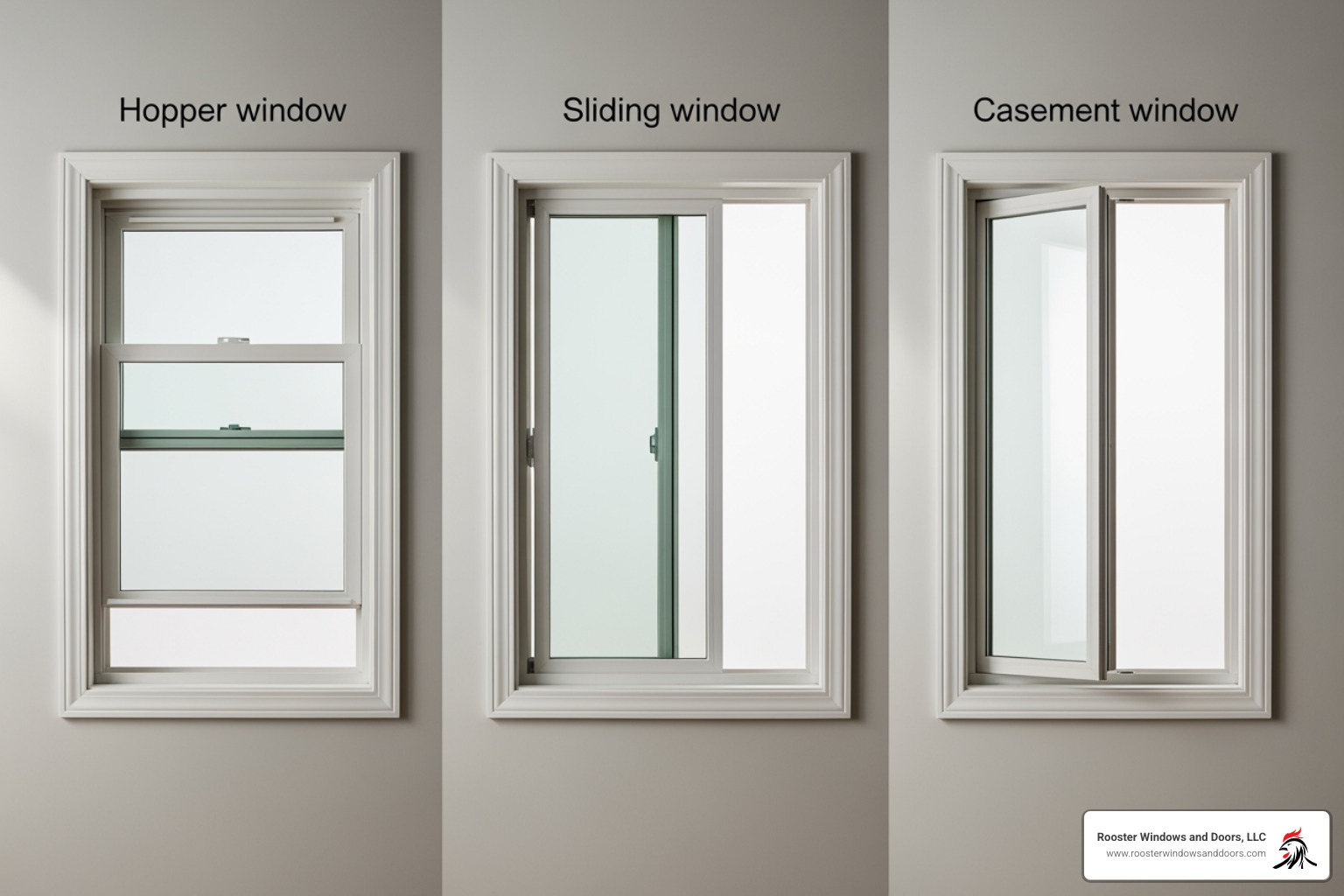
| Window Type | Ventilation | Ease of Cleaning | Space Requirements |
|---|---|---|---|
| Hopper | Excellent | Moderate | Minimal (inward) |
| Sliding | Good | Moderate | Minimal (horizontal) |
| Casement | Superior | Excellent | Moderate (outward) |
Hopper Windows
Hopper windows are a popular and traditional choice for basements, and for good reason. They are hinged at the bottom and open inward from the top.
-
Advantages:
- Excellent Ventilation: They effectively draw in fresh air from the top while allowing warmer, stale air to escape, promoting good air circulation. This is especially useful for managing that “basement smell.”
- Security: Because they open inward and often have a limited opening distance, they offer good security.
- Debris Protection: The inward-opening design means that the sill faces upward when open, preventing rain, leaves, and other debris from easily entering your basement.
- Compact: Their design makes them ideal for smaller, higher-up openings commonly found in basements.
-
Disadvantages:
- Limited View: Their small size and inward opening offer a restricted view of the outside.
- Interference: The inward swing can sometimes interfere with blinds, curtains, or objects on a nearby shelf.
Sliding Windows
Sliding windows for basement spaces operate horizontally, with one sash sliding past the other.
-
Advantages:
- Easy to Use: They glide open and closed with minimal effort.
- Good for Wide Openings: Sliding windows are a great choice if your basement has wider window openings, as they maximize the light and view for their size.
- Modern Look: They offer a clean, contemporary aesthetic.
- Decent Ventilation: While only half the window opens, they still provide good airflow.
-
Disadvantages:
- Track Maintenance: The tracks can collect dirt and debris, requiring occasional cleaning.
- Less Airtight: Compared to casement windows, the seal may not be as tight when closed, potentially leading to more air leakage if not well-maintained.
For a comprehensive look at various options, our Basement Windows Complete Guide offers more details.
Casement and Awning Windows
Casement and awning windows, while perhaps less common in traditional basements, offer distinct advantages.
-
Casement Windows: Hinged on one side and open outward with a crank.
- Advantages: Superior ventilation (they can open fully), excellent energy efficiency due to a tight seal when closed, and easy to clean both sides from inside the home.
- Disadvantages: Outward swing can interfere with landscaping or require careful planning for window wells.
-
Awning Windows: Hinged at the top and open outward from the bottom.
- Advantages: Provide ventilation even during light rain or snow, as the sash creates a protective “awning” over the opening. They also offer a very tight seal.
- Disadvantages: Limited view, and like casements, the outward swing needs consideration for window wells.
Fixed (Picture) Windows
Fixed windows, also known as picture windows, are non-operable.
-
Advantages:
- Maximizes Light: Their primary purpose is to let in as much natural light as possible, offering an unobstructed view.
- High Energy Efficiency: Since they don’t open, they are generally very airtight and energy-efficient.
- Cost-Effective: Often a more affordable option.
-
Disadvantages:
- No Ventilation: They offer no airflow, so other means of ventilation would be needed.
- No Egress: Cannot be used as an emergency exit.
- Best used in areas where ventilation isn’t a priority, or in conjunction with other operable windows to fulfill ventilation needs.
Key Factors for Choosing the Best Windows for a Basement
Selecting the perfect windows for basement applications involves more than just picking a style. You need to consider how they integrate with your home, meet local codes, and deliver on performance.
When our team at Rooster Windows and Doors helps homeowners across Chicagoland, we always start by asking about their goals for the basement.
Size and Shape Considerations: Basement windows are often smaller and positioned higher than those on upper floors. We’ll assess the existing openings and discuss options for enlarging them if more light or an egress window is needed. The shape can also be customized to fit unique architectural elements or preferences.
Ventilation Needs: Do you want to air out your basement regularly? Hopper, sliding, casement, or awning windows are great for this. If you only need light and have other ventilation sources, a fixed window might suffice.
Maximizing Natural Light: Basements are inherently dark. Choosing windows that optimize light intake is crucial. Wider windows can compensate for lack of height, and strategically placed windows can brighten the entire space.
Security Features: Since basement windows are at ground level, security is a major concern. Look for windows with strong locks, durable frames, and possibly laminated or tempered glass. We can also discuss additional security measures during installation.
Durability: Basements are susceptible to moisture and temperature fluctuations. Durable, moisture-resistant materials are essential to ensure your windows last.
Selecting the Right Window Materials
The material of your windows for basement plays a huge role in their durability, energy efficiency, and maintenance requirements.
-
Vinyl Windows: These are by far the most popular choice for basements in our service areas like Libertyville, Naperville, and Schaumburg.
- Advantages: Highly durable, low maintenance (never need painting or staining), excellent energy efficiency, and generally the most affordable option. They resist moisture, rot, and insects, making them ideal for below-grade environments.
- Disadvantages: Color options are usually limited, and while rare in basements, extreme heat could theoretically cause warping (though modern vinyl is very resilient).
-
Fiberglass Windows:
- Advantages: Extremely durable and dimensionally stable, meaning they resist warping, expanding, and contracting even with significant temperature changes, which is a great benefit in the Chicagoland climate. They are also highly energy-efficient and can be painted to match your home’s aesthetic.
- Disadvantages: More expensive than vinyl.
-
Wood Windows:
- Advantages: Offer a classic, natural aesthetic and good insulation properties.
- Disadvantages: High maintenance, as they require regular painting or staining. They are also susceptible to moisture, rot, and insect damage, making them a less ideal choice for the inherently damp environment of a basement unless they are clad with a protective exterior material (like aluminum or vinyl).
Our team can help you weigh the pros and cons of each material to find the best fit for your basement and your budget.
Unique and Functional Windows for Basement Spaces
Sometimes, standard options aren’t enough, or you have specific needs for your basement. We offer unique and functional windows for basement areas to address these.
- Glass Block Windows: These non-operable windows are a fantastic choice for privacy and security. They let in ample light while obscuring the view from outside, and their robust construction makes them very difficult to break through. They’re also energy-efficient and low maintenance.
- Custom Shapes: For a truly unique look or to fit an unusual opening, we can create custom-shaped windows. This allows for creative architectural elements even in a basement setting.
- Privacy Glass Options: If you want the light but not the view, privacy glass (frosted, etched, or textured) is an excellent solution. It allows natural light to filter in while maintaining seclusion.
- You might even consider options like a Garden Window Installation Near Me if your basement allows for a window well that can accommodate such a design, bringing a touch of greenery indoors.
Egress Windows: A Critical Requirement for Finished Basements
When you’re changing your basement into a finished living space, particularly if it includes a bedroom, an egress window isn’t just a recommendation—it’s a critical safety and legal requirement. An egress window provides an emergency escape route in case of fire or other hazards, giving occupants a safe way out and allowing emergency personnel a way in.
Understanding these requirements is paramount for any homeowner in Illinois planning a basement renovation. Our Egress Window Installation Complete Guide provides an in-depth look at this vital topic.
Understanding Egress Code Requirements
Building codes across Chicagoland and Illinois specify precise requirements for egress windows to ensure they are large enough and accessible in an emergency. While local codes can vary slightly, they generally follow these guidelines:
- Minimum Clear Opening Width: The window must open to at least 20 inches wide.
- Minimum Clear Opening Height: The window must open to at least 24 inches high.
- Minimum Clear Opening Area: The total open area must be at least 5.7 square feet (5 square feet for at-grade basements).
- Maximum Sill Height: The bottom of the clear opening must be no more than 44 inches from the finished floor.
- Window Well Specifications: If the bottom of the window opening is below ground level, a window well is required.
- The window well must have a minimum horizontal area of 9 square feet.
- It must project at least 36 inches away from the window.
- If the window well is deeper than 44 inches, it must include a permanent ladder or steps that don’t obstruct the window’s opening.
These codes are in place to save lives, and our team at Rooster Windows and Doors is expert in ensuring all installations meet or exceed these critical standards. For more specific guidance on hiring professionals, check out our Egress Window Installers Best Guide.
Planning Your Egress Window Installation
Installing an egress window is a significant undertaking that typically involves excavation, cutting into the foundation, and meticulous installation. It’s not a DIY project for the faint of heart, and proper planning is crucial.
- Choosing a Location: We’ll help you identify the best spot for your egress window, considering accessibility both inside and outside, and ensuring there’s a clear path for escape.
- Excavation: Digging out a window well requires careful planning to avoid utility lines and ensure proper grading away from the foundation.
- Window Well: Selecting the right window well—whether made of corrugated steel, fiberglass, or concrete—is important for durability and aesthetics. It also needs to be properly drained to prevent water accumulation.
- Drainage: This is perhaps one of the most critical aspects. We implement best practices for installing basement windows to ensure proper drainage and prevent moisture issues. This includes careful flashing, sealing around the window, and ensuring the window well itself has adequate drainage, often connecting to a perimeter drain or gravel base. Proper management of groundwater and rainwater is paramount for keeping basements dry.
- Installation Process: The actual installation involves cutting the foundation, framing the new opening, installing the window, and then installing the window well and its drainage system. Because of the complexity and the critical safety aspect, we always recommend professional installation.
For more information on window wells, including local providers in our service areas like Crystal Lake or Waukegan, you can consult our guide on Window Well Companies Near Me. Understanding the potential Egress Window Installation Cost is also an important part of your planning.
Frequently Asked Questions about Windows for a Basement
We often hear similar questions from homeowners in Chicagoland about their basement window projects. Here are some of the most common ones:
What is the most common type of basement window?
Hopper windows are a traditional and very popular choice for windows for basement applications. Their design—hinged at the bottom and opening inward—is ideal for the small, high-up openings typical in basements. They offer excellent, secure ventilation, allowing fresh air in while keeping debris and rain out. This makes them perfect for circulating air and preventing that stuffy basement feeling without compromising security.
Do all finished basements require an egress window?
Building codes generally require any basement that contains a bedroom, sleeping area, or even a habitable living space (depending on local interpretation) to have at least one egress window. This is a crucial safety measure to provide an emergency exit in case of fire or other hazards. However, the exact requirements can vary by municipality within Illinois. For example, specific rules might differ slightly between Chicago, Naperville, or Arlington Heights. Therefore, it’s crucial to check with your local building department to understand the precise regulations that apply to your finished basement project. Our team is well-versed in these local codes and can help you ensure compliance.
How can I make my basement windows more secure?
Basement windows, being at ground level, can be vulnerable. Here are several ways we help homeowners improve their security:
- High-Quality Locks: Ensure your windows have robust, multi-point locking systems.
- Laminated or Tempered Glass: These types of glass are much harder to break than standard glass, deterring intruders.
- Security Film: A clear film applied to the glass can make it shatter-resistant, holding the glass in place even if broken.
- Sturdy Window Well Covers: For egress windows or any basement window with a well, installing a strong, lockable cover can significantly deter unauthorized entry. You can learn more about these options on our page about Covers for Basement Windows.
- Proper Installation: A window that is poorly installed can be easily forced open. Our professional installation ensures a secure, tight fit that resists tampering.
Transform Your Basement with the Perfect Windows
Choosing the right windows for basement spaces is a pivotal step in changing an underused area into a vibrant, comfortable, and safe extension of your home. It’s about balancing aesthetics with essential functions like ventilation, natural light, energy efficiency, and, most importantly, safety.
The impact of professional installation cannot be overstated. From ensuring precise measurements and a watertight seal to guaranteeing compliance with all local egress codes in Chicagoland, our expertise ensures your windows perform optimally and stand the test of time. A poorly installed window, even if it’s the highest quality, can lead to drafts, moisture issues, and security vulnerabilities.
At Rooster Windows and Doors, we pride ourselves on providing flawless, energy-efficient installations with a wide variety of options to suit every customer’s needs. We’re dedicated to bringing light and life to your basement, making it a space you’ll love for years to come.
Ready to explore your options and turn your drab basement into a fab new space? Explore our high-quality basement window options today and let’s start the change.
