

Why Homeowners Are Choosing Hopper Windows for Basements and Bathrooms
A hopper window is a compact, single-sash window that’s hinged at the bottom and tilts inward from the top. Here’s what makes it unique:
- Opening Mechanism: Opens inward into your room, unlike awning windows that open outward.
- Hinge Location: Bottom-hinged design allows the window to tilt from the top at 45° to 90°.
- Ideal Spaces: Perfect for basements, bathrooms, laundry rooms, and garages where space is limited.
- Key Benefits: Excellent ventilation, easy cleaning from inside, improved security, and superior energy efficiency.
- Privacy Advantage: Can be installed high on walls to maintain privacy while providing light and airflow.
For basement renovations, bathroom upgrades, or any tight space needing better airflow, hopper windows offer a space-saving design that won’t obstruct your interior. They seal tightly when closed for excellent energy efficiency, yet open inward for maximum ventilation. Their compact size and inward-opening mechanism also make them significantly more secure than many other window types.
I’m Piotr Wilk, and with over two decades of experience in residential window installation in the Chicagoland area, I’ve helped countless homeowners select and install the perfect hopper window. The right hopper can transform a dark, stuffy space into a bright, well-ventilated area while maintaining security and privacy.
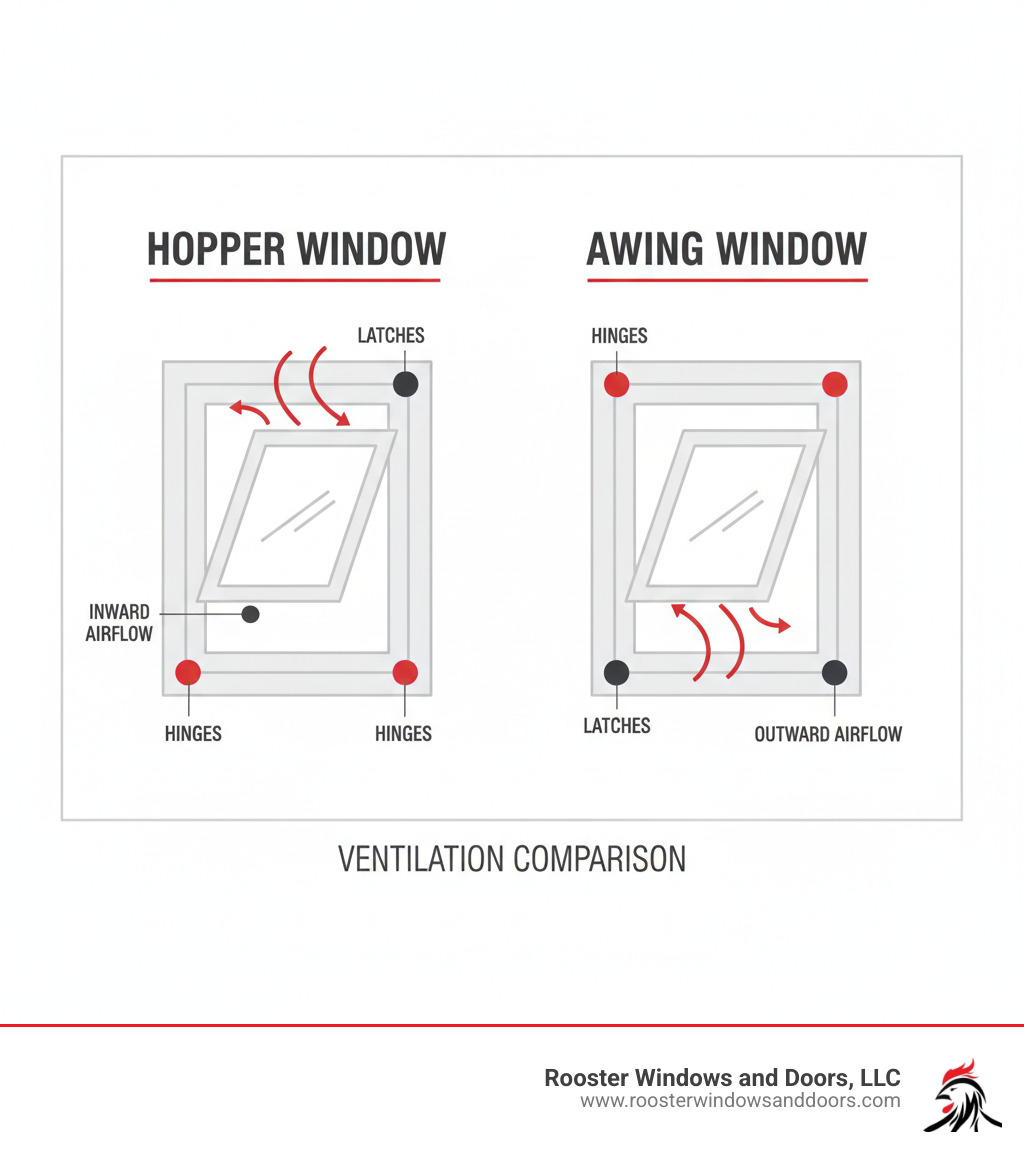
Hopper window vocab explained:
What is a Hopper Window? The Fundamentals Explained
Think of a hopper window as a clever solution for specific spaces. It’s hinged at the bottom and tilts inward from the top, opening into your room at an angle. This bottom-hinge design is what makes hopper windows special, creating an opening that directs fresh air upward and into your space.
The story behind hopper windows takes us back to the 19th century. Homeowners needed fresh air but wanted to keep dust from horse-drawn carriages and early automobiles out of their homes. The hopper window was the perfect solution. Its inward-tilting design allowed air to flow in while acting as a barrier, catching dust and debris.
While dust from carriages is no longer a concern, the practical benefits remain. The inward opening provides excellent ventilation in tight spaces, the design offers superior security, and tight seals deliver impressive energy efficiency.
Understanding how hopper windows differ from other styles is key. An awning replacement window is hinged at the top and opens outward, while replacement casement windows are hinged on the side and swing open like a door.
| Window Type | Hinge Location | Opening Direction | Best Use Case |
|---|---|---|---|
| Hopper Window | Bottom | Inward from top | Basements, bathrooms, laundry rooms, small spaces needing ventilation and privacy. |
| Awning Replacement Windows | Top | Outward from bottom | Spaces needing ventilation even during light rain, often paired with fixed windows. |
| Replacement Casement Windows | Side | Outward | Achieving maximum ventilation and unobstructed views, often in living areas or kitchens. |
The inward tilt from the top is what sets hopper windows apart, making them ideal for basements, bathrooms, and other compact spaces where you need airflow without sacrificing floor space or privacy.
The Pros and Cons of Installing Hopper Windows
Every window style has its strengths and weaknesses. While hopper windows can transform a basement or bathroom, it’s important to understand where they shine and where they might fall short.
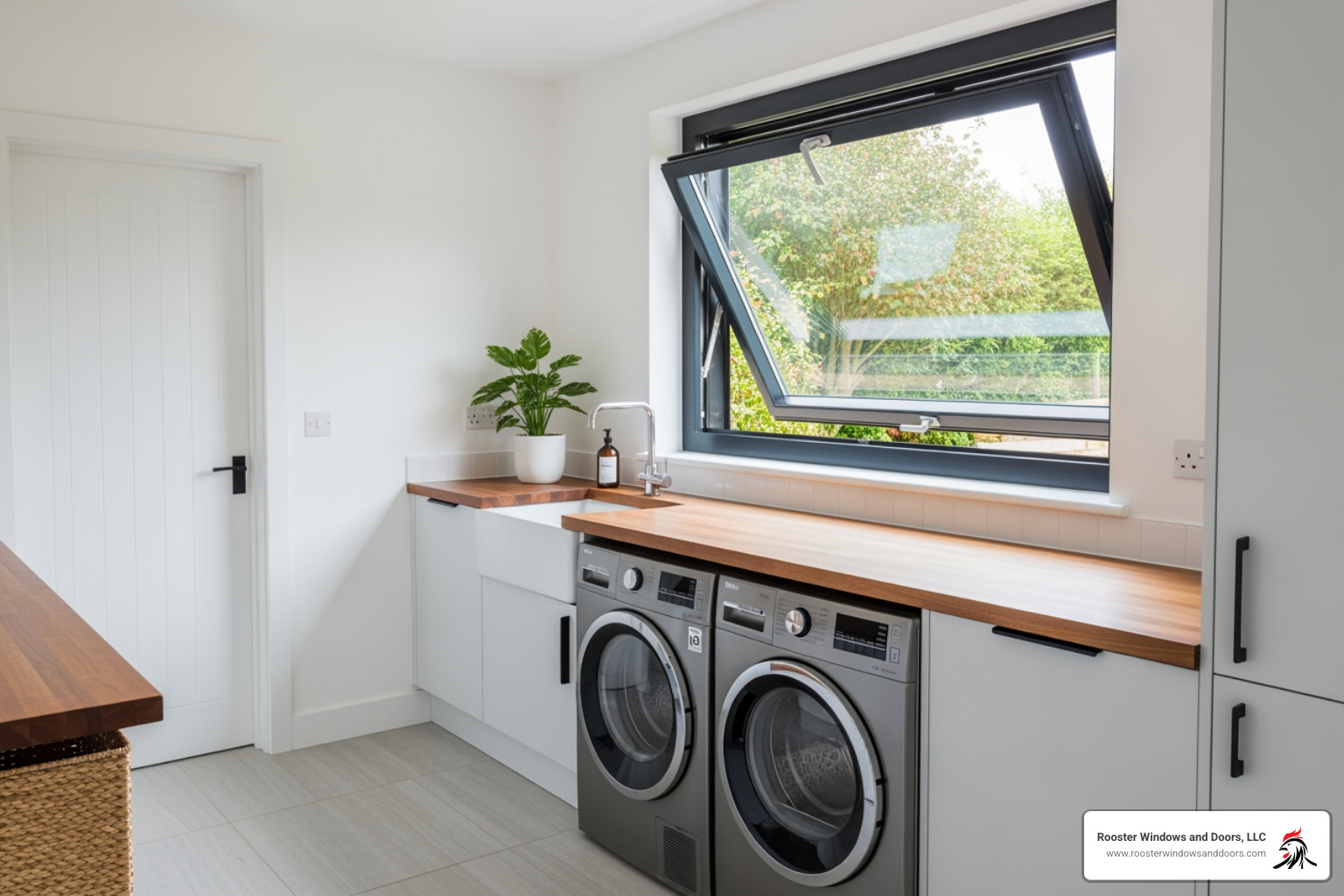
Key Benefits: Why Choose a Hopper Window?
The hopper window has earned its reputation as a basement and bathroom favorite for several key reasons.
Excellent ventilation is a primary feature. The inward tilt funnels fresh air upward into the room while helping to push stale, warm air out. This is especially effective in basements or laundry rooms where air can feel stagnant. Most hoppers open from 45° to a full 90° for complete airflow control.
Its space-saving design is a major advantage. Because the window opens inward, it doesn’t require exterior clearance, making it perfect for tight spots next to bushes or walkways.
Improved security is crucial for ground-level installations. The compact size of a hopper window makes it difficult for an intruder to enter. Modern versions often include dual sash latches or double handle locking systems for added protection.
Superior energy efficiency comes from the single-sash design. When closed, the sash presses tightly against the frame, creating an airtight seal that prevents air leakage and helps lower energy bills. Our Energy Efficient Window Installation process maximizes this benefit.
Easy cleaning is a practical perk. Since the sash tilts inward, you can clean both sides of the glass from inside your home without ladders. Some models even have quick-release hinges for thorough cleaning, simplifying Window Maintenance.
Privacy benefits make hoppers ideal for bathrooms. They can be installed high on a wall to let in light and air without compromising privacy. Adding frosted glass improves this effect.
Potential Drawbacks to Consider
While versatile, hopper windows aren’t perfect for every situation.
The limited view is a tradeoff. These windows are typically smaller and installed for function over scenery, so they don’t offer the expansive views of larger window styles.
Interior obstruction can be a minor issue. The inward-tilting sash requires clear space inside to open fully, which is a consideration for placement above countertops or in tight hallways.
Rain infiltration risk is something to be aware of. Unlike Awning Replacement Windows, an open hopper can catch rain. You’ll need to remember to close them during a storm.
Most hopper windows are not ideal for egress. Standard sizes are too small to meet building code requirements for emergency exits in bedrooms. For these spaces, a proper egress solution is necessary, as detailed in our Egress Window Installation Complete Guide.
Debris collection can occur on the open sash. The inward tilt can collect dust or leaves over time, though it’s easily wiped clean.
Ideal Applications and Egress Code Considerations
Choosing the right window for the right place makes all the difference. Hopper windows excel in certain rooms, but it’s crucial to understand safety codes, especially for basement projects.
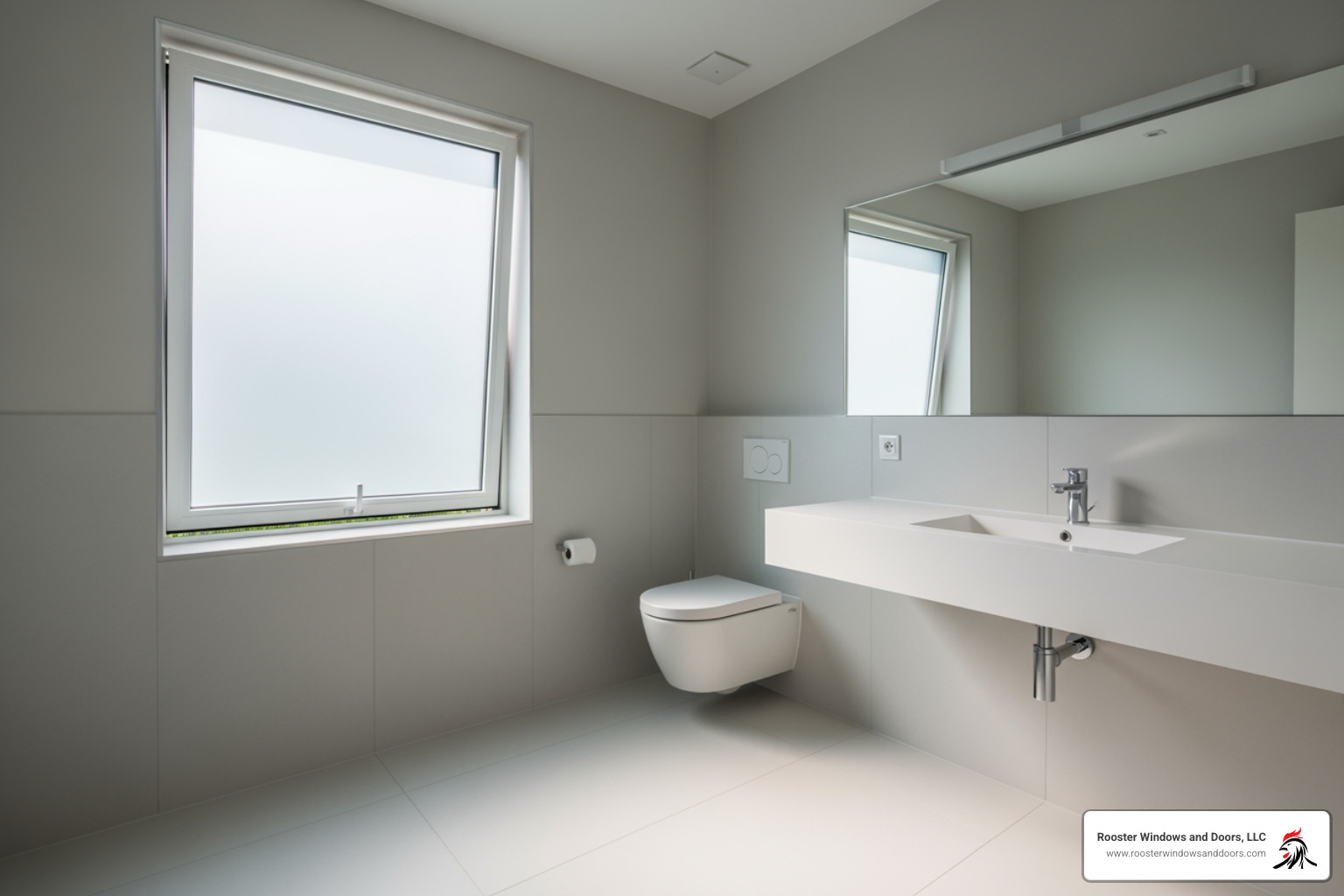
Best Rooms for a Hopper Window Installation
There are five spaces where hopper windows are a perfect fit.
Basements are the classic application. Hoppers bring in natural light and provide crucial ventilation to combat dampness and musty smells. Our Basement Windows Complete Guide offers more details on changing these spaces.
Bathrooms benefit from the combination of ventilation and privacy. A hopper window, especially with frosted glass, can be placed high on the wall to circulate air while maintaining privacy.
Laundry rooms generate heat and humidity. A hopper window provides the ventilation needed to keep the space comfortable and dry.
Garages can accumulate stale air and fumes. A hopper window offers simple, effective ventilation and lets in natural light.
Transom Windows, which are smaller windows installed above doors or larger windows, are another great use for hoppers. They add extra light and ventilation without altering the main window’s function. Learn more about Transom Windows.
Hopper Windows and Egress Requirements
This is a critical safety consideration. An egress window is an emergency exit required by the International Residential Code (IRC) for bedrooms and other habitable spaces. It must have a minimum clear opening size to allow escape or for a firefighter to enter.
Most standard hopper windows do not meet egress requirements. They are typically too small, and the inward tilt obstructs the opening. If you are finishing a basement bedroom, a typical hopper window will not pass inspection. It is essential to verify your local building codes before installation.
While some specialized, larger hopper windows are designed to meet egress codes (often with a fully removable sash), they are the exception. For most egress needs, an alternative window style is required. Our Egress Window Installation Complete Guide provides comprehensive information on compliant solutions.
Your Guide to the Perfect Hopper Window
Choosing the right hopper window involves understanding how frame materials, glass, and security features work together to ensure long-term performance.
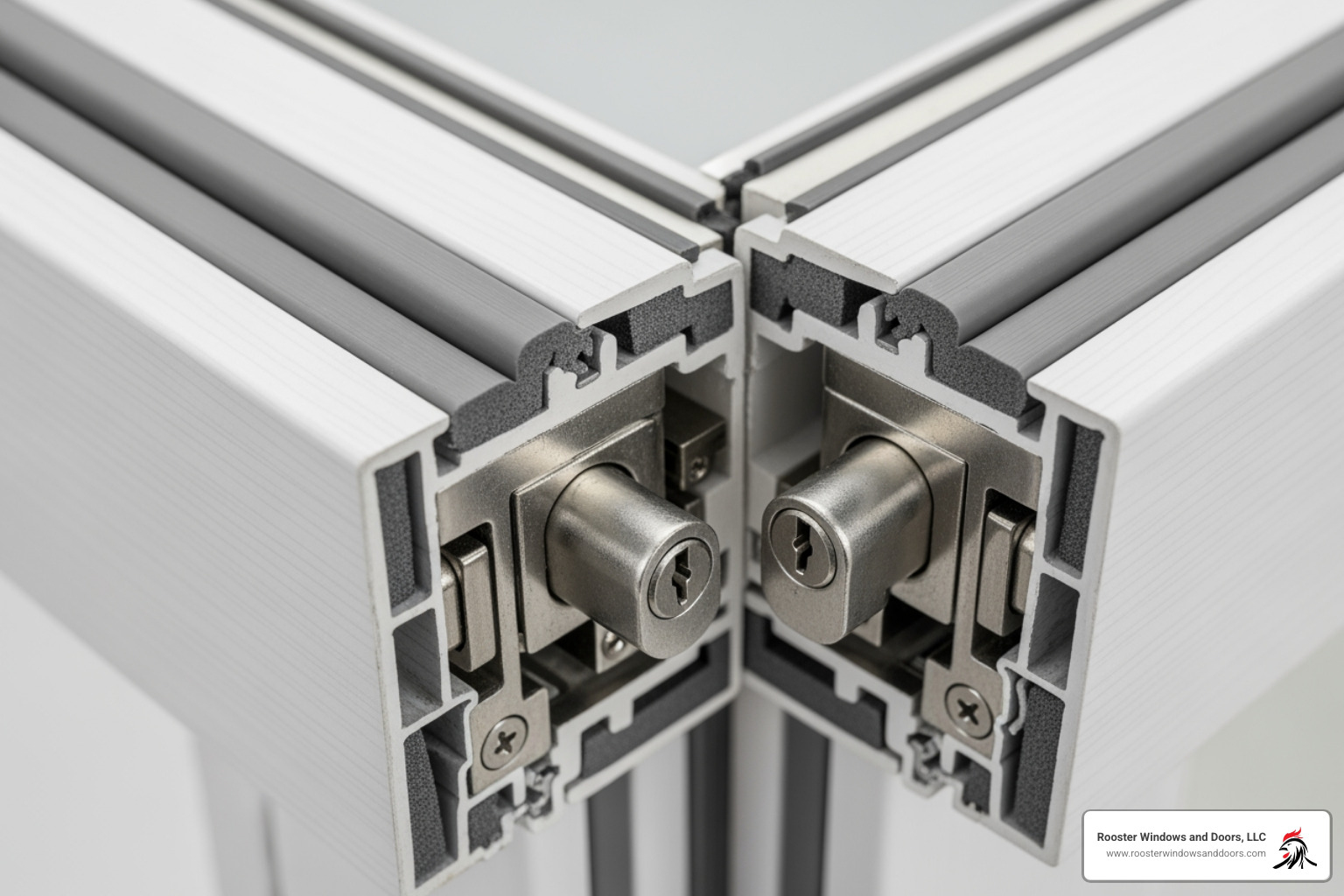
Frame Materials, Glass, and Customization
The materials you choose impact insulation, maintenance, and durability.
- Vinyl frames are our most popular recommendation. They offer excellent insulation, resist moisture and rot (ideal for basements and bathrooms), and are virtually maintenance-free.
- Wood frames provide a classic aesthetic and good insulation but require significant maintenance in high-humidity environments to prevent decay.
- Aluminum frames are strong with slim profiles for a contemporary look. However, they are less energy-efficient unless they are thermally broken.
Glass technology is where most of a window’s energy efficiency comes from. We recommend double-pane insulated glass, as the difference between Single Pane vs. Double Pane is dramatic. For our climate, consider these upgrades:
- Low-E coatings: A microscopic layer that reflects heat, keeping your home warmer in winter and cooler in summer.
- Argon gas fills: An inert gas used between panes that insulates better than air.
Quality hardware is also key, ensuring smooth operation and a tight, secure seal. We offer Custom Hopper Windows to meet your exact needs, including specific sizes, frame colors, grid styles, and privacy glass.
Energy Efficiency, Security, and Privacy Features
A well-chosen hopper window actively improves your home’s comfort and safety.
For energy efficiency, look for low U-factors (better insulation) and the right SHGC (manages solar heat). Modern glass packages with Low-E coatings and argon gas achieve impressive ratings. The hopper’s design creates an airtight seal when closed, preventing drafts. High-quality vinyl frames with multi-chambered designs further improve insulation and strength. Our Energy Efficient Window Installation process ensures these features perform optimally.
For security, the compact size of hopper windows is a natural deterrent. We often install them high on walls, making them hard to reach. Robust locking mechanisms, such as dual sash latches and multi-point locks, make them extremely difficult to force open from the outside, providing peace of mind for ground-level installations.
For privacy, we can install your window with frosted, textured, or obscure glass. This allows natural light to enter while preventing anyone from seeing inside. The typical high wall placement of hopper windows also adds an inherent layer of privacy.
Installation and Cost of Hopper Windows
Understanding the installation process and costs helps you plan your hopper window investment. Proper installation is key to open uping a window’s full potential for performance and longevity.
The Hopper Window Installation Process
While a hopper window may seem simple, professional installation is essential to guarantee energy efficiency, security, and weatherproofing. A DIY or poor-quality installation can lead to drafts, water leaks, and operational issues.
The process focuses on creating an airtight seal and proper weatherproofing, which is especially crucial for basement installations where moisture is a concern. Our process involves:
- Accurate Measuring: We measure the rough opening to ensure a perfect fit with adequate room for shimming and sealing.
- Proper Setting: The window is carefully set to be perfectly level and plumb, which is critical for proper operation and sealing.
- Expert Sealing: We use high-quality flashing, insulation, and sealants to create a durable, weathertight barrier against air and water infiltration.
Learn more about our meticulous approach on our Window Installation page.
Understanding the Costs
The total investment for hopper windows depends on several factors.
A standard hopper window unit itself typically costs between $100 to $500, before installation. The final price is influenced by:
- Frame Material: Vinyl is the most affordable and popular choice. Wood and thermally broken aluminum cost more.
- Glass Package: Basic double-pane glass is standard, while upgrades like Low-E coatings and argon gas fills add to the cost but increase energy savings.
- Custom Features: Non-standard sizes, privacy glass, decorative grids, and premium hardware will increase the price. Explore options on our Custom Hopper Windows page.
- Installation Costs: This varies based on project complexity. Replacing an existing window is less expensive than creating a new opening in a concrete wall.
Quality hopper windows are a long-term investment that pays off in energy savings. For a full breakdown of expenses, see our Window Replacement Cost Ultimate Guide.
Frequently Asked Questions about Hopper Windows
Here are answers to the most common questions we hear from Chicagoland homeowners about hopper windows.
How do you clean a hopper window?
Cleaning is simple. Because the sash tilts inward, you can easily access both the interior and exterior surfaces of the glass from inside your home. There’s no need for ladders or leaning outside. Some modern hopper window models also feature quick-release hinges, allowing you to remove the sash for even more convenient cleaning.
Can a hopper window be used in a shower?
Yes, but with specific requirements for durability and water resistance. For a shower installation, you must use a waterproof vinyl frame, as it will not rot or corrode. Critical sealing during professional installation is also essential to prevent water from getting into your wall structure. For privacy, we always recommend frosted or obscure glass in a shower.
Are hopper windows good for security?
Yes, hopper windows are one of the most secure window types for ground-level applications. Their security comes from two main features:
- Small Size: The compact opening is a natural deterrent, as it is extremely difficult for an intruder to fit through.
- Locking Mechanism: The inward-tilting design allows the sash to press firmly against the frame when latched. High-quality locking systems make it nearly impossible to pry the window open from the outside.
Conclusion
The hopper window is a smart, versatile solution for specific areas of your home. Its unique bottom-hinged, inward-tilting design provides an excellent balance of ventilation, energy efficiency, security, and privacy.
Hopper windows are the perfect upgrade for stuffy basements, humid bathrooms, and laundry rooms. They bring in light and fresh air while their tight seal lowers energy bills and their robust design improves security. The compact, inward-opening mechanism is ideal for tight spaces where an outward-swinging window wouldn’t work.
While hoppers are excellent for many uses, most standard models are not designed to meet egress code requirements for bedrooms. We can help you steer these rules and find the right solution for every room.
For a high-quality, flawless installation that maximizes the benefits of your hopper window, trust the experts at Rooster Windows and Doors. We are committed to providing energy-efficient installations with a wide variety of custom options. Explore your options for a new basement window with us today.
