

Why Homeowners Choose Triple Pane Windows
Triple pane windows feature three layers of glass with two gas-filled spaces between them, offering superior performance over traditional windows. For homeowners dealing with high energy bills, outside noise, or uncomfortable drafts, they are an excellent solution. These windows are about 40% more efficient than double-pane units, can reduce perceived noise by half, and virtually eliminate condensation.
Since up to 25% of a home’s heat can escape through its windows, upgrading is one of the most effective ways to boost efficiency. Triple pane windows use a combination of three glass panes, inert gas fills like argon or krypton, and Low-E coatings to reflect heat and block UV rays. This advanced construction makes them ideal for extreme climates, noisy neighborhoods, and high-performance homes.
Modern technology has also made them more practical. Today’s thin triple-pane windows have similar dimensions to standard double-pane units, resolving old concerns about excessive weight or bulk. With ENERGY STAR version 7 now requiring triple-pane performance in northern climates like ours, they are quickly becoming the new standard.
I’m Piotr Wilk, founder of Rooster Windows and Doors. For over two decades, my team and I have installed windows and doors across Chicagoland, including Lake, Cook, and McHenry Counties. We help homeowners determine if triple pane windows are the right investment for their climate, budget, and long-term goals.
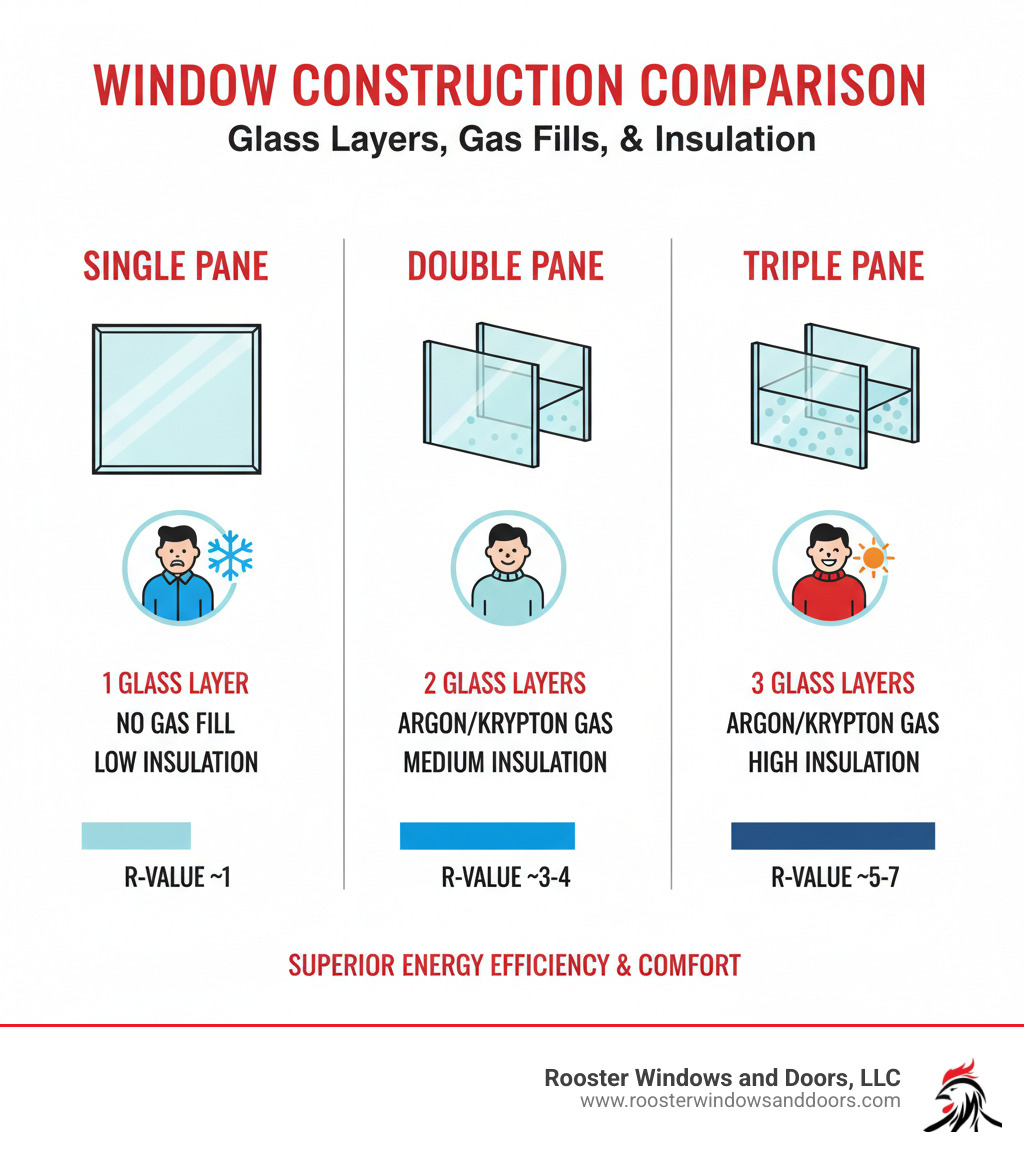
Basic triple pane windows glossary:
The Anatomy of a High-Performance Window
A triple pane window is an engineered system known as an Insulated Glass Unit (IGU). It’s a sandwich of three glass panes creating two sealed chambers. These chambers are filled with an inert gas—typically argon, which is denser than air and slows heat transfer. For maximum performance, especially in brutal Chicago winters, krypton gas can be used. Krypton is even denser and a better insulator, though it comes at a higher cost.
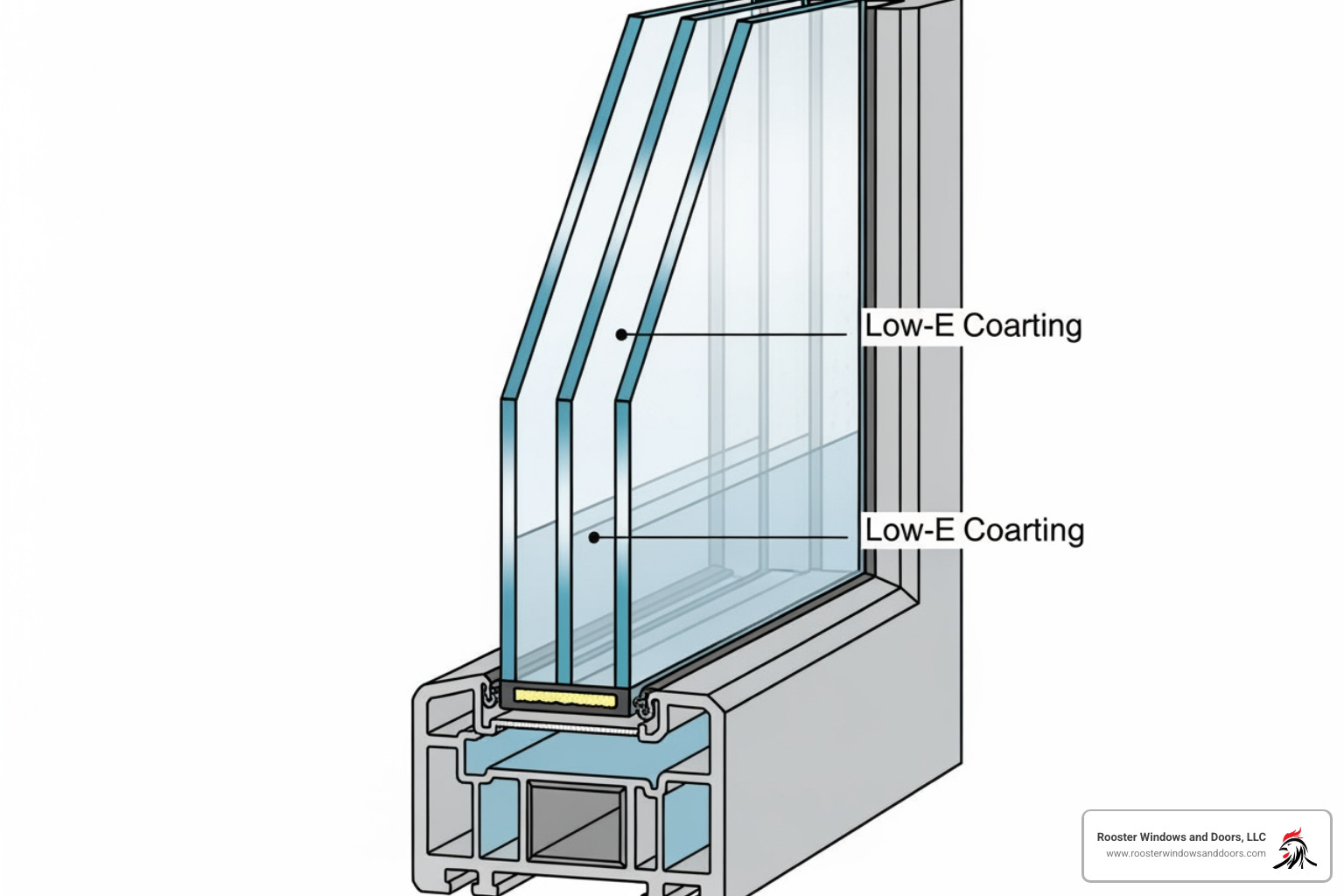
The glass panes are treated with invisible Low-E coatings, which reflect heat. In winter, they keep your home’s warmth inside; in summer, they reflect the sun’s heat out. These coatings also block UV rays that can fade furniture and flooring. Finally, specialized spacers hold the panes apart and are made from low-conductivity materials to prevent energy loss around the window’s edges.
If you want to learn more about making your windows work harder for you, check out our guide on energy efficient windows.
How Construction Boosts Performance
The design of triple pane windows is engineered to stop heat transfer in three ways: conduction, convection, and radiation. This is critical in the Chicagoland climate, with its freezing winters and hot summers.
- Conduction (heat transfer through solids): The three panes of glass and two gas-filled chambers create a formidable barrier that slows heat from passing through.
- Convection (heat transfer through air/gas movement): The sealed, dense argon or krypton gas eliminates the natural air currents that carry heat through lesser windows.
- Radiation (heat transfer via invisible waves): Low-E coatings reflect radiant heat, keeping your home warmer in winter and cooler in summer, while also providing UV protection.
The performance difference compared to older windows is dramatic. We’ve written more about why upgrading makes sense on our page about single vs double pane windows.
Understanding Low-E Coatings and Gas Fills
Choosing the right components for your triple pane windows is key to optimizing performance for Illinois weather. Low-E coatings come in different types, with soft-coat Low-E being a popular choice for its high performance in reflecting heat. It’s applied in a vacuum and protected inside the IGU. Some manufacturers offer climate-specific coatings designed for regions like ours, prioritizing heat retention in winter while still blocking solar gain in summer.
For gas fills, the choice is between argon and krypton:
- Argon gas is the industry standard, offering excellent thermal performance at an affordable price. It’s the right choice for most Chicagoland homes.
- Krypton gas is a premium option that is denser and provides superior insulation, especially in the narrower gaps found in some high-performance windows. It’s ideal for homeowners seeking the absolute best R-value.
The decision comes down to cost versus performance. We can help you determine which option best fits your budget and energy goals.
The Best Benefits of Triple Pane Windows
Investing in triple pane windows for your Chicagoland home upgrades your daily life. Beyond the well-known energy savings, homeowners are often most impressed by the immediate improvement in comfort and quiet. Your home transforms into a peaceful sanctuary, shielded from the outside world.
The primary benefits include superior energy efficiency that lowers utility bills, exceptional sound insulation for a quieter home, and improved security due to the multi-layer construction. Furthermore, triple pane windows virtually eliminate interior condensation, protecting your window frames and sills from moisture damage and mold. These upgrades work together to increase your home’s comfort and long-term value.
If you’ve been dealing with condensation issues, read our guide on More info about condensation on windows to understand how triple-pane construction solves the problem.
Superior Energy Efficiency
In Chicagoland, your windows battle both brutal winters and sweltering summers. If they aren’t performing well, you’re losing money. Triple pane windows are built for this challenge.
Performance is measured in two ways. R-Value measures resistance to heat transfer (higher is better), and triple pane windows score a 5 to 7, compared to 3 to 4 for double-pane. The U-Factor measures heat loss (lower is better), and it’s the standard used by the National Fenestration Ratings Council (NFRC).
The bottom line is that triple pane windows are about 40% more energy-efficient than their double-pane counterparts. Studies on modern thin triple-pane windows confirm this, showing annual HVAC cost reductions of around 18.6%. These savings add up significantly over the life of the windows.
We recommend ENERGY STAR certified windows, which meet strict EPA performance standards. The latest ENERGY STAR version 7 criteria for northern climate zones like ours often require triple-pane performance, making them a smart financial and environmental choice. For a detailed cost breakdown, see our guide on More info about energy efficient window prices.
A Quieter, More Peaceful Home
One of the most immediate benefits homeowners notice is the quiet. Whether you’re near an expressway, under a flight path, or on a busy street, constant background noise can be draining. Triple pane windows act as a formidable sound barrier.
The three layers of glass and two gas-filled chambers disrupt and absorb sound waves before they enter your home. Sound performance is measured by STC (Sound Transmission Class) and OITC (Outdoor-to-Indoor Transmission Class) ratings. OITC is particularly relevant as it measures how well windows block external noise like traffic and construction.
Triple pane windows typically reduce sound by 8 to 10 dB more than double-pane units. A 10 dB reduction makes outside noise seem about half as loud. Imagine cutting the sound of a busy road in half. Homeowners in noisy areas from Schaumburg to Park Ridge consistently tell us they didn’t realize how much noise affected them until it was gone.
Cost vs. Value: Analyzing the Investment
While triple pane windows have a higher upfront cost than double-pane options, the investment provides significant long-term value. The real story is not just the initial price but the cumulative savings on heating and cooling bills for years to come. For homeowners planning to stay in their homes, these savings create a compelling return on investment.
Beyond utility bills, the value includes improved comfort—a home without drafts or hot spots—and the peace and quiet of a well-insulated space. These quality-of-life improvements, combined with increased property value, make triple pane windows a smart upgrade for many homeowners.
Our guide on More info about window replacement costs offers a deeper dive into the financial aspects of window replacement.
Comparing the Costs: Triple Pane vs. Double Pane
In the Chicagoland market, triple pane windows typically cost 10-15% more than high-quality double-pane windows. The price per window generally ranges from $500 to $3,000, with factors like size, style, frame material, and custom features like krypton gas affecting the final cost.
Here’s a side-by-side comparison:
| Feature | Double Pane Windows | Triple Pane Windows |
|---|---|---|
| Layers of Glass | 2 | 3 |
| Gas Fills | 1 (Argon or air) | 2 (Argon, Krypton, or air) |
| R-Value | 3 to 4 | 5 to 7 |
| Energy Efficiency | Good | Excellent (40% more efficient) |
| Noise Reduction | Good | Superior (8-10 dB reduction) |
| Cost Per Window | $400 – $2,500 (average ~$900) | $500 – $3,000 (average ~$1,000) |
| Upfront Cost | Lower | Higher (approx. 10-15% more) |
| Weight | Standard | Heavier (approx. 1.5x standard dual-pane) |
While triple pane windows are heavier, modern “thin triple-pane” technology allows them to fit into standard frame dimensions. This innovation simplifies installation and helps keep labor costs reasonable, making them a more accessible option than ever before.
When are triple pane windows most beneficial?
In our two decades of experience across Chicagoland, we’ve found triple pane windows are especially transformative in specific situations:
- Extreme Climates: For cold northern regions like Illinois, the superior insulation provides dramatic energy savings during our harsh winters and hot summers.
- High-Performance Homes: If you are building or renovating to passive house or other high-efficiency standards, triple pane windows are essential to meet the required low U-factors and airtightness.
- Noisy Locations: For homes near highways like I-90, airports like O’Hare, or busy commercial streets, the 8-10 dB noise reduction creates a peaceful indoor environment.
- Long-Term Homeowners: If you plan to stay in your home for many years, the cumulative energy savings and improved comfort provide the greatest return on your investment.
Making the Right Choice: Selection and Installation
Choosing the right triple pane windows involves balancing performance, aesthetics, and budget, followed by a flawless installation to ensure you get the benefits you’re paying for. With numerous manufacturers and technical options, the process can seem complex, but we’re here to guide you to the best solution for your home.
Choosing a Manufacturer
We partner with manufacturers known for quality craftsmanship, proven energy efficiency, and strong warranties. Most major U.S. window brands now offer triple pane windows in various styles, including casement, double-hung, and picture windows, so you don’t have to sacrifice aesthetics for performance. A comprehensive lifetime warranty is crucial, as it protects your investment against issues like seal failure, providing long-term peace of mind.
Emerging Technologies
One of the most significant recent innovations is thin triple-pane windows. Traditionally, triple-pane units were thicker and heavier, sometimes complicating installation. This new technology produces windows with a thickness similar to standard double-pane units, allowing them to fit into most existing frames without major modifications. Research from institutions like the Pacific Northwest National Laboratory confirms these windows provide excellent energy and acoustic benefits, making them a practical choice for retrofits. You can read more in the Evaluation of Thin Triple-Pane Windows in the PNNL Lab Homes (Technical Report).
The Importance of Professional Installation
Even the best triple pane windows will underperform if not installed correctly. Proper installation is non-negotiable. These windows are roughly 1.5 times heavier than double-pane units, requiring experienced installers with the right techniques and tools to handle the weight safely and ensure the window is properly supported.
Beyond managing the weight, the most critical detail is proper sealing. The window must be installed perfectly square, plumb, and level. Any gaps around the frame must be carefully sealed to prevent air leaks, which would otherwise negate the window’s energy efficiency. A poor installation can lead to drafts, energy loss, and disappointment. Our meticulous process creates an airtight seal, guaranteeing your triple pane windows deliver the lower bills, improved comfort, and noise reduction you expect.
For an overview of our process, visit our page on More info about window installation services.
Maintaining Your triple pane windows
Triple pane windows are durable and require minimal maintenance.
- Glass: Clean with a mild glass cleaner and a soft cloth. Avoid abrasive materials that could scratch the glass or damage Low-E coatings.
- Frames: Vinyl and fiberglass frames need only an occasional wash with soap and water. Wood frames require periodic inspection and refinishing to protect against moisture.
- Seals: Annually inspect the seals for any signs of cracking or shrinking. Look for moisture between the glass panes, which indicates a seal failure. Catching issues early can prevent bigger problems.
With proper care, your windows will provide comfort and value for decades. For more tips, see our More info about window maintenance guide.
Frequently Asked Questions about Triple Pane Windows
Here are the answers to the most common questions we hear from homeowners in Lake, Cook, and McHenry Counties about triple pane windows.
Are triple pane windows worth it for the average homeowner?
Yes, for homeowners in the Chicagoland region, they are an excellent investment. Our extreme climate, with its cold winters and hot summers, is exactly where these windows excel. The significant energy savings, combined with a dramatic increase in home comfort and quiet, make them a worthwhile upgrade, especially for those planning to stay in their homes long-term.
How much quieter are triple pane windows?
They are significantly quieter. Triple pane windows reduce sound by 8 to 10 dB compared to standard double-pane units. A 10 dB reduction makes outside noise seem about half as loud to the human ear. This is a life-changing benefit for anyone living near traffic, train lines, or other sources of noise pollution.
Do triple pane windows prevent condensation?
Yes, they are highly effective at preventing interior condensation. Condensation forms when warm, moist indoor air touches a cold windowpane. The superior insulation of triple pane windows keeps the innermost pane of glass much warmer, often eliminating condensation entirely. This protects your sills and frames from moisture damage and potential mold growth, a common problem during Illinois winters.
Conclusion: Upgrade Your Home’s Performance

For over two decades, we’ve seen how triple pane windows transform homes in the Chicagoland area. It’s about more than just saving money on energy bills; it’s about the year-round comfort of a draft-free home and the daily peace of a quieter living space.
In a climate like ours, the benefits are clear. Triple pane windows offer superior energy savings (around 40% more efficient than double-pane), improved comfort by eliminating cold spots and radiant heat, and significant noise reduction. These advantages add up to a smart, lasting investment that improves your quality of life and increases your home’s value.
At Rooster Windows and Doors, we specialize in the flawless installation required to maximize these benefits. Our expert team serves Lake, Cook, and McHenry Counties, ensuring every window is perfectly sealed and supported to deliver on its promise of performance. We stand behind our work, giving you confidence in your investment.
If you’re ready to upgrade your home’s performance, comfort, and value, we’re here to help. Learn more about our window installation services and find how triple pane windows can be the right choice for your home.
